
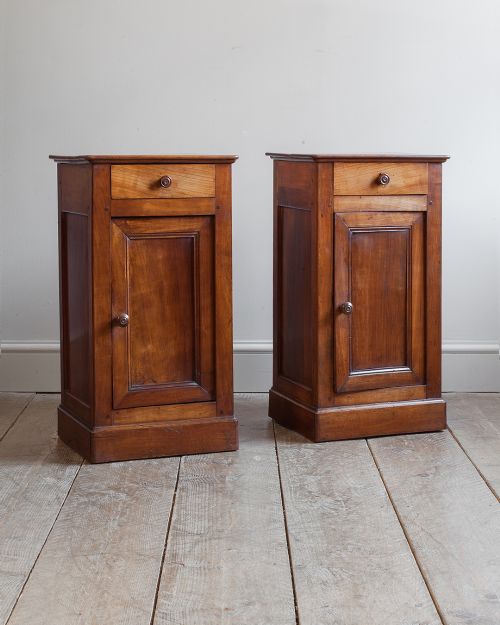
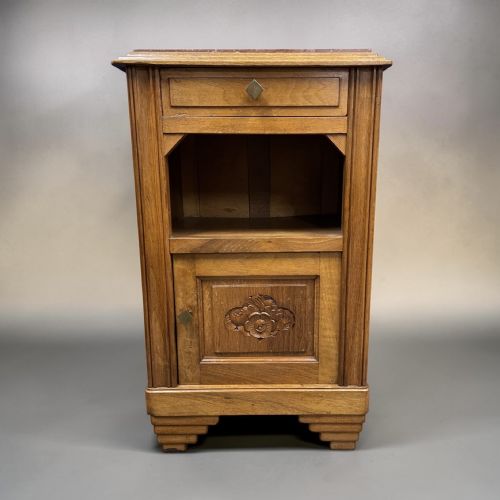


Warm Brown Pot Cupboard
A warm brown pot cupboard brings practical bedside storage and rich timber grain to a room.
Warm Brown Pot Cupboard
A warm brown pot cupboard provides enclosed storage beside a bed, taking the form of a small cabinet or bedside table designed to house a chamber pot or personal items. These pieces span the Georgian, Victorian, Edwardian, and Art Deco periods, offering compact utility with traditional craftsmanship.
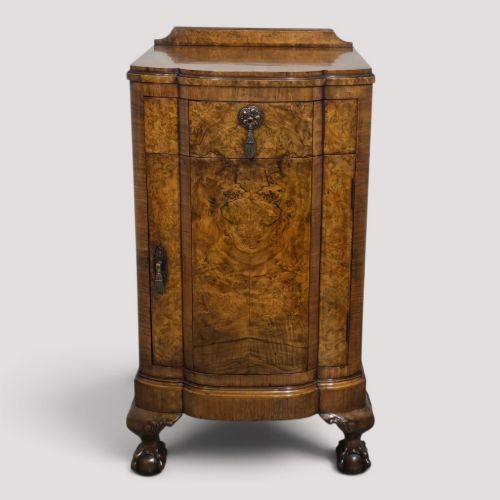
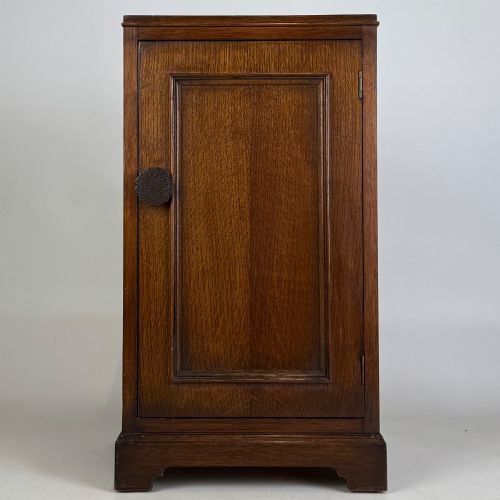
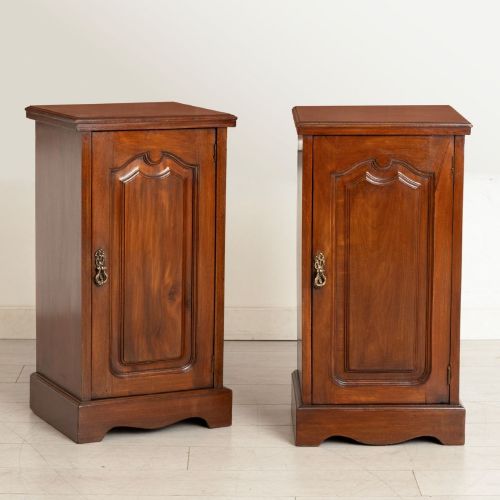
The versions met most frequently on this page include mahogany, walnut, and oak cabinets from the nineteenth century. Shoppers encounter freestanding cupboards with single doors, tambour fronts, and occasional pairs designed to flank a bed.
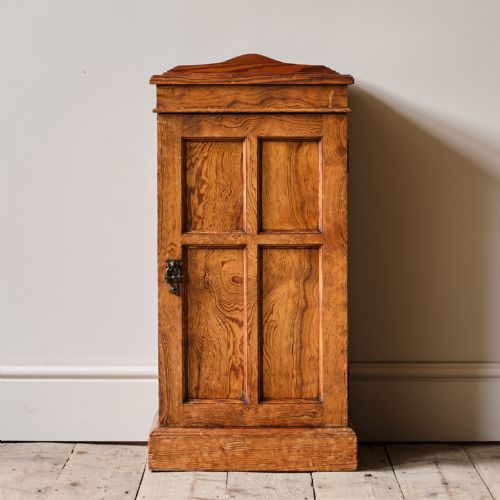
Makers and workshops from various eras utilised distinct regional styles, ranging from French provincial cherrywood stands to Gothic revival Oregon pine and George III bow-fronted commodes. Each specimen displays the characteristic timber tones and proportions expected from its period.
Materials and construction
Cabinetmakers constructed these cupboards primarily using solid hardwoods and selected veneers like mahogany, walnut, and oak, often paired with secondary woods such as pine. Joinery techniques relied on traditional framing and panel methods to ensure stability in daily use.
Hardware details typically involve brass handles, hinges, and occasional iron fixtures, reflecting the functional requirements of nineteenth and early twentieth-century domestic spaces. Timber surfaces received polished finishes that accentuated the natural grain and deep brown colouration of the wood.
A clever tambour front lets a bedside cabinet hide its interior contents with a gentle slide.
Assessing quality and craftsmanship
Superior examples distinguish themselves through the selection of finely figured timber veneers and the precision of the cabinet joinery. The alignment of doors, the integrity of panel construction, and the retention of original brass or iron hardware dictate the standing of an individual piece.
Simpler provincial variants utilise straightforward plank construction in regional woods like cherrywood or pine, offering robust utility rather than high-style ornamentation. The overall proportion, depth of the timber patina, and subtlety of decorative carving or moulding define the upper tiers of the range.
The Warm Brown Pot Cupboard Glossary
- Pot cupboard
- A small bedside cabinet originally designed to conceal a chamber pot behind a single door. These pieces evolved into general bedside tables during the twentieth century.
- Tambour front
- A flexible shutter door formed of narrow strips of wood glued to a canvas backing, allowing it to slide smoothly around a curved track.
- Bow front
- A convex, outwardly curved front facade commonly found on Georgian and later case furniture. This shape softens the profile of a room.
- Commode
- A historic term for a low cabinet or chest of drawers, often incorporating a concealed compartment for sanitary use in a bedroom.
- Satin birch
- A pale, fine-grained hardwood utilised by nineteenth-century cabinetmakers for decorative bedroom furniture and contrasting veneers.
Warm Brown Pot Cupboard: Frequently Asked Questions
What is a warm brown pot cupboard used for today?
These compact cupboards serve primarily as bedside tables, offering a convenient surface for a lamp alongside enclosed storage space for books and personal items.
Their traditional proportions allow them to fit easily into smaller bedrooms or tight spaces where larger furniture proves impractical.
How do I date a wooden bedside cabinet?
Dating relies on observing the timber species, construction methods, and stylistic details such as the presence of Georgian curves, Victorian mouldings, or Edwardian simplicity.
Hardware styles, including brass handles and hinges, also provide reliable clues regarding the decade of manufacture.
Are these cupboards sturdy enough for daily use?
Solid hardwood construction in materials like mahogany, walnut, and oak ensures these cabinets remain robust and suitable for everyday modern demands.
Traditional joinery methods provide the structural strength needed to support lamps, books, and regular handling of doors and drawers.
How do I care for antique timber finishes?
Maintaining the surface requires simple dusting with a soft cloth and occasional application of appropriate beeswax to nourish the wood and preserve the natural patina.
Avoiding direct sunlight and excessive moisture protects the historic polished finish from fading or cracking over time.