

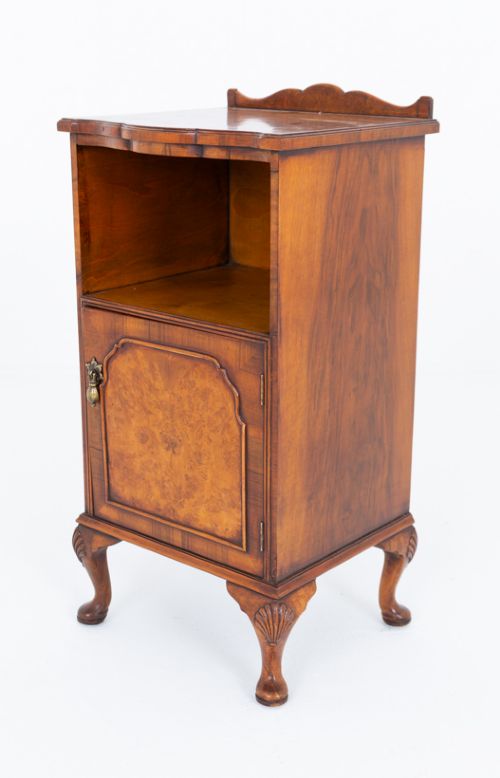


Traditional Bedside Locker
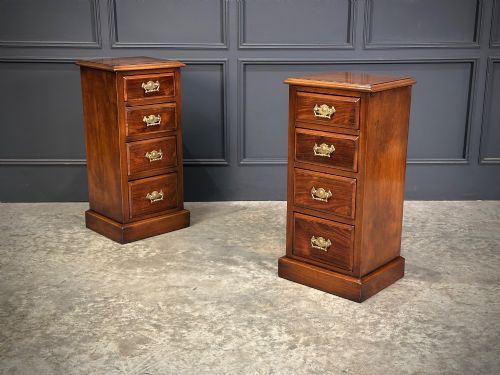
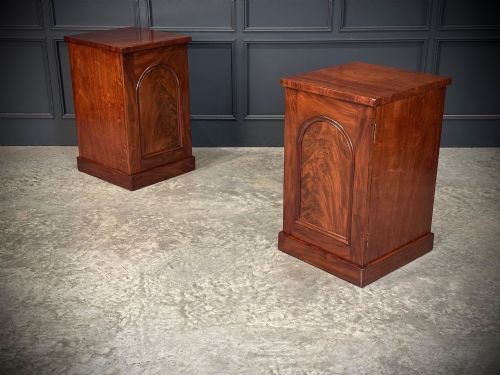
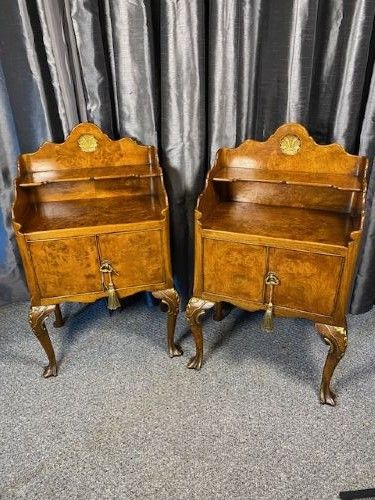
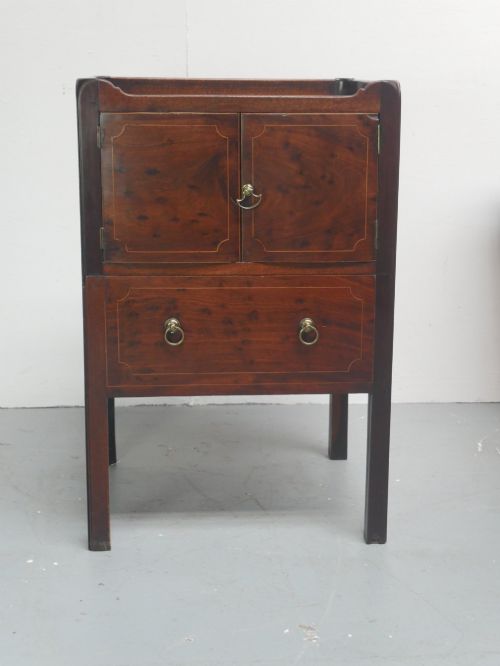
These traditional bedside lockers bring practical bedside storage and genuine period character to a bedroom.
Traditional Bedside Locker
A traditional bedside locker serves as a compact storage unit beside the bed, holding nighttime essentials behind a door or within drawers. The selection here ranges from compact cupboards to multi-drawer chests.
Most examples date from the Victorian and Edwardian periods, alongside Georgian pieces and later revivals from the 1920s and 1930s. Buyers frequently encounter matched pairs in these listings alongside single cabinets.
The form varies from simple drop-flap mahogany designs to substantial carved oak cabinets and grand flame mahogany pairs. These pieces combine functional storage with the distinct proportions of nineteenth and early twentieth-century furniture.
How traditional bedside lockers were made
Cabinetmakers built these lockers using solid timber and decorative veneers over secondary woods, applying boxwood inlay for contrast on select surfaces. Mahogany, walnut, and oak form the primary structural materials across the inventory.
Surface finishing relied on French polishing to highlight the grain of flame mahogany and burr walnut veneers. Brass hardware, including handles and hinges, completes the construction of these cabinets.
Listings feature periods from the mid-nineteenth century through to the 1930s, constructed in mahogany, walnut, and oak.
What varies in quality
Quality rests on the selection of timber veneers and the crispness of any carved detailing or inlay work. Flame mahogany and burr walnut examples with matched grain patterns sit at the upper end of the scale.
Construction methods also distinguish finer pieces, such as the precision of dovetail joints in drawers and the stability of panelled doors. Matched pairs command greater interest than single items due to the difficulty of sourcing identical companions.
The Traditional Bedside Locker Glossary
- Flame mahogany
- A figure in mahogany timber resembling flickering flames, achieved by cutting across the branch junction. Cabinetmakers prized this veneer for principal display surfaces.
- Burr walnut
- A prized wood grain featuring swirling patterns caused by growth deformities on walnut trees. It provides rich texture on cabinet doors and tops.
- Boxwood inlay
- Contrasting pale wood inserted into recesses in a darker timber surface to create linear or geometric decoration. It frames panels and tabletops.
- Drop-flap
- A hinged panel that lowers to reveal a surface or compartment inside the furniture. This mechanism appears on select compact cabinets.
Traditional Bedside Locker: Frequently Asked Questions
What is a bedside locker?
A bedside locker is a small enclosed cabinet or chest designed to stand next to a bed for nighttime storage.
Historically used to house chamber pots or personal items, today they hold books, lamps, and modern essentials.
Are these lockers sold as pairs?
Many listings feature matched pairs of cabinets, though single lockers also appear.
Pairs allow for symmetrical placement on both sides of a bed.
How do I date a locker?
Dating relies on timber choices, construction techniques, and stylistic revivals evident in the piece.
Victorian and Edwardian examples show distinct handling of mahogany and walnut compared to 1920s revival pieces.
What wood types are used?
The inventory consists largely of mahogany, walnut, and oak.
Many examples feature decorative veneers like flame mahogany or burr walnut alongside boxwood inlay.