



Warm Brown Office Chair
A warm brown office chair brings deep timber grain and sturdy nineteenth-century proportions straight to your desk.
Warm Brown Office Chair
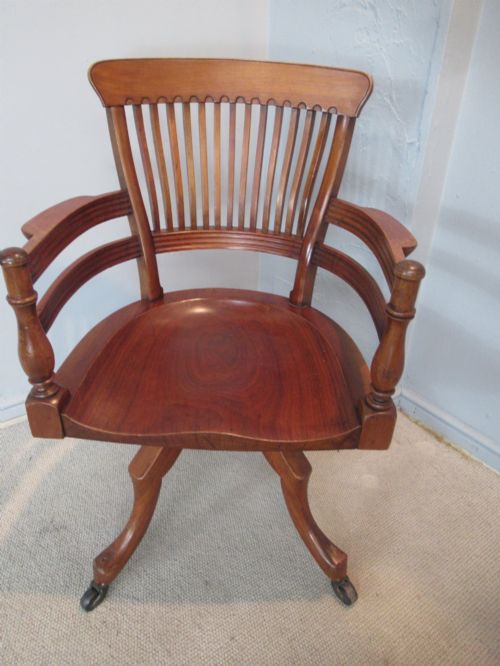
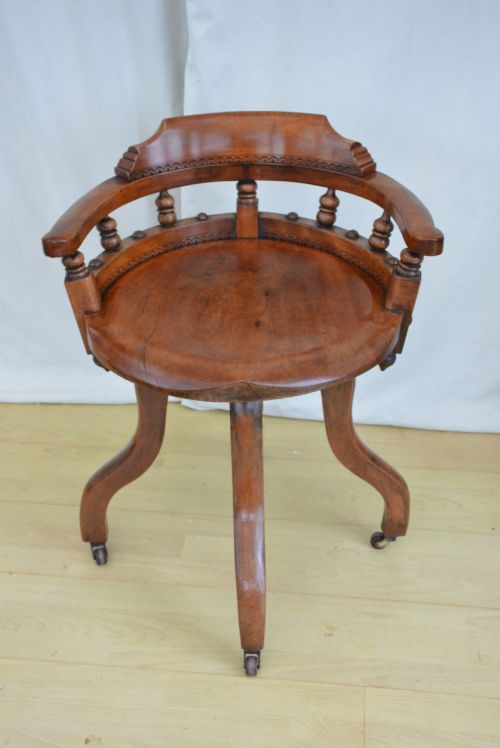
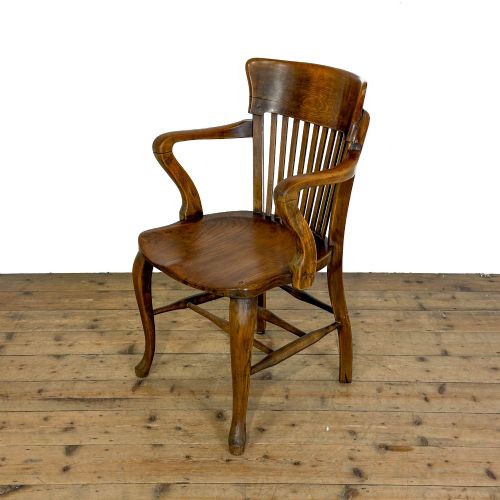
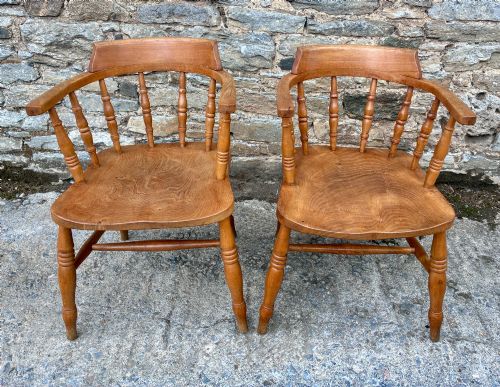
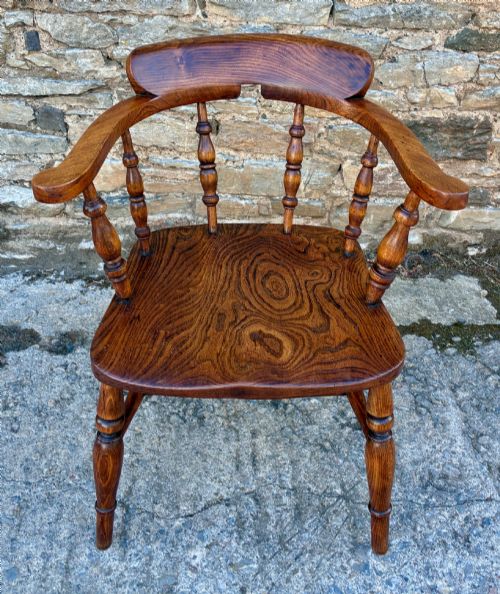
A warm brown office chair encompasses nineteenth-century and early twentieth-century seating designed for workspaces, featuring sturdy desk chairs, armchairs, and elbow chairs. The selection centres heavily on classic elm and beech captain's chairs alongside smoker's bows from the Victorian and Edwardian eras.
How they were made
Makers utilised native timbers like elm and beech, often combining them within a single frame to balance flexible bentwood arm rails with dense, durable seats. Mahogany and oak also appear, shaped through traditional joinery and steam-bending techniques to create the characteristic curved captain's backrests.
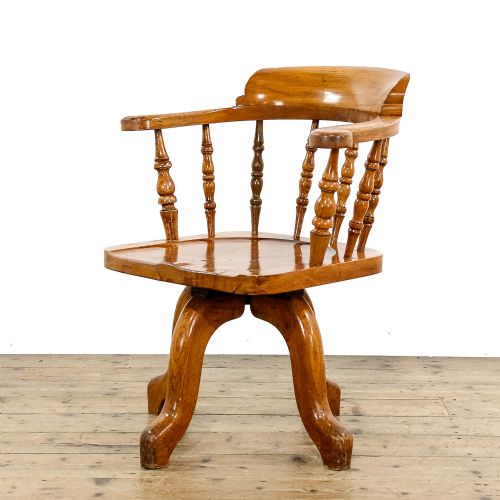
Iron components appear on specialised desk seating to provide swivel functionality, anchoring robust wooden superstructures designed for heavy administrative use.
Warm Brown Office Chair Retail Price Guide 2026
Typical asking prices for warm brown office chair among the pieces listed under this phrase on Sellingantiques today, from the lower quarter to the upper quarter. They describe what is for sale here now, not the wider market.
Several timbers spent decades supporting nineteenth-century clerks before finding retirement as comfortable companions for modern laptops.
What varies in quality
The distinction between standard utility seating and finer examples lies in the selection of timber and the complexity of the woodwork. Chairs featuring distinct grain patterns in the elm seat and well-formed steam-bent arm rails display a higher degree of craftsmanship.
Integration of mechanical elements, such as swivel mechanisms housed within mahogany frames during the Edwardian period, elevates the sophistication of the piece far beyond simple country workshop output.
SHOOLBRED
The Warm Brown Office Chair Glossary
- Captain's Chair
- A sturdy wooden armchair with a low, curved back rail supported by spindles, designed originally for office and shipboard use. These typically feature shaped solid timber seats.
- Smoker's Bow
- A low-backed Windsor-style armchair sharing similarities with the captain's chair, distinguished by a continuous bow arm. They are frequently found in beech and elm.
- Arts and Crafts
- A design movement emphasising handcraftsmanship, simple structural forms, and traditional materials. This style produced refined mahogany office chairs with functional swivel bases.
Warm Brown Office Chair: Frequently Asked Questions
Are these chairs comfortable for daily desk work?
These pieces feature deep, saddled wooden seats shaped to the body, offering solid support for working hours. They lack modern upholstery, relying instead on ergonomic nineteenth-century proportions.
Pairing one with a sheepskin or loose cushion softens the rigid timber base while maintaining the authentic period aesthetic at your desk.
How do I distinguish a Victorian captain's chair?
Victorian examples rely heavily on solid elm or beech construction, often featuring turned legs and a low spindle-backed bow. They date from the nineteenth century through the Edwardian transition.
Look for pegged joints and natural wear patterns on the seat edges, which indicate genuine age rather than later reproduction work.
What is the difference between a captain's chair and a smoker's bow?
Both terms describe sturdy nineteenth-century elbow chairs with low, curved backs, though regional workshop traditions often dictated the exact name. Smoker's bows frequently emphasise a continuous bentwood rail.
On this page, both forms serve equally well as characterful desk seating built from warm native hardwoods.
Can I find adjustable office chairs from this period?
Early swivel mechanisms begin to appear in Edwardian pieces, combining traditional timber frames with iron hardware. These allow for movement while retaining rich mahogany or hardwood finishes.
Most traditional nineteenth-century examples remain stationary, prioritizing fixed structural stability over mechanical adjustment.