



Antique Walnut Swivel Chair
An antique walnut swivel chair brings mechanical ingenuity and rich timber tone to a desk or music room.
Antique Walnut Swivel Chair
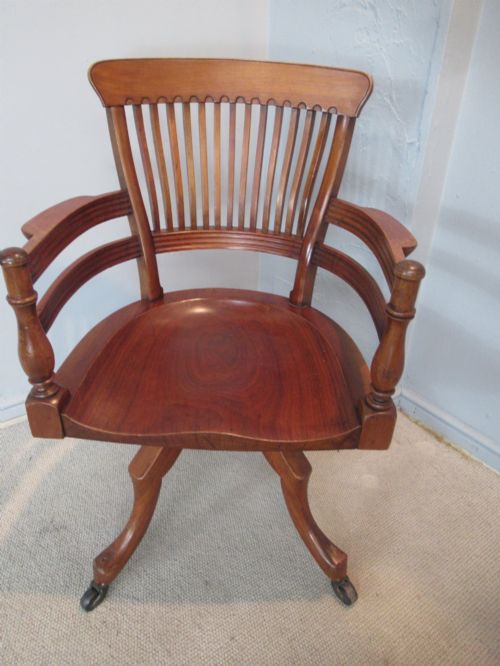
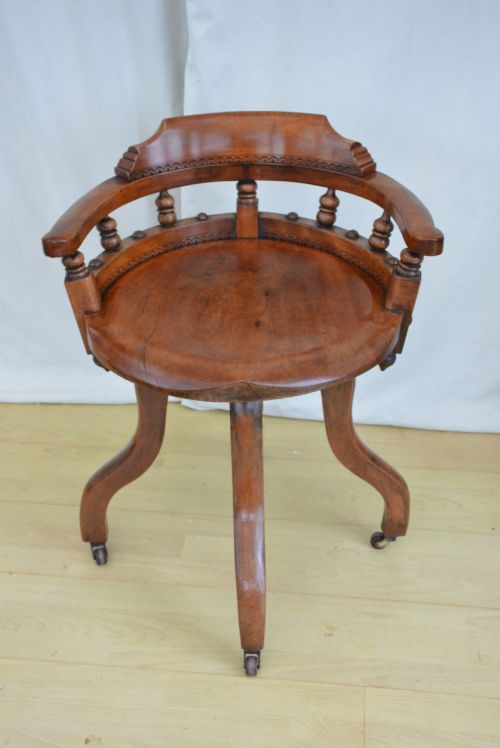
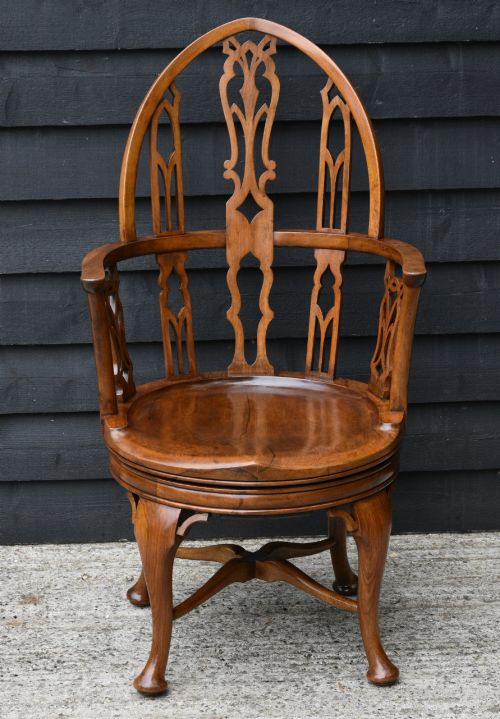
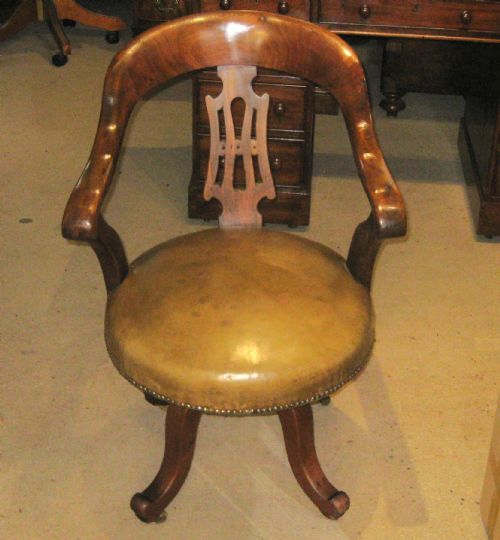
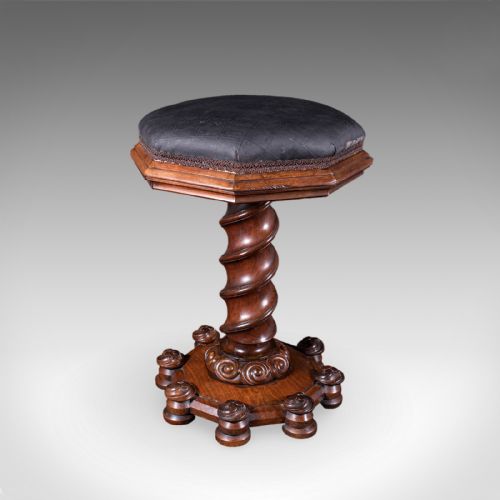
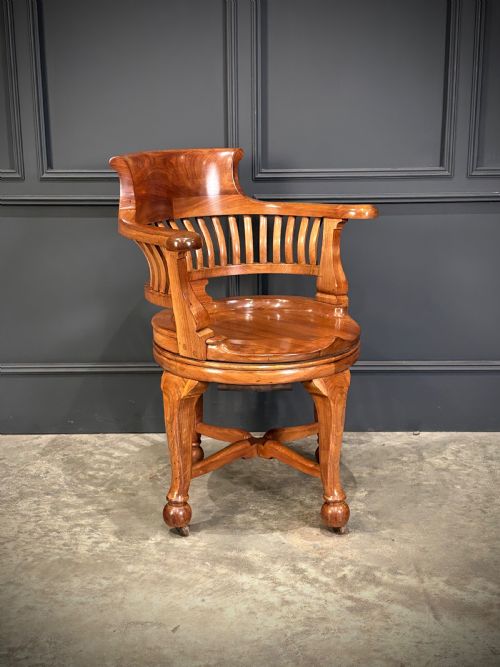
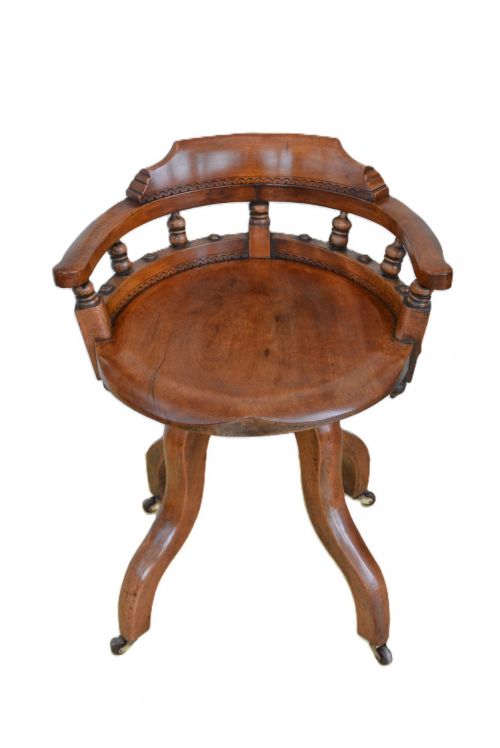
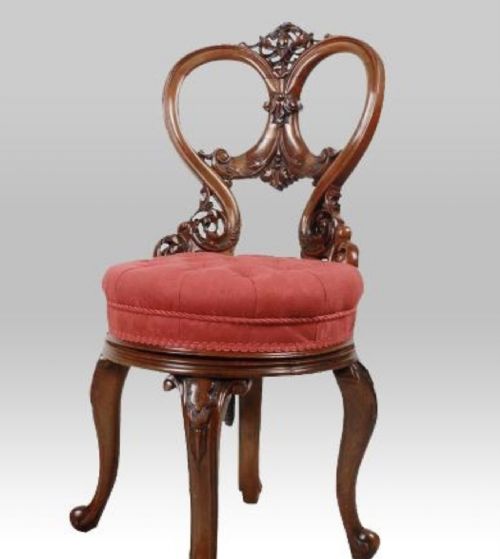
An antique walnut swivel chair combines the rich, dark grain of walnut timber with a revolving mechanism designed for working at a desk or playing an instrument. The pieces on this page span several distinct forms, from sturdy office and desk chairs to adjustable music stools, piano stools, and bar stools.
Most examples originate from the Victorian period, utilising styles such as Gothic Revival, Aesthetic Movement, and Edwardian Arts and Crafts. Buyers find both solid walnut frames and versions featuring leather or velvet upholstery alongside iron and brass mechanical components.
Origins range across British, Scottish, and French workshops, encompassing utilitarian office seating as well as decorative music room furnishings. Each piece relies on a central spindle or screw mechanism to permit rotation and, in many cases, height adjustment.
How they were made
Makers shaped these chairs primarily from solid walnut and veneered walnut, frequently selecting the timber for its deep, figured grain. Carved details adorn pedestals, tripod bases, and back rails, whilst structural strength relies on sturdy joinery.
Metal components, including iron and brass screws, brackets, and swivel mechanisms, provide the essential engineering for rotation and height adjustment. Upholstered variants incorporate leather, velvet, or fabric coverings secured over padding on the revolving seats.
Antique Walnut Swivel Chair Retail Price Guide 2026
Typical asking prices for walnut swivel chair among the pieces listed under this phrase on Sellingantiques today, from the lower quarter to the upper quarter. They describe what is for sale here now, not the wider market.
Chapel organists and harpists required specialised revolving seating to reach every pedal and string with absolute grace.
What varies in quality
The sophistication of the carving and the robustness of the timber define the upper tier of these chairs, separating standard utilitarian seating from finer artistic examples. Elaborate Gothic Revival motifs, Aesthetic Movement lines, or refined French Chateau turning indicate greater workshop ambition.
The precision and smooth operation of the iron or brass swivel mechanism dictate the mechanical quality of each piece. Original, well-preserved adjusting screws and stable pedestal bases demonstrate superior craftsmanship compared to replacement or heavily worn hardware.
The Antique Walnut Swivel Chair Glossary
- Revolving desk chair
- A seating form fitted with a central pivot that allows the user to rotate fully while seated at a workspace. These often feature upholstered leather pads and supportive backs.
- Music stool
- An adjustable seat designed for pianists, organists, or harpists, allowing the player to alter their height via a screw mechanism. They appear in pedestal, tripod, and rise-and-fall formats.
- Gothic Revival
- A nineteenth-century design style drawing on medieval architectural motifs, visible in pointed arches and heavy carved details on walnut frames. It reflects a Victorian enthusiasm for historical revivals.
- Aesthetic Movement
- A late nineteenth-century artistic style prioritising visual beauty and fine craftsmanship over rigid historicism. Pieces from this movement often display refined walnut forms.
- Tripod base
- A three-legged support structure commonly found beneath piano stools and music chairs. This configuration ensures stability on uneven floors by maintaining contact at three points.
Antique Walnut Swivel Chair: Frequently Asked Questions
What is an antique walnut swivel chair used for?
These pieces serve primarily as functional desk seating or specialised music stools for pianos and organs. Their revolving design allows easy movement within a workspace or studio.
Many buyers place them at writing desks, dressing tables, or use them as accent seating in living spaces. The adjustable height function adds practical versatility for different tasks.
How do I identify a Victorian walnut swivel chair?
Victorian examples typically display rich walnut timber grain, often paired with cast iron or brass mechanical turning screws beneath the seat. Look for characteristic stylistic clues such as Gothic Revival carvings or Aesthetic Movement lines.
Common forms include revolving office desk chairs and pedestal piano stools dating from the mid to late nineteenth century. The construction methods and patination of the timber further support the period attribution.
Are piano stools adjustable?
Many period piano and music stools feature a rise-and-fall mechanism operated by rotating the seat top. This screw action raises or lowers the seating platform to suit the musician.
Tripod and pedestal models on this page frequently utilise this height-adjustment capability. The metal screw rod remains concealed within the central walnut column.
How do I care for walnut furniture?
Walnut timber benefits from gentle cleaning with a soft, dry cloth to remove dust without harming the polished finish. Avoid placing antique chairs near direct heat sources or strong sunlight, which can dry out the wood.
Leather and fabric upholstery require appropriate specialist cleaners depending on the material. Keeping mechanical swivel parts lightly lubricated ensures smooth rotation.