
Warm Brown Elm Chairs
Warm brown elm chairs bring honest country timber and sturdy Windsor forms straight into a room.
Warm Brown Elm Chairs
When searching for warm brown elm chairs, buyers encounter traditional seating shaped by English country makers across the eighteenth, nineteenth and early twentieth centuries. These pieces encompass armchairs, Windsor chairs, captains chairs and dining sets built for everyday domestic use.
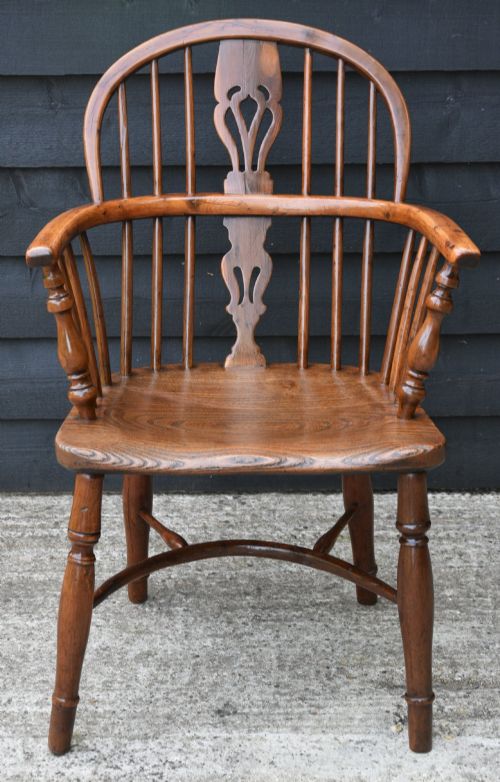
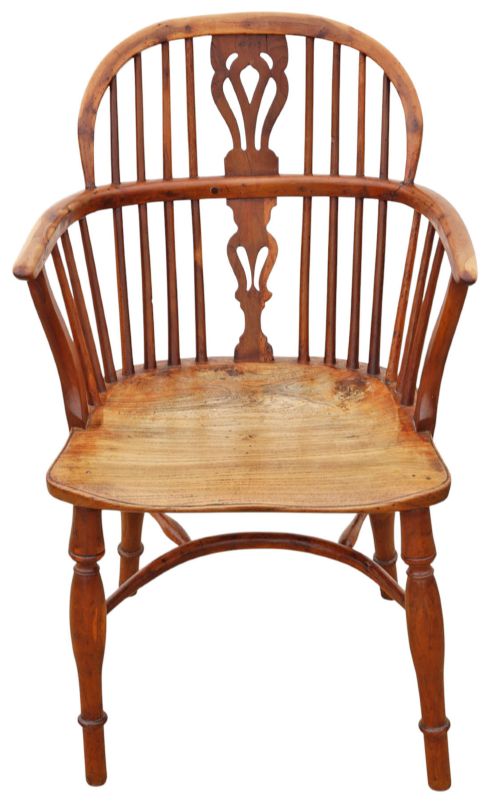
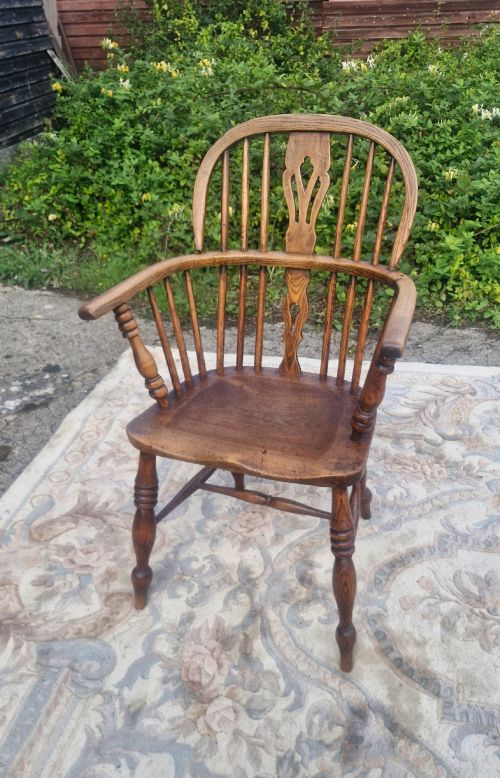
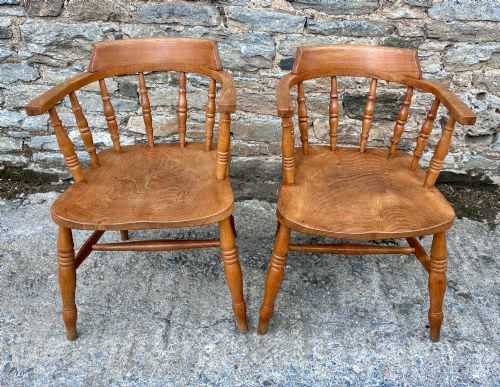
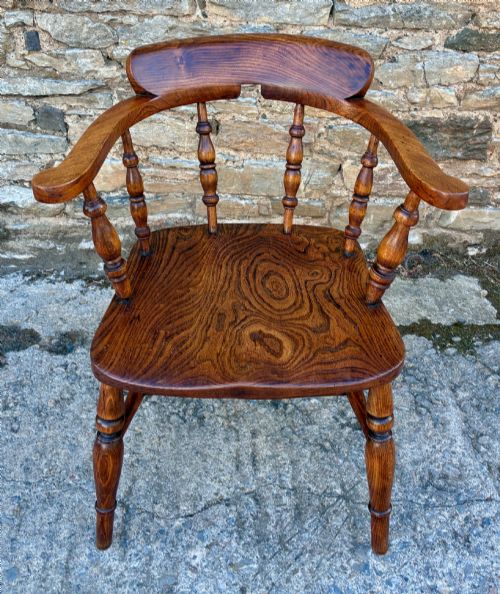
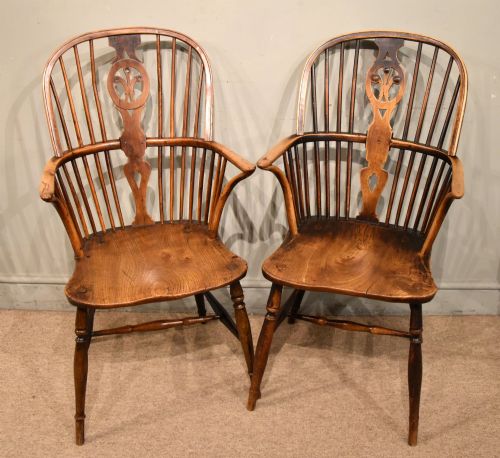
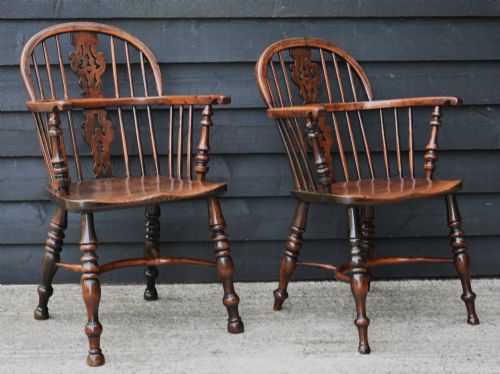
The version most commonly met on this page is the classic Windsor armchair, featuring a solid elm seat combined with ash, beech or yew components. These robust chairs emerge from vernacular traditions associated with regional workshops, farmhouse kitchens and country houses.
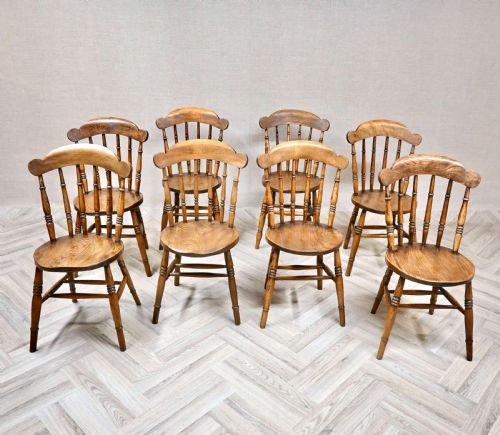
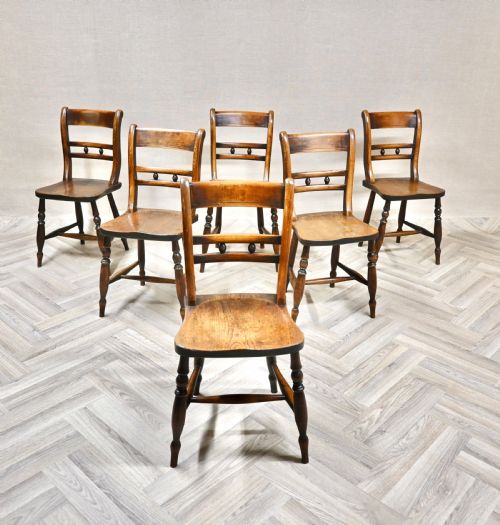
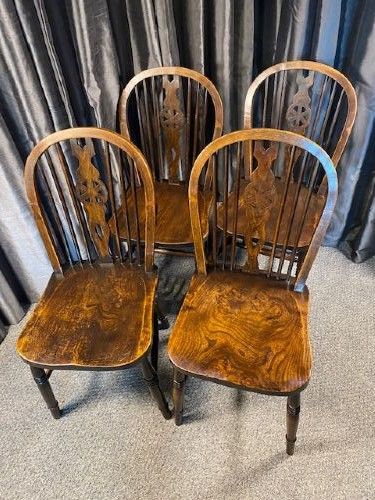
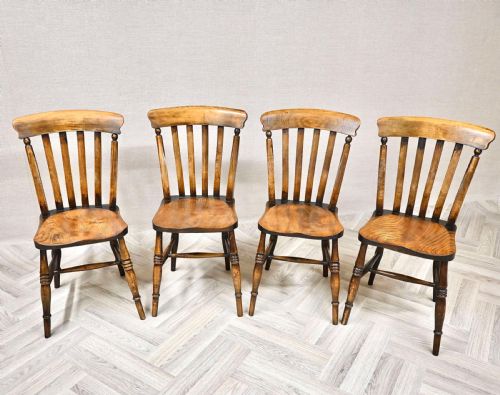
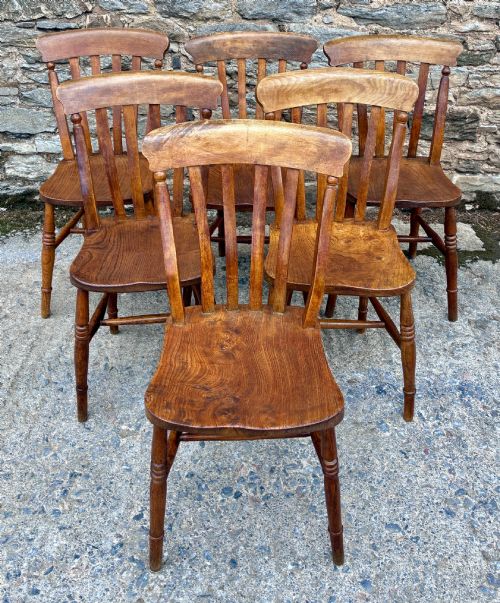
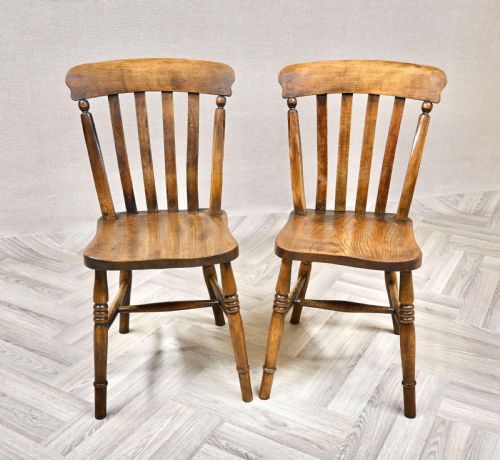
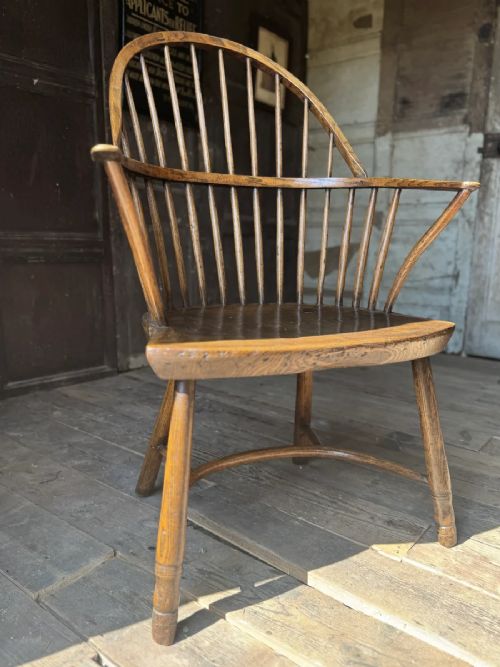
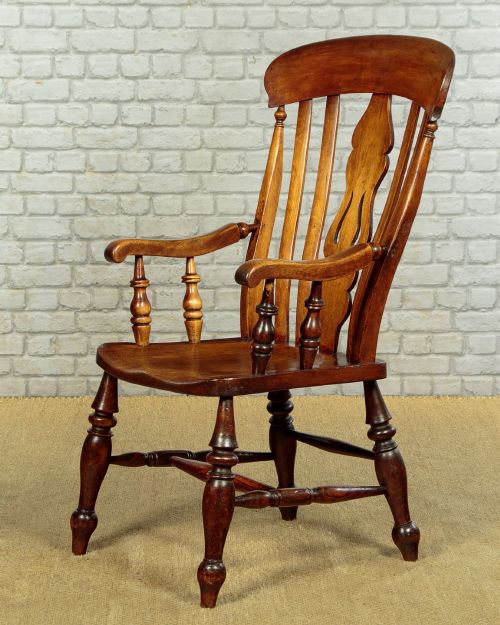
The selection ranges from low-back smokers bows and high-back Windsor carvers to matched sets of lathe-back or hoop-back dining chairs. Each piece displays the distinctive grain and deep honey-brown tone that develops in mature English elm over generations of use.
How they were made
Makers utilised elm for the thick saddle seats because its interlocking grain resisted splitting when hammered or hollowed out with an adze. Spindles, legs and stretchers were typically turned from ash, beech or fruitwood on a pole lathe, offering high tensile strength for slender structural parts.
Traditional Windsor construction relied on wedged tenon joints, where legs and back stems passed straight through bored holes in the elm seat and were locked securely from above. Steam bending formed the continuous hoop backs and arm bows, shaping seasoned timber without cutting the natural grain.
Listings feature eighteenth-century Georgian forms alongside nineteenth-century Victorian farmhouse designs in elm, ash, beech and yew.
What varies in quality
Quality rests in the sculptural depth of the elm seat and the balance of the turned components. Superior examples possess deeply sculpted saddle seats with soft, worn edges and well-proportioned spindles that show careful hand-shaving rather than mechanical uniformity.
The integrity of the original construction dictates much of the standing, particularly where legs meet the underside of the seat. Chairs retaining their original wedged joints, matching timber species and crisp artisan turning sit at the upper end of the range.
The Warm Brown Elm Chairs Glossary
- Windsor chair
- A chair built with a solid wooden seat into which the legs and back sticks are independently inserted. This vernacular form emerged in rural England before gaining widespread popularity in farmhouse kitchens.
- Crinoline stretcher
- An arched or curved wooden brace connecting the legs of a chair to provide rigidity. These stretchers are frequently found on eighteenth-century Windsor designs.
- Smokers bow
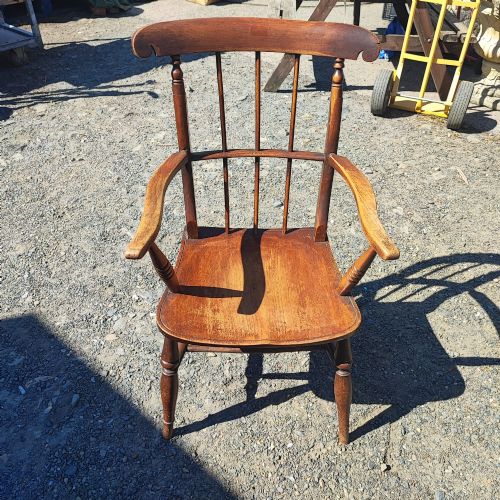
- A low-backed Windsor armchair with a continuous rounded arm rail supported by short spindles. These comfortable seats were common in nineteenth-century parlours and inns.
- Lathe back
- A chair back featuring vertical flat slats or splats turned and shaped on a lathe. This style appears frequently on nineteenth-century kitchen and farmhouse chairs.
- Comb back
- A Windsor chair design where the vertical spindles of the back extend upward into a headrest resembling a traditional hair comb. This profile dates to the eighteenth century.
Warm Brown Elm Chairs: Frequently Asked Questions
Are these chairs comfortable for daily dining?
The solid elm seats are deeply sculpted to fit the body, offering surprising support during long meals. Adding loose squab cushions provides extra softness while keeping the timber visible.
Most models were originally built for heavy kitchen and dining use, meaning their ergonomic proportions remain well suited to modern tables.
How do I clean and maintain elm timber?
Dust the wood regularly with a dry cloth and occasionally feed the surface with a traditional beeswax polish. Avoid modern silicone sprays, which can build up and dull the natural grain.
Keep the timber away from direct heat sources and drastic humidity changes to prevent the elm and supporting ash from shrinking or splitting.
How can I tell a Georgian chair from a Victorian one?
Georgian pieces often display finer turning on the leg stretchers, delicate comb-back profiles, and older varieties of yew and ash framing. Their joinery frequently shows hand-carved tool marks from country workshops.
Victorian and later examples tend toward heavier proportions, standardised lathe-turned spindles, and simpler hoop-back or smokers bow configurations designed for robust farmhouse service.
Can I mix different styles around a dining table?
Country seating naturally accommodates variation, and mixing different spindle backs or arm styles creates an authentic vernacular look. Matching the seat heights and overall timber tones helps unify mismatched chairs.
Pairing a pair of high-back Windsor armchairs at the table ends with simpler side chairs along the flanks works particularly well.