



Warm Brown Book Cabinet
These warm brown book cabinet pieces are sturdy repositories for heavy volumes, built to anchor a study in rich timber.
Warm Brown Book Cabinet
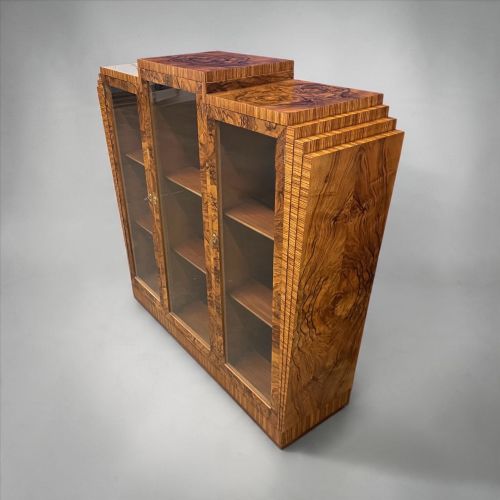
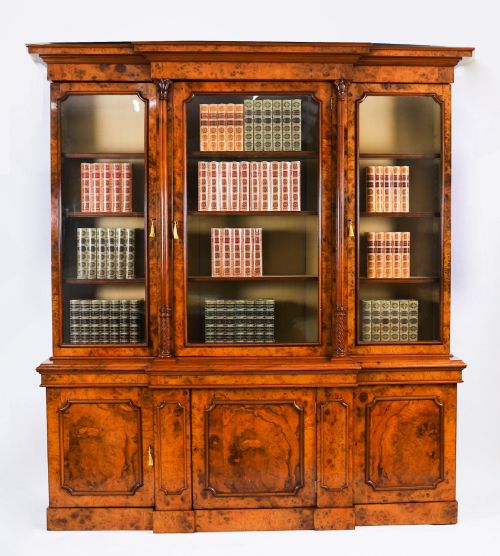
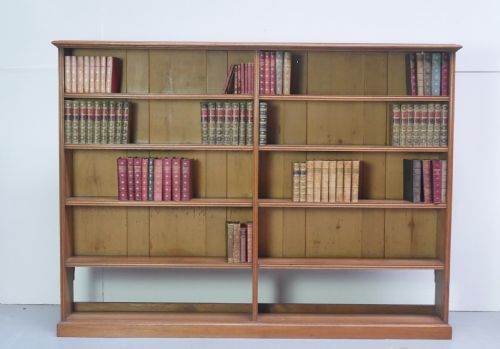
A warm brown book cabinet serves as a dedicated container for domestic libraries, frequently found in Victorian and Edwardian iterations across this selection. Buyers encounter both open front designs and enclosed glazed formats, spanning tall proportions down to low library styles.
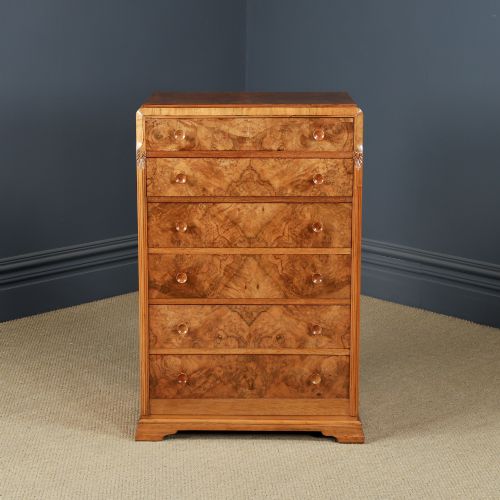
The prevalent forms on this page include tall mahogany and oak bookcases, alongside walnut display combinations and distinctive three section elm pieces. Many incorporate adjustable shelving to accommodate varying book heights.
Origins stretch from mid nineteenth century pieces through to nineteen thirties examples, reflecting shifts in domestic storage needs. The traditional styles dominate, often displaying simple open shelves or glazed upper sections above lower cabinet storage.
Materials and construction methods
Makers utilised dense hardwoods such as mahogany, oak, and walnut, selecting timber for deep natural grain and enduring strength. Satinwood and boxwood frequently appear as contrasting inlay elements on friezes and panels.
Glass doors protect specialised volumes in enclosed cabinets, while brass hardware secures doors and concertina mechanisms. Joinery relies on traditional fitted shelving systems and sturdy panel construction to support heavy loads.
Warm Brown Book Cabinet Retail Price Guide 2026
Typical asking prices for warm brown book cabinet among the pieces listed under this phrase on Sellingantiques today, from the lower quarter to the upper quarter. They describe what is for sale here now, not the wider market.
Materials listed span oak, walnut, mahogany, satinwood, elm, and boxwood, paired with brass hardware and glass.
Distinguishing quality across examples
Substantial proportions and choice timber selections set finer library cabinets apart from utilitarian pieces, visible in deeply figured walnut and dense oak. The presence of secondary timbers and the crispness of inlaid satinwood indicate workshop standard.
Intricate detailing such as inlaid friezes, glazed door framing, and functional adjustable shelving mechanisms elevate certain pieces. The overall structural integrity and depth of the wood finish determine the standing of each cabinet.
The Warm Brown Book Cabinet Glossary
- Frieze
- The decorative horizontal band near the top of a cabinet, often plain or enhanced with inlaid satinwood and boxwood details.
- Waterfall bookcase
- A stepped shelving unit where each successive tier sits slightly further back than the one below, typically seen in Edwardian forms.
- Library bookcase
- A large, substantial storage unit designed for extensive book collections, frequently featuring enclosed lower cupboards beneath open or glazed upper shelves.
- Adjustable shelves
- Internal shelving supported on movable pegs or tracks, allowing the user to alter vertical spacing between tiers.
- Concertina door
- A folding door mechanism that collapses neatly to the side, allowing unobstructed access to the cabinet interior.
Warm Brown Book Cabinet: Frequently Asked Questions
What is a warm brown book cabinet used for?
These cabinets serve primarily to store and display bound volumes, keeping private libraries organised and protected within a domestic setting.
Enclosed versions shield delicate paper from dust and light, while open formats offer immediate access for working collections in studies and libraries.
How do I care for a wooden bookcase?
Maintain the timber by keeping the cabinet away from direct heat sources and sudden humidity shifts that can warp heavy panels.
Apply natural wax periodically to nourish the grain of oak, walnut, or mahogany surfaces without building up heavy chemical residues.
Are shelves usually adjustable in these cabinets?
Many period examples include adjustable shelving supported by wooden ratchets or peg systems to accommodate books of varying heights.
Fixed shelves do appear in certain simpler structures, so checking internal configurations helps determine storage flexibility.
How do I distinguish Victorian from Edwardian pieces?
Victorian examples generally feature heavier timbers like dark mahogany and substantial proportions designed for formal nineteenth century interiors.
Edwardian pieces often lean towards lighter oak or satinwood and occasionally present simpler, more relaxed proportions influenced by Arts and Crafts ideals.