

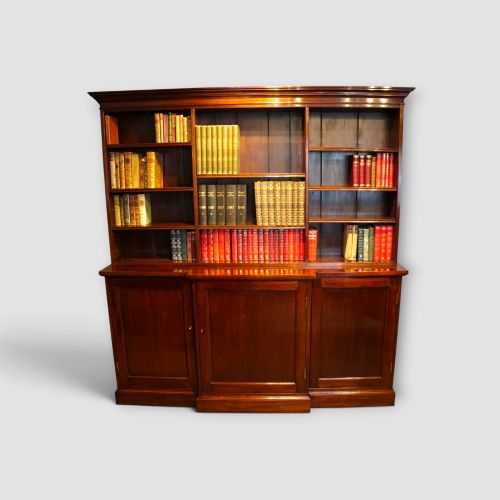
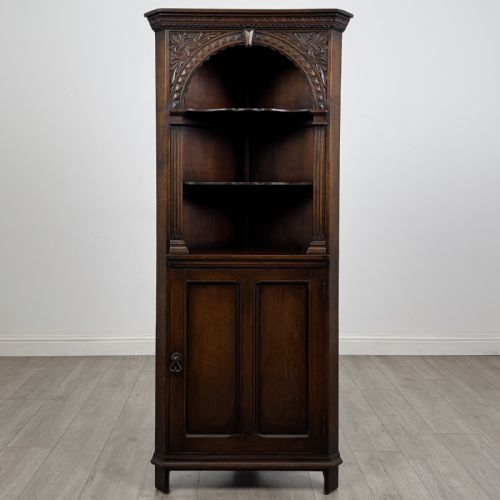
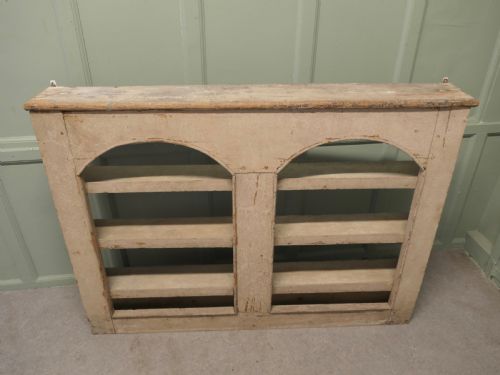
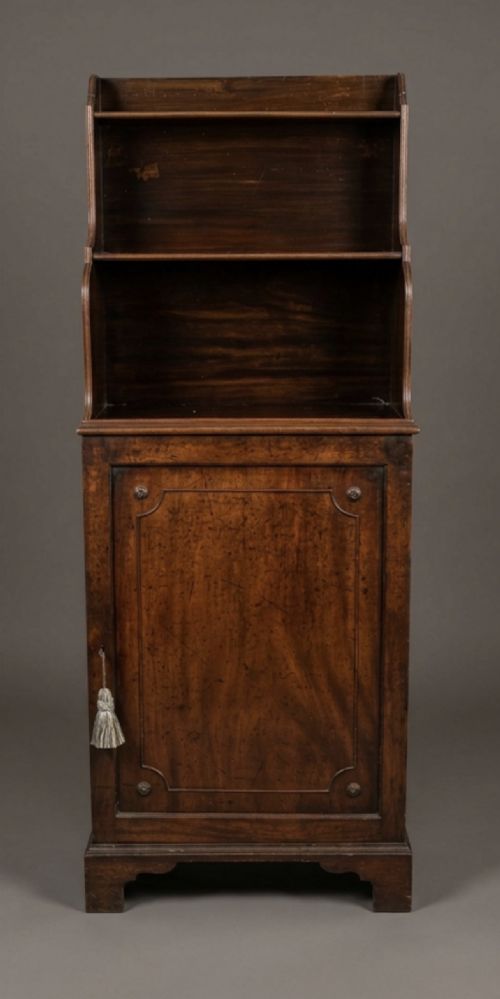
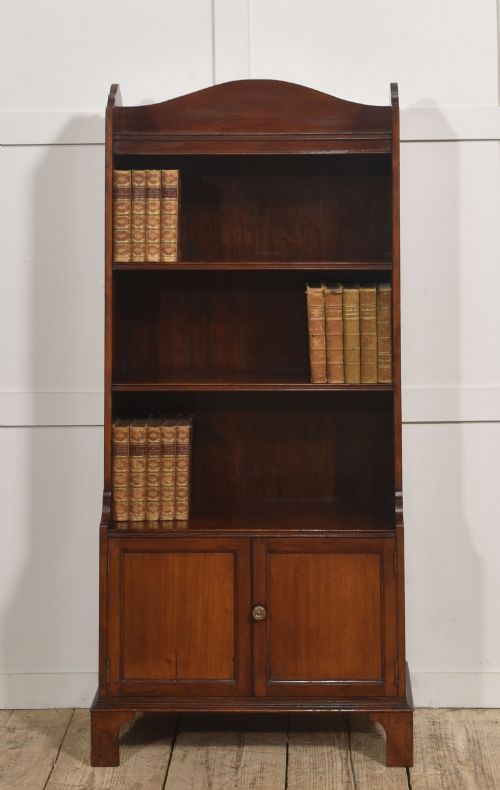


Open Top Cupboard Bookcase
When you want an open top cupboard bookcase, you are looking for a hybrid piece that marries upper display shelving with lower storage.
Open Top Cupboard Bookcase
An open top cupboard bookcase combines upper shelving for display with a lower enclosed cabinet for storage. These pieces bridge the gap between a traditional bookcase and a sideboard, offering practical utility for living spaces and libraries alike.
The versions you meet on this page span several centuries, with pieces originating from Georgian, Victorian, and Edwardian periods. Alongside English examples, French Provincial and Italian styles appear, often rendered in oak, mahogany, or pine.
Forms vary from straightforward shelved alcove cupboards to elaborate waterfall bookcases and fitted library units. Lower sections commonly feature panelled doors or built-in cupboards that conceal adjustable shelves within.
Construction and Materials
Cabinet makers utilised dense hardwoods such as mahogany and oak for substantial pieces, while softer woods like pine served regional or provincial commissions. Surfaces were frequently enriched with satinwood inlay or finished with distemper paint.
Hardware played a functional and decorative role, with brass fixtures securing doors and supporting internal adjustments. Joinery relied on traditional framing techniques to bear the weight of heavy volumes in the upper open sections.
Open Top Cupboard Bookcase Retail Price Guide 2026
Typical asking prices for open top cupboard bookcase among the pieces listed under this phrase on Sellingantiques today, from the lower quarter to the upper quarter. They describe what is for sale here now, not the wider market.
Some nineteenth century provincial workshops used distemper paint so thickly that generations of subsequent decorators simply painted straight over the top.
Markers of Quality
The distinction between standard utility items and finer pieces lies in the selection of timber figures, such as burr walnut or figured mahogany. Superior examples demonstrate meticulous attention to proportion, subtle inlay work, and the integration of the upper open shelves with the lower cabinet.
Construction details also separate workshop outputs, where tighter joint tolerances and thoughtful interior layouts elevate a piece. Maker attributions, when present through stamps or known regional designs, further distinguish notable examples from ordinary production.
Gillows·Collinson & Lock London·Sandberg & Co
The Open Top Cupboard Bookcase Glossary
- Waterfall bookcase
- A tiered shelving unit where each successive shelf is narrower than the one below, creating a stepped profile reminiscent of cascading water. This form gained popularity during the nineteenth century for displaying smaller volumes and ornaments.
- Alcove shelving
- Fitted or freestanding shelving designed to occupy a wall recess or corner space. These pieces maximise vertical storage in domestic interiors without dominating the room.
- Satinwood inlay
- Decorative woodwork technique involving contrasting veneers inserted into the primary timber surface. It creates pale, lustrous geometric or botanical patterns against darker woods like mahogany.
- Distemper paint
- A water-based paint mixture utilising chalk and pigment bound with animal glue. It provides a matte, chalky finish seen on period provincial furniture.
Open Top Cupboard Bookcase: Frequently Asked Questions
How do I use an open top cupboard bookcase?
The upper open shelves suit the display of books, ceramics, and decorative objects where visibility matters. Meanwhile, the lower cupboard doors conceal household items, paperwork, or overflow volumes to keep rooms tidy.
Position these hybrid pieces against solid walls in studies, libraries, or living rooms where their combined height provides both focal presence and practical storage.
Are these bookcases suitable for modern homes?
Their dual-purpose design makes them remarkably adaptable for contemporary interiors that require both display space and hidden storage. The varied footprints fit comfortably into alcoves or act as standalone statement furniture.
Selecting a piece matching your room scale ensures the height of the upper shelves does not overwhelm lower ceilings or compact spaces.
How do I identify a Georgian bookcase?
Georgian examples often exhibit classical proportions, restrained architectural mouldings, and solid mahogany or oak construction. Their lines tend to be clean and balanced, reflecting the aesthetic priorities of the eighteenth century.
Interior construction details, such as hand-cut dovetails and pegged joints, help confirm the period of manufacture alongside secondary timbers used in the carcase.
Can shelves be adjusted?
Many period bookcases feature adjustable shelving systems utilising traditional wooden ratchets, brass pins, or slotted uprights. This adaptability allows storage for volumes of varying heights.
Checking the interior construction reveals whether the original adjustment mechanism remains intact within the upper open section.