
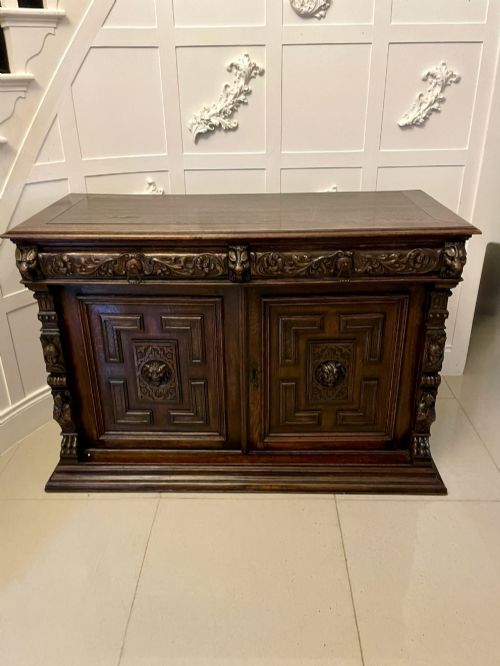
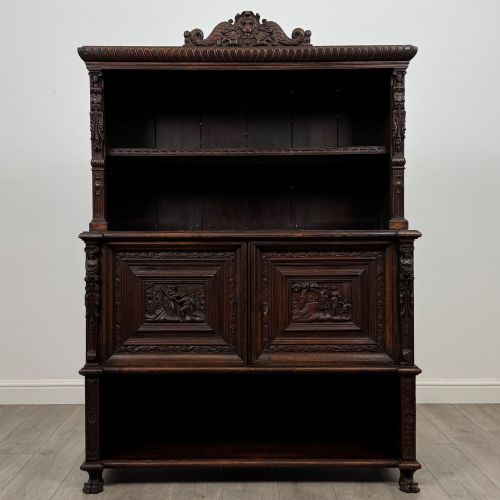
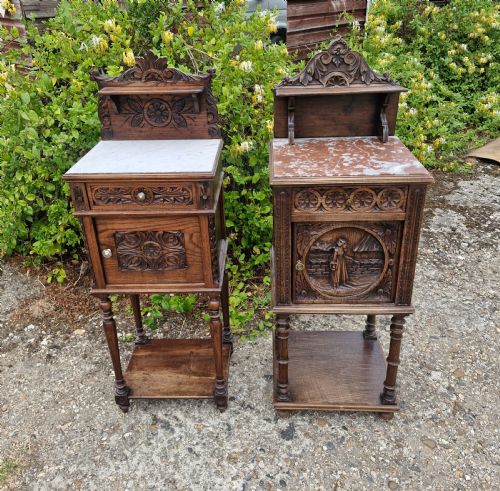
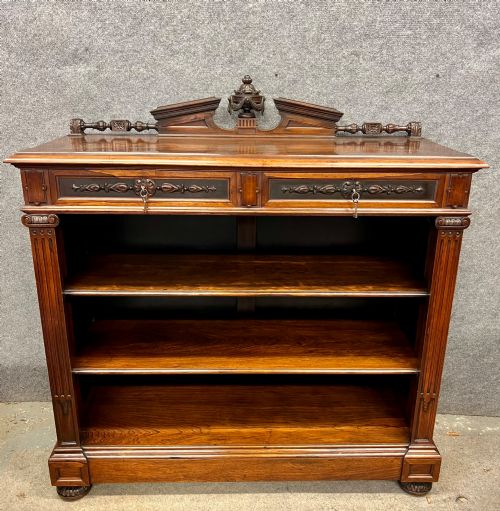


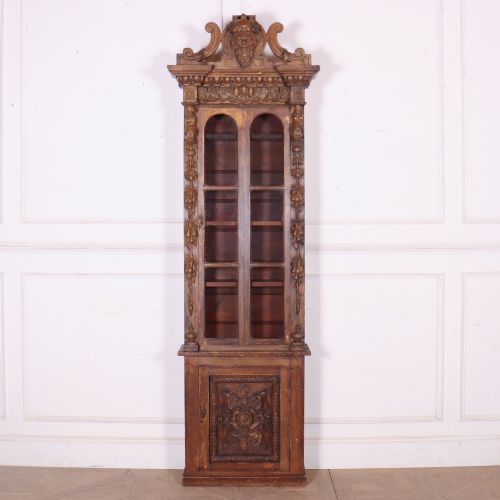


Victorian Renaissance Revival Cabinet
A victorian renaissance revival cabinet brings architectural authority and heavy carving to a room, offering both display space and substantial storage.
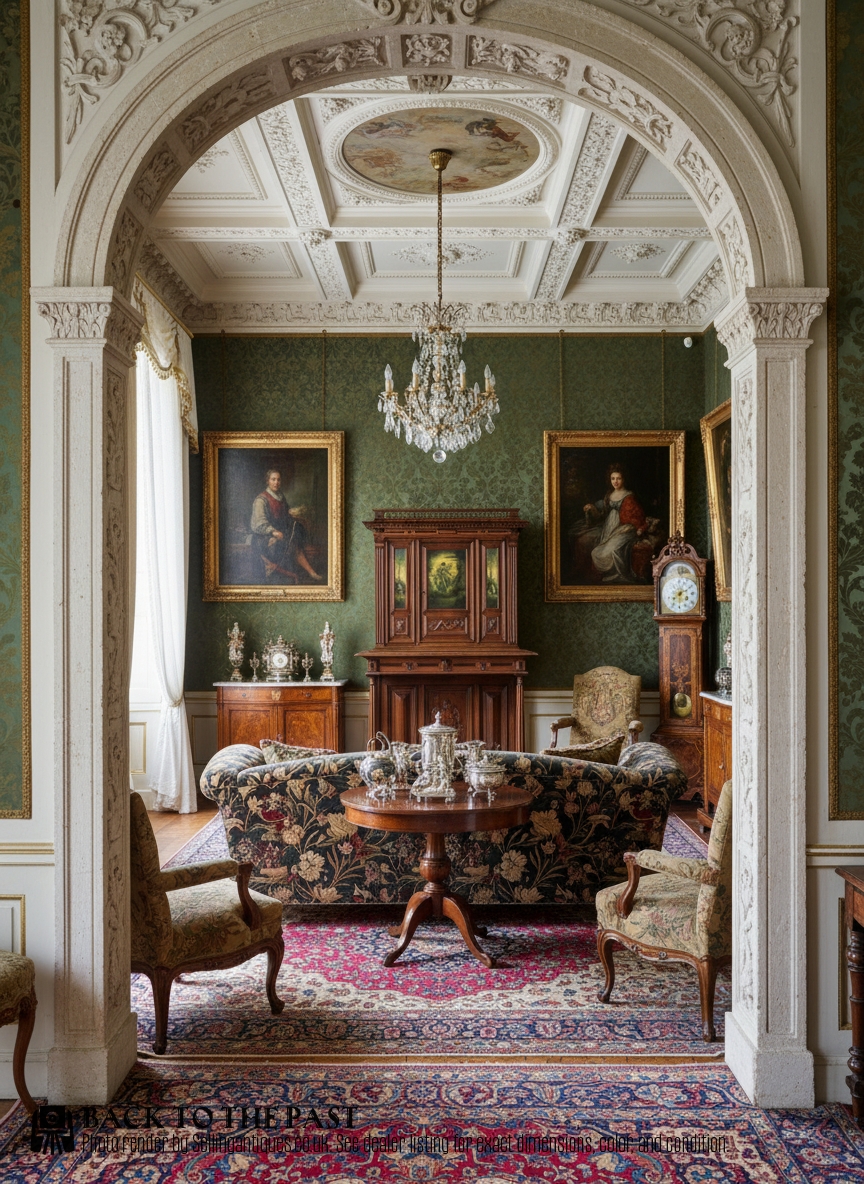
Victorian Renaissance Revival Cabinet
When you search for a victorian renaissance revival cabinet, you encounter sturdy pieces designed to project historicism through ornament. These furnishings emerge from the nineteenth century, drawing on classical and sixteenth-century continental motifs. They stand apart from lighter domestic furniture by virtue of their architectural presence.
The versions most commonly met on this page are carved from oak and walnut, taking the form of sideboards, bookcases, hall cupboards, and cabinets on stands. Many incorporate glazed doors, mirror backs, or fall-front desks alongside heavy cupboard bases. Their makers borrowed freely from Flemish and general continental Renaissance repertoires to satisfy Victorian tastes for grand, dark wood furniture.
How they were made
Carpenters constructed these pieces primarily in solid oak and walnut, occasionally turning to rosewood, amboyna, or pine for specific commissions. Construction relied on robust joinery capable of supporting heavy cornices, projecting plinths, and deep mouldings. Secondary timbers were employed for drawer linings and panel backs while keeping the exterior visually unified.
Carving defined the surface work, executed by hand with deep relief depicting lion masks, green men, and scrolling foliage. Inlayers added contrast using marquetry and mother-of-pearl, while metalworkers contributed brass panels, drop handles, and hinges. Glass panels were fitted into doors to allow the display of books or collections within secure architectural frames.
Stare long enough into the foliage of a green man carving and you will spot a small wooden smile grinning back from the nineteenth century.
What varies in quality
The ambition of the carving separates standard production from exhibition-grade work. Superior pieces display crisp, deep relief where figural elements such as green men and lion masks possess anatomical depth rather than flat surface decoration. Secondary details like marquetry inlay, brass mounts, and internal woodwork reveal the time invested by the workshop.
Proportion and scale dictate the visual success of each piece. Better cabinets balance massive cornices and heavily carved pilasters with harmonious overall dimensions, avoiding clumsy joins between upper display sections and lower cupboards. The choice of timber grain, particularly in figured walnut and quarter-sawn oak, further distinguishes superior examples.
Sigmund Jaray Wien·Wiggers
The Victorian Renaissance Revival Cabinet Glossary
- Renaissance Revival
- A nineteenth-century style that reinterprets sixteenth-century classical, Italian, and Flemish motifs. It relies on symmetrical layouts, architectural columns, and heavy relief carving.
- Green Man
- A sculptural motif depicting a human face disgorging or entwined with foliage and vines. It appears frequently as a grotesque on nineteenth-century carved woodwork.
- Marquetry
- The art of applying decorative veneer pieces of different woods, metals, or shells onto a structural surface to form pictures or geometric patterns. It provides contrasting colour without altering the timber plane.
- Breakfront
- A piece of furniture whose central section projects forward from the flanking wings. This configuration breaks the flat plane to create depth and shadow.
- Secretaire
- A desk or cabinet featuring a pull-down or drop-front writing flap that conceals small drawers and pigeonholes. It combines storage with a dedicated writing surface.
Victorian Renaissance Revival Cabinet: Frequently Asked Questions
What rooms suit a renaissance revival cabinet?
These substantial pieces anchor large dining rooms, libraries, and high-ceilinged entrance halls where their dark woods and heavy carvings hold space against expansive walls.
Their architectural character pairs well with other nineteenth-century furnishings and heavy textiles, though they also provide a striking focal point in more restrained interior schemes.
How do you maintain carved oak surfaces?
Dust regularly with a dry, soft cloth and apply a quality beeswax sparingly to nourish the timber and preserve its deep lustre. Avoid modern silicone sprays that can build up a sticky residue within the recessed areas of the carving.
Keep the wood away from direct heat sources and strong sunlight to prevent the timber from drying out and splitting over time.
What is the difference between a buffet and a sideboard?
A buffet traditionally refers to a lower storage piece designed primarily for serving food or storing table linen, often taking a simpler form.
Sideboards in the Victorian period frequently incorporated upper plate racks, mirror backs, or enclosed cabinets, offering greater height and a more monumental architectural display.
Can glazed cabinets safely hold heavy books?
Many of these pieces were constructed specifically as bookcases or libraries with sturdy internal shelving designed to bear the weight of large leather-bound volumes.
Checking the stability of the shelf supports and the solid wood construction ensures the interior can accommodate dense collections without sagging.