



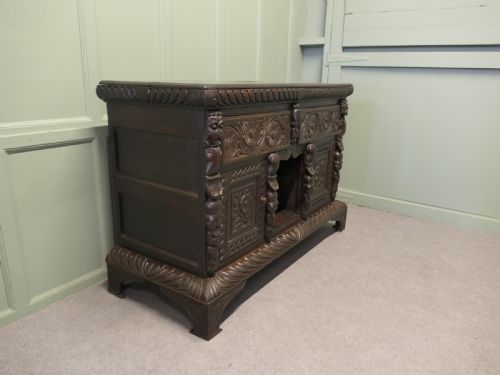


Heavy Carved Cabinet
A heavy carved antique cabinet brings solid presence into a room, offering robust storage shaped by nineteenth-century revival styles.
Heavy Carved Cabinet
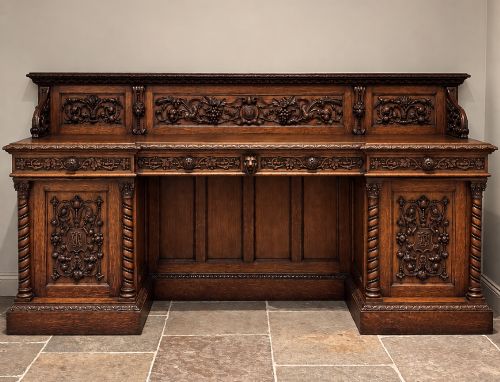
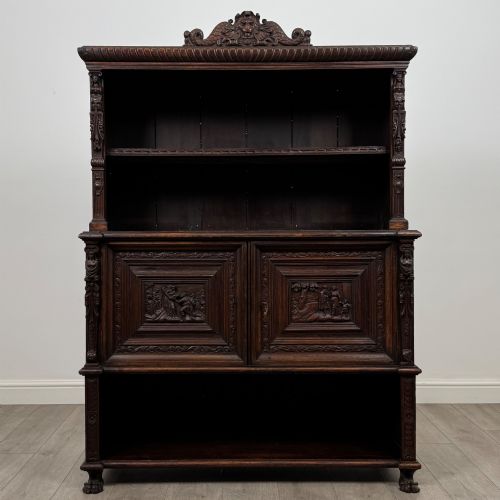
A heavy carved antique cabinet encompasses large storage forms such as sideboards, bookcases, and cupboards built during the nineteenth and early twentieth centuries. These pieces emerge in styles including Victorian, Renaissance Revival, and Gothic Revival, reflecting a strong historical interest in ornament.
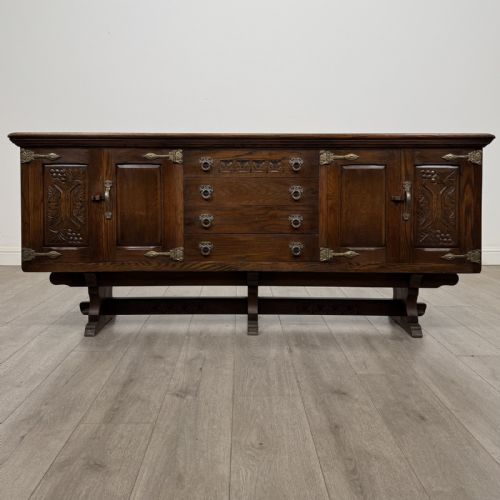
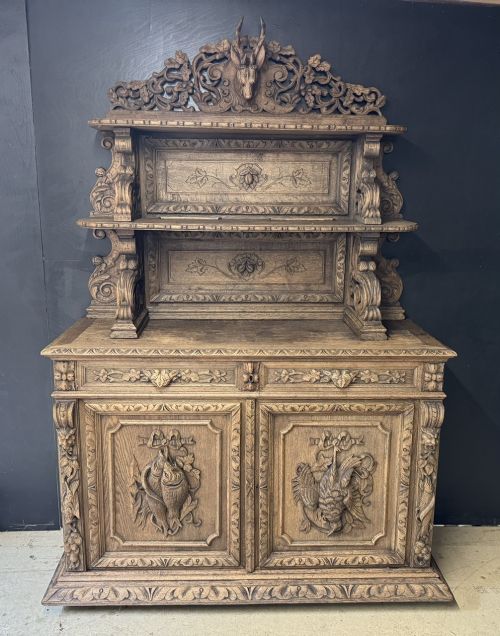
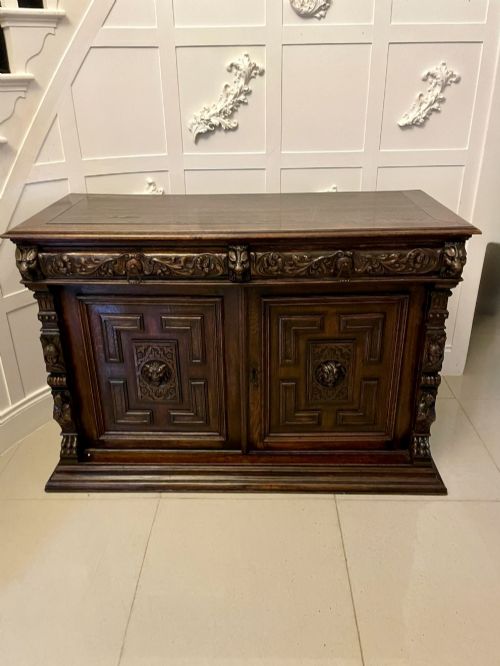
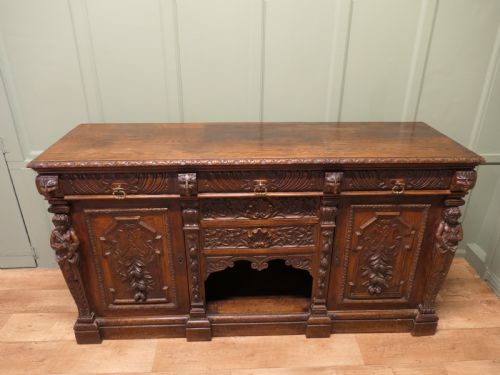
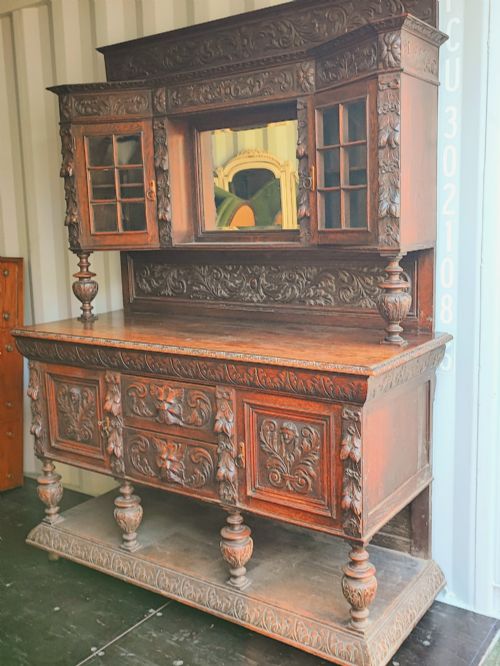
The version most commonly met on this page is the carved oak sideboard or cupboard, often dated to the 1880s or the broader Victorian period. They serve practical storage functions while displaying deep relief work on doors and panels.
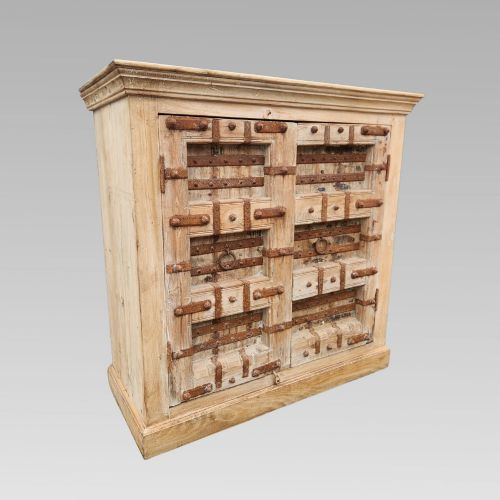
Makers drew on various regional and historical influences, producing French hunting sideboards, Flemish style cabinets, and traditional Indian reclaimed teak storage cupboards. Their sheer scale and dense carving suit them for large dining rooms and libraries.
What varies in quality
The depth and execution of the carving separate standard workshop output from exceptional examples. Crisp undercutting and naturalistic detail in foliage and figures require skilled hand labour rather than mechanical repetition.
Scale and proportion influence the standing of a piece, with monumental breakfront bookcases and documented country house sideboards representing the upper tier. The integration of secondary materials like mirror backs and bevelled glass adds complexity to the construction.
Heavy Carved Cabinet Retail Price Guide 2026
Typical asking prices for heavy carved cabinet among the pieces listed under this phrase on Sellingantiques today, from the lower quarter to the upper quarter. They describe what is for sale here now, not the wider market.
Listings feature nineteenth-century and early twentieth-century periods, utilising oak, teak, rosewood, and glass.
The Heavy Carved Cabinet Glossary
- Breakfront
- A piece of furniture whose central section projects forward from the flanking wings. This architectural arrangement creates varied shadow and depth across large sideboards and bookcases.
- Pollard Oak
- Timber taken from trees that have been pollarded, resulting in a dense, highly figured grain pattern. Cabinet makers used veneers and solid sections of this wood for decorative effect on prominent surfaces.
- Green Man
- A sculptural motif depicting a human face entwined with or emerging from foliage. It appears frequently as a carved detail on nineteenth-century oak furniture.
- Court cupboard
- A traditional form of enclosed storage featuring a recessed upper stage supported by pillars. Nineteenth-century interpretations adapt this form with heavy revival carving.
Heavy Carved Cabinet: Frequently Asked Questions
Where should I place a heavy carved cabinet?
These substantial pieces require sturdy flooring and adequate wall space to accommodate their depth and height. They anchor large dining rooms, hallways, and libraries effectively.
Ensure the room has sufficient light to highlight the deep relief carving and dark timber tones without overwhelming smaller spaces.
What is the difference between a sideboard and a buffet?
Sideboards traditionally combine enclosed cupboard space with drawers and sometimes upper mirror or shelf sections for serving and display. Buffets generally offer lower, heavier storage capacity with fewer upper tiers.
Both forms utilise robust oak construction and extensive carving within nineteenth-century contexts.
How do I care for antique oak furniture?
Maintain stable indoor humidity levels to prevent the solid oak timbers from drying out or splitting. Avoid placing the cabinet near direct heat sources or strong sunlight.
Dust regularly with a dry cloth and apply appropriate wax sparingly to preserve the finish of the carved surfaces.