
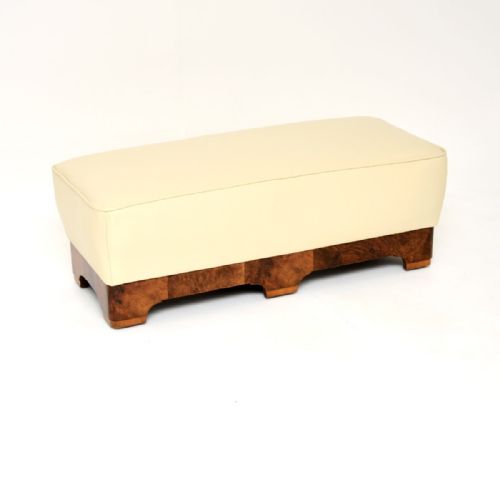
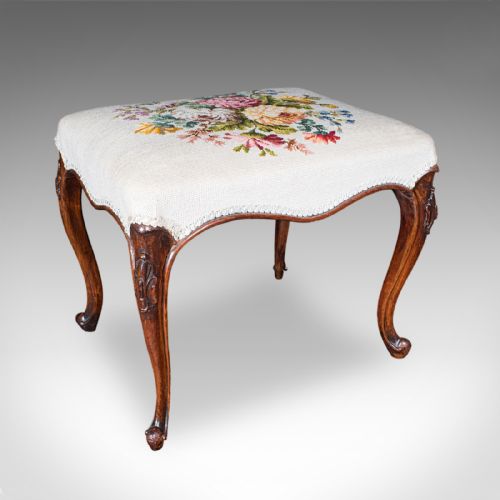
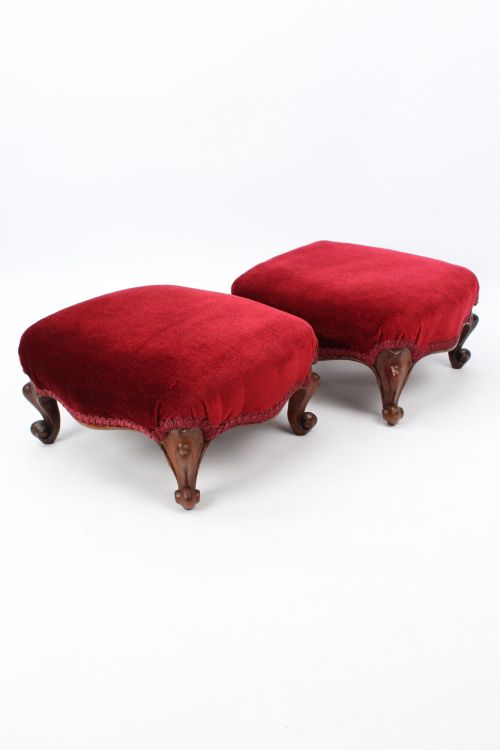
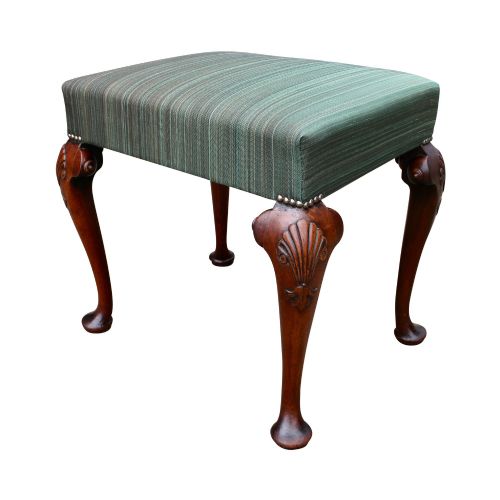
Walnut Upholstered Footstool
These walnut upholstered footstools combine rich timber frames with varied textile coverings to offer both comfort and period character.

What walnut upholstered footstools are
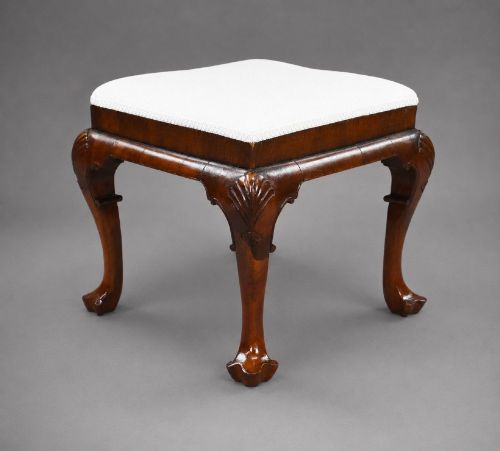
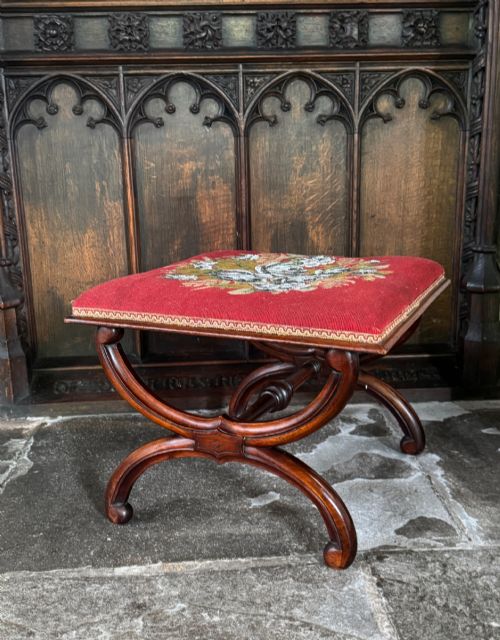
A walnut upholstered footstool provides a supportive platform for resting feet while seated, taking forms ranging from compact individual gout stools to longer fireside seats. These pieces appear across several distinct historical eras, including the eighteenth century and the Victorian period, reflecting evolving domestic comforts.
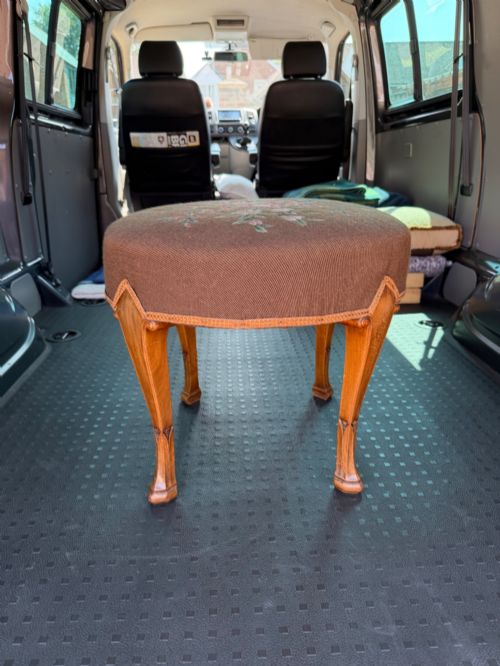
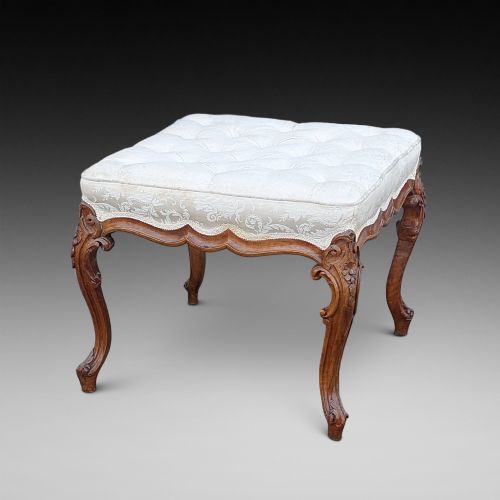
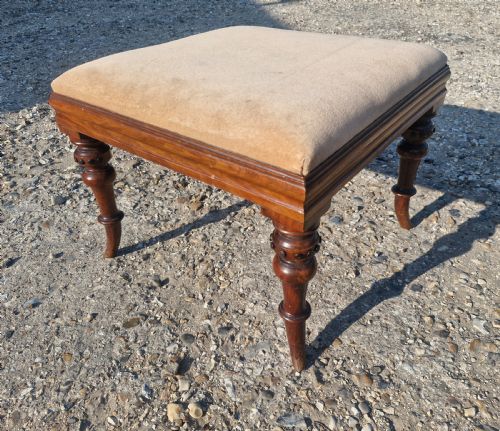
The most common versions met on this page belong to the Victorian era, alongside revival pieces that draw upon earlier stylistic traditions. Makers produced both square and circular formats, often pairing the low wooden framework with patterned textile upholstery.
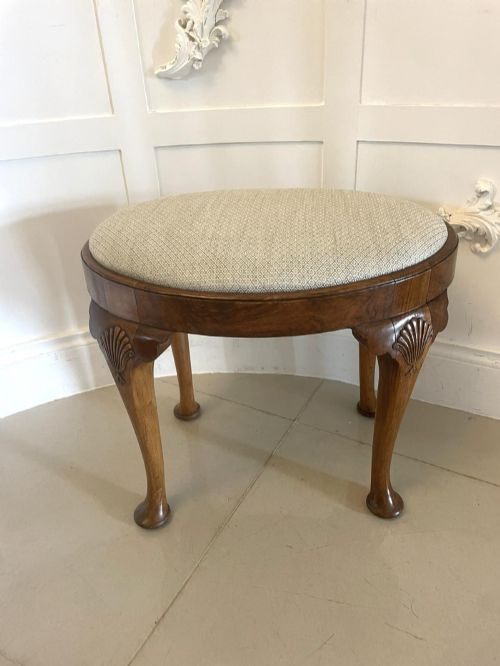
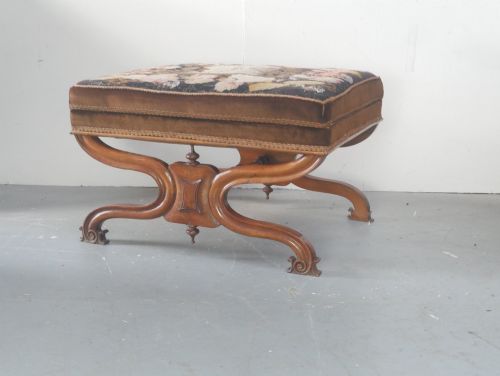
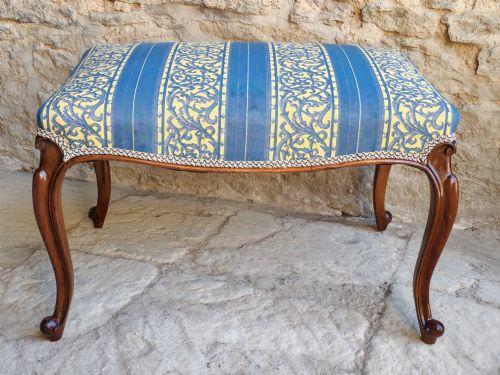
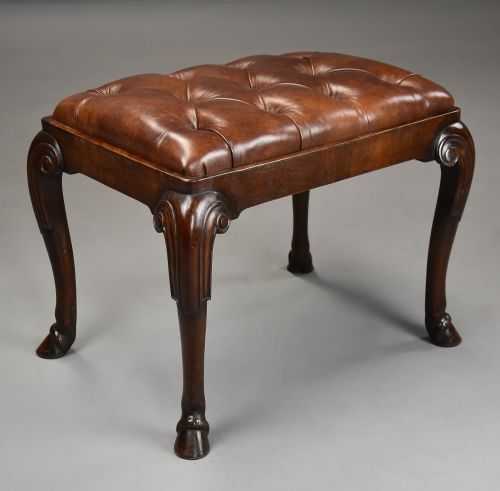
On this page, buyers encounter diverse iterations including cabriole-legged examples, freestanding carved forms, and matched pairs. These functional items served various rooms, functioning as fireside companions, dressing table accessories, and window seats.
How walnut upholstered footstools were made
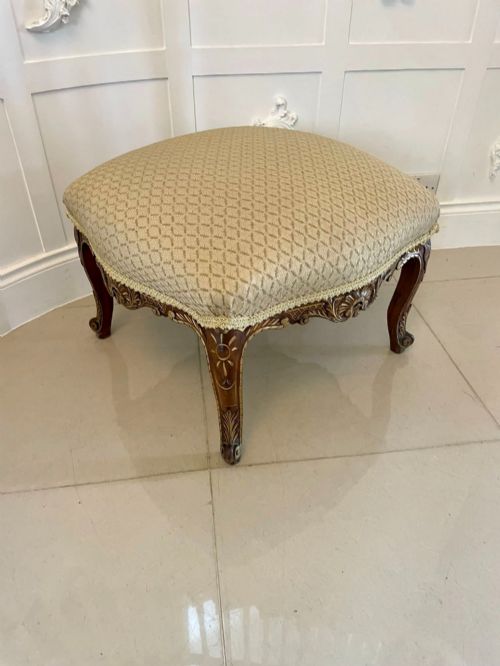
Craftsmen shaped the supporting frames from solid walnut, often applying carved ornamentation to the structural wood. Cabriole legs and distinct profiles emerged through traditional joinery and woodcarving techniques.
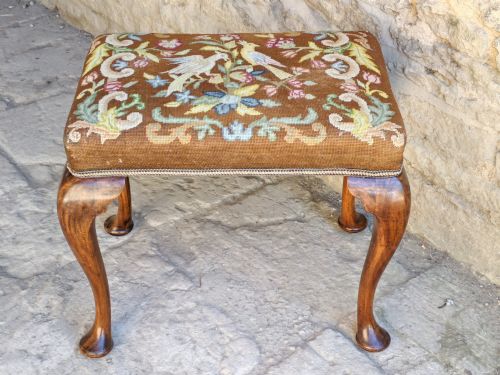
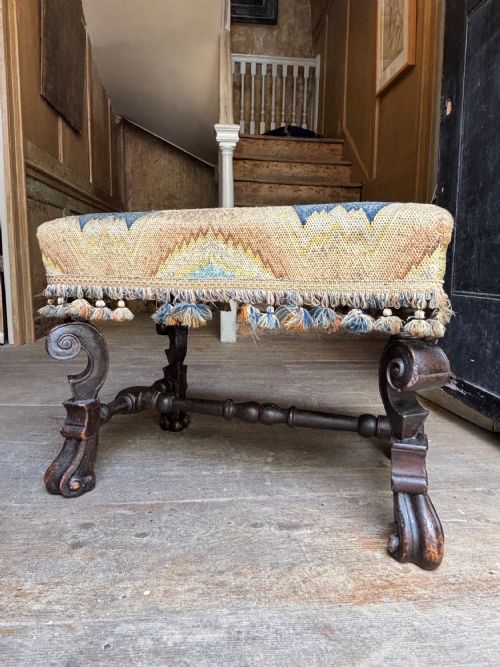
Upholstery completed the upper surface, utilising materials such as velvet, fabric, and tapestry. Artisans secured these textiles using brass tacks and finished the edges with decorative textile braid.
Retail Price Guide 2026
Typical UK retail prices for walnut upholstered footstool, calculated from the Sellingantiques database of over a million retail prices indexed since 2003. This retail price guide relies exclusively on Sellingantiques data; no external sources or auction records are used, so the figures do not describe the wider market.
Listings feature walnut timber combined with textiles, velvet, tapestry upholstery, and brass tacks across nineteenth-century and eighteenth-century periods.
What varies in quality in walnut upholstered footstools
The distinction between standard examples and finer pieces rests in the execution of the timber frame and the complexity of its carving. Superior items display deep, crisp carving upon the walnut, particularly around the legs and framework.
The integrity of the upholstery and the choice of covering material further separate ordinary stools from exceptional ones. Pieces retaining fine period textiles, meticulous brass tack work, and well-preserved structural joins command greater appreciation.
The Walnut Upholstered Footstool Glossary
- Walnut
- A dense, dark hardwood valued for its rich grain and durability in furniture construction. It provides the primary structural material for the frames seen in these pieces.
- Cabriole leg
- A furniture leg featuring a double curve, typically bowing outward at the knee and inward at the ankle. This design is frequently found on period stool frames.
- Tapestry upholstery
- A heavy, hand-woven or jacquard fabric depicting pictorial or geometric designs. It is often utilised to cover the seats of period footstools.
- Gout stool
- A specialised low stool designed to elevate the feet and legs of individuals suffering from joint ailments. These items form a distinct subset of the footstool category.
- Brass tacks
- Small metal fastening pins with rounded heads used to secure fabric to wooden frames. They frequently provide a decorative border along the edge of the upholstery.
Frequently Asked Questions
What is a walnut upholstered footstool used for?
These pieces served multiple domestic functions, primarily providing support for resting feet by a fireplace or assisting at a dressing table. Longer variants also functioned as low window seats in period rooms.
Today, they integrate easily into modern interiors as movable seating or low display surfaces while retaining their historical utility.
How do I identify a Victorian walnut footstool?
Victorian examples typically exhibit darker walnut framing, often featuring carved details, cabriole legs, or revival stylistic influences. Examination of the timber and construction methods helps distinguish them from later reproductions.
The presence of period textiles, traditional brass tacks, and authentic wear on the wooden feet also points toward nineteenth-century origins.
What are gout footstools?
Gout footstools are specialised, low-profile seating items historically designed to elevate the feet of those requiring joint support. They are often circular or compact in shape.
These pieces share the same walnut construction and textile upholstery as standard footstools but serve a more specific historical health function.
How should I care for antique upholstery?
Preserving the fabric involves gentle dusting and protection from direct sunlight to prevent fading of the textile or tapestry. Regular, careful maintenance ensures the integrity of the covering endures.
The underlying wooden frame benefits from occasional appropriate polishing to maintain the condition of the walnut surface without harming the surrounding fabric.