
Walnut Tripod Occasional Table
A walnut tripod occasional table brings compact warmth and centuries of craftsmanship to a room.
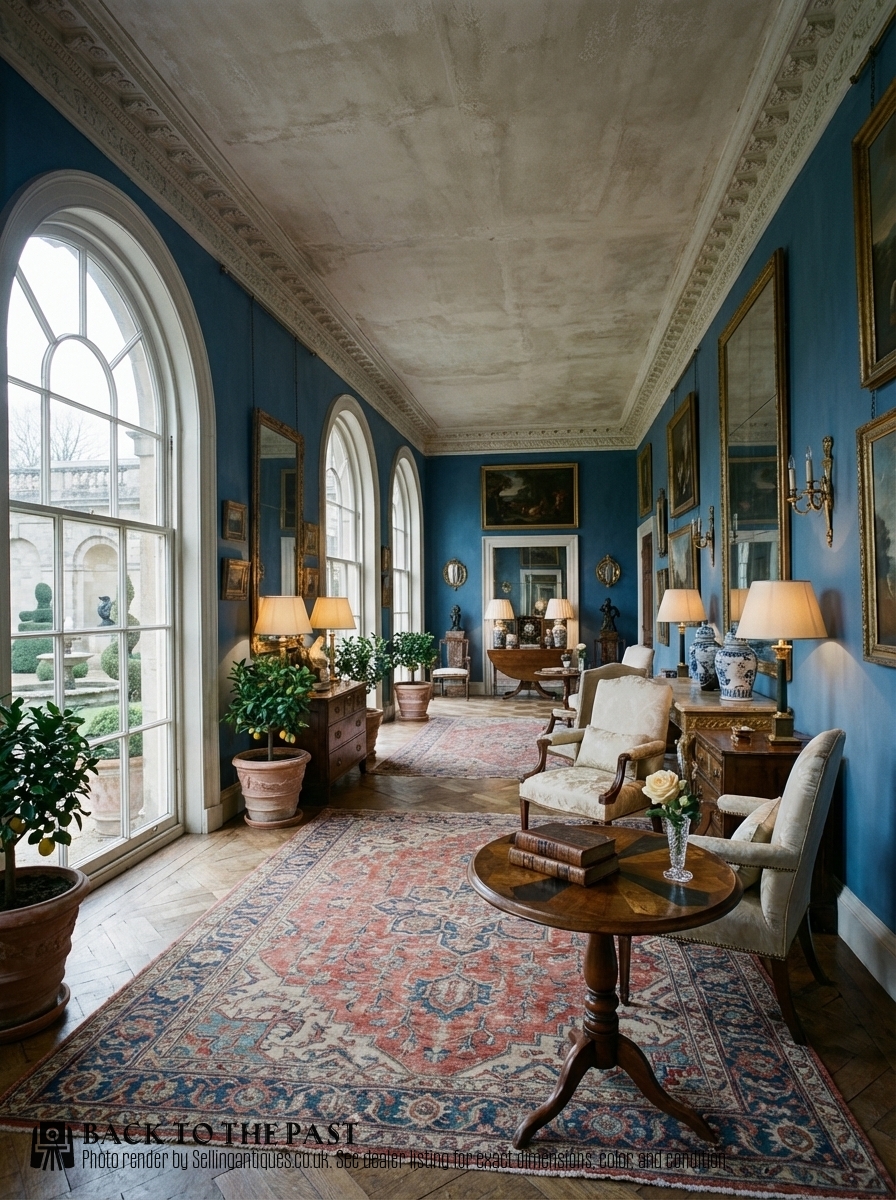
Walnut Tripod Occasional Table
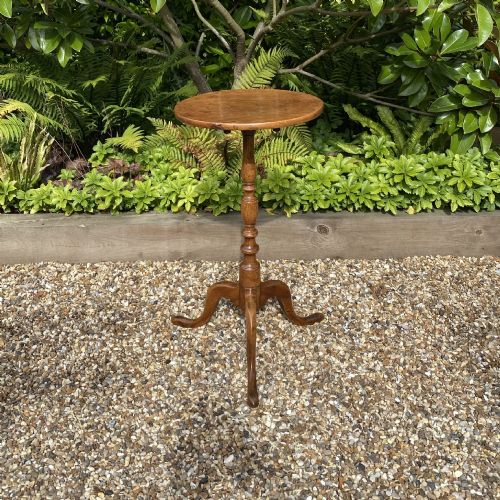
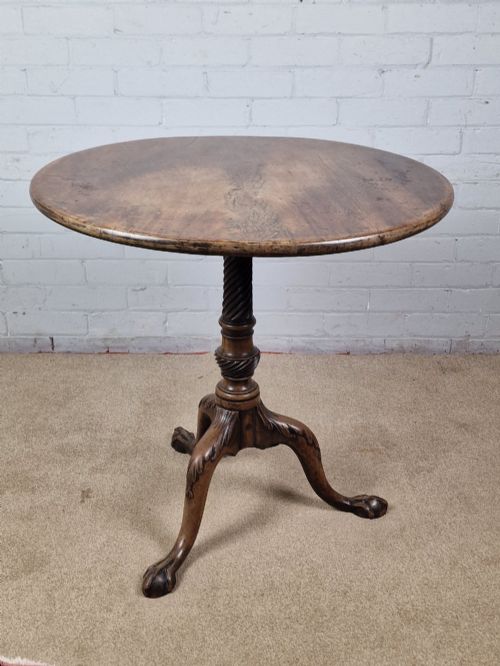
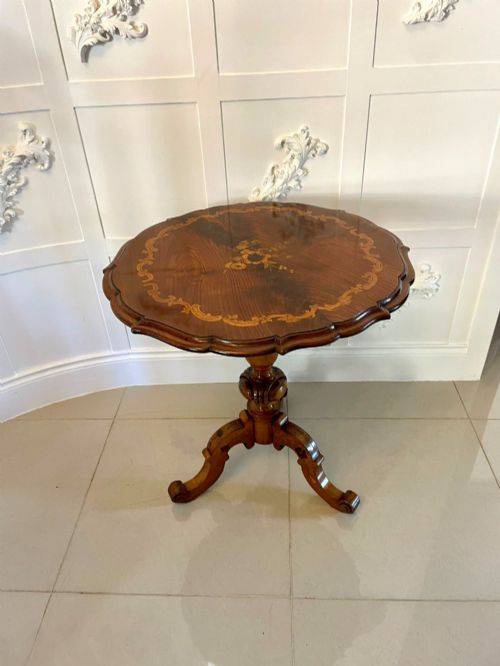
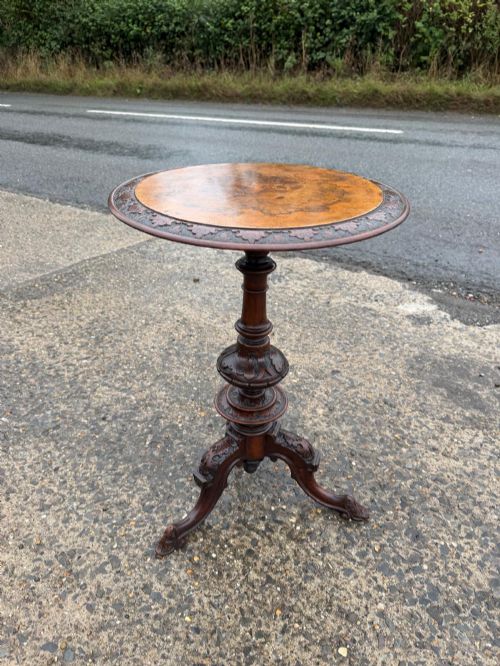
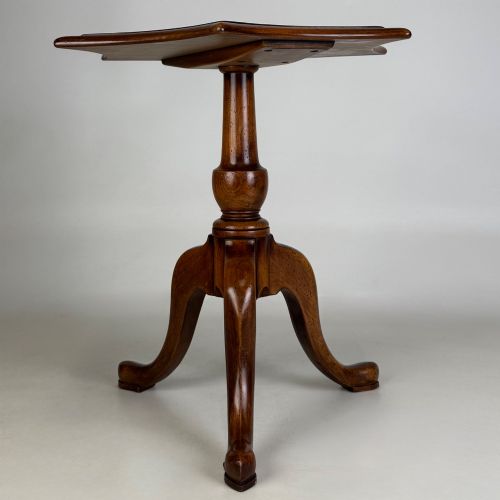
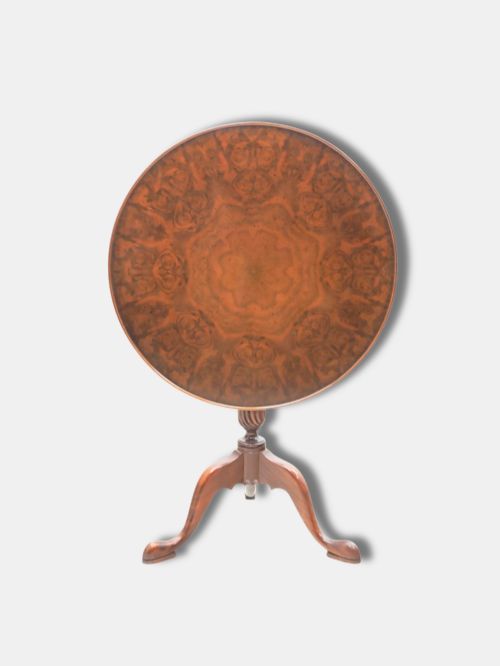
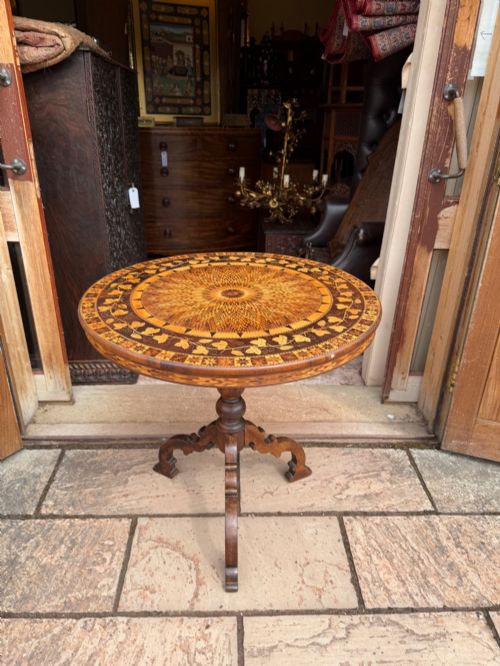
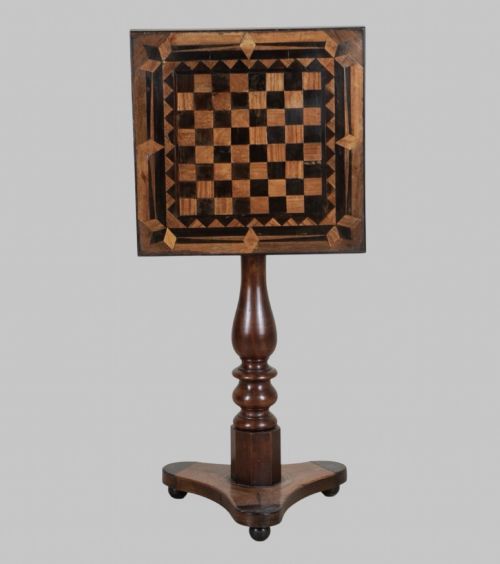
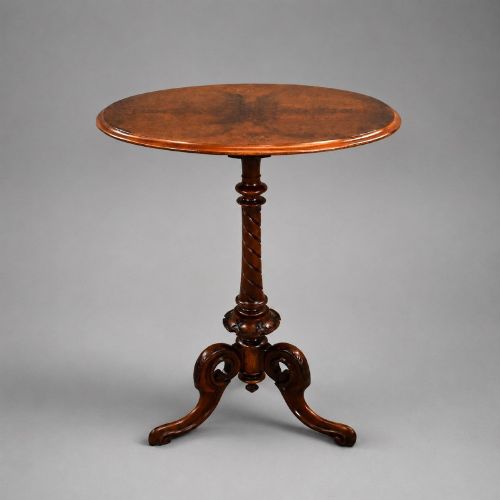
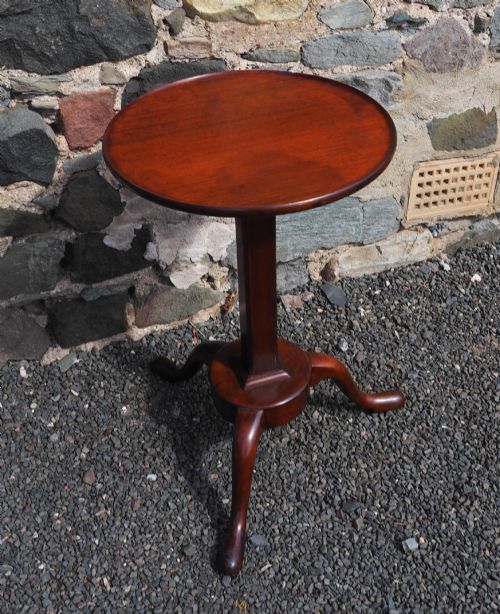
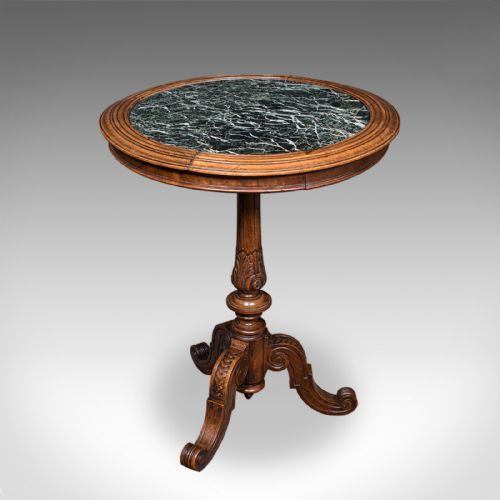
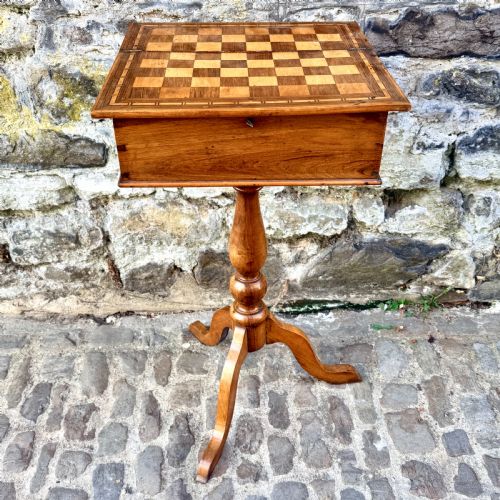
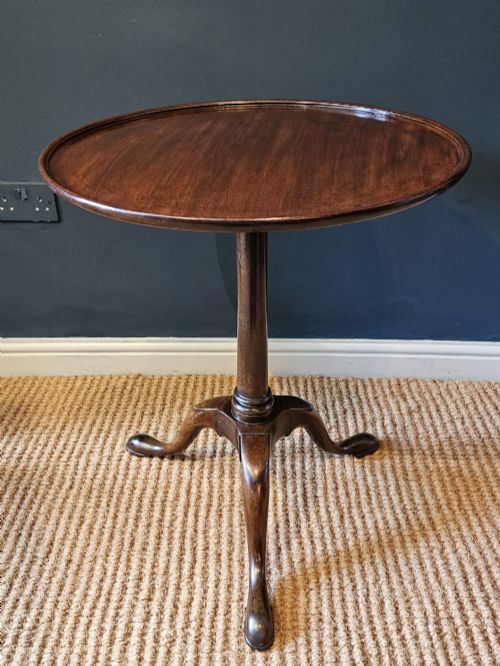
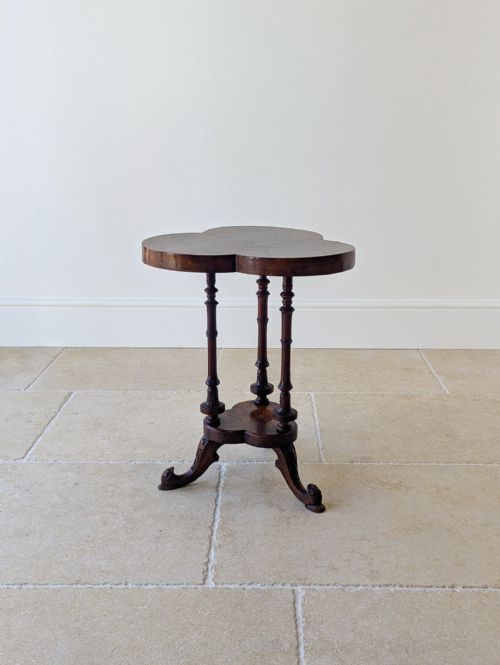
A walnut tripod occasional table is a small, versatile piece designed for mobility and display, featuring a central pillar supported by three legs. When you search for a walnut tripod occasional table, you meet a range of forms including wine tables, lamp tables, and tilt-top tables. The selection spans the Georgian era through to the Victorian period and the early twentieth century.
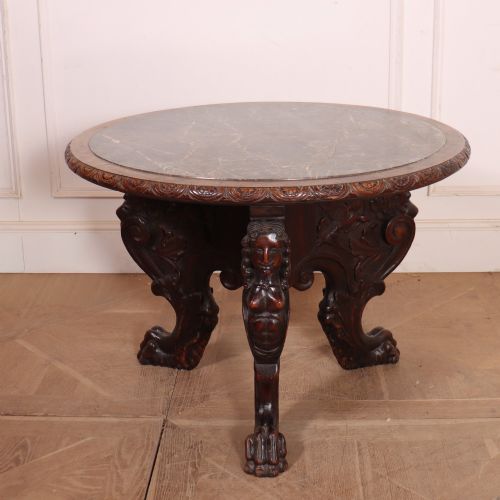
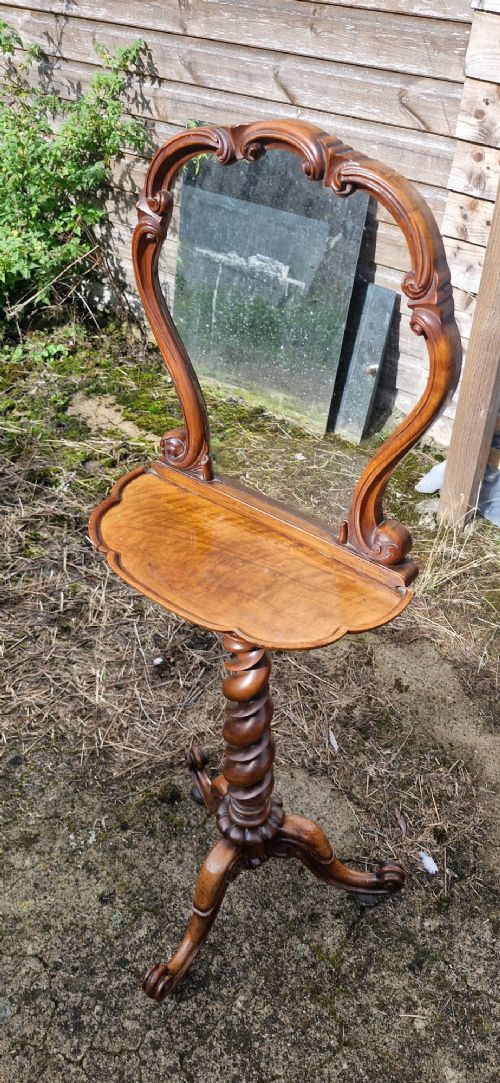
Victorian examples in burr walnut dominate the selection, often displaying rich grain patterns and inlaid marquetry or specimen woods. Pieces stretch from modest domestic items to elaborate tables with galleried edges or carved pedestals. English and Irish workshops feature heavily alongside continental pieces such as Italian Sorrento tables and French provincial designs.
How they were made
Cabinet makers utilised solid walnut, burr walnut veneers, and occasionally red walnut or fruitwood, paired with mahogany or secondary timbers for internal structures. Burr walnut provided dense, highly figured surfaces that were cut and arranged to create symmetrical patterns on tabletop fascias.
Inlay techniques involved marquetry using various contrasting woods like tulipwood and yew, while some tops incorporated marble, onyx, or glass panels. Turned central columns met three swept tripod legs, frequently secured with tilt mechanisms or snap-top hinges.
Some Victorian wine tables feature subtle glass backs, perhaps designed to reflect candlelight or hold stray drops from spirited gatherings.
What varies in quality
The distinction between ordinary and superior pieces rests on the choice of timber and the precision of decorative work. Highly figured burr walnut veneers and crisp marquetry inlay separate standard utility tables from finer parlour pieces.
Proportion and stability define the construction standard, seen in the balance of the central column against the three swept legs. Fine turning on the pedestal and well-executed edge details like pie crust carving or bobbin galleries elevate a piece.
The Walnut Tripod Occasional Table Glossary
- Burr walnut
- A figured wood obtained from the wart-like growths on walnut trees, prized for its swirling grain patterns.
- Tilt top
- A tabletop mounted on a hinge mechanism that allows it to fold vertically when not in use.
- Tripod table
- A small table supported by a single central pedestal resting on three spread legs.
- Marquetry
- Decorative veneer work arranged in geometric or pictorial patterns across the surface of the timber.
- Galleried edge
- A raised border around the perimeter of a tabletop, often pierced or turned in wood, designed to keep objects from sliding off.
Walnut Tripod Occasional Table: Frequently Asked Questions
What is a walnut tripod occasional table used for?
These tables served various domestic purposes historically, acting as stands for lamps, wine glasses, or reading materials. Their compact footprint made them easy to move around a drawing room or parlour.
Today, they function well as bedside tables, lamp stands in living areas, or display surfaces for decorative items in narrow hallways.
How do I date a walnut tripod table?
Dating relies on observing construction methods, timber choices, and stylistic cues present in the legs and pedestal. Georgian pieces often show simpler, robust forms with red walnut, while Victorian examples frequently utilise burr walnut veneers and elaborate marquetry.
Secondary woods, fixing types, and wear patterns also help establish the approximate period of manufacture alongside recorded historical styles.
How do I care for antique walnut furniture?
Protecting walnut surfaces requires keeping tables away from direct sunlight and steady heat sources to prevent the burr veneers from drying out or splitting. Gentle dusting with a dry, soft cloth maintains the finish without stripping natural oils.
Occasional application of appropriate wax polish preserves the sheen of the timber and highlights the depth of the grain.