

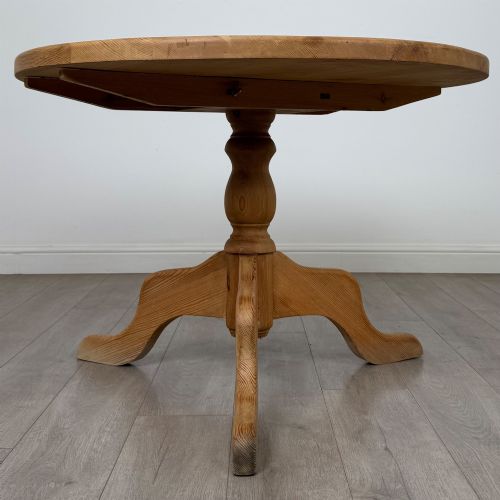
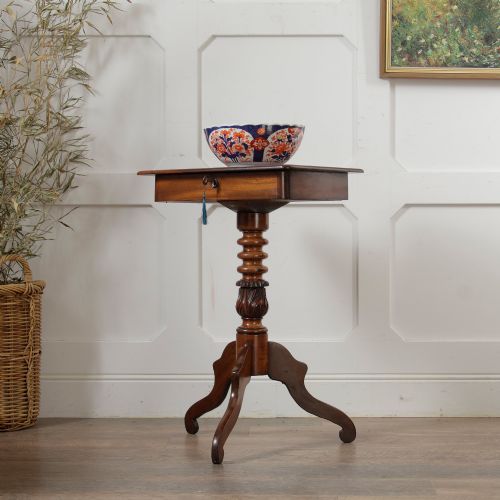
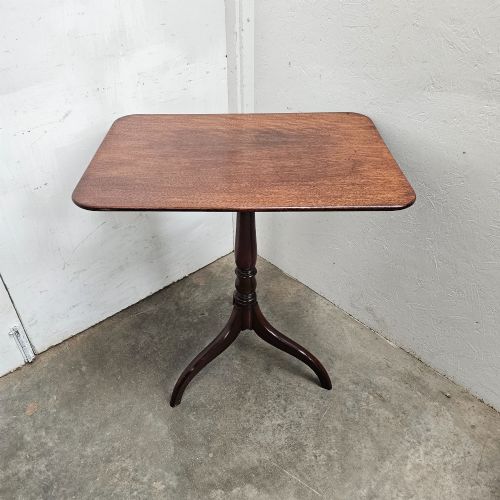
Victorian Turned Pedestal Table
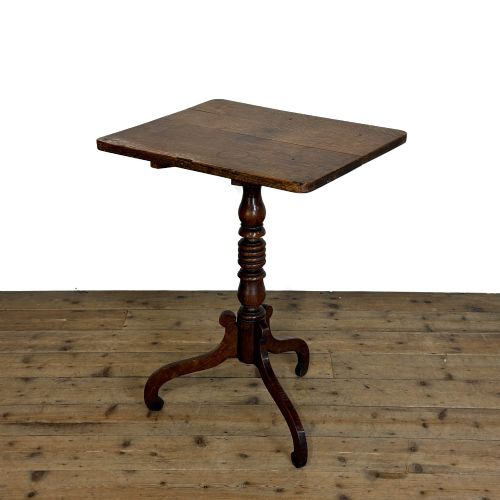
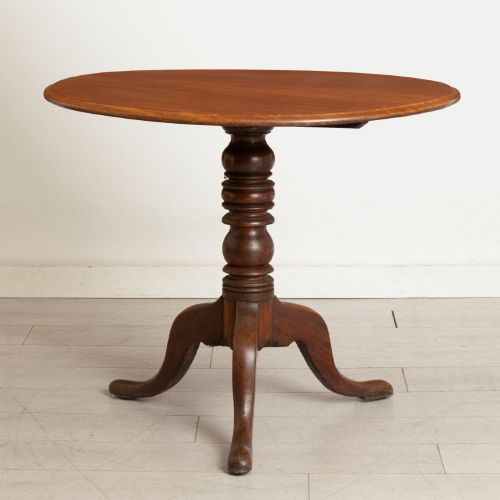
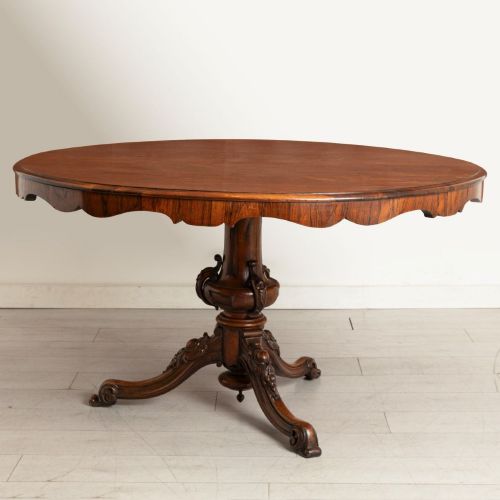
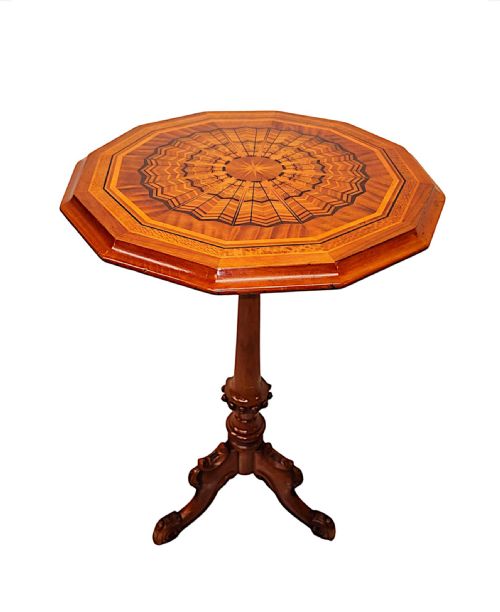
A victorian turned pedestal table brings sturdy utility and rich nineteenth-century timber into a room without dominating the floor space.
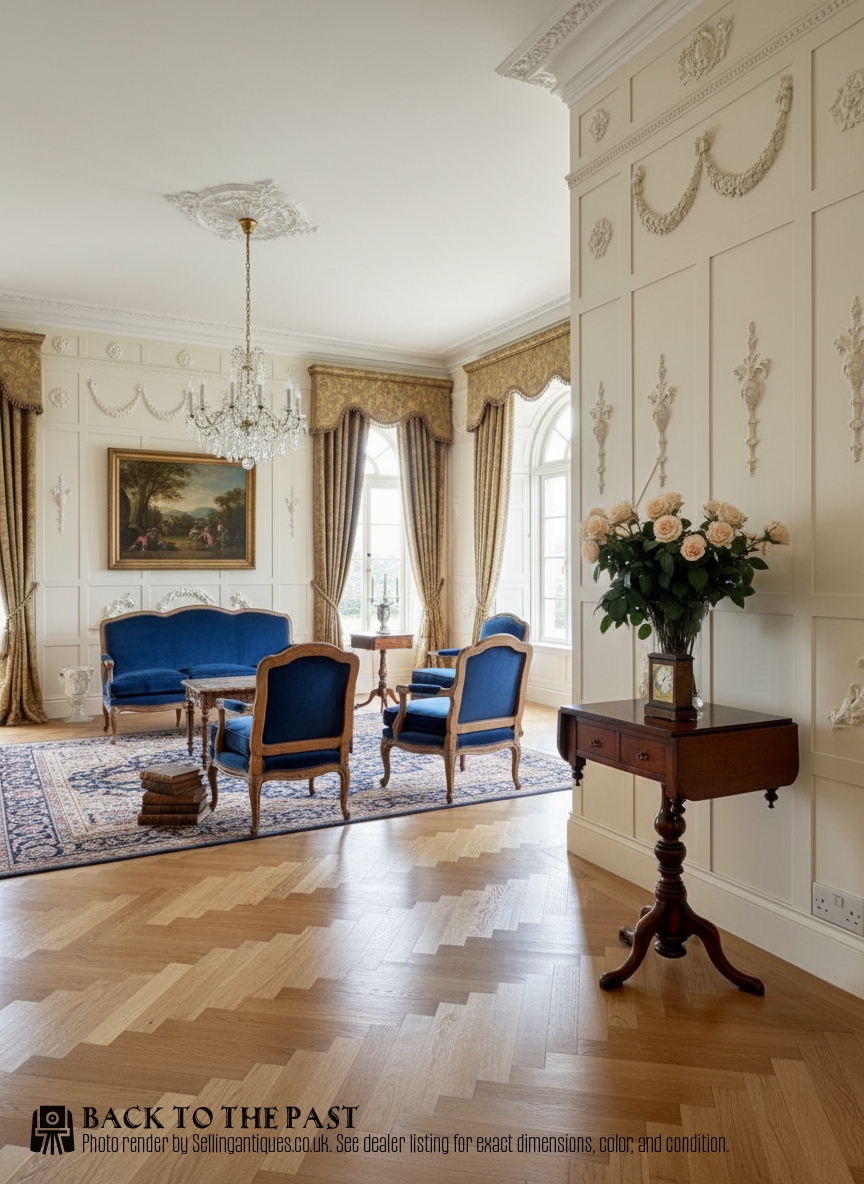
Victorian Turned Pedestal Table
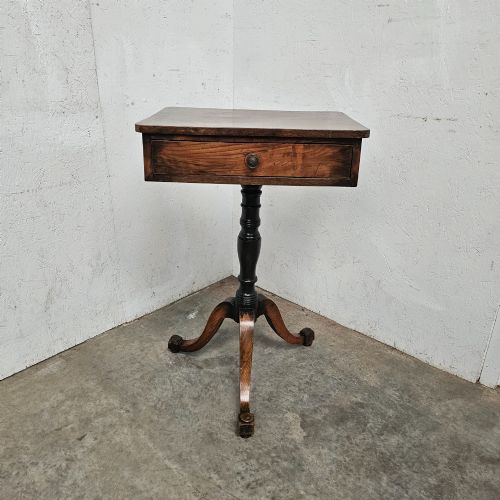
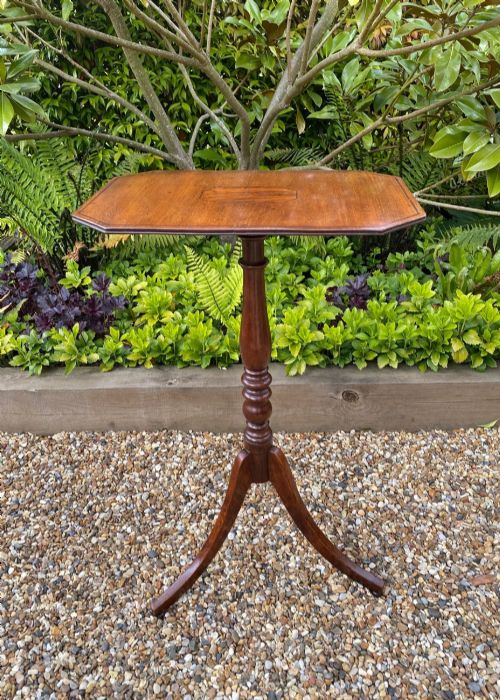
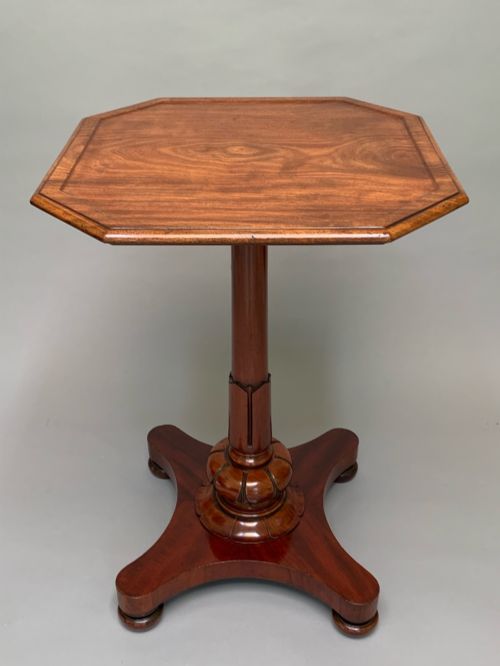
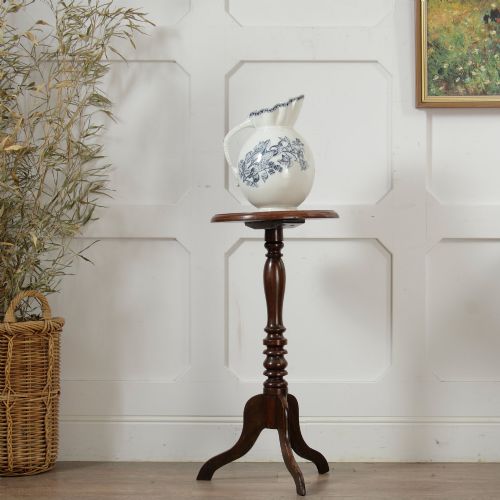
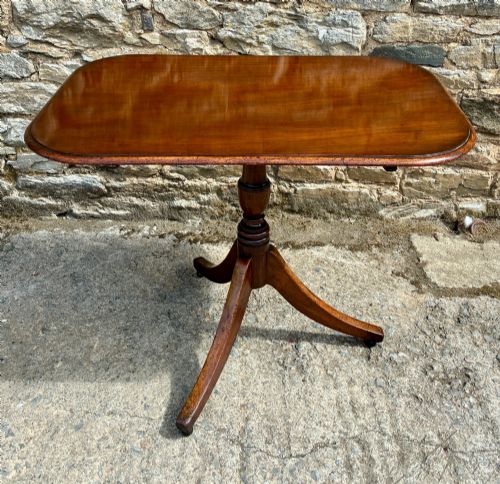
A victorian turned pedestal table is a compact form designed for occasional use, wine service, or bedside holding, typically supported by a central column resting on three feet. The pieces appearing here span side tables, wine tables, and occasional stands from the nineteenth century, including specific Victorian examples.
Most entries showcase the characteristic central shaft turned on a lathe, often paired with circular tops that tilt on a birdcage or catch mechanism. Makers of the period drew on Georgian traditions while introducing heavier mouldings or delicate bobbin turning suited to smaller domestic interiors.
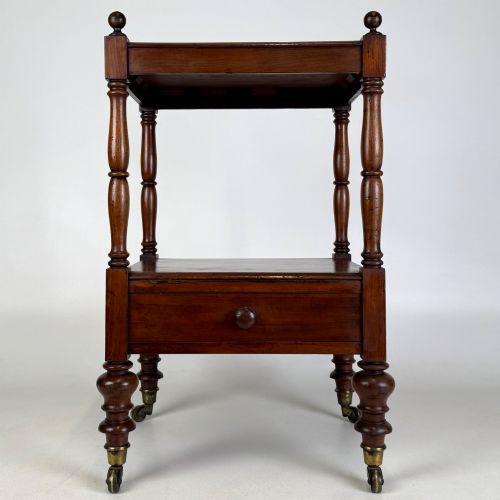
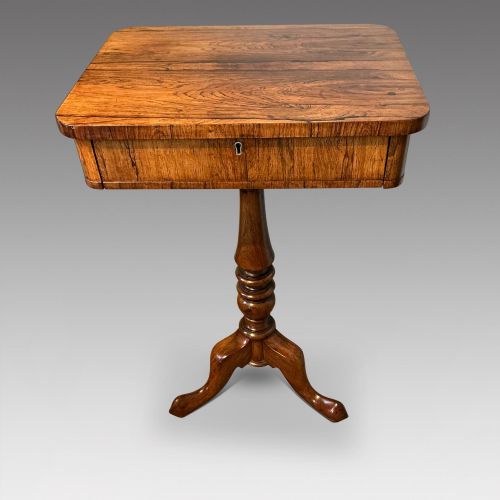
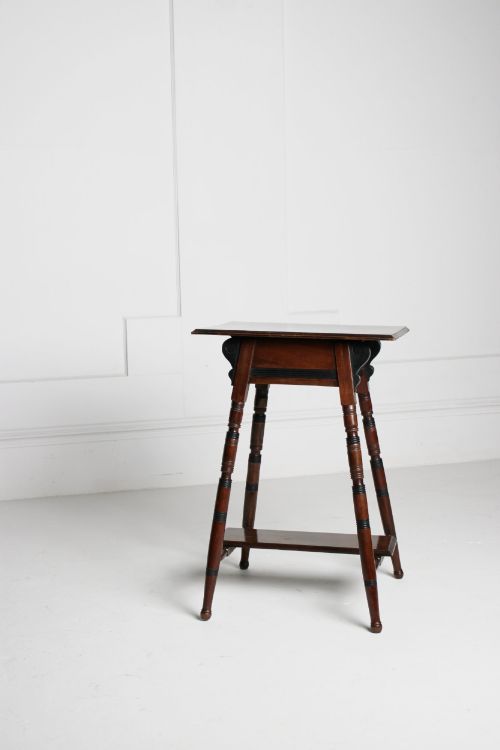
Alongside standard tripod wine tables, the selection includes sewing tables with drawers, breakfast tables in pine or mahogany, and occasional tables bearing the stylistic marks of the Aesthetic Movement. Mahogany and walnut dominate the offerings, occasionally supplemented by rosewood, oak, and specimen timbers.
How they were made
Cabinet makers utilised dense hardwoods such as mahogany, walnut, and rosewood for durability and fine turning capabilities, frequently mounting tops onto solid turned pedestals. Where lighter timbers like pine or elm appear, construction relies on traditional joinery and sturdy pegging to withstand daily weight.
The central columns display detailed lathe work, ranging from simple vase profiles to complex bobbin and barley twist turnings. Tripod bases are commonly jointed into the base of the pedestal with dovetail or tenon fixings, ensuring stability for the tilting or fixed tops above.
Listings feature nineteen-century pieces primarily in mahogany and walnut, with occasional examples in rosewood, oak, pine, and elm.
What varies in quality
Quality rests heavily on the selection of timber grain, the precision of the lathe turning on the central shaft, and the integrity of the joints connecting the pedestal to the legs. Superior examples exhibit tightly figured mahogany or burr walnut veneers, clean and crisp turning work without excessive sanding wear, and stable mechanisms for any tilting tops.
Lesser pieces may show coarser secondary timbers, poorly fitted tilt mechanisms that wobble in use, or replacement feet that disrupt the proportions of the original base. The execution of decorative elements, such as inlaid satinwood or carved details on solid rosewood, further separates standard production items from workshop pieces bearing maker attributions.
Gillows·Druce and Co·Shoolbred·Liberty
The Victorian Turned Pedestal Table Glossary
- Tilt top
- A table top hinged to the pedestal so it can tilt vertically for storage against a wall when not in use. This clever mechanism often relies on a wooden catch or a birdcage assembly.
- Tripod base
- A three-legged support structure radiating from the bottom of the central pedestal. It maintains firm contact on uneven nineteenth-century floors better than a four-legged frame.
- Birdcage
- A revolving wooden framework beneath the table top that allows the surface to both rotate and tilt. It consists of two parallel discs connected by small miniature pillars.
- Bobbin turning
- A form of lathe work characterised by a series of rounded, spool-shaped segments alternating with narrow collars. This style gained particular popularity during the Victorian era for sewing and side tables.
- Aesthetic Movement
- A late nineteenth-century design style rejecting heavy Victorian ornamentation in favour of simplicity and artistic harmony. Pieces from this movement often feature ebonised wood or Moorish influences.
Victorian Turned Pedestal Table: Frequently Asked Questions
What is a tilt top table used for?
A tilt top table served primarily as an occasional piece that could be pushed out of the way against a perimeter wall when the floor space was needed for other activities.
In nineteenth-century parlance, these pieces functioned as wine tables or lamp stands during evening hours before being folded flat and stored.
How do I date a Victorian pedestal table?
Dating relies on examining the secondary woods, the style of the turning on the central pedestal, and assembly marks left by the workshop.
Victorian pieces often feature machine-sawn components and heavier proportions compared to earlier Georgian prototypes, while late nineteenth-century examples may display Aesthetic Movement styling.
Are all turned pedestal tables mahogany?
While mahogany is the most common timber found across these nineteenth-century listings, makers also utilised walnut, rosewood, oak, pine, and elm.
Some exceptional items incorporate specimen woods or ebonised finishes to mimic rarer materials or suit contemporary decorative tastes.
Can I use a wine table as a bedside stand?
The compact footprint and stable tripod base make these small tables ideal for holding a reading lamp or a glass of water beside a bed.
Their height generally matches standard nineteenth-century seating and sleeping furniture levels comfortably.