



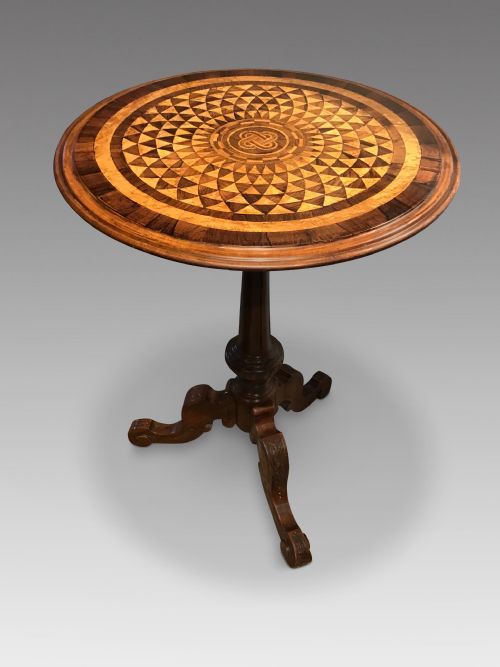
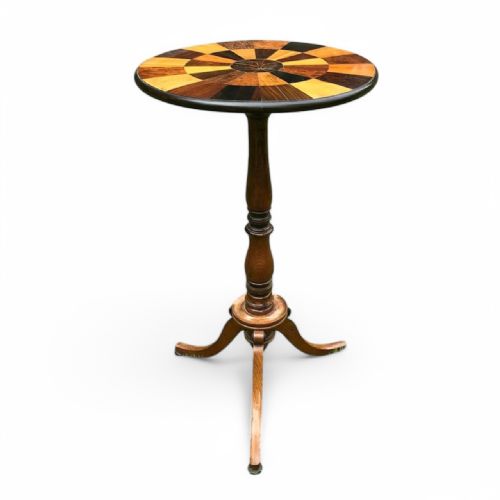
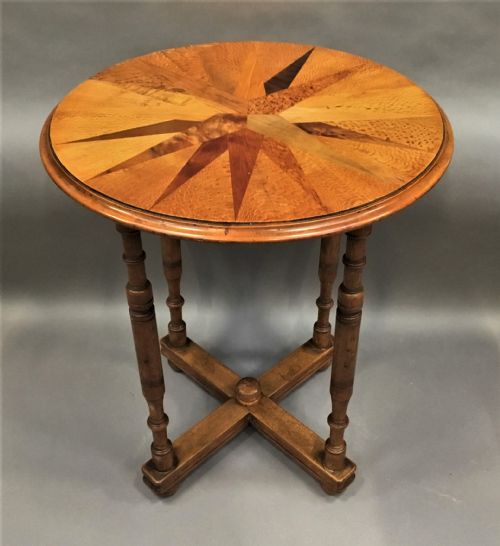


Victorian Parquetry Wine Table
A Victorian parquetry wine table brings together meticulous geometric timber work and the compact elegance of a 19th-century tripod base.
Victorian Parquetry Wine Table
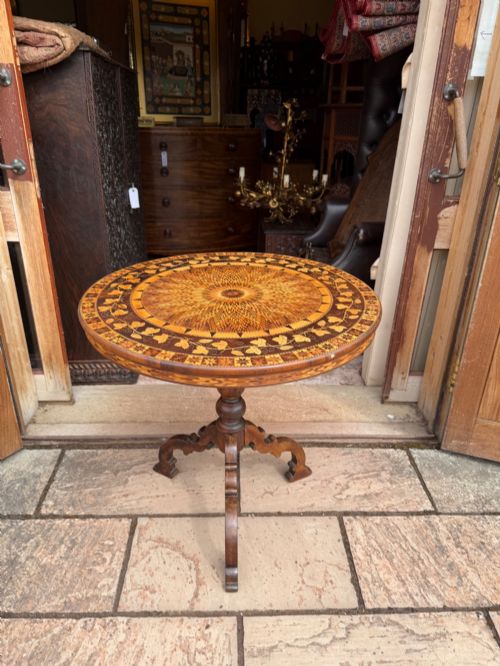
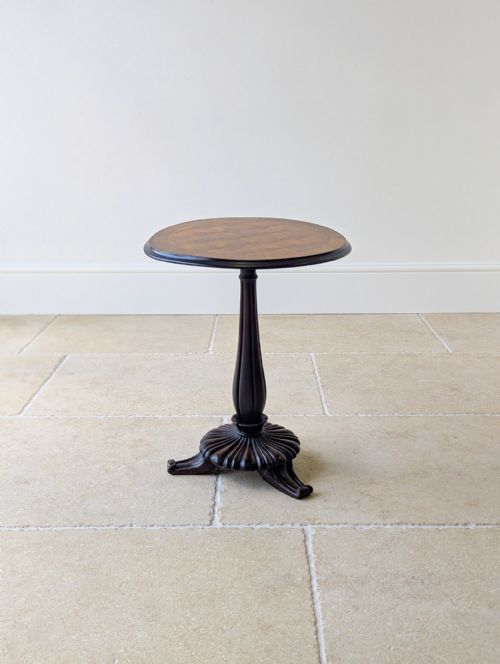
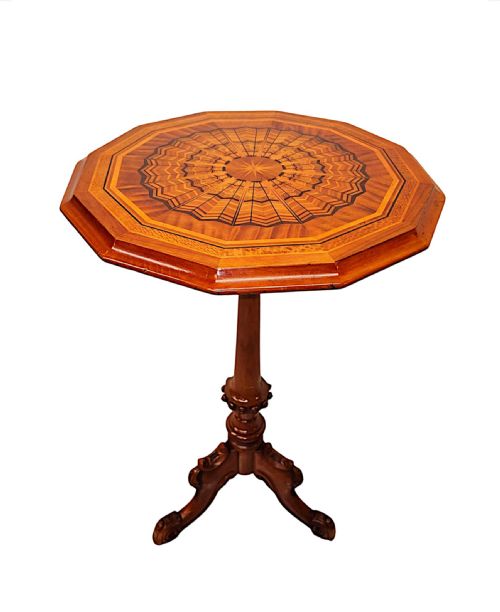
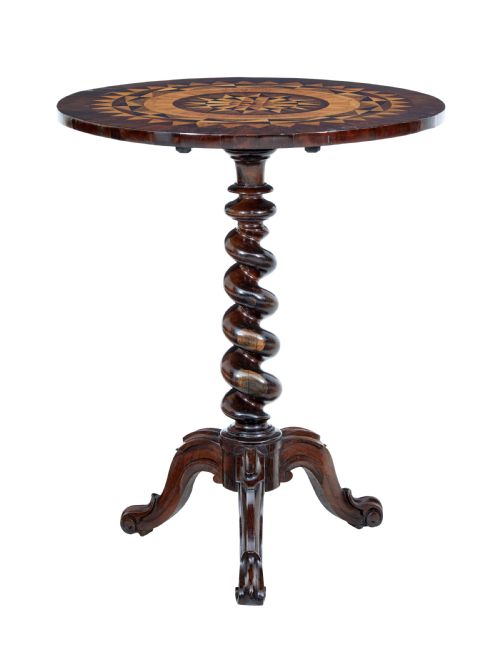
A Victorian parquetry wine table is primarily an occasional or side table featuring a decorative geometric wood-block top supported by a central pillar and tripod legs. These pieces emerge from the 19th century, with origins spanning English workshops as well as Italian Sorrento and colonial makers.
The format varies from round and hexagonal surfaces to tilt-top mechanisms designed for easy storage against a wall when not in use. Buyers encounter simpler oak and mahogany versions alongside heavily inlaid specimen wood creations displaying sunburst motifs.
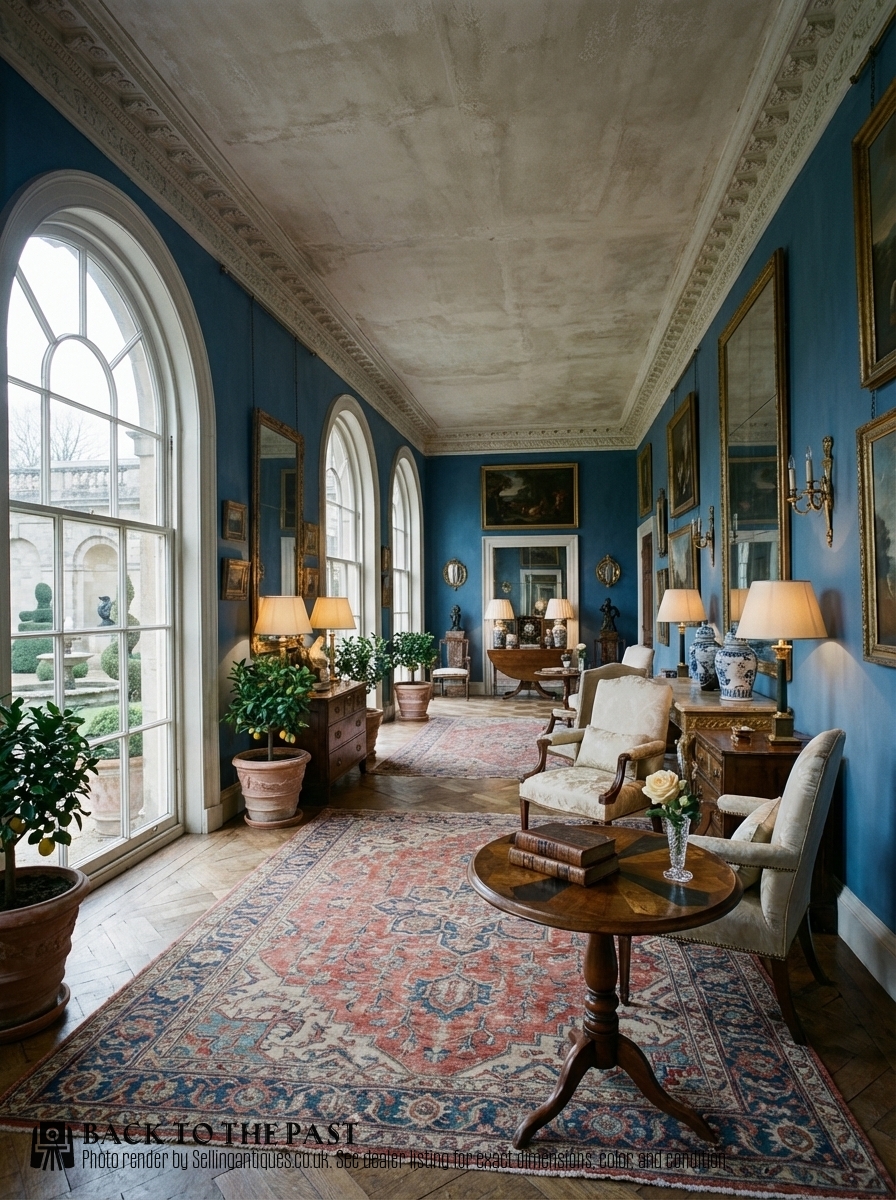
On this page, the pieces reflect the broader Victorian appetite for contrasting timbers and functional domestic furniture. They serve today as bedside stands or low display surfaces next to armchairs.
Materials and construction
Cabinet makers built these tables using a structural foundation of walnut, mahogany, oak, or ebony for the turned pedestals and tripod bases. The tops then received meticulous surface decoration through parquetry and marquetry inlay.
Craftsmen utilised varied natural timbers, including olive wood, satinwood, and New Zealand native woods, arranged to create geometric patterns and tonal contrast. Specialist workshops relied on precision cutting to fit tiny wood sections tightly together before polishing the surface to a smooth finish.
Victorian Parquetry Wine Table Retail Price Guide 2026
Typical asking prices for victorian parquetry wine table among the pieces listed under this phrase on Sellingantiques today, from the lower quarter to the upper quarter. They describe what is for sale here now, not the wider market.
Some Victorian tables include tilt-top catches so clever you can store them flat against the wall like a guest who knows when to leave.
Judging quality and execution
The distinction between ordinary and superior examples lies in the precision of the geometric parquetry and the selection of woods. Finer tops display complex sunburst designs or intricate specimen wood mosaics with tight joints and minimal filler.
Structural integrity also separates the grades, particularly the stability of the central pedestal and the secure fitting of the tripod legs. Examples with robust oak or walnut frames and well-preserved turning represent the more accomplished end of the range.
Gillows·Anton Seuffert·William Norrie
The Victorian Parquetry Wine Table Glossary
- Parquetry
- A geometric mosaic of wood pieces used for surface decoration, forming patterns such as cubes or stripes. It differs from pictorial marquetry by relying strictly on repeating angles and shapes.
- Marquetry
- The art of applying pieces of veneer to a structure to form decorative patterns or pictures. Craftsmen cut contrasting timbers together to ensure seamless joints.
- Specimen wood
- Furniture tops constructed from a collection of different native and exotic timbers. This practice showcased the variety of woods available to 19th-century makers.
- Tripod table
- A small freestanding table supported by a central pillar resting on three legs. This configuration prevents wobbling on uneven floorboards.
- Tilt-top
- A tabletop hinged to the pedestal so it can swivel to a vertical position when not in use. This mechanism saved valuable floor space in Victorian drawing rooms.
Victorian Parquetry Wine Table: Frequently Asked Questions
What is a Victorian parquetry wine table used for?
These small tables were originally designed to hold glasses and bottles beside a chair during the evening. Today, they function well as compact side tables for holding a lamp or book.
Their modest footprint allows them to fit easily into tight corners or small bedrooms without crowding the space.
How do I tell parquetry from marquetry?
Parquetry uses geometric shapes like triangles, squares, and diamonds to create repeating patterns across a surface. It depends entirely on symmetry and angles.
Marquetry, by contrast, forms pictorial or curvilinear designs using varied veneer grains to depict flowers, landscapes, or scrolls.
Why do some tables have tilt tops?
The tilt-top mechanism allowed Victorian households to pivot the surface vertically and store the table flat against a wall. This practical feature cleared floor space during the day when the table was not needed.
Many surviving examples retain the original brass or iron catch beneath the top.