

Walnut Tilt Top Breakfast Table
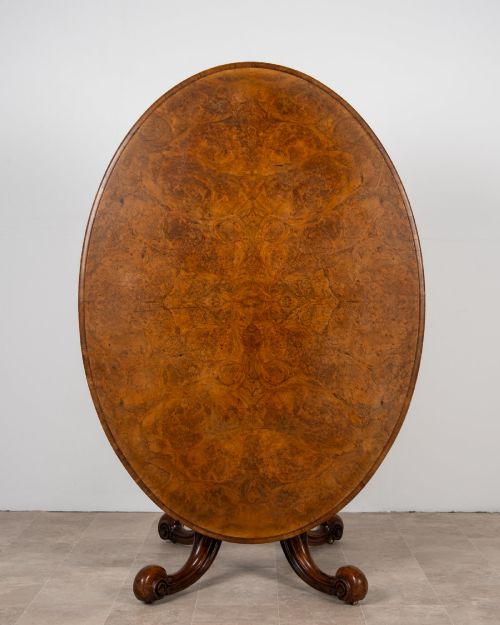
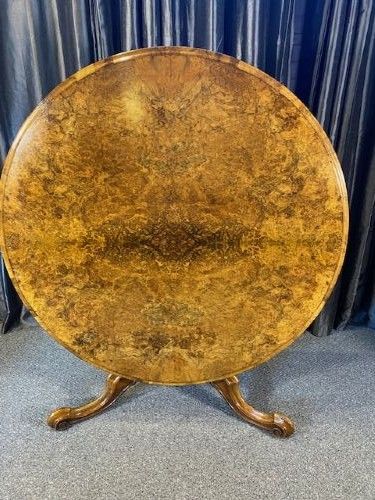
A walnut tilt top breakfast table brings Victorian warmth and clever utility to a room through richly figured timber and a pivoting top.
Walnut Tilt Top Breakfast Table
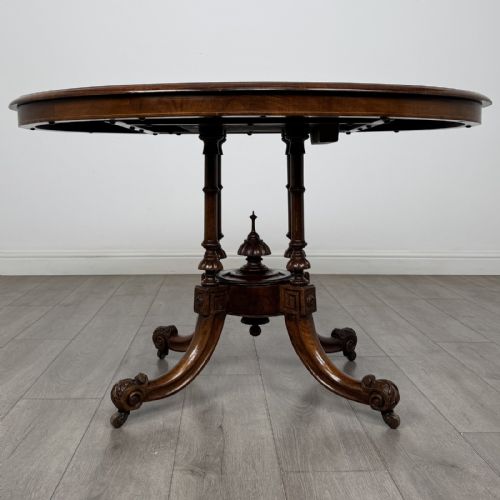
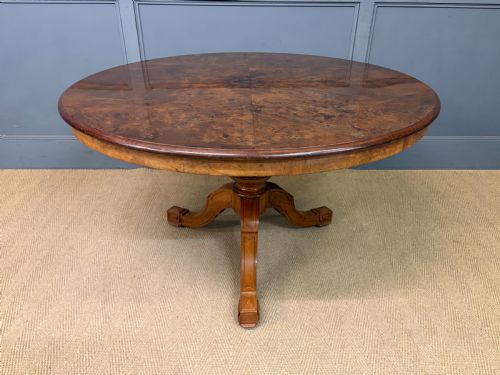
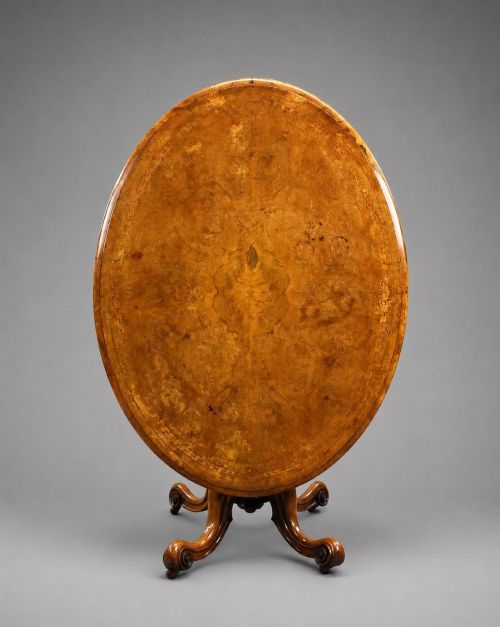
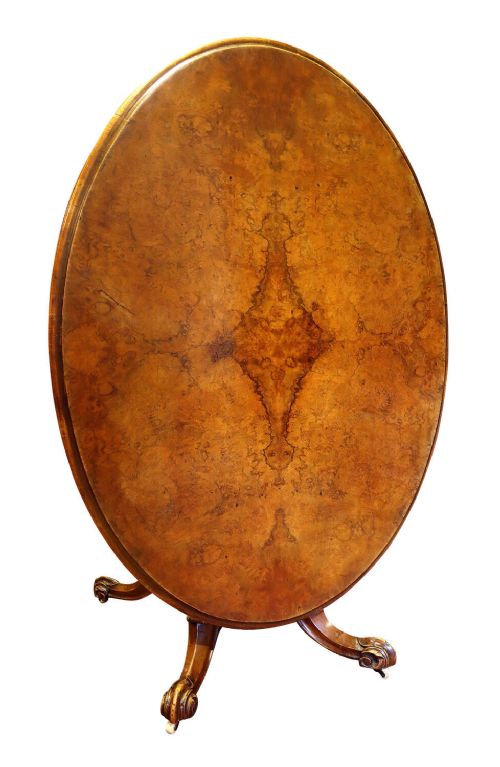
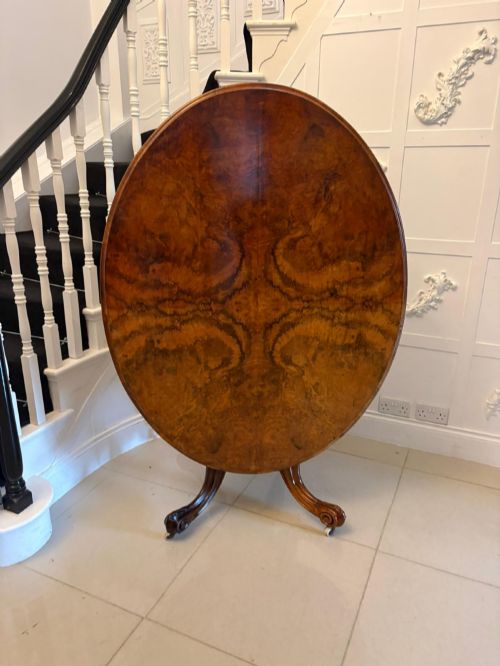
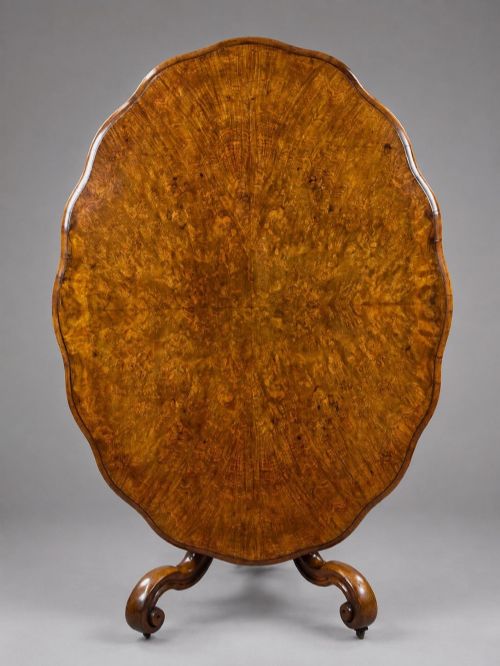
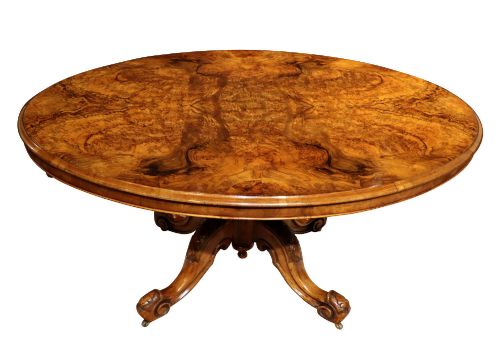
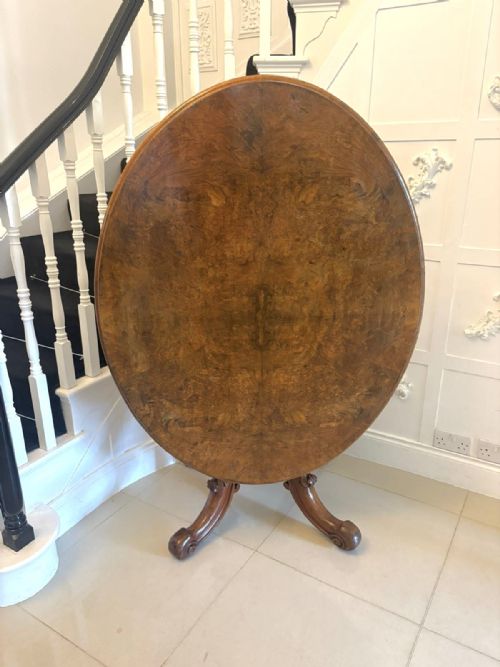
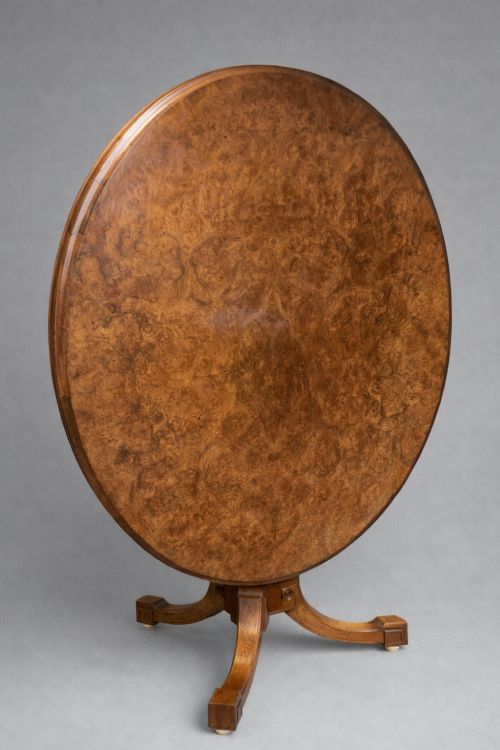
A walnut tilt top breakfast table combines a substantial pedestal support with an oval or round top that releases to store flat against the base. This page focuses on Victorian examples, predominantly from the mid to late nineteenth century, which span compact four-seat designs to larger six-seater dining pieces.
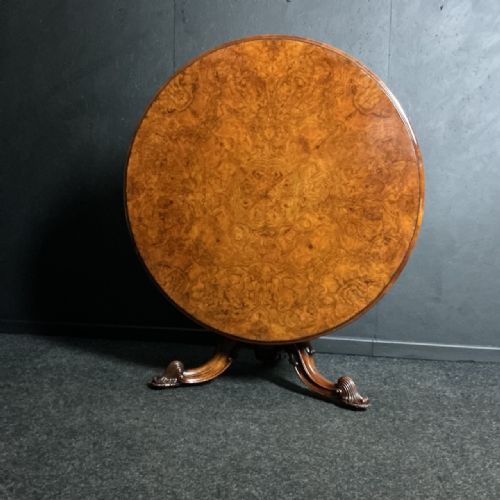
The evidence shows these versatile items frequently appear under alternative period names such as loo tables, supper tables, or centre tables. Oval formats dominate the records, alongside circular variations resting on carved quadrapod bases or single pedestals.
Materials and construction methods
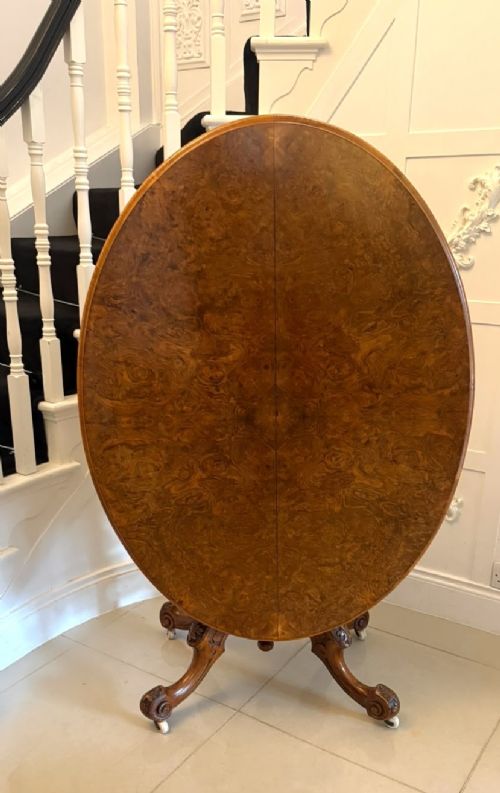
Cabinetmakers utilised figured timber over secondary woods, applying burr walnut veneer to create intricate, highly decorative grain patterns across the broad tabletops. Solid walnut forms the structural carved bases, pedestals, and framing elements.
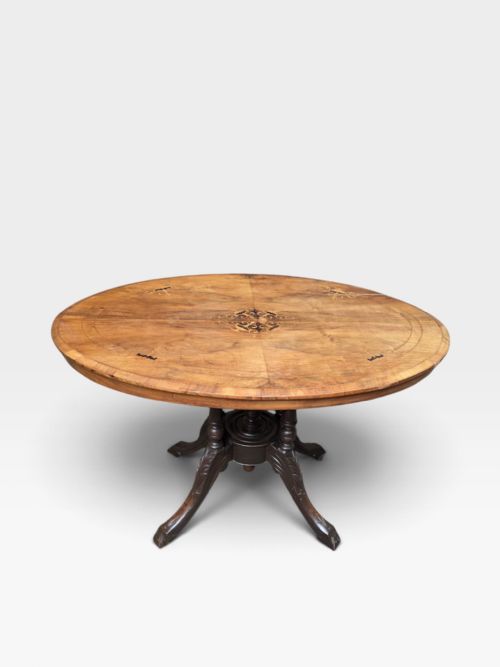
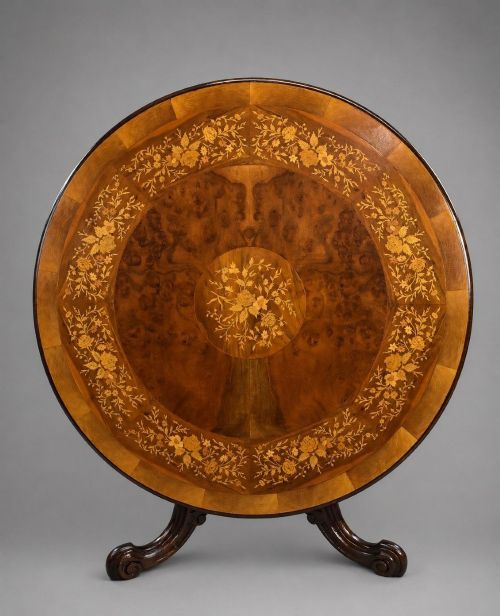
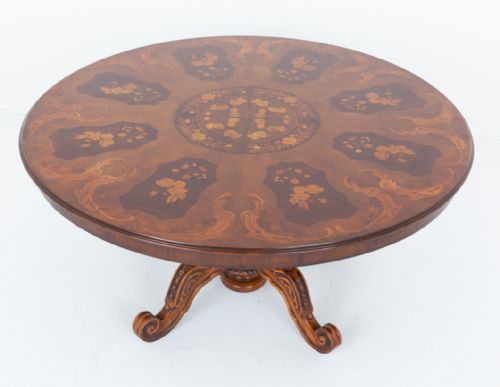
Many examples incorporate delicate boxwood inlay, marquetry, and cross-banding to ornament the borders and central surfaces. Secondary timbers like mahogany occasionally provide internal framing or structural support beneath the veneered top.
Walnut Tilt Top Breakfast Table Retail Price Guide 2026
Typical asking prices for walnut tilt top breakfast table among the pieces listed under this phrase on Sellingantiques today, from the lower quarter to the upper quarter. They describe what is for sale here now, not the wider market.
Some tables tilt so often they develop a favourite side to face the window.
Evaluating craftsmanship and condition
Quality rests primarily in the selection of the burr walnut veneer, where symmetrical figuring and rich depth elevate the visual impact of the piece. The precision of any marquetry or boxwood inlay further distinguishes standard workshop output from finer productions.
Carved details on the pedestal and base reveal the hand of the maker, moving from simple turned supports to deeply sculpted quadrapod legs with retained original mechanisms for the tilt function.
Edwards and Roberts
The Walnut Tilt Top Breakfast Table Glossary
- Tilt top
- A mechanism allowing the tabletop to pivot vertically on its base for convenient storage when not in use. This clever engineering saved valuable floor space in nineteenth-century homes.
- Loo table
- A Victorian term for a round or oval centre table used for the card game loo and general evening entertaining. These tables frequently share the same tilt-top format as breakfast tables.
- Burr walnut
- Sliced timber taken from the gnarled growths of a walnut tree, prized for its swirling, highly figured grain pattern. Cabinetmakers used it as a veneer on prominent surfaces.
- Marquetry
- Decorative patterns formed by fitting together small pieces of different coloured wood veneers into the surface. It often creates floral or geometric motifs on table tops.
- Quadrapod base
- A heavy central pedestal supported by four carved legs spreading outward for stability. They frequently feature decorative scrolling and castors.
Walnut Tilt Top Breakfast Table: Frequently Asked Questions
What is a walnut tilt top breakfast table?
A walnut tilt top breakfast table is a nineteenth-century dining and centre piece featuring a pivoting top mounted on a central pedestal. The clever hinge mechanism allows the top to lock flat for use or swing upright to save space.
These pieces rely on rich walnut veneers and decorative inlays, making them both functional furniture and striking focal points for a room.
How were these tables used originally?
Victorian households utilised these tables for morning meals, intimate suppers, and evening gatherings. Their dual nature as dining surfaces and display items made them central to daily domestic life.
When tilted upward against a wall, the decorative top functioned as a display panel while freeing up floor space for other daytime activities.
How do I live with a tilt top table?
Living with a tilt top table involves appreciating both its practical utility and its decorative timber surfaces. Keep the pivoting mechanism lubricated lightly and avoid placing hot items directly on the polished walnut veneer.
Position the table where the figured grain catches the light, and feel free to tilt it upright occasionally just as nineteenth-century owners did.
How do I tell Victorian periods apart?
Differentiating Victorian periods relies on observing shifts in carving styles, inlay work, and structural silhouettes. Pieces from the 1850s often display robust proportions, while 1870s examples may incorporate refined marquetry or lighter aesthetic movement influences.
Examine the complexity of the pedestal carving and the presence of boxwood inlay to help place a piece within the broader nineteenth-century timeline.