




Walnut Table and Chairs
When you search for walnut table and chairs, you enter a world of rich timber grain and period dining suites.
Walnut Table and Chairs
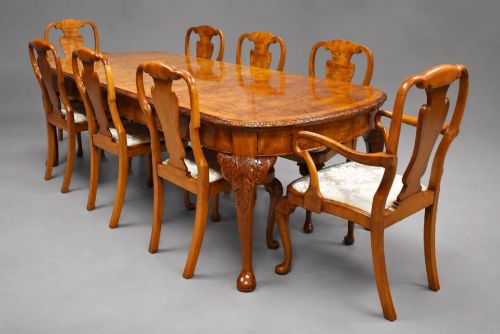
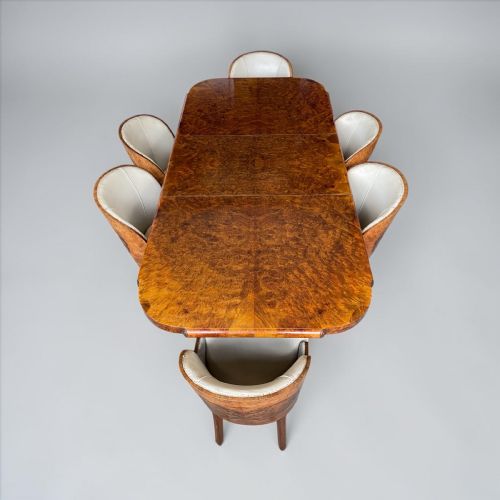
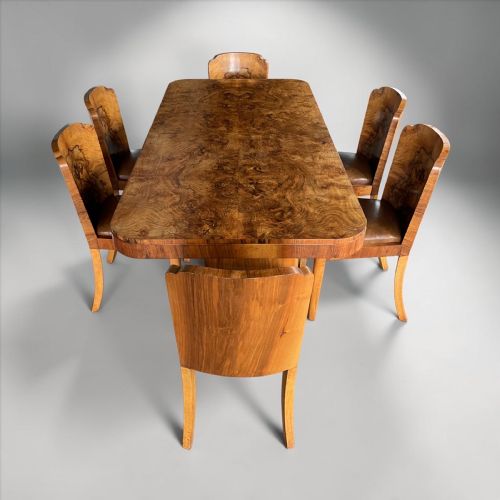
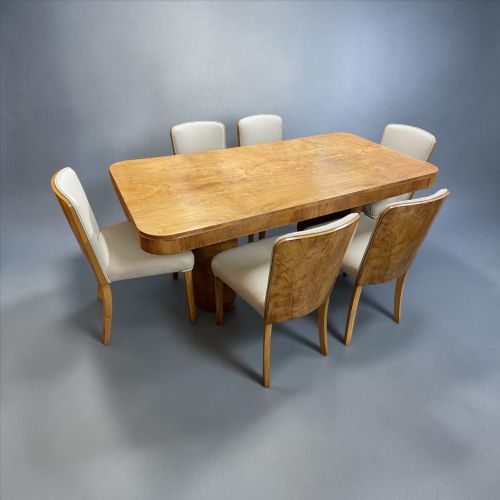
A walnut table and chairs set typically comprises a timber dining table accompanied by a matching set of seating, spanning various eras from the nineteenth century into the twentieth. Buyers encounter everything from grand nineteenth-century extending tables with carver chairs to matching Art Deco dining suites designed to seat six or eight.
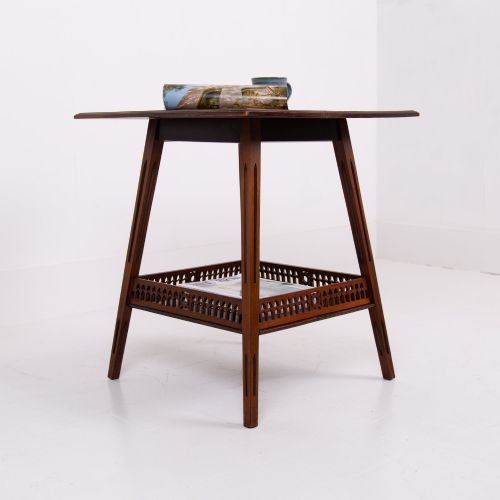
Beyond the main dining sets, the selection includes smaller pieces such as dressing table stools, piano stools, and side chairs fashioned in the Queen Anne revival style. These diverse forms reflect how cabinet makers utilised walnut across different rooms and decades, offering options from formal dining rooms to intimate dressing areas.
How they were made
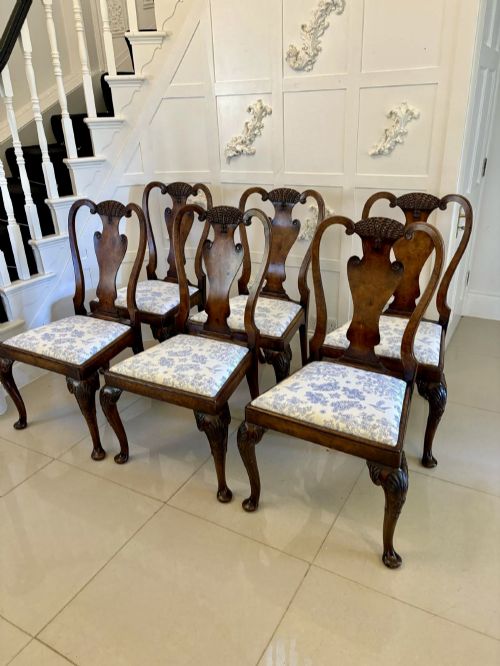
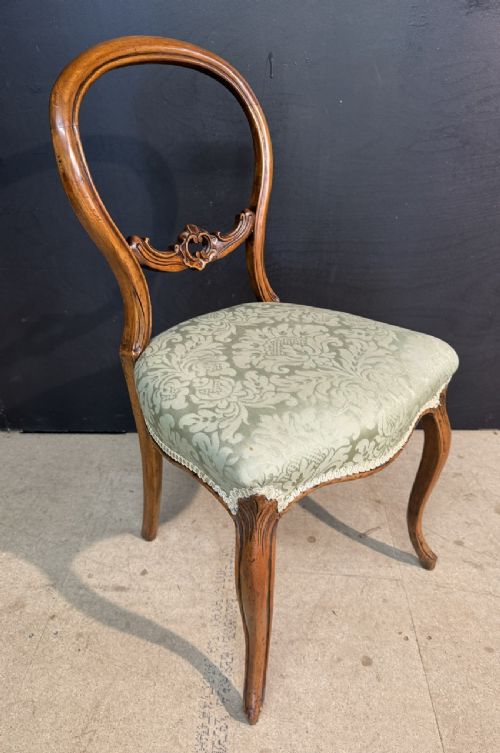
Craftsmen utilised solid timber and decorative veneers, frequently selecting burr walnut for its intricate, swirling grain patterns on table tops and cabinet fronts. Structural elements relied on sturdy wood frames, while supporting components often featured brass details or carved cabriole legs.
Upholstered items incorporated fabrics, leather, and needlepoint textiles for seat pads, occasionally finished with buttoning or twisted rope legs. Joinery methods varied by period, employing traditional wind-out mechanisms for extending tables alongside the sleek geometric lines typical of Art Deco production.
Materials recorded across the inventory include solid wood, burr walnut veneer, brass, leather, and needlepoint textiles.
What varies in quality
Quality separates through the selection and matching of timber veneers, where superior suites display continuous, symmetrical burr walnut grain across expansive table leaves and cabinet surfaces. Lesser examples utilise plain timber or mismatched veneer patches that disrupt the visual flow of the piece.
The sophistication of carving and structural joinery distinguishes finer workshops from standard production. Crisp hand-carving on cabriole legs and robust framing demonstrate superior craftsmanship compared to softened mouldings and loose joints.
Maurice Adams·Harry and Lou Epstein·Hille London·Charles Walker of Harrogate·Merryweather of Holloway London
The Walnut Table and Chairs Glossary
- Burr walnut
- A highly figured timber veneer harvested from the growths of walnut trees. It yields complex, swirling patterns prized by cabinet makers for decorative surfaces.
- Cabriole leg
- A furniture leg that curves out and then in, resembling an animal's leg. This styling appears frequently on Queen Anne revival pieces from the nineteenth and twentieth centuries.
- Wind-out table
- An extending dining table operated by a mechanical handle inserted into the side. The mechanism parts the leaves to accept central insertion leaves.
- Cloud back
- A rounded, upholstered chair design associated with Art Deco dining suites. The curved profile mimics stylized cloud formations popular in interwar furniture.
- Balloon back
- A chair back shaped like a rounded oval, resembling a floating balloon. This form is common in Victorian nursing and side chairs.
Walnut Table and Chairs: Frequently Asked Questions
How do I date a walnut dining set?
Examine the structural design, joinery techniques, and overall aesthetic to determine the period of manufacture. Art Deco sets display geometric forms from the nineteen-thirties, whereas cabriole legs and revival styling point toward earlier Victorian or Edwardian origins.
Hardware, upholstery remnants, and maker stamps also provide reliable clues for dating. Comparing the construction methods against known period standards helps confirm whether a suite dates to the nineteenth century or later.
What is burr walnut?
Burr walnut is a specialised wood veneer taken from a tree growth or knot where the grain has grown in a deformed, swirling pattern. Cabinet makers prize this material for its exceptional decorative qualities on table tops and cabinet doors.
Because of its rarity and striking visual texture, burr walnut typically indicates a higher grade of furniture. It requires careful matching across table leaves to create a seamless, symmetrical appearance.
Are these tables good for daily use?
These dining sets are built from durable timber designed to withstand regular family meals and gatherings. Extending mechanisms allow tables to adjust in size for everyday dining or larger dinner parties.
Routine care, such as using protective mats and maintaining indoor humidity levels, helps preserve the polished wood surfaces. Many antique suites continue to serve functional roles in modern homes without losing their character.
How do I match chairs to a table?
Many dining sets arrive as complete suites where the table and chairs share identical wood tones, styling, and maker origins. Keeping original suites together preserves their historical integrity and aesthetic harmony.
When pairing separate pieces, look for matching timber species like walnut, complementary leg styles such as cabriole designs, and similar historical periods. Consistent proportions between the table height and chair seats ensure comfortable seating.