


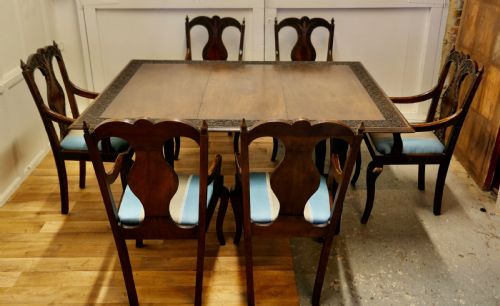


Vintage 6 Chair Dining Suite
A vintage 6 chair dining suite brings together a table and matching seating for six, offering a complete period setting for the home.
Vintage 6 Chair Dining Suite
When searching for a vintage 6 chair dining suite, buyers encounter matched collections of dining tables and seating designed to accommodate six people together. These groupings span multiple design movements, including Art Deco, Edwardian, and various revival styles.
The most common examples on this page date from the 1930s and lean towards Art Deco forms executed in rich timbers. Alongside these, Edwardian and earlier revival suites appear, offering traditional mahogany, oak, and walnut construction.
Object forms include dedicated dining room suites with tables and chairs, sometimes accompanied by sideboards or side tables. Sets range from straightforward seating groups to comprehensive dining room sets designed for formal hospitality.
Materials and construction methods
Cabinet makers utilised a variety of figured timbers for these suites, most notably mahogany, walnut, burr walnut, maple, and calamander. These woods were chosen for their distinct grain patterns and were frequently polished to a high sheen.
Seating components integrate upholstery materials such as leather, fabric, and velvet to provide comfort alongside the wooden framework. Metal elements like brass appear selectively for hardware, while carved details adorn traditional revival oak and mahogany pieces.
Listings feature dining suites spanning the Edwardian era through the 1940s, executed in timber varieties including mahogany, walnut, and satinwood.
Assessing quality in period dining suites
The distinction between ordinary and superior suites rests on the selection of timber veneers and the precision of the cabinet work. Finer examples display meticulously matched wood grains across table tops and chair backs.
Construction integrity also defines the tier of a suite, evident in the rigidity of table frames and the stability of chair joints. Original maker stamps or signatures provide further indication of workshop pedigree and design ambition.
Maurice Adams·Harry and Lou Epstein·Hille·Shoolbred
The Vintage 6 Chair Dining Suite Glossary
- Art Deco
- A design style characterised by sleek geometric shapes, streamlined forms, and opulent materials prevalent during the 1920s and 1930s. It marked a distinct departure from heavy Victorian ornamentation.
- Burr Walnut
- A specialised timber cut from the abnormal growth of a walnut tree, yielding swirling, highly decorative grain patterns. Makers utilised burr walnut veneers on prominent surfaces like table tops.
- Edwardian
- Pertaining to the reign of King Edward VII, spanning the early years of the twentieth century. Furniture from this era often lighter in scale than Victorian pieces, drawing inspiration from eighteenth-century designs.
- Revival Style
- An artistic movement that looks back to historical periods, such as Georgian, Queen Anne, or Jacobean eras, for its aesthetic vocabulary. Makers recreated these historic silhouettes using contemporary techniques of their own day.
Vintage 6 Chair Dining Suite: Frequently Asked Questions
What pieces are included in a dining suite?
A dining suite typically comprises a matching dining table and a set of chairs designed to seat six or more guests. Some comprehensive suites also incorporate related dining room furniture such as sideboards and side tables.
Configurations vary according to the period and style, ranging from minimalist Art Deco tables with leather chairs to heavily carved oak or mahogany revival sets.
How do I identify an Art Deco dining suite?
Art Deco suites are defined by smooth geometric lines, symmetrical compositions, and the prominent use of exotic veneers like burr walnut, bird's eye maple, and calamander. They often date from the 1920s and 1930s and eschew traditional carved ornamentation in favour of sleek surfaces.
Makers from this movement, such as Harry and Lou Epstein or Hille, focused attention on the natural grain of the wood rather than applied decorative motifs.
Are these suites suitable for everyday use?
Period dining suites were built for functional domestic dining and remain entirely practical for modern daily use. Regular maintenance and careful placement away from direct heat sources help preserve the polished wooden surfaces and upholstery.
Buyers should consider the dimensions of both the table and the six chairs to ensure comfortable placement within a modern dining room space.
How do I tell Edwardian suites from earlier styles?
Edwardian dining furniture generally exhibits a lighter, more refined proportion compared to heavy Victorian predecessors. These pieces frequently draw upon Georgian revival designs, featuring slender mahogany frames and subtle string inlay.
Earlier nineteenth-century suites tend to display darker, denser timber selection and more robust structural forms without the lighter neoclassical influences found in Edwardian work.