




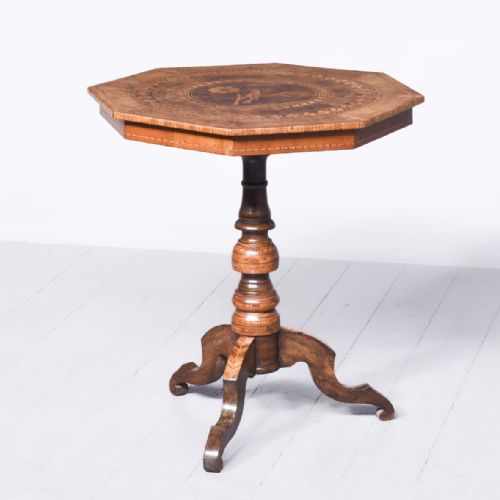


Walnut Sorrento Ware Table
A walnut sorrento ware table brings intricate Italian marquetry and rich timber into a room, offering both decorative warmth and everyday surface utility.
Walnut Sorrento Ware Table
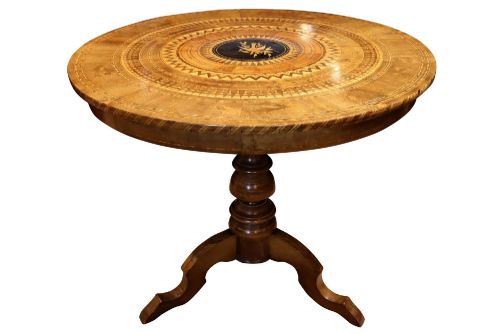
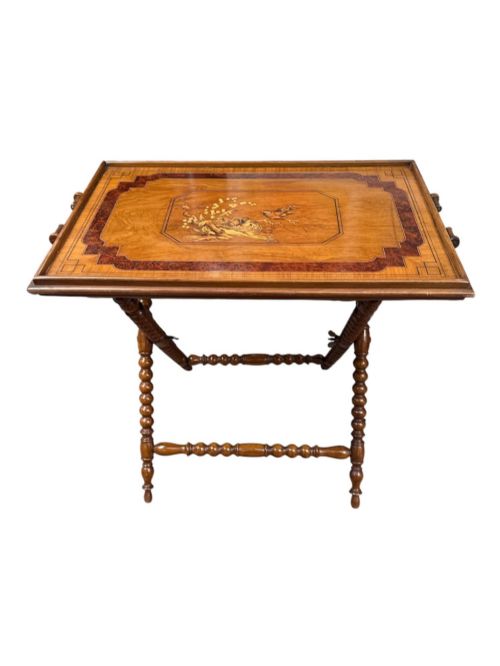
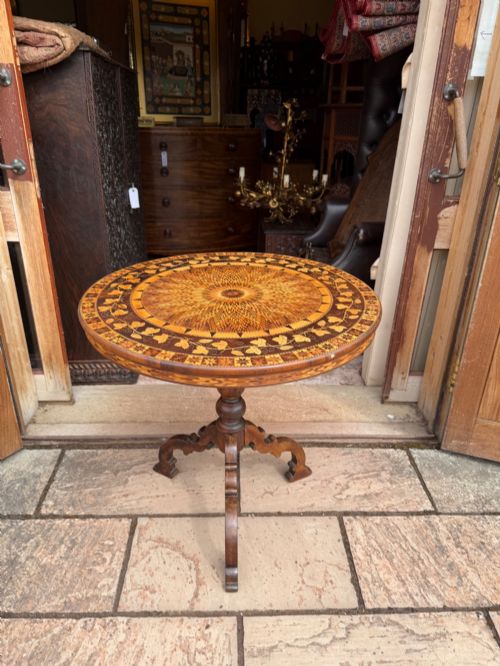
A walnut sorrento ware table represents a specific tradition of Italian woodworking originating from the coastal town of Sorrento. These pieces function as occasional tables, side tables, tray tables, coffee tables, and centre tables, bringing decorative utility to a living space.
The examples available here span the nineteenth century and the early twentieth century, incorporating Victorian interpretations of Italian craft. Buyers typically encounter occasional tables and tray tables featuring elaborate marquetry surfaces supported by pedestals or turned legs.
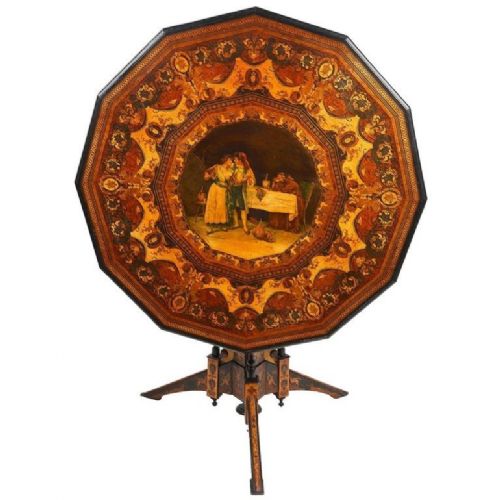
Originating during the Grand Tour period, these tables capture the taste of nineteenth-century travellers who collected Italian souvenirs. They combine practical furniture forms with intricate wood mosaics that depict architectural motifs, floral scenes, or geometric patterns.
How they were made
Makers constructed these pieces using a foundation of walnut, fruitwood, and olive wood, applying mixed hardwood veneers to the primary surfaces. The technique relies on meticulous hand-cutting of individual wood veneers to form complex pictorial or geometric designs.
Artisans combined marquetry and parquetry, laying contrasting timbers into recesses to create multi-coloured panels. These decorative veneers were then applied to table tops and supported by turned pedestals or frames fashioned from native Italian hardwoods.
Walnut Sorrento Ware Table Retail Price Guide 2026
Typical asking prices for walnut sorrento ware table among the pieces listed under this phrase on Sellingantiques today, from the lower quarter to the upper quarter. They describe what is for sale here now, not the wider market.
Nineteenth-century tourists frequently carried these flat-topped souvenirs home in steamer trunks, trusting delicate fruitwood mosaics to survive the journey across Europe.
What varies in quality
The standard of a walnut sorrento ware table depends primarily on the precision of the marquetry and the variety of woods employed. Finely executed pictorial scenes utilising a wide palette of fruitwoods and olive wood indicate superior craftsmanship compared to repetitive geometric parquetry.
Structural integrity and the preservation of the original veneer surface also determine the tier of the piece. Tables retaining crisp detail in the timber inlays without excessive restoration command greater appreciation among collectors of nineteenth-century Italian furniture.
Almerico Gargiulo
The Walnut Sorrento Ware Table Glossary
- Marquetry
- The art of creating decorative patterns and pictures by arranging pieces of veneer on a structural support. This technique allows artisans to depict complex scenes using natural wood grains and colours.
- Parquetry
- A geometric mosaic of wood pieces used for decorative floors and furniture surfaces. It differs from marquetry through its reliance on repeating angles and regular shapes rather than pictorial illustration.
- Grand Tour
- A traditional trip of Europe undertaken by upper-class European young men of sufficient means. These journeys resulted in the acquisition of souvenirs including Italian woodwork and tables.
- Veneer
- A thin layer of superior wood glued to a base of cheaper timber to provide a decorative surface. This method prevents warping while displaying expensive or figured grain patterns.
Walnut Sorrento Ware Table: Frequently Asked Questions
What is a sorrento ware table?
A sorrento ware table is a nineteenth-century Italian piece decorated with intricate wood inlays and marquetry. These tables originate from the town of Sorrento and often feature floral or architectural designs.
They serve as decorative occasional or side tables, bringing traditional craftsmanship and warm timber tones into contemporary interiors.
How do I date a sorrento table?
Dating these tables involves examining the timber species, base construction, and the style of the marquetry panels. Most examples found on the market date from the nineteenth century, reflecting the Grand Tour era.
Victorian pieces often combine British furniture forms with Italian inlaid tops, while later twentieth-century examples show simplified manufacturing techniques.
How do I care for inlaid wood?
Inlaid wood surfaces require protection from direct sunlight and extreme humidity changes to prevent the veneer from lifting. Dusting regularly with a soft, dry cloth maintains the finish without moisture damage.
Avoid placing hot cups or damp items directly onto the timber, using coasters and mats to preserve the delicate fruitwood and walnut mosaics.
Were these tables made for export?
Many sorrento tables were produced specifically for foreign travellers visiting Italy during the nineteenth century. Tourists purchased them as portable or decorative reminders of their travels abroad.
Consequently, the forms often adapted to suit British and European domestic interiors, leading to the creation of tray tables and pedestal occasional tables.