





Sorrento Wine Table
A sorrento wine table brings intricate Italian marquetry and warm fruitwood veneers into a room as an exceptional occasional piece.
Sorrento Wine Table
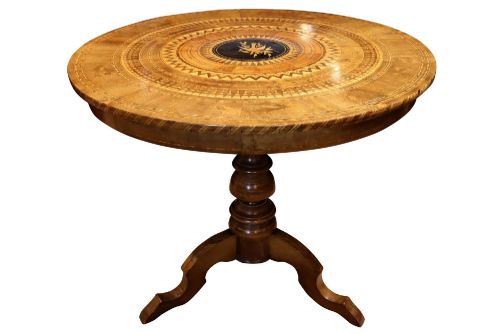
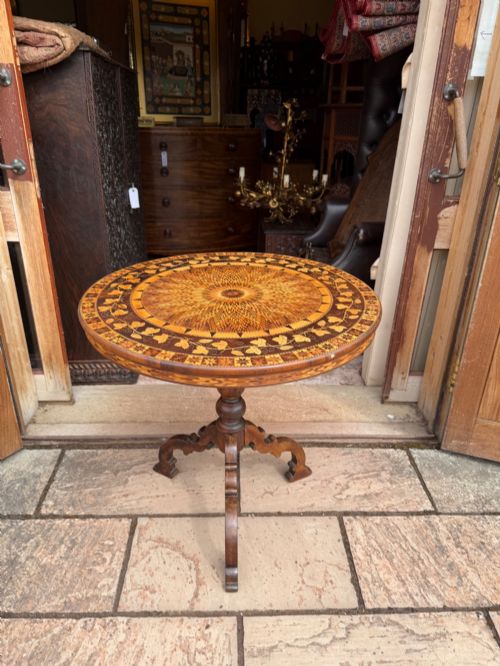
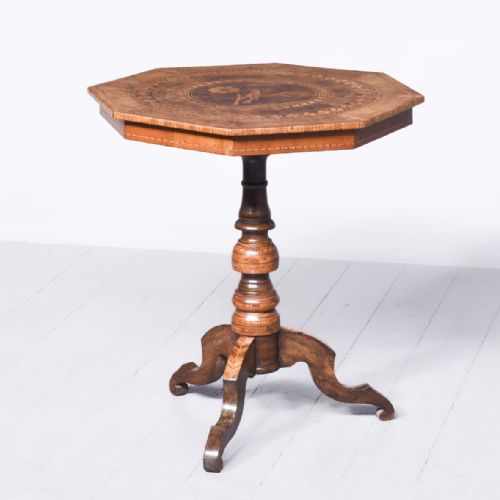
A sorrento wine table represents the pinnacle of nineteenth-century Italian woodworking, designed primarily as an occasional or side table. These pieces frequently appear in walnut, olive wood, and mixed fruitwood veneers, displaying elaborate geometric and pictorial marquetry.
Most examples found here date from the nineteenth century, including specific years like 1870, 1880, and the broader Victorian era, alongside occasional early twentieth-century interpretations from 1920. Buyers commonly encounter tilt-top and flip-top variations that showcase the mobility and clever engineering of Grand Tour souvenirs.
The form typically combines a turned pedestal base with a richly inlaid circular or multi-sided top. Every piece reflects the distinct aesthetic of Sorrento ware, created for travellers collecting mementoes of Italy.
How they were made
Craftsmen built these tables using sturdy carcases of walnut or mixed hardwoods as a foundation for decorative surfaces. They applied intricate veneers of olive wood, fruitwood, and various contrasting timbers to achieve rich tonal variation.
Specialists then employed marquetry and parquetry techniques, cutting delicate pieces of wood to form pictorial scenes or geometric patterns. These thin veneers were carefully glued and pressed onto the table tops before receiving a protective polish.
Sorrento Wine Table Retail Price Guide 2026
Typical asking prices for sorrento wine table among the pieces listed under this phrase on Sellingantiques today, from the lower quarter to the upper quarter. They describe what is for sale here now, not the wider market.
Some nineteenth-century makers hid secret locking catches beneath the tilt-top mechanism to stop the table tipping unexpectedly while serving wine.
What varies in quality
The sophistication of the marquetry dictates the standing of each piece, distinguishing simple geometric parquetry from elaborate pictorial storytelling. Finer examples display meticulous control of tone and grain direction across the fruitwood veneers.
Construction details also separate standard production from superior workshops, particularly the stability of the pedestal base and the crispness of the turned woodwork. The precision of the flip-top or tilt-top mechanism reveals the original maker's skill.
The Sorrento Wine Table Glossary
- Marquetry
- The art of applying decorative pieces of veneer to a structure to form intricate pictures or patterns. Sorrento artisans used various fruitwoods to create naturalistic floral and architectural designs.
- Parquetry
- A geometric mosaic of wood pieces used for decorative floors and table tops. It differs from marquetry by relying on repeating angular shapes rather than pictorial scenes.
- Tilt Top
- A table design featuring a hinge mechanism that allows the top to rotate and rest vertically when not in use. This clever function saved valuable floor space in Victorian parlours.
- Grand Tour
- A traditional cultural excursion of Europe undertaken by upper-class young European men of the 18th and 19th centuries. Travellers purchased Sorrento tables as portable reminders of their Italian itinerary.
- Fruitwood
- Timber derived from fruit-bearing trees such as pear, apple, or cherry, prized by cabinetmakers for its fine grain and warm colour. These woods provided the subtle tonal contrasts essential for detailed marquetry.
Sorrento Wine Table: Frequently Asked Questions
What is a sorrento wine table used for?
These tables served primarily as decorative occasional surfaces in nineteenth-century drawing rooms and parlours. Travellers brought them home as functional souvenirs of Italy.
Today, they work well beside a reading chair or as a display surface for small decorative objects. Their compact proportions make them versatile additions to modern interiors.
How do I identify a nineteenth-century sorrento table?
Look for traditional construction methods, solid walnut or fruitwood framing, and hand-cut marquetry rather than printed laminates. Nineteenth-century examples often feature distinct patination on the olive wood and walnut surfaces.
Dates like 1870 or 1880 frequently align with the height of Grand Tour manufacturing. Examine the underside and pedestal joints for the hallmarks of period hand-tooling.
How do I care for a marquetry table?
Keep the wood away from direct sunlight and extreme temperature fluctuations to prevent the delicate fruitwood veneers from lifting. Regular dusting with a soft, dry cloth maintains the polished finish safely.
Avoid placing damp glasses or hot items directly onto the antique surface. Apply a quality microcrystalline wax sparingly when the wood appears dry.
Why do some tables tilt?
The tilt-top mechanism was originally engineered to allow tables to be stored flat against a wall when not in use. This saved precious floor space in crowded nineteenth-century drawing rooms.
It also made the tables easier to transport during the long journey home from Italy. The clever hinge design remains a charming mechanical feature today.