

Walnut Slope Front Bureau
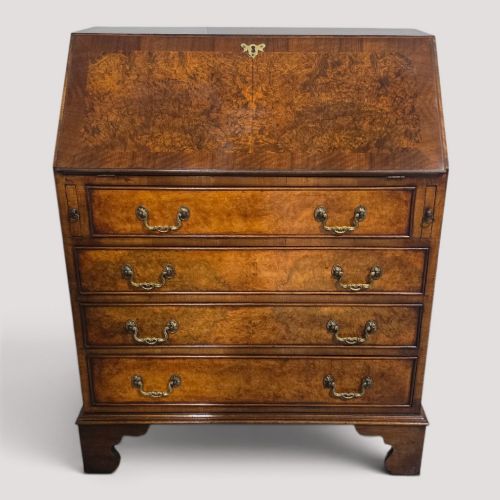
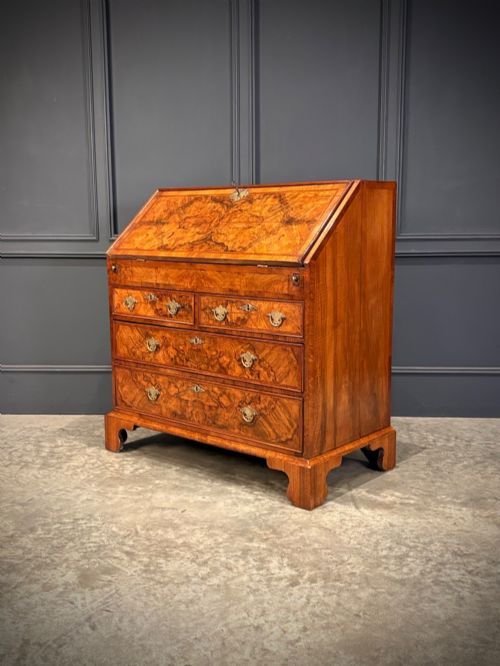
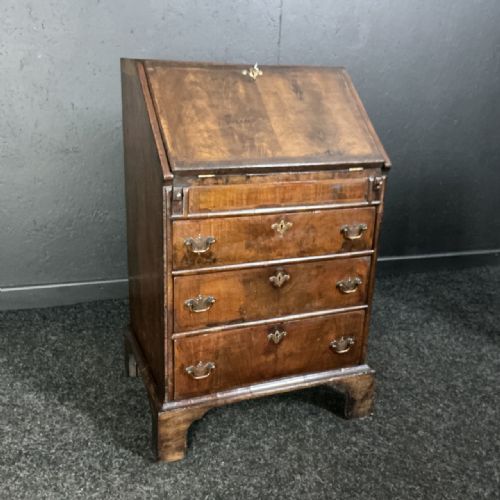
A walnut slope front bureau offers a sloping fall-front writing flap that conceals a fitted interior of drawers and pigeonholes, providing practical workspace and rich timber grain.
Walnut Slope Front Bureau
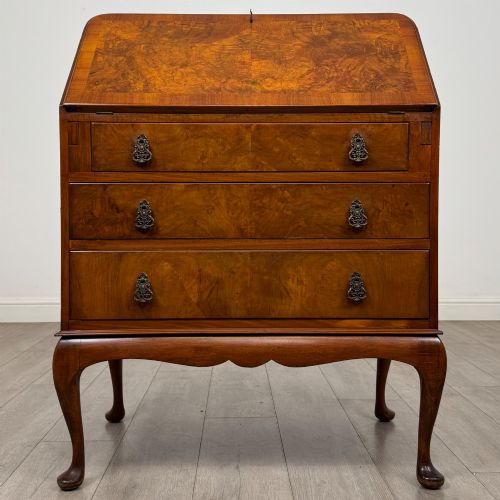
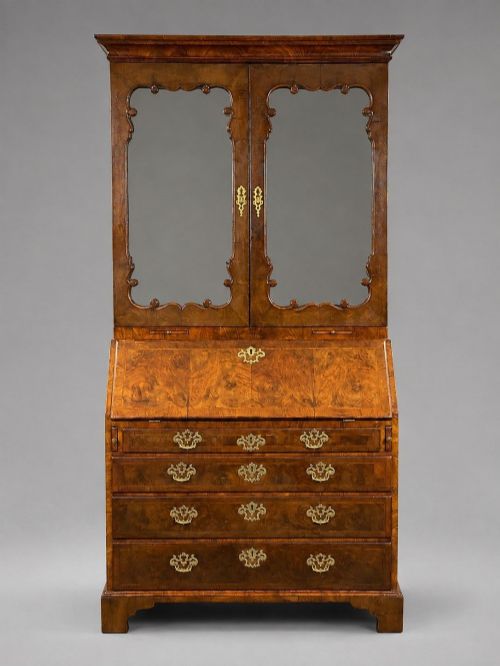
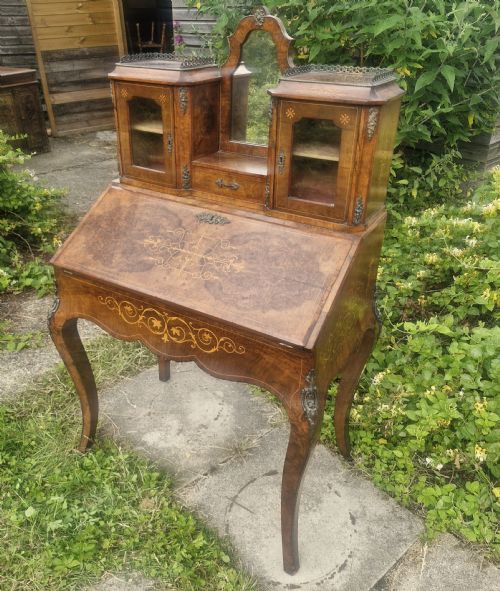
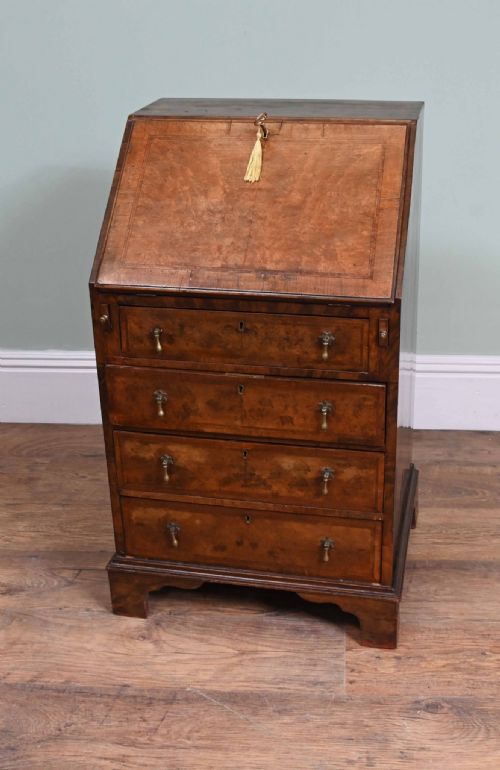
A walnut slope front bureau stands as a traditional writing desk designed with a hinged flap that drops down to form a writing surface. Buyers searching for a walnut slope front bureau encounter forms ranging from compact fall-front writing cabinets to large bureau bookcases fitted with upper display sections.
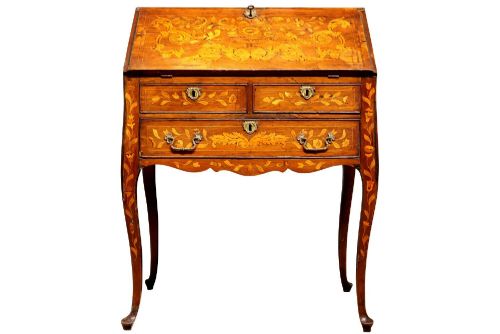
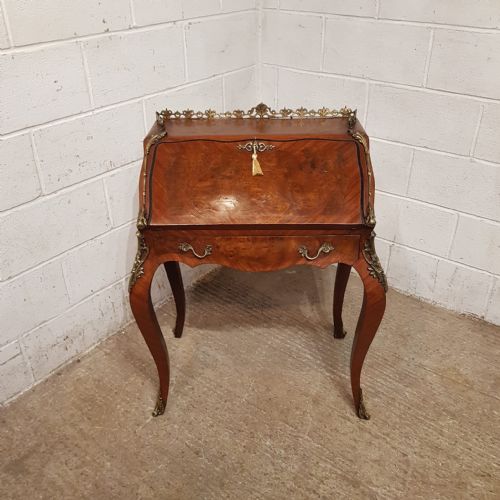
The pieces on this page span several centuries and design traditions, including early eighteenth-century Queen Anne and George I examples alongside later Victorian, Edwardian, and twentieth-century interpretations. Common variations include simple slant-front desks, bureau de dame writing tables, and elaborate bureau bookcases featuring marquetry inlay or feather banding.
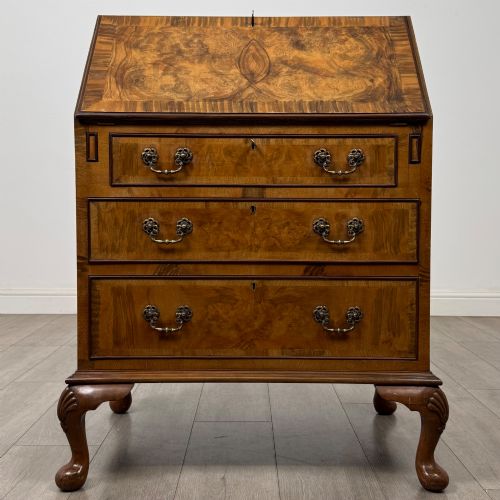
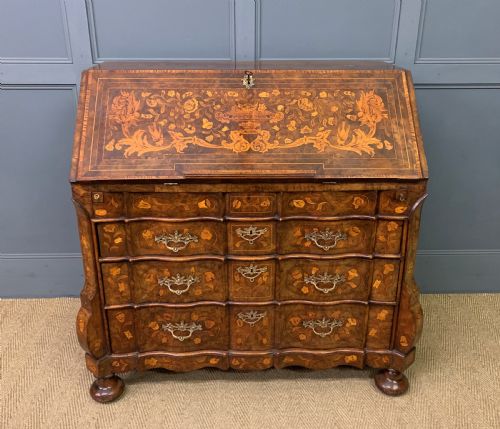
Makers and cabinetmakers across these periods utilised the timber's natural figure to create striking visual appeal on the sloping fall and drawer fronts. Regional styles such as Dutch Baroque further expand the selection with floral marquetry and shaped fronts.
How they were made
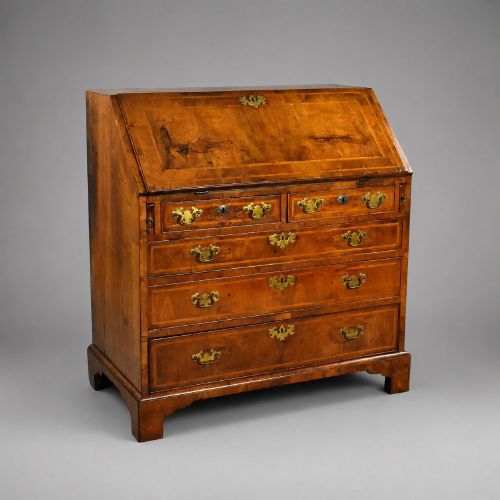
Cabinetmakers constructed these writing pieces using solid timbers and decorative veneers applied to secondary woods like oak and fruitwood. Skilled artisans selected figured walnut, burr walnut, and red walnut to cover large surfaces, matching the grain patterns symmetrically across drawer fronts and the fall-front flap.
Internal components relied on traditional joinery, incorporating pigeonholes, small drawers, and secret compartments behind the sloping lid. Brass handles, escutcheons, and original ironwork provided functional hardware, while marquetry, feather banding, and ormolu mounts added decorative detail on select regional and revival pieces.
Many antique bureaus contain hidden compartments behind internal pigeonholes designed for storing secret letters and small valuables.
What varies in quality
The quality of a walnut bureau rests upon the selection and preservation of the timber veneer, particularly the richness and movement found in burr or figured walnut surfaces. Superior examples demonstrate careful grain matching across the fall-front and drawer tiers, maintaining visual harmony without excessive patching or restoration.
Structural integrity and the retention of original internal fittings distinguish finer pieces from heavily altered ones. The presence of period brassware, original ironwork, and untouched secondary woods inside the pigeonholes and drawer linings separates workshop masterworks from later adaptations.
The Walnut Slope Front Bureau Glossary
- Bureau
- A writing desk featuring a sloping fall-front flap that opens to reveal an interior arrangement of small drawers and pigeonholes.
- Burr walnut
- A decorative timber veneer taken from the growth excrescences of walnut trees, prized for its swirling, highly figured grain patterns.
- Feather banding
- A delicate decorative inlay technique using veneer strips arranged in a herringbone pattern around the edges of drawer fronts and panels.
- Marquetry
- The art of applying decorative pieces of veneer to a structure to form intricate floral or geometric pictorial designs.
- Bureau bookcase
- A tall dual-purpose furniture form combining a slope-front writing desk base with an upper shelving or cabinet section.
Walnut Slope Front Bureau: Frequently Asked Questions
What is inside a slope front bureau?
Lower drawers sit beneath a hinged writing flap that opens horizontally to reveal internal compartments. These fitted interiors typically include small tiered drawers, pigeonholes, and occasionally hidden central compartments.
Upper sections on larger bureau bookcases provide enclosed shelving or display space behind glazed or panelled doors.
How do I date an antique bureau?
Dating relies on examining the construction methods, timber choices, and secondary woods used within the carcase and drawer linings. Early eighteenth-century pieces often feature feather banding and walnut veneers on oak, while later Victorian and Edwardian examples show different internal joinery and hardware styles.
Stylistic markers such as bracket feet, cabriole legs, or Dutch floral marquetry also point towards specific periods like the Queen Anne or Georgian eras.
Where should I place a bureau in my home?
These writing desks suit studies, living rooms, and bedrooms where their compact footprint and enclosed workspace can function daily. The drop-down flap provides a concealed surface for laptop use or correspondence when not in use.
Keep the timber away from direct sunlight and strong heat sources to prevent the walnut veneers from drying out or fading over time.
What is the difference between a bureau and a Davenport?
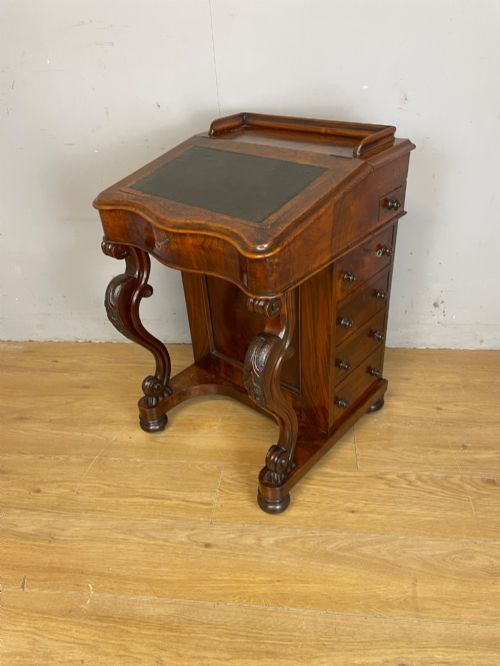
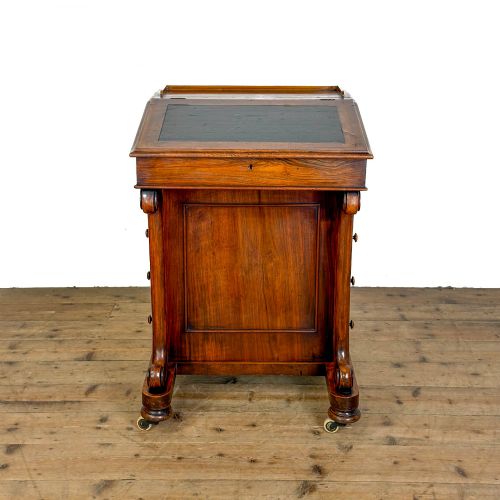
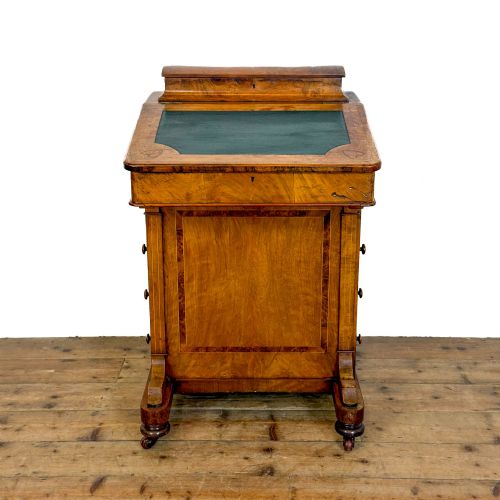
A standard bureau uses a vertical carcass with a sloping front flap that pulls down toward the user. A Davenport desk is a compact pedestal form where the writing surface slopes upward on top of a stack of side drawers.
Both serve as writing furniture, but their structural layouts and internal storage configurations differ entirely.