



French Revival Ladies Desk
A french revival ladies desk brings elegant nineteenth-century writing forms and intricate marquetry into modern rooms.
French Revival Ladies Desk
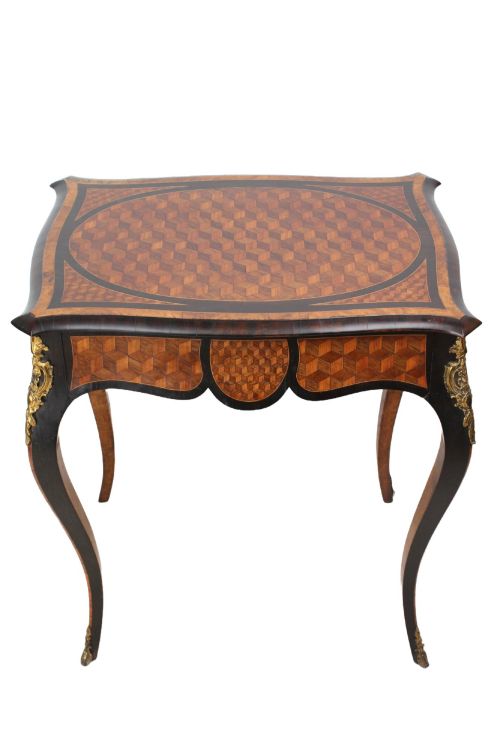
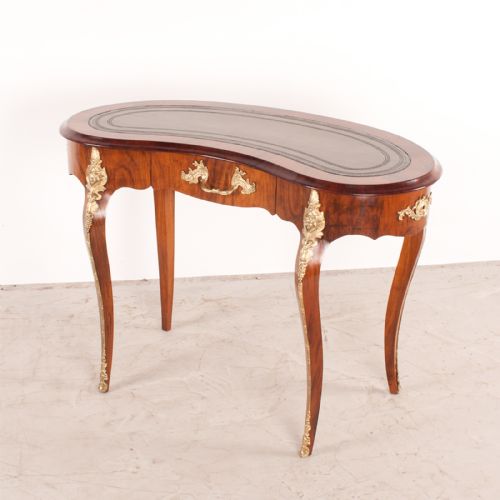
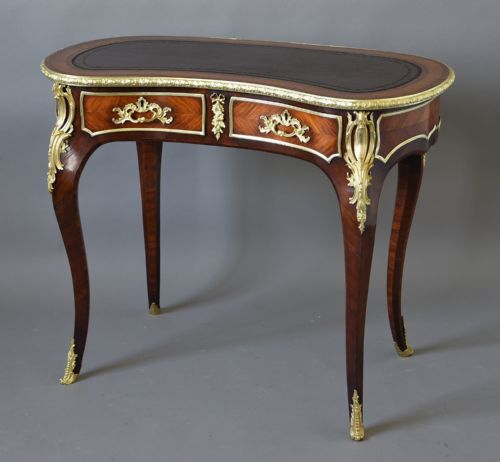
A french revival ladies desk is a compact nineteenth-century writing piece designed for private correspondence and light paperwork. These items take various forms on this page, including kidney-shaped writing tables, bureau de dame desks, and tiered bonheur du jour cabinets.
Materials and Construction
Cabinetmakers built these desks using dense hardwood carcases of walnut, burr walnut, kingwood, and rosewood, often enhanced by intricate parquetry and floral marquetry veneers. Surfaces frequently incorporate inset leather writing panels intended for daily correspondence.
Gilded ormolu mounts, brass galleries, and cast bronze details accent the structural lines of the wood. Finer pieces integrate painted Vernis Martin panels, porcelain plaques, or marble tops to elevate the decorative scheme.
Listings span the nineteenth century, centring on Victorian interpretations of Louis XV and Rococo revival styles.
Assessing Quality and Execution
The distinction between standard production and top-tier pieces rests on the crispness of the ormolu mounts and the precision of the veneer work. Superior desks display meticulously matched grain patterns and deeply chased metalwork rather than cast repeats.
Makers known for exceptional cabinetmaking apply thoughtful interior detailing, such as secret drawers, fitted stationery compartments, and robust locking mechanisms. The overall balance of proportions and the fluidity of serpentine or kidney-shaped curves dictate the standing of an individual desk.
JAS Shoolbred·Edwards and Roberts·Gillows·Robert Strachan and Co
The French Revival Ladies Desk Glossary
- Bonheur du jour
- A small, light ladies writing desk featuring a small cabinet or superstructure with shelves and drawers above the main writing surface. This form gained popularity during the mid-nineteenth century revival periods.
- Bureau de dame
- A sloping-front lady's desk, often fitted with internal compartments and small drawers for correspondence. It typically stands on slender cabriole legs.
- Ormolu
- Gilded bronze mounts applied to furniture for decorative accent and edge protection. High-grade examples show hand-chasing after casting.
- Vernis Martin
- A simulated Japanese lacquer technique developed in eighteenth-century France and replicated on nineteenth-century revival pieces. It employs translucent varnishes over painted pastoral or romantic scenes.
- Marquetry
- Decorative veneer work forming intricate patterns or pictorial scenes using various coloured woods. Artisans meticulously fit these wood slivers into the desk surface.
French Revival Ladies Desk: Frequently Asked Questions
What is a bonheur du jour?
A bonheur du jour is a small, elegant writing desk featuring an upper cabinet with shelves or small drawers above the main writing surface. These pieces were designed specifically for ladies to handle correspondence in private sitting rooms.
The raised superstructure provides convenient storage for stationery and inkwells while keeping the footprint compact. They frequently appear in walnut, kingwood, and rosewood with marquetry inlay.
How do I use a kidney-shaped table?
A kidney-shaped writing table fits comfortably into smaller spaces while offering a curved cutout edge that brings the user closer to the writing surface. They work effectively as standalone writing desks or as decorative side tables.
The inset leather top provides a durable and smooth surface for writing letters. Their finished backs allow them to sit centrally in a room rather than strictly against a wall.
How do I care for antique veneer?
Antique veneer requires protection from direct sunlight and extreme humidity fluctuations to prevent warping or lifting. Maintaining stable indoor room conditions preserves the structural integrity of walnut, rosewood, and kingwood surfaces.
Cleaning should be limited to dusting with a soft cloth and applying traditional wax sparingly. Avoid chemical sprays and moisture on vulnerable ormolu and leather surfaces.