



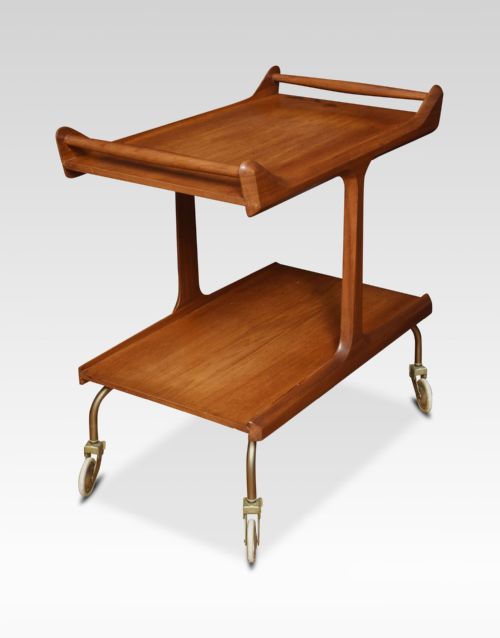
Walnut Serving Trolley
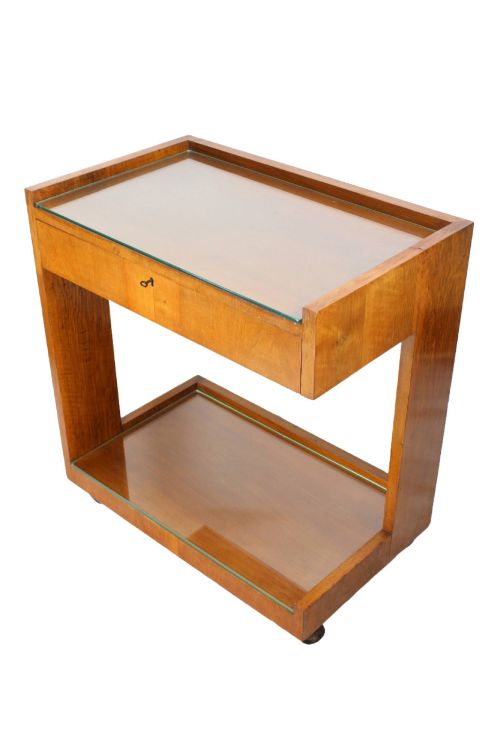
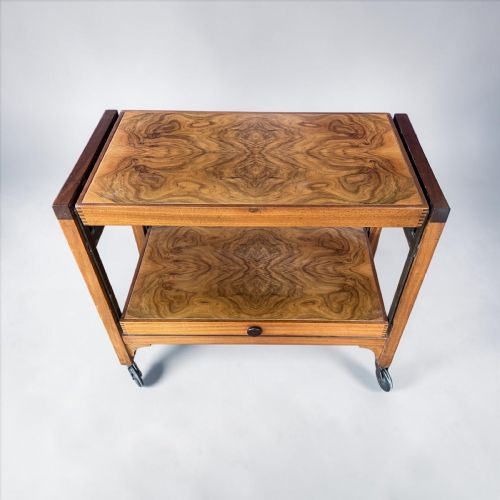
A walnut serving trolley is a mobile piece of entertaining furniture combining practical timber surfaces with smooth-rolling castors.
Walnut Serving Trolley
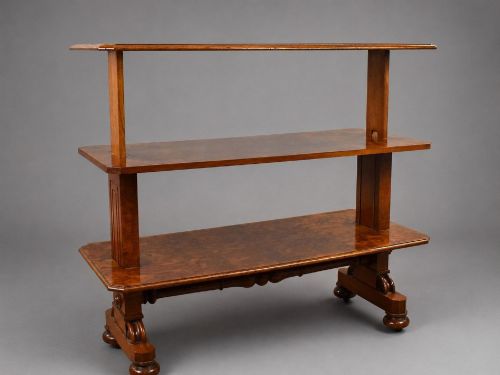
A walnut serving trolley brings mobile surface space and period character to dining rooms and living areas. When searching for a walnut serving trolley, buyers encounter forms ranging from Victorian dumbwaiters and adjustable buffets to Art Deco circular bar carts and tiered tea trolleys.
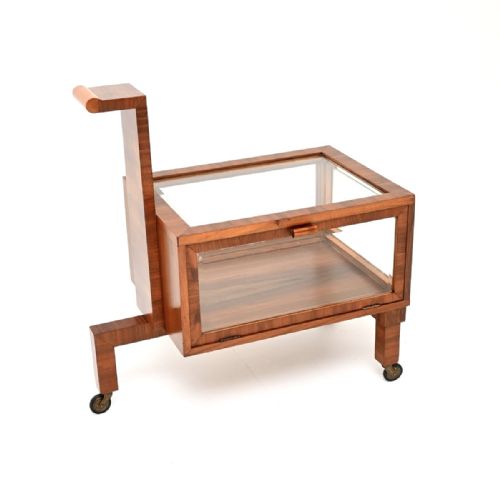
The selection includes pieces from the nineteenth century through the Edwardian era and into the mid-twentieth century. Art Deco designs from the nineteen-thirties feature prominently, often showcasing figured veneers and circular or metamorphic profiles.
Materials and construction methods
Makers utilised solid walnut and burr walnut veneer to create rich, figured grain patterns across the main surfaces and tiers. Timber frames were frequently mounted with brass hardware and fitted with metal castors to allow smooth movement across floors.
Depending on the period, construction techniques incorporated tiered shelving, folding mechanisms, telescopic columns, and glass inserts. These elements balanced structural stability with the mobility required for serving drinks and food.
Walnut Serving Trolley Retail Price Guide 2026
Typical asking prices for walnut serving trolley among the pieces listed under this phrase on Sellingantiques today, from the lower quarter to the upper quarter. They describe what is for sale here now, not the wider market.
Some Victorian dumbwaiters come with adjustable tiers that rise and fall like musical instruments.
Factors that distinguish the best examples
Quality rests in the selection of the timber veneer, the crispness of the turning or joinery, and the mechanical smoothness of adjustable tiers or metamorphic actions. Finely figured burr walnut commands attention for its visual depth compared to plain timber boards.
The integrity of the original brass fittings, castors, and glass components also separates standard production pieces from finer examples. Superior balance and robust frame construction ensure the trolley remains functional during use.
The Walnut Serving Trolley Glossary
- Burr walnut
- A prized timber harvested from walnut tree growths, producing swirling, highly decorative grain patterns. It is frequently utilised as a veneer on prominent surfaces.
- Dumbwaiter
- A multi-tiered piece of dining furniture designed to hold dishes, glasses, or bottles without requiring a servant present. Victorian examples often feature adjustable or revolving tiers.
- Metamorphic
- A descriptive term for furniture that transforms from one form into another, such as a trolley that expands its surface area. These pieces rely on clever internal hinges and folding leaves.
- Castor
- A small wheel mounted on a swivel assembly at the base of the legs. They allow heavy wooden trolleys to be moved effortlessly across a room.
- Aesthetic movement
- A nineteenth-century design style that emphasised artistic visual qualities over heavy historic revivalism. Pieces from this movement often display refined joinery and clean lines.
Walnut Serving Trolley: Frequently Asked Questions
What is a walnut serving trolley used for?
These pieces were originally designed to transport food, tea, and drinks between rooms without needing a dining table cleared. Today they serve equally well as mobile cocktail bars or display surfaces in living spaces.
Their tiered structure allows bottles, glassware, and accessories to be stored and moved with minimal effort during gatherings.
How do I date a walnut serving trolley?
Dating relies on observing stylistic markers, construction methods, and materials used in the frame. Victorian and Edwardian pieces often display turned supports and traditional joinery, whereas nineteen-thirties examples lean towards Art Deco curves and geometric veneers.
Checking for original castors, brass hardware, and glass inserts also helps place the piece within its specific decade.
Are these trolleys sturdy enough for daily use?
Most pieces were built from solid timber and robust veneers intended to support heavy glassware and ceramics. Well-constructed frames remain stable when rolled across firm flooring.
Care should be taken with folding mechanisms or telescopic columns on older models to ensure smooth operation without straining the joints.