




Art Deco Tea Cart
An art deco tea cart brings functional modernist elegance to home entertaining through polished metals and rich woods.
Art Deco Tea Cart
When searching for an art deco tea cart, buyers encounter mobile serving units designed for drinks and hospitality during the early and mid twentieth century. These pieces function as drinks trolleys, bar carts, and serving trolleys tailored for hosting guests.
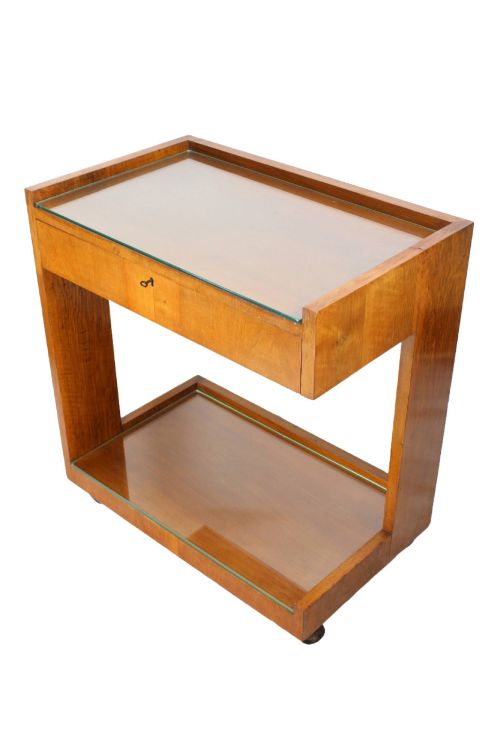
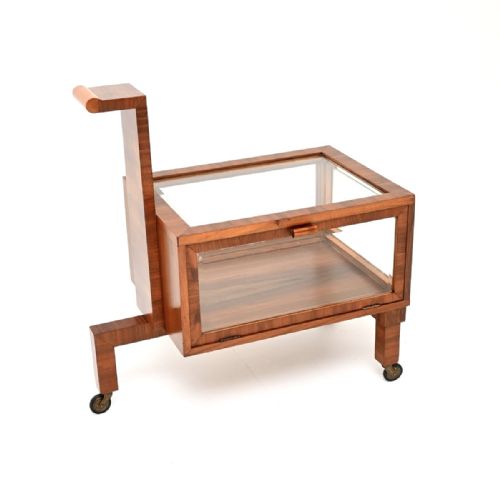
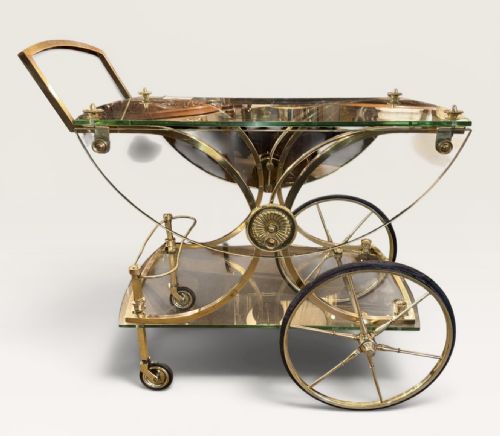
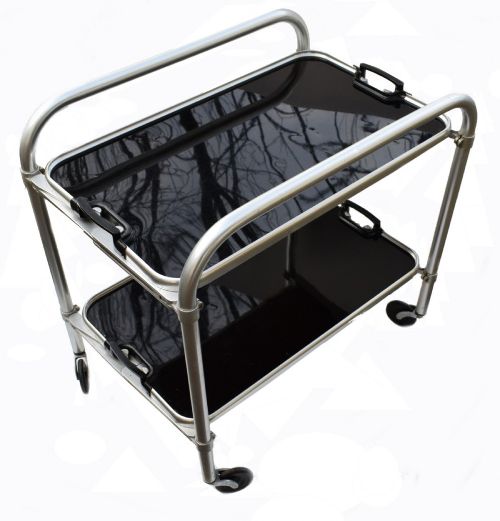
The versions most frequently met on this page date from the 1920s, 1930s, and 1940s, originating from English and French makers. Forms range from two-tier walnut trays to circular serving carts and metamorphic designs.
Makers utilised distinct regional approaches, pairing warm timbers with industrial metals like chrome, brass, and aluminium. Domestic pieces often favour figured walnut and mahogany, while continental examples incorporate silver plate and burr amboyna.
Assessing quality
Quality separates through the selection of materials and the precision of the metalwork joined to the timber. Finer examples feature figured veneers and substantial cast metal frames rather than lighter plated substitutes.
Design complexity also defines the upper range, seen in metamorphic mechanisms and specialised circular or display configurations. The integration of branded metalware or documented maker attribution elevates a piece further.
Art Deco Tea Cart Retail Price Guide 2026
Typical asking prices for art deco tea cart among the pieces listed under this phrase on Sellingantiques today, from the lower quarter to the upper quarter. They describe what is for sale here now, not the wider market.
Listings feature walnut, mahogany, and burr amboyna paired with chrome, brass, and silver plate across pieces dated from the 1920s to the 1940s.
Maison Bagues·Asprey
The Art Deco Tea Cart Glossary
- Metamorphic
- A piece of furniture designed to transform its shape or function through folding or sliding mechanisms. This engineering allows a serving surface to expand or alter its configuration during use.
- Burr Amboyna
- A highly prized timber burl showing intricate, swirling grain patterns. Cabinet makers utilised this decorative wood on surfaces to create dramatic visual contrast.
- Gallery rail
- A small metal or wooden barrier fitted around the edge of a tray or tier. This edge prevents bottles and glassware from sliding off during movement.
- Silver plate
- A thin layer of silver applied over a base metal foundation. This technique provided the appearance of solid silver for hardware and serving trays.
Art Deco Tea Cart: Frequently Asked Questions
What is an art deco tea cart?
An art deco tea cart is a mobile serving trolley designed during the 1920s, 1930s, and 1940s for hosting and dispensing drinks. These units typically feature multiple tiers constructed from glass and wood, supported by metal frames.
They combine utilitarian mobility with the geometric styling characteristic of the period. Collectors use them as functional display furniture in modern interiors.
How were these trolleys used originally?
These trolleys served as mobile cocktail bars and tea stations in domestic settings during the interwar period. Hosts used them to transport glassware, decanters, and serving dishes between rooms.
The wheeled design allowed effortless hospitality, bringing refreshments directly to guests seated in a drawing room or study.
How do I style a tea cart at home?
Styling involves arranging period glassware, cocktail shakers, and small decanters across the tiers for a balanced display. Incorporating a mix of glass, polished metal, and wood echoes the original material contrasts.
Position the cart against a wall or beside seating where it remains accessible yet functions as a decorative focal point.
How do I tell English and French pieces apart?
English pieces often emphasise warm domestic timbers like figured walnut and mahogany with straightforward tiered construction. French examples frequently lean toward bolder modernist materials, including chrome, burr amboyna, and mirrored glass.
Continental designs also tend to incorporate more elaborate curves and specialised hardware from known design houses.