

Walnut Salon Armchair
When you select a walnut salon armchair, you choose a piece of refined nineteenth-century seating designed for formal domestic entertaining.
Walnut Salon Armchair
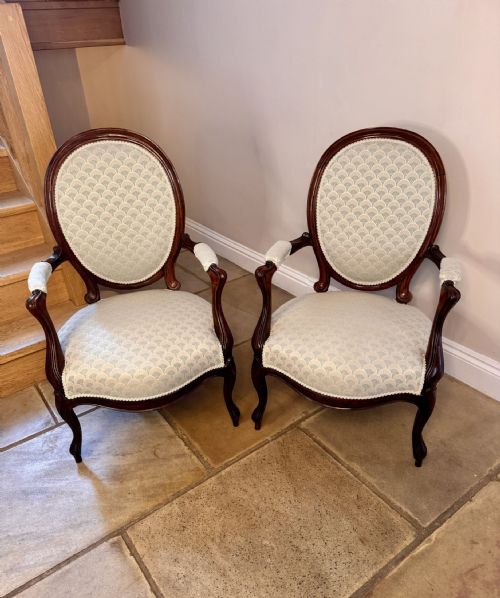
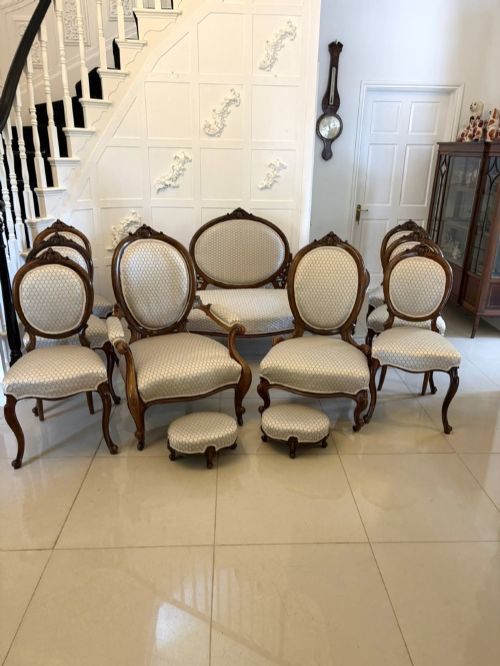
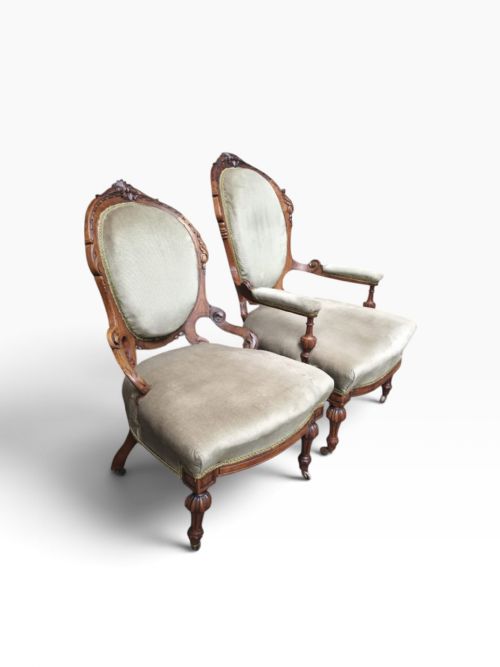
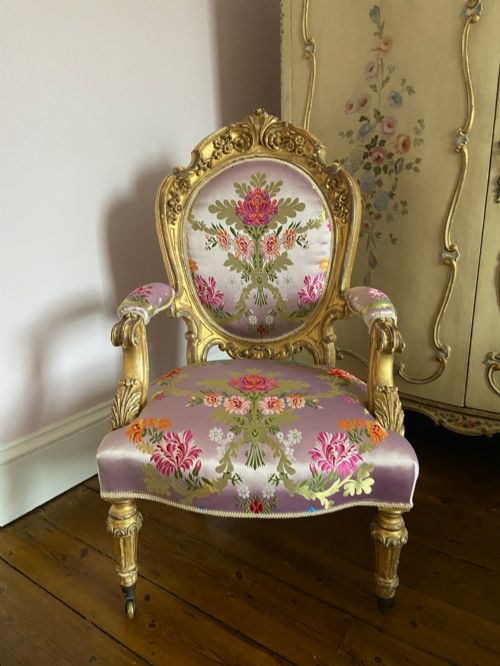
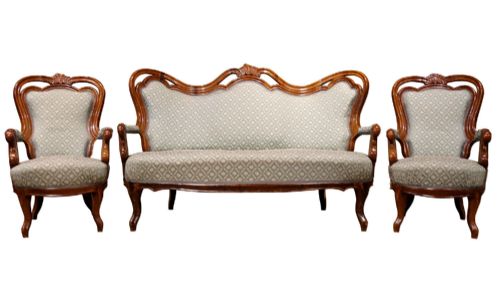
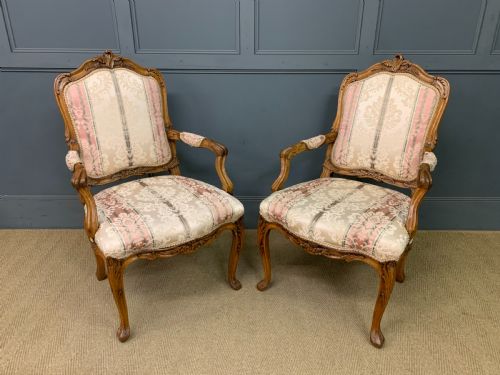
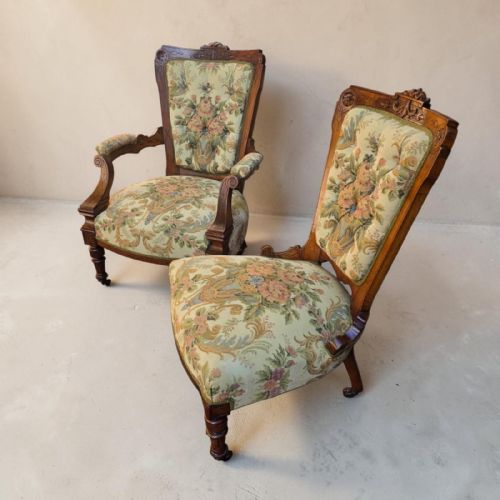
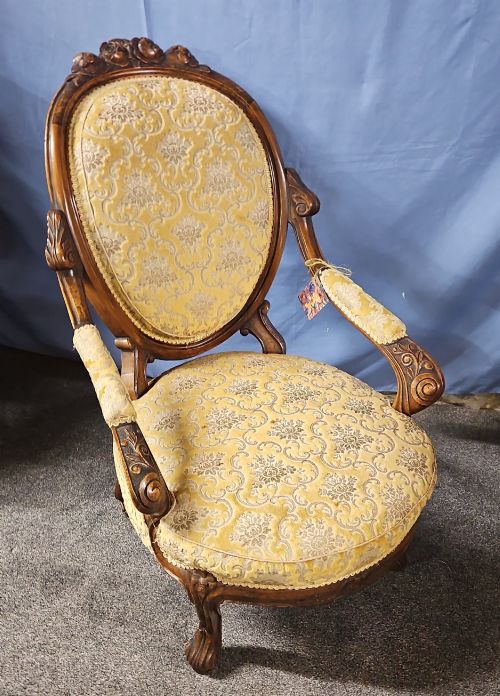
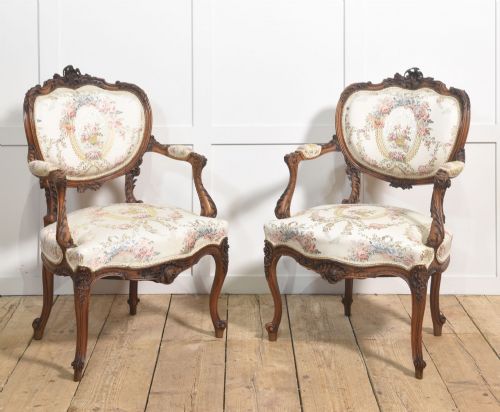
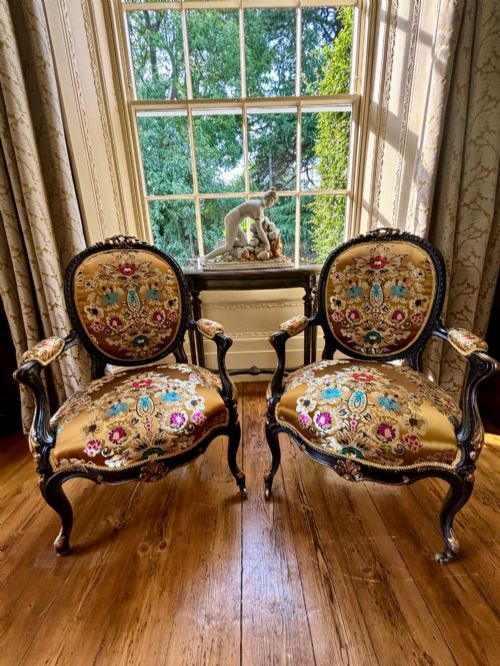
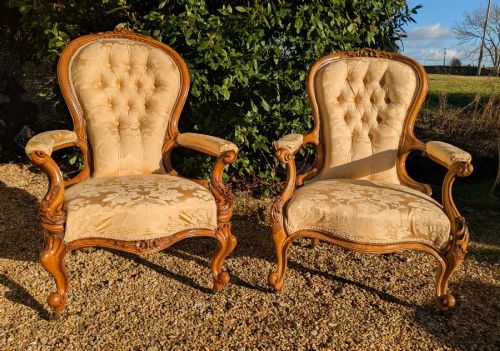
A walnut salon armchair is a form of nineteenth-century or early twentieth-century occasional seating designed primarily for formal drawing rooms and parlours. These chairs appear in various regional interpretations, including English Victorian productions and continental French designs influenced by Louis XV and Louis XVI revivals. The phrase encompasses open armchairs, tub chairs, spoonback forms, and pairs intended for matching salon suites.
The selections on this page highlight the persistent popularity of carved wooden frames paired with textile upholstery. Buyers frequently encounter nineteenth-century English and French examples displaying Rococo revival curves or button-backed padding. These items served both decorative and functional purposes in historic interiors, functioning as accent pieces alongside larger settees.
How they were made
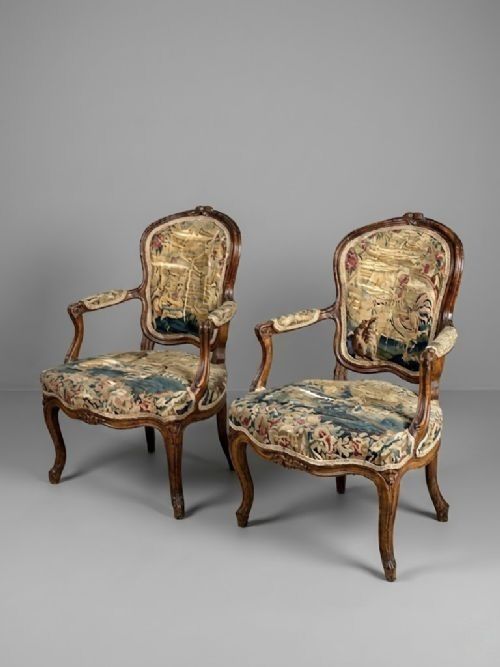
Frames rely principally on solid walnut, sometimes accompanied by gilt wood or auxiliary hardwoods, shaped through traditional joinery and manual carving. Upholstery techniques incorporate textile covers such as velvet, silk, damask, or needlepoint tapestry panels stretched over internal padding.
Makers utilised brass tacks, webbing, and springs within the structural depth of the seats and backs, particularly in Victorian and Edwardian iterations. Decorative elements frequently involve intricate woodwork applied to show frames, capturing the stylistic preferences of the period.
Walnut Salon Armchair Retail Price Guide 2026
Typical asking prices for walnut salon armchair among the pieces listed under this phrase on Sellingantiques today, from the lower quarter to the upper quarter. They describe what is for sale here now, not the wider market.
Several matched pairs preserve their original needlework covers, stitched by hands that grew weary under Victorian gaslight.
What varies in quality
The standard of carving on the wooden frame dictates much of the visual distinction between individual examples. Crisp, deeply undercut foliage and scrollwork indicate superior craftsmanship compared to shallow or mechanically replicated detailing.
The integrity of the original timber and the choice of covering fabric also separate standard production items from exhibition-grade pieces. Cohesion within matched pairs or multi-piece suites alters the overall desirability for collectors.
The Walnut Salon Armchair Glossary
- Spoonback
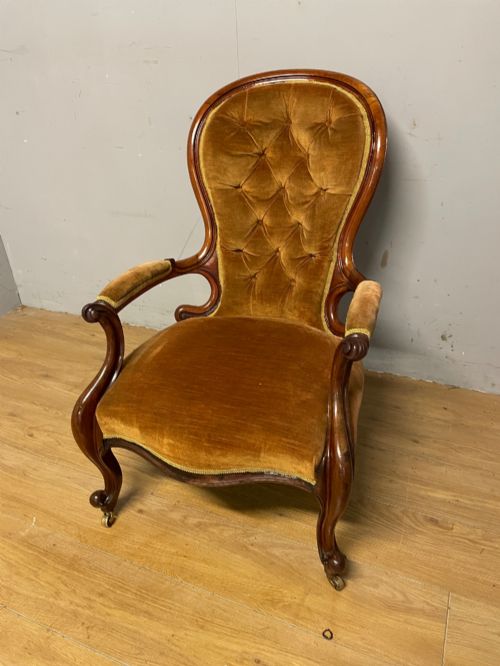
- An upholstered chair back shaped in a concave oval resembling the bowl of a spoon, common in Victorian seating. This ergonomic contour fits the human spine.
- Fauteuil
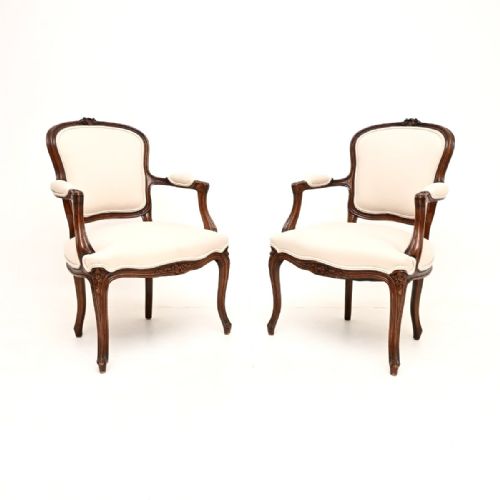
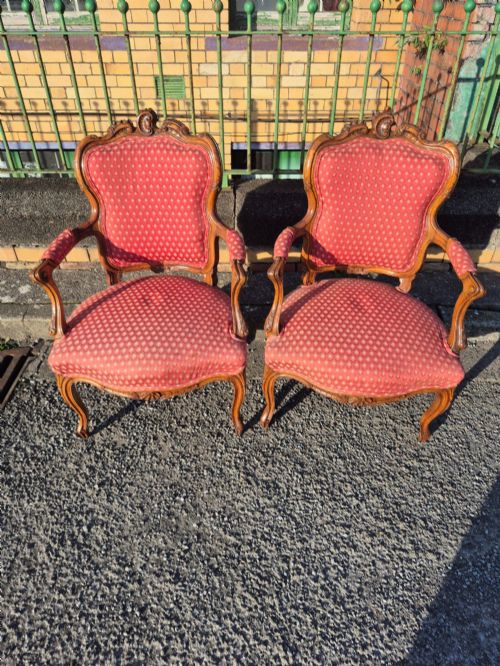
- An open-arm armchair originating in France, characterised by upholstered back and armrests with exposed wooden framing. These pieces typically display stylistic traits of Louis XV or Louis XVI revivals.
- Tub armchair
- A seating form featuring a continuous curved back and armrests that form a single enclosed barrel shape. This design provides a cocooning effect for the sitter.
- Show frame
- A wooden structural skeleton left deliberately exposed around the upholstered perimeter of a chair. It displays the grain and carving of the walnut.
- Needlepoint
- A type of canvas work embroidery utilised historically for decorative upholstery panels on formal seating. It introduces intricate multi-coloured patterns to the textile surface.
Walnut Salon Armchair: Frequently Asked Questions
What is a walnut salon armchair used for?
These chairs functioned historically as movable seating within formal reception spaces, drawing rooms, and ladies' chambers. Their lighter proportions compared to heavy library chairs allowed easy rearrangement for conversation.
Today, buyers utilise them as statement accent chairs in living rooms, bedrooms, or hallways where period character is desired.
How do I identify a Victorian walnut salon chair?
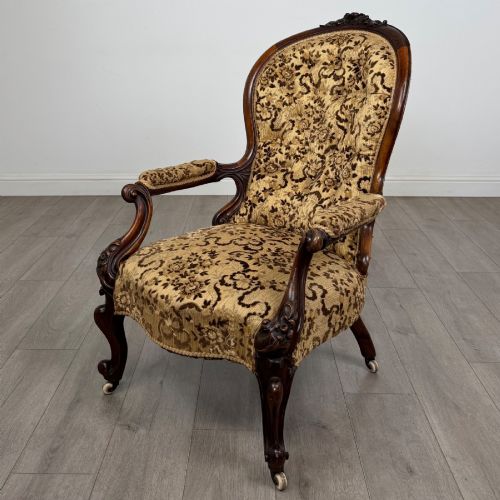
Victorian examples typically present dark walnut frames featuring characteristic nineteenth-century revival motifs such as C-scrolls, floral carvings, or button-backed upholstery. The proportions often reflect mid to late nineteenth-century domestic interior standards.
Makers of this era frequently paired the carved walnut timber with heavy damask, velvet, or needlework textiles.
Are these chairs comfortable for daily use?
Most historic salon chairs were built for upright formal posture during visiting hours rather than lounging. Their seats often incorporate traditional spring or webbing foundations that provide firm support.
Buyers planning regular daily seating should consider the depth and height of the specific frame to suit modern comfort preferences.
How do French and English salon armchairs differ?
French examples frequently follow Louis XV or Louis XVI revival styles, displaying lighter carved flourishes, cabriole legs, and Aubusson or tapestry upholstery panels. English Victorian pieces often lean towards heavier proportions, spoonback designs, and button-tufted velvet.
Both national traditions showcase the versatility of walnut as a primary framing timber during the nineteenth century.