

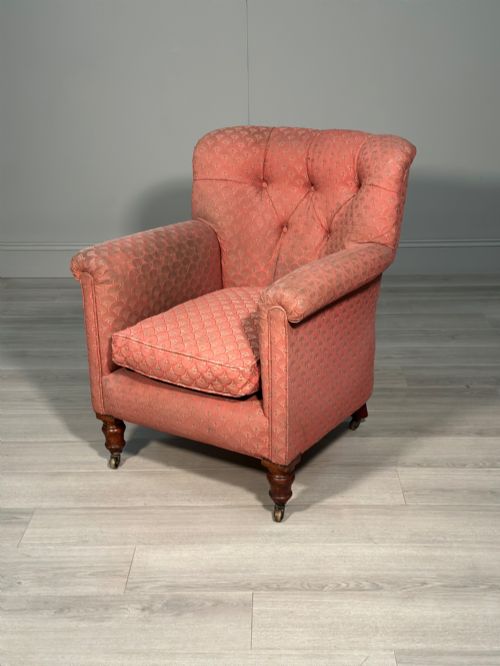
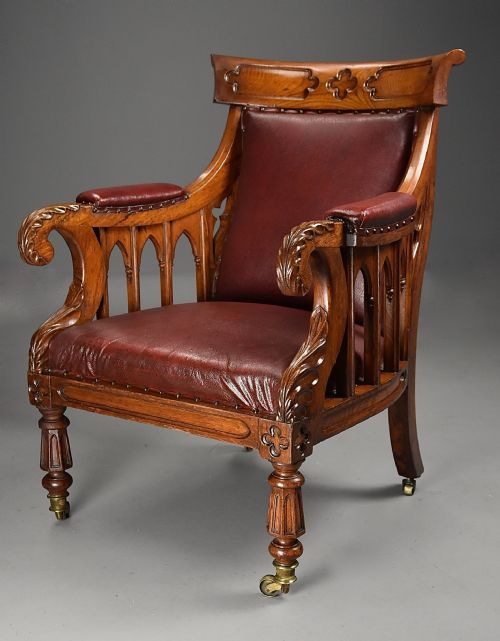
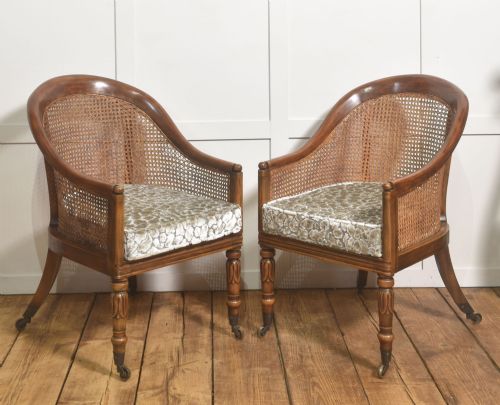
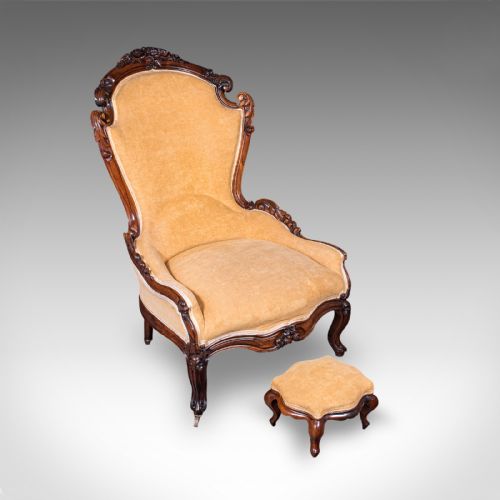
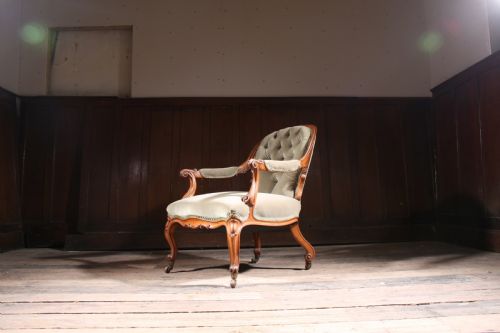
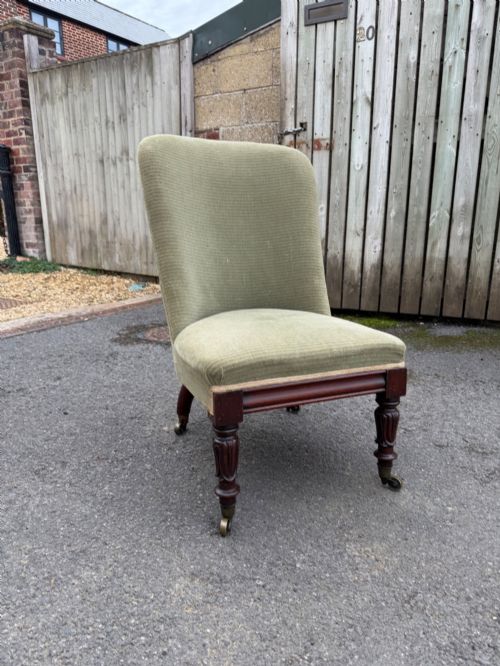
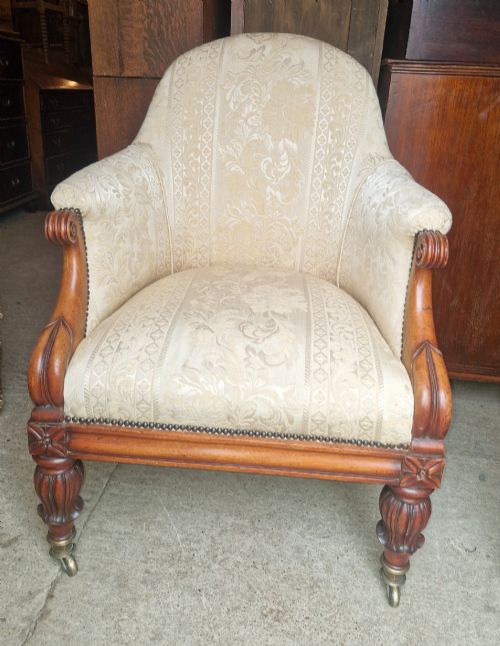

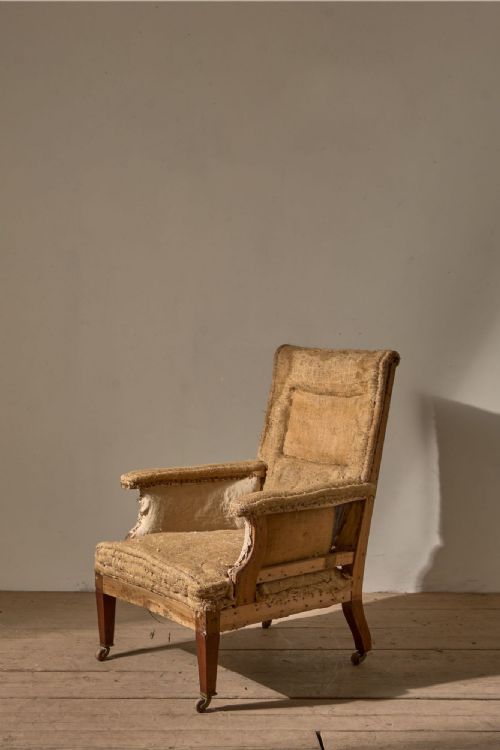
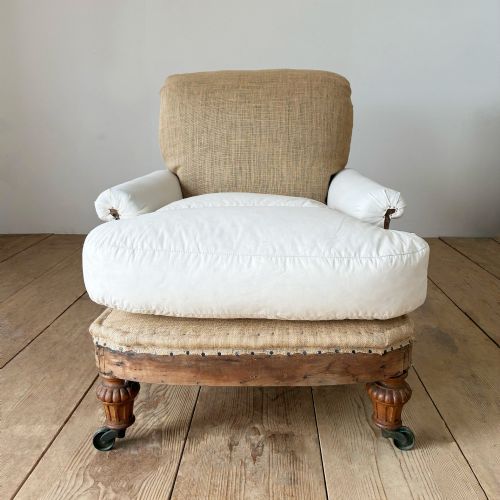
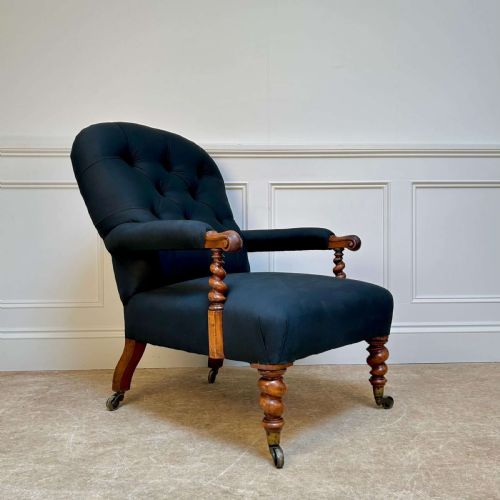


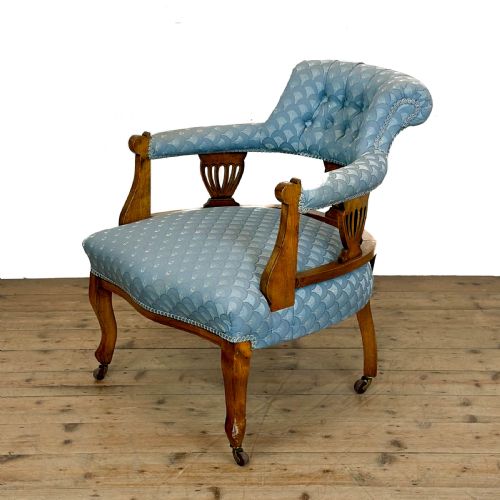
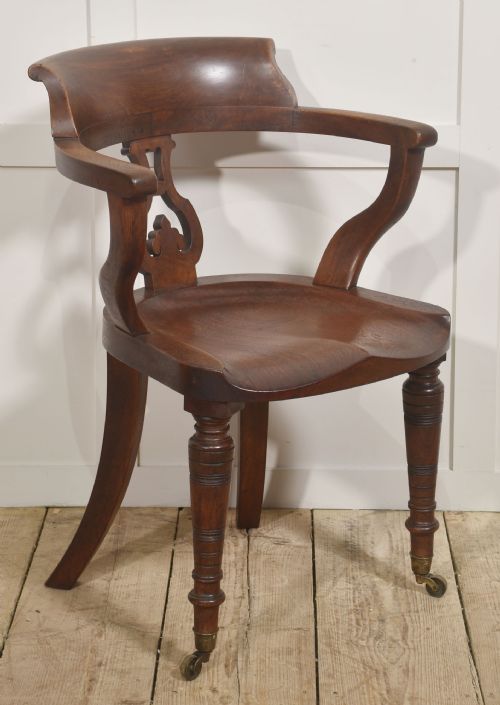

Carved Armchair on Castors
A carved armchair on castors brings robust nineteenth-century timber framing together with rolling mobility for the library or study.
Carved Armchair on Castors
A carved armchair on castors is typically a nineteenth-century seating form, spanning Regency, George IV, William IV, and Victorian periods. You encounter library armchairs, desk chairs, captain's chairs, and gentleman's chairs designed for domestic comfort.
The materials you see most often on this page include mahogany, walnut, rosewood, and oak frames. These timbers support various coverings such as fabric, leather, velvet, and needlework.
Makers and workshops recorded in the evidence range from Gillows and Hindley & Sons to Howard & Sons. Many pieces also emerge from English country house collections without attributed maker marks.
Materials and Technique
Makers shaped structural frames from dense hardwoods like mahogany, walnut, rosewood, and oak, often incorporating carved details on arms and forelegs. Brass castors were attached to the feet to allow smooth movement across carpets and wooden floors.
Upholstery techniques involved sprung or stuffed padding secured beneath fabric, leather, velvet, or needlework covers. Button back designs and showwood frames appear frequently across the nineteenth-century examples.
Carved Armchair on Castors Retail Price Guide 2026
Typical asking prices for carved armchair on castors among the pieces listed under this phrase on Sellingantiques today, from the lower quarter to the upper quarter. They describe what is for sale here now, not the wider market.
Listings span the nineteenth century, featuring Regency, William IV, Victorian, and Edwardian periods alongside oak, mahogany, rosewood, and walnut timbers.
Judging Quality
The refinement of the timber carving and the crispness of the framing separate standard examples from finer library armchairs. Superior pieces display harmonious proportions, substantial showwood frames, and well-executed scroll or lyre motifs.
The integrity of the original brass castors and the quality of the upholstery materials, whether leather, velvet, or needlework, contribute significantly to a chair's standing.
Hindley & Sons·Gillows·Howard & Sons
The Carved Armchair on Castors Glossary
- Bergère
- An enclosed upholstered armchair with exposed wooden framing and cane or upholstered sides. It frequently appears in Regency and nineteenth-century libraries.
- Castor
- A small wheel fitted to the foot of a chair leg to permit rolling. Brass is the primary metal seen on these nineteenth-century frames.
- Showwood
- Polished hardwood framing left visible around the upholstered portions of a chair. Walnut and mahogany are common showwood materials.
- Spoon back
- A curved, recessed backrest shaped to resemble the bowl of a spoon. It appears on Victorian walnut and Regency seating forms.
Carved Armchair on Castors: Frequently Asked Questions
What is a carved armchair on castors?
A carved armchair on castors is a nineteenth-century wooden seat fitted with small wheels for mobility. These pieces include library chairs, desk chairs, and gentleman's chairs.
They combine dense hardwoods like mahogany, walnut, or rosewood with upholstered seats, backs, and brass castor fittings.
How do I tell Regency from Victorian chairs?
Regency and George IV pieces often feature clean architectural lines, lyre motifs, and rosewood or mahogany frames. Victorian examples tend to introduce heavier walnut frames, button backs, and spoon shapes.
Cabinetmakers also shifted carving styles across the decades, moving from classical Regency restraint to more exuberant Victorian ornamentation.
Were these chairs used at desks?
Many examples on this page are specifically designated as desk chairs, captain's chairs, or library armchairs. The castors allowed users to swivel or roll away from a partner desk or reading table with ease.
Oak, mahogany, and walnut frames with leather or wood seats provided durable support for daily study.
How should I live with one of these chairs?
These armchairs suit studies, libraries, and living rooms where their timber frames and upholstery can be appreciated. Position them on level flooring to protect the original brass castors from strain.
Regular dusting of the hardwood frame and careful maintenance of the leather, fabric, or velvet will preserve the chair.