
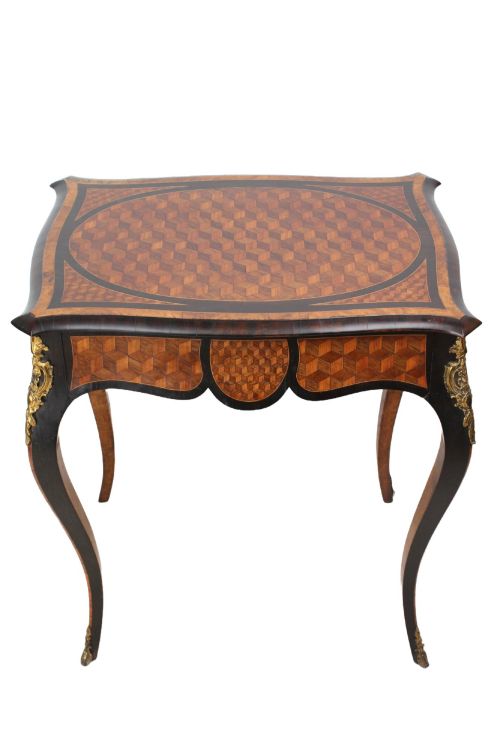
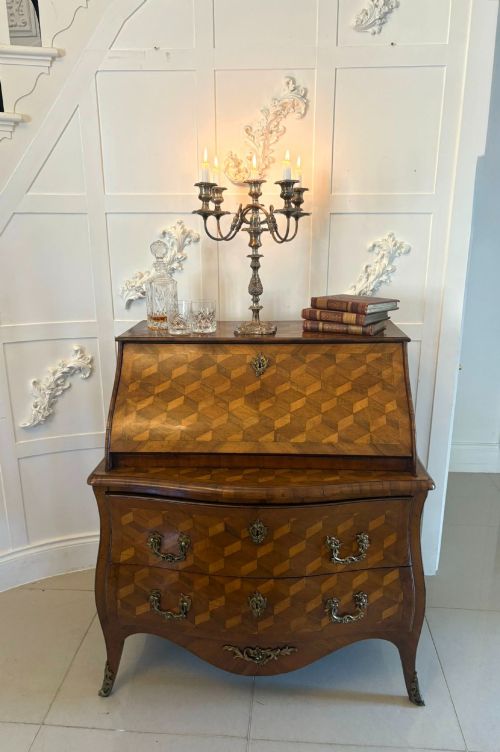
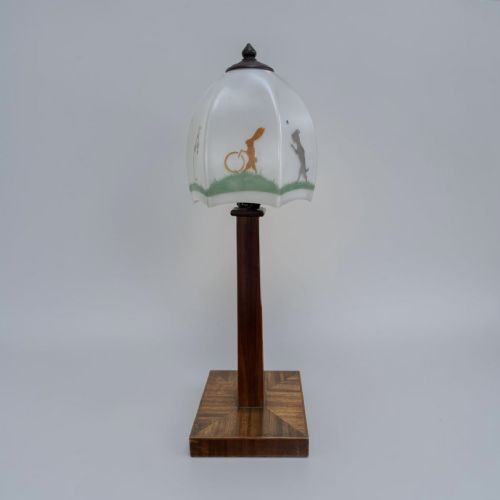
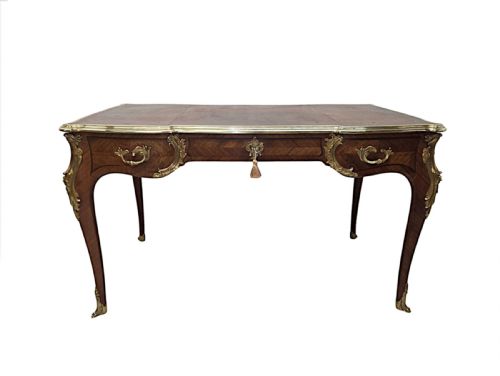

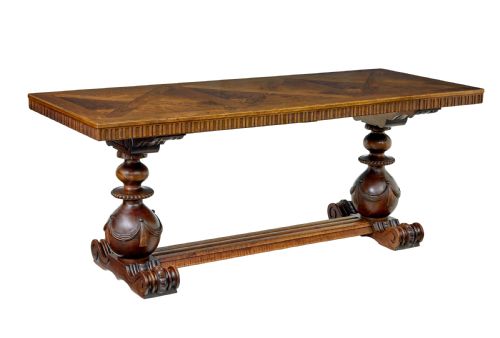


Walnut Parquetry Desk
A walnut parquetry desk brings geometric woodcraft and rich timber tones into a room, offering a practical writing surface built with ornamental precision.
Walnut Parquetry Desk
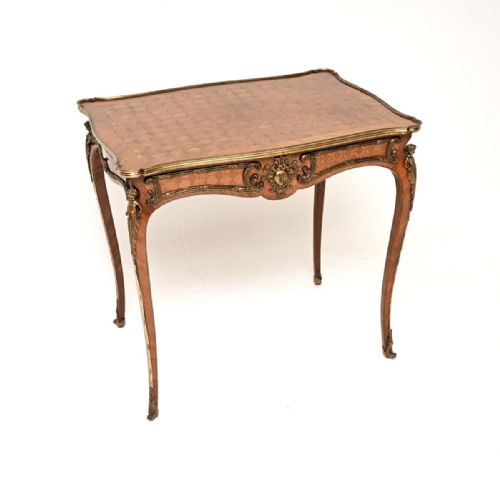
When you search for a walnut parquetry desk, you find writing surfaces decorated with geometric wood veneers. The selections here span centuries, reaching from eighteenth-century continental pieces to later nineteenth-century revival interpretations and twentieth-century designs.
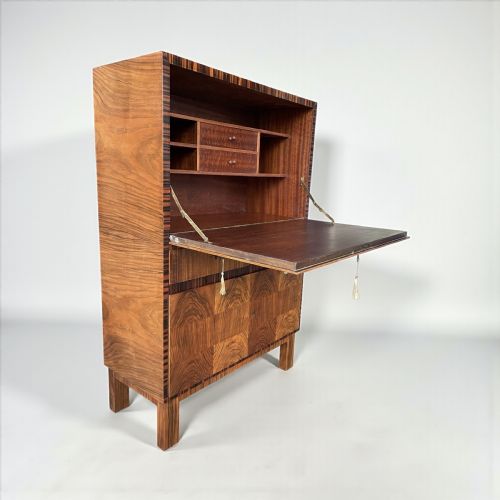
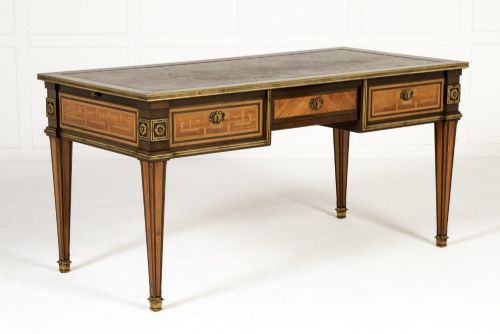
The dominant forms on this page include writing tables, bureau plat desks, and bureau de dame styles, alongside fall-front secrétaires and smaller portable writing slopes. Many items originate from French workshops, alongside English and Scandinavian examples created in similar decorative traditions.
Makers and retailers such as Jas Shoolbred, Maples, Maurice Dufrêne, and Edmund Nye appear across the records. These pieces combine functional storage or writing space with complex geometric surface patterns.
How they were made
Carpenters constructed these desks using walnut as the primary timber, often combining it with contrasting woods like kingwood, rosewood, and coromandel to build intricate parquetry patterns. Veneers were hand-cut and laid onto underlying carcases in geometric arrangements.
Metal elements played a structural and decorative role, with gilt bronze, brass, and ormolu mounts fitted to corners, handles, and edges. Some desks incorporate leather writing surfaces, marble tops, and glass components.
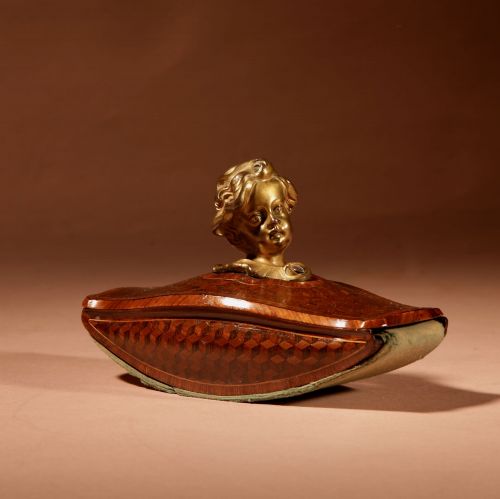
Specialised techniques such as Tunbridge ware surface decoration appear on smaller items like writing slopes and stationery boxes. Cabinetmakers balanced structural stability with elaborate surface ornamentation.
Listings feature walnut parquetry desks across eighteenth, nineteenth, and twentieth-century periods, alongside related forms like occasional tables and stationery boxes.
What varies in quality
The standard of a walnut parquetry desk depends on the precision of the geometric veneer work and the integration of the mounts. Finer examples show tight joints in the parquetry blocks and substantial timber selection without warping across large flat surfaces.
Mount quality separates standard production from exceptional pieces, as cast gilt bronze and ormolu details require careful chasing and secure fitting. The sophistication of the internal compartments and drawer linings also indicates the tier of the workshop.
JAS Shoolbred·Edmund Nye·Maurice Dufrêne·Maples
The Walnut Parquetry Desk Glossary
- Parquetry
- A geometric mosaic of wood veneers used to cover floors or furniture surfaces. It differs from marquetry by using strictly geometric angles rather than pictorial scenes.
- Bureau plat
- A freestanding writing table fitted with one or more drawers in the frieze. These desks typically feature finished backs so they can stand in the middle of a room.
- Ormolu
- Gilded bronze ornamentation applied to furniture mounts and clock cases. The technique involves applying a mercury and gold amalgam to cast bronze before heating.
- Bonheur du jour
- A light lady's writing desk featuring a small cabinet or set of shelves superstructure above the writing surface. These pieces became popular during the eighteenth century.
- Secrétaire abattant
- A tall upright desk with a drop-front panel that conceals internal pigeonholes and drawers. This form maximises vertical storage while providing a fold-down writing ledge.
Walnut Parquetry Desk: Frequently Asked Questions
How do I clean a walnut parquetry desk?
Dust the surface regularly with a soft dry cloth to prevent dirt accumulation in the veneer joints. Apply specialist wax sparingly to nourish the walnut timber.
Avoid chemical cleaning sprays and keep moisture away from the inlaid sections and leather inserts. Consistent humidity control prevents the small veneer tiles from lifting.
Where should I place a freestanding desk?
Position the desk away from direct sunlight and heat sources to protect the walnut timber and underlying veneers from fading or splitting. Freestanding bureau plat designs look best positioned toward the centre of a room.
Ensure adequate clearance around drawers and drop-front panels for comfortable daily use. Keep leather writing surfaces clear of sharp objects to maintain the material.
What is the difference between a bureau plat and a bureau de dame?
A bureau plat is a flat-topped writing table with drawers beneath the surface, designed to sit away from the wall. These tables offer a wide, open workspace.
A bureau de dame is typically smaller and often includes a superstructure with small drawers and pigeonholes above the desk top. These feminine writing desks were designed for correspondence rather than administrative work.
How can I tell a nineteenth century revival desk from an eighteenth century original?
Eighteenth century pieces exhibit construction methods, timber ageing, and hand-cut joinery characteristic of period cabinetmaking. Revival desks from the nineteenth century often incorporate machine-cut veneers and standardised hardware fittings.
Examine the secondary woods inside the drawers and the wear patterns around the handles. Comparing construction details helps determine the period of manufacture.