


Antique Salesmans Sample Desk
These antique salesmans sample desk and miniature furniture pieces are scaled salesman samples and apprentice pieces built to show skill or travel easily.
Antique Salesmans Sample Desk
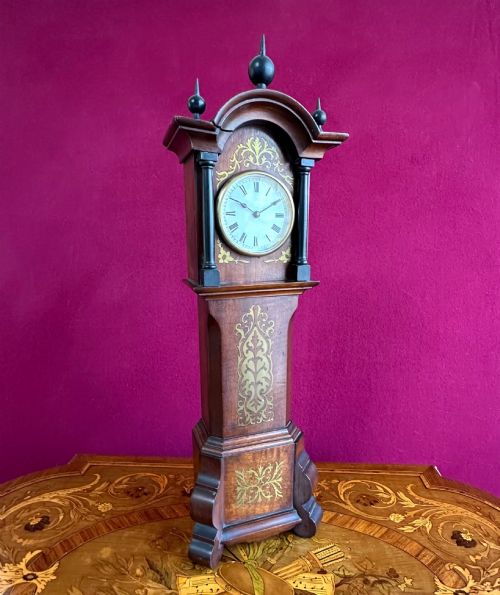
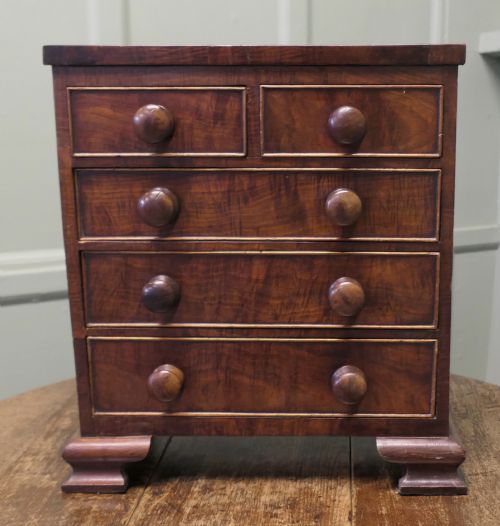
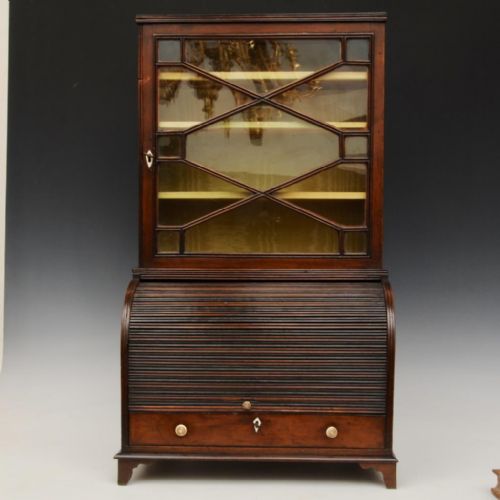
When you search for an antique salesmans sample desk, you encounter miniature furniture forms including chests of drawers, bureau bookcases, secretaire cabinets, kneehole desks, and grandfather clocks. These diminutive objects were made as apprentice pieces or traveller samples to demonstrate joinery and design.
The pieces appearing on this page span the eighteenth century, the Victorian era, and the early twentieth century, taking shape in styles such as Georgian, William and Mary Revival, and Louis XV. Miniature chests of drawers and bureau bookcases emerge most frequently among these listings.
Construction and materials
Makers utilised dense hardwoods such as mahogany, oak, walnut, and yew to construct these miniature forms, frequently pairing them with secondary timbers. Surfaces received traditional finishes including French polish, while structural elements involved precise dovetailing and miniature joinery techniques.
Detailing often incorporated inlay, parquetry, and contrasting stringing using boxwood. Smaller decorative accents featured cast brass handles, escutcheons, and occasional bone or glass components.
Listings feature items from the eighteenth, nineteenth, and early twentieth centuries, constructed in mahogany, oak, walnut, and yew.
Quality differences
The fidelity of the scaling dictates the success of the piece, separating items that merely look small from those that replicate full-sized construction accurately. Superior examples maintain correct proportions across drawers, cornices, and feet rather than appearing compressed or clumsy.
The refinement of the internal joinery and the selection of timber grain distinguish the better objects in this range. Finely figured mahogany or burr walnut veneers, clean dovetails, and crisp parquetry indicate a higher standard of workmanship from the maker.
The Antique Salesmans Sample Desk Glossary
- Apprentice piece
- An item created by a trainee craftsman to demonstrate mastery of a trade to a guild or master. These objects often show meticulous attention to structural detail.
- French polish
- A shellac finish applied in numerous thin coats using a rubber pad to achieve a high gloss. This technique gained widespread use during the nineteenth century.
- Parquetry
- A geometric mosaic of wood pieces used for decorative veneering on floors and furniture surfaces. Artisans employed contrasting timbers to create visual depth.
- Kneehole desk
- A writing table featuring a central recess for the legs flanked by pedestals of small drawers. Miniature versions replicate this functional domestic layout on a small scale.
- Secretaire cabinet
- A piece of furniture containing a writing drawer or fold-down writing flap concealing compartments and small pigeonholes. The form allows for secure storage of correspondence.
Antique Salesmans Sample Desk: Frequently Asked Questions
What is an antique salesmans sample desk?
These items are small-scale furniture pieces created either as working models for travelling salesmen or as test pieces by apprentices learning cabinetmaking. They duplicate full-sized desks, chests, and cabinets in every structural detail except overall dimension.
Craftsmen built them to demonstrate their technical competence in joinery, turning, and veneering to prospective clients or guild examiners.
How were miniature desks used historically?
Salesmen transported these compact models to show clients furniture designs and timber options without hauling heavy full-sized inventory. Apprentices constructed them to prove their mastery before qualifying as journeymen cabinetmakers.
In domestic settings, affluent households sometimes placed miniature furniture on tabletops or inside larger cabinets as decorative curiosities.
How do I date a miniature desk?
Dating relies on identifying the prevailing furniture style, such as Georgian, Victorian, or William and Mary Revival, combined with the characteristics of the timber and construction methods. Secondary woods, handle styles, and dovetail cuts provide reliable clues to the decade of manufacture.
Many pieces reflect the revival styles popular in the nineteenth and early twentieth centuries rather than the exact period of the original design.
What woods were used for these pieces?
Cabinetmakers selected dense hardwoods such as mahogany, oak, walnut, and yew because they held fine details and intricate joints securely. They often applied veneers of figured timber to the primary surfaces for decorative effect.
Inlays of boxwood and secondary woods added contrast, while brass hardware completed the miniature fittings.