
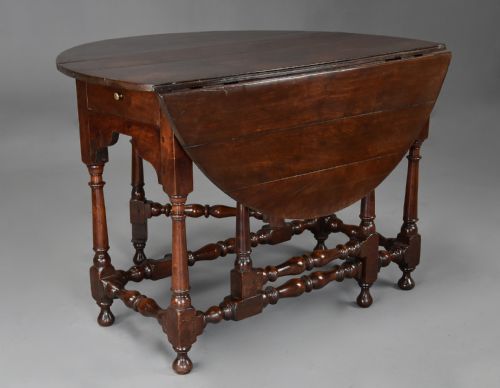
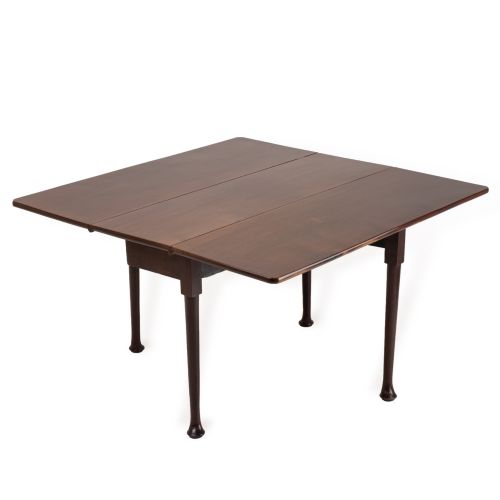
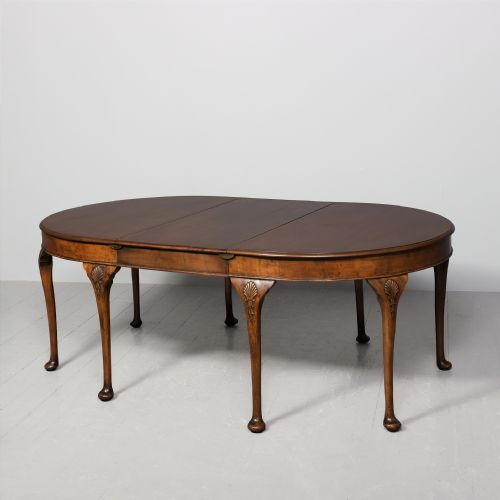


Walnut Oval Drop Leaf
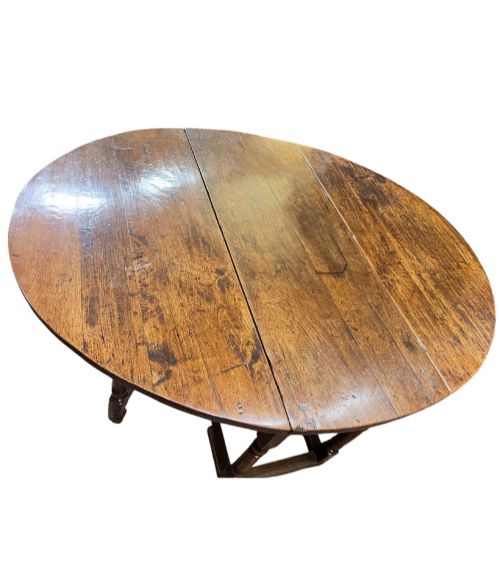
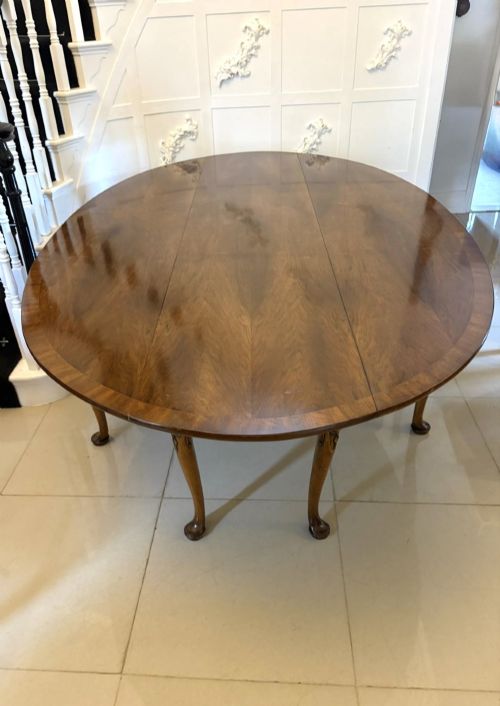
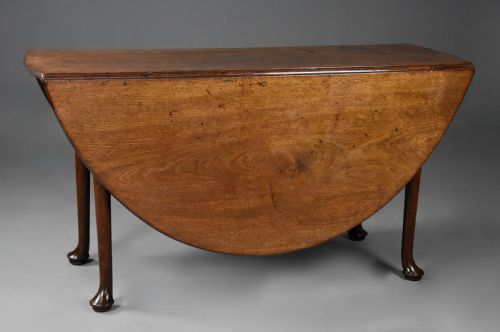
A walnut oval drop leaf table brings warmth and clever folding space to a room, spanning periods from the seventeenth century through to the Victorian era.
Walnut Oval Drop Leaf
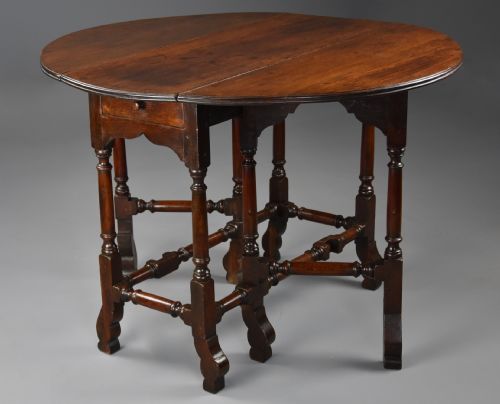
When you search for walnut oval drop leaf tables, you encounter gateleg designs, Sutherland tables, and dining pieces spanning several centuries. The evidence shows forms ranging from early eighteenth-century red walnut gatelegs to Victorian burr walnut Sutherland tables.
The selection here includes large solid dining tables alongside smaller occasional pieces. Many examples utilise drop leaves supported by folding legs or scissor actions to adjust their footprint.
Earlier periods favour solid walnut and red walnut constructions with patinated surfaces, while Victorian makers often employ burr walnut veneers enriched with marquetry inlay or brass fittings.
How they were made
Cabinet makers utilised walnut timber, frequently cutting decorative burr veneers to cover secondary woods like oak. Tables rely on hinged drop leaves supported by swinging gatelegs or scissor actions.
Surfaces often feature boxwood stringing or floral marquetry inlay, finished by hand to bring out the grain pattern. Structural elements incorporate brass hinges and occasionally single drawer compartments.
The listings span from the seventeenth century through the Georgian era to Victorian times, utilising solid walnut, burr veneer, and oak.
What varies in quality
The choice of timber creates a distinct separation in the range, moving from plain walnut boards to highly figured burr walnut and red walnut. Figured surfaces and complex marquetry inlay require greater skill from the maker.
Proportions also dictate distinction, with smaller scaled gateleg examples and large ten-seater dining tables representing different functional demands. The depth of the patina on older surfaces marks out pieces that have aged gracefully.
The Walnut Oval Drop Leaf Glossary
- Gateleg table
- A table with hinged leaves supported by legs that swing outward like a gate. This form provides a large surface area when extended and folds compactly.
- Sutherland table
- A narrow-profile drop leaf table featuring particularly slender legs and leaves that fold down almost vertically. They emerged during the Victorian period for versatile occasional use.
- Burr walnut
- Wood taken from a walnut tree growth where the grain has swirled into intricate patterns. Cabinet makers slice this material into decorative veneers.
- Marquetry
- Decorative patterns formed by fitting together small pieces of wood veneer. Artisans apply these designs to table tops.
- Red walnut
- A specific classification of American or European walnut timber noted for its distinct reddish hue. It appears frequently in eighteenth-century furniture.
- Drop leaf
- A hinged table leaf that folds down at the side of the main top. It allows the furniture piece to alter its size according to space requirements.
Walnut Oval Drop Leaf: Frequently Asked Questions
What is a Sutherland table?
A Sutherland table is a narrow drop leaf table designed to take up minimal space when folded down.
Victorian makers favoured this form for occasional use in sitting rooms and parlours.
How do gateleg tables work?
Gateleg tables utilise hinged leaves supported by swinging legs that pivot outward from the frame.
This mechanism provides sturdy support underneath extended leaves while allowing the table to fold flat.
What is burr walnut?
Burr walnut is timber harvested from a tree excrescence that produces swirling, highly decorative grain patterns.
Cabinet makers slice this wood into thin veneers to adorn table tops and display surfaces.
How do I care for walnut furniture?
Walnut furniture benefits from regular dusting with a soft, dry cloth and protection from direct sunlight and heat sources.
Avoiding excessive moisture preserves the finish and natural patina of the wood over time.
Are these tables suitable for dining?
Certain examples function primarily as dining furniture, including large ten-seater wake tables and drop leaf dining formats.
Smaller pieces serve better as occasional tables or coffee table heights.