




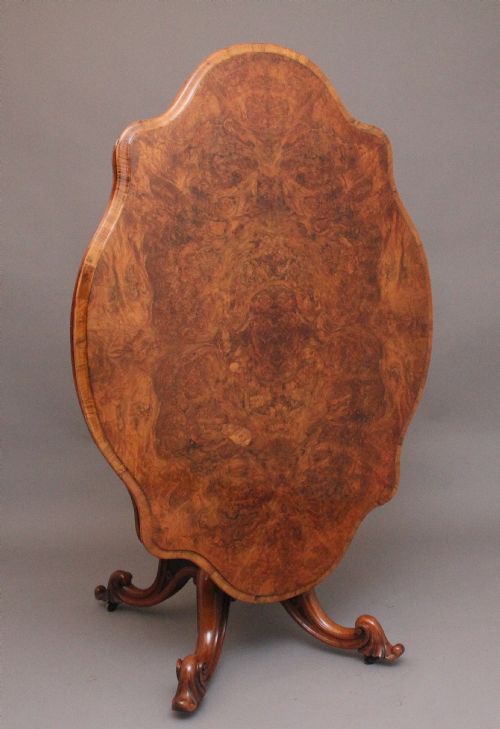
Walnut Oval Breakfast Table
A walnut oval breakfast table offers warmth and proportion, bringing nineteenth-century timber into daily service as a centrepiece or dining surface.
Walnut Oval Breakfast Table
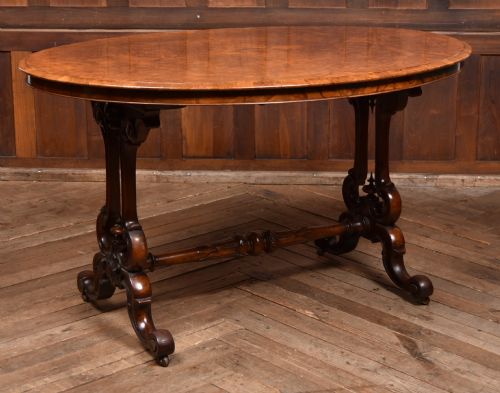
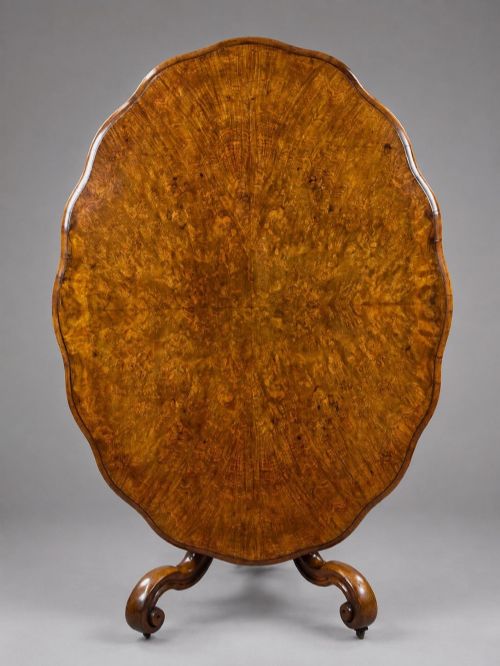
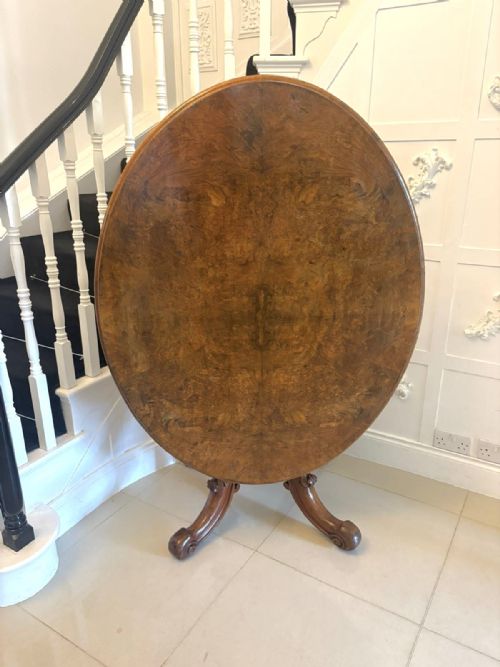
A walnut oval breakfast table brings together nineteenth-century domestic design and rich timber grain, serving primarily as a loo table, centre table or tilt-top dining piece. The pieces encountered here stem predominantly from the Victorian period, spanning the decades from eighteen-fifty to eighteen-ninety, alongside occasional Edwardian examples.
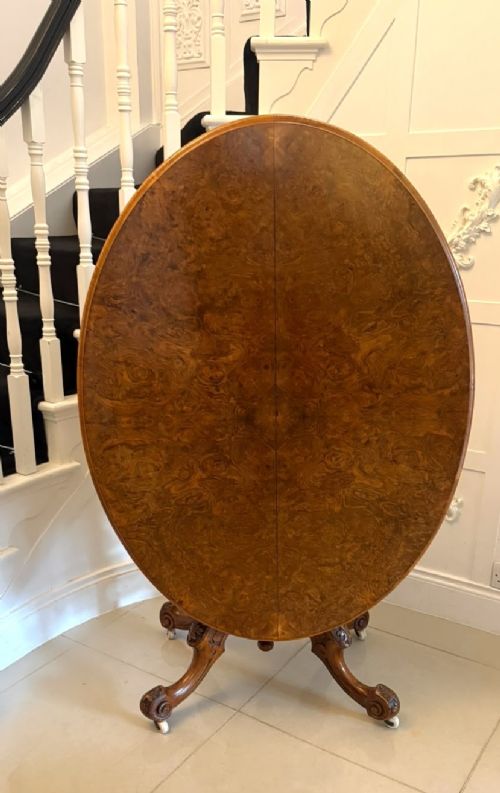
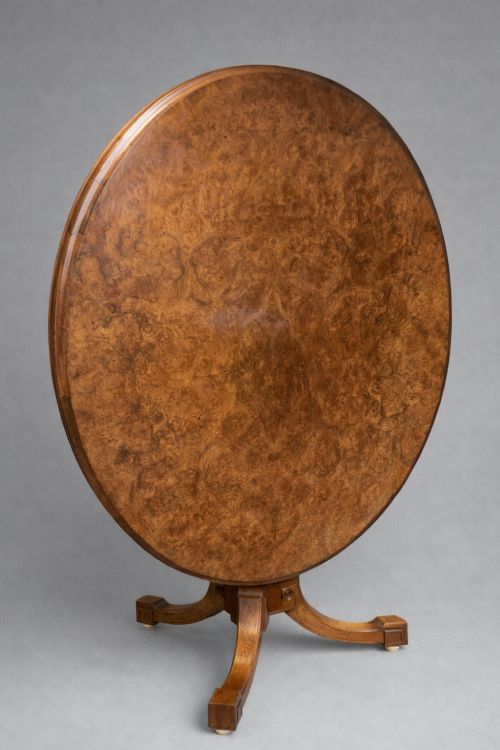
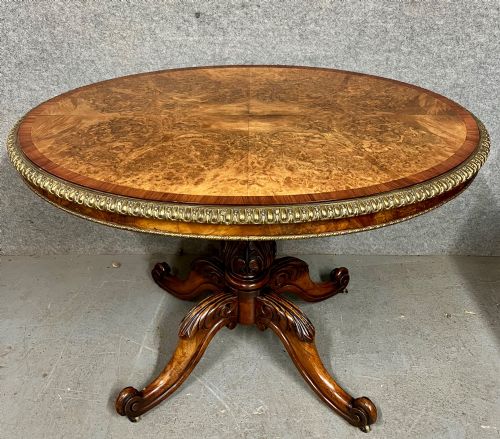
These tables typically feature an oval top supported by a central pillar or a carved quadrapod base, designed to stand freely in a room. Many examples incorporate a tilt mechanism, allowing the top to pivot vertically when not in use to save space.
Materials and construction
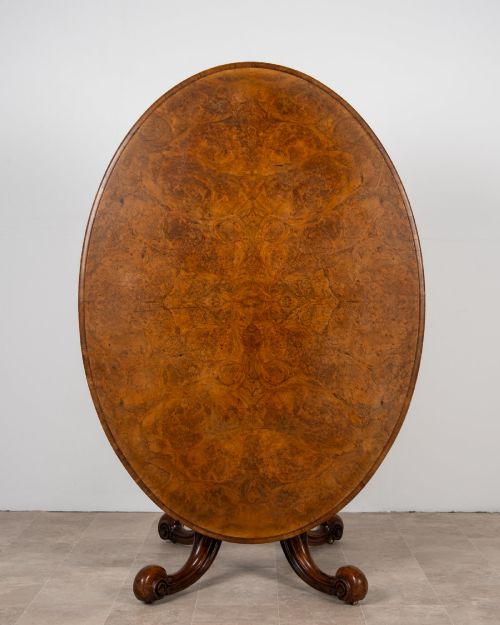
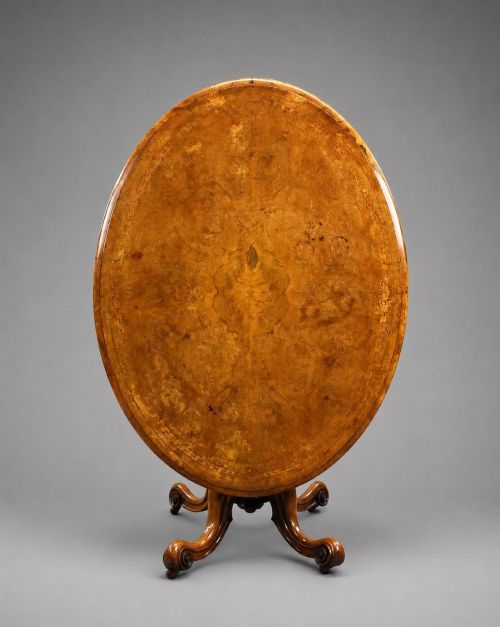
Makers utilised solid walnut and burr walnut veneer, selected for its swirling, highly figured grain patterns that create decorative patterns across the table top. This timber was frequently enhanced with boxwood inlay, adding precise geometric or floral detailing around the borders.
Structural elements often incorporated brass fittings, particularly within the castor mounts on the pedestal bases, while secondary woods provided stability beneath the veneers. Carved wooden details on the pillars and feet required skilled hand joinery to support the weight of the heavy oval tops.
Walnut Oval Breakfast Table Retail Price Guide 2026
Typical asking prices for walnut oval breakfast table among the pieces listed under this phrase on Sellingantiques today, from the lower quarter to the upper quarter. They describe what is for sale here now, not the wider market.
Nineteenth-century card players needed sturdy pivot mechanisms so their tables could double as impromptu dining surfaces after a late game.
Judging quality and execution
The distinction between tiers rests upon the choice of veneer and the depth of the carving on the base. Highly figured burr walnut with matching symmetry across the oval top marks out superior examples, whereas plain walnut timber indicates simpler production.
Execution of the inlay and the crispness of the hand-carved pillars further separate standard tables from exceptional ones. A well-balanced tilt mechanism and sturdy quadrapod base demonstrate superior workshop construction.
Edwards & Roberts
The Walnut Oval Breakfast Table Glossary
- Burr walnut
- A prized timber harvested from walnut tree growths, yielding intricate and swirling grain patterns. It was sliced into thin veneers for decorative table tops.
- Loo table
- A large nineteenth-century occasional or dining table designed for card games like loo. These tables frequently feature tilt tops for convenient storage.
- Tilt top
- A pivoting table top mechanism secured with a catch. This design allowed the surface to fold flat against the pedestal when not in use.
- Quadrapod base
- A heavy central pedestal supported by four carved legs or feet. It provides the necessary stability for large oval table tops.
- Boxwood inlay
- Contrasting pale wood inserted into recesses within the darker walnut surface. This technique creates delicate borders and decorative motifs.
Walnut Oval Breakfast Table: Frequently Asked Questions
What is a loo table?
A loo table is a nineteenth-century multi-purpose table designed originally for the card game loo. These pieces served as general centre tables when not in use for gaming.
Their generous oval surfaces made them adaptable for dining or social gatherings in Victorian parlours.
How do tilt-top mechanisms work?
A tilt-top mechanism uses a hinged block beneath the table surface secured by a brass latch or wooden pin. Releasing the catch allows the entire top to pivot vertically.
This clever engineering enabled large tables to be stored flat against a wall to free up floor space.
How do I date a walnut table?
Dating relies on observing construction methods, timber selection, and decorative motifs like boxwood inlay or carved pillar styles. Victorian examples often display deep burr walnut veneers and heavy quadrapod pedestal bases.
Edwardian pieces tend to show lighter framing and refined inlay patterns reflecting turn-of-the-century tastes.
Where should I place a centre table?
A centre table is designed to be viewed from all angles, making it ideal for the middle of a spacious room or a large entrance hall. Because the base supports the weight centrally, seating can be arranged freely around the oval perimeter.
Avoid placing these tables in direct sunlight to protect the sensitive walnut veneers from fading.