


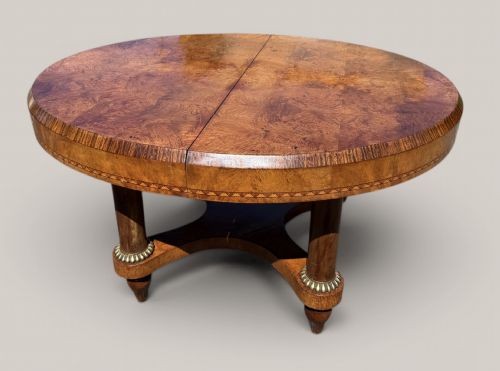


Oval Burr Walnut Dining Table
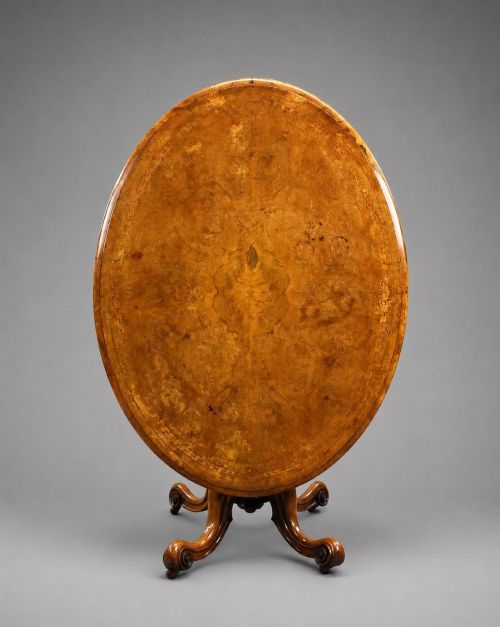
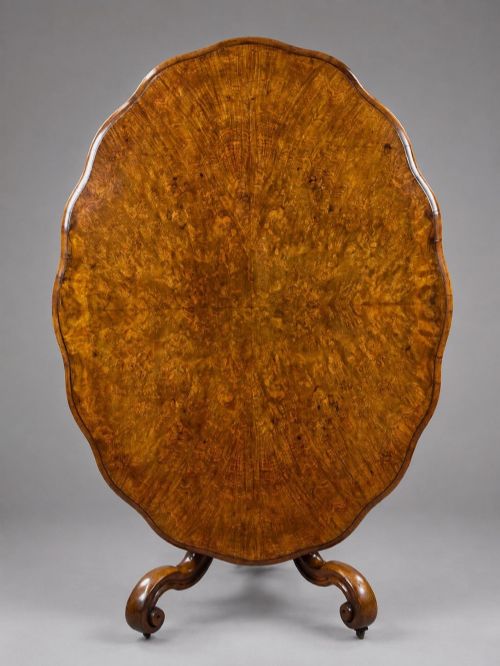
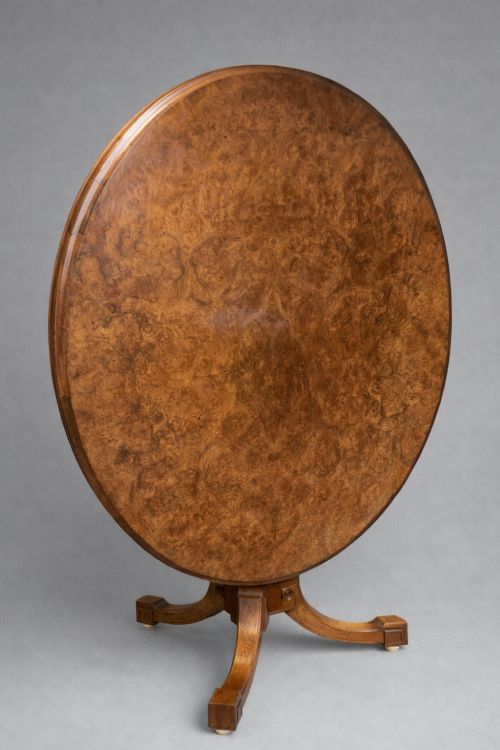
An oval burr walnut dining table brings rich, figured timber and soft curved lines directly into a room.
Oval Burr Walnut Dining Table
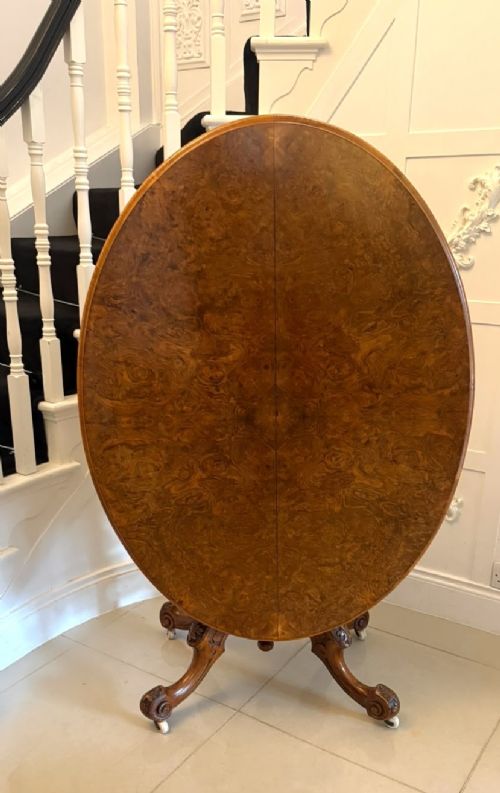
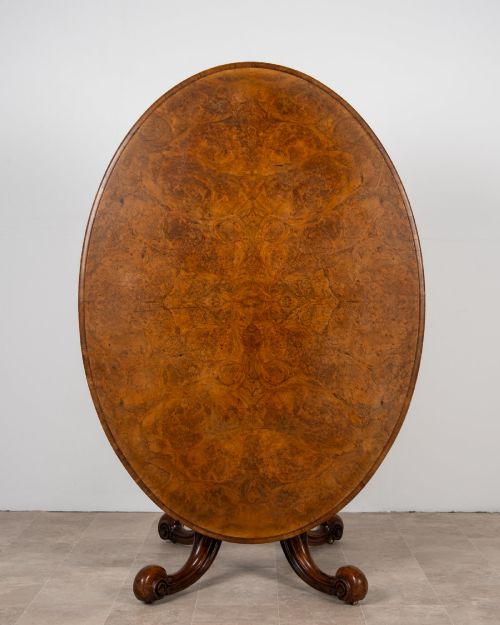
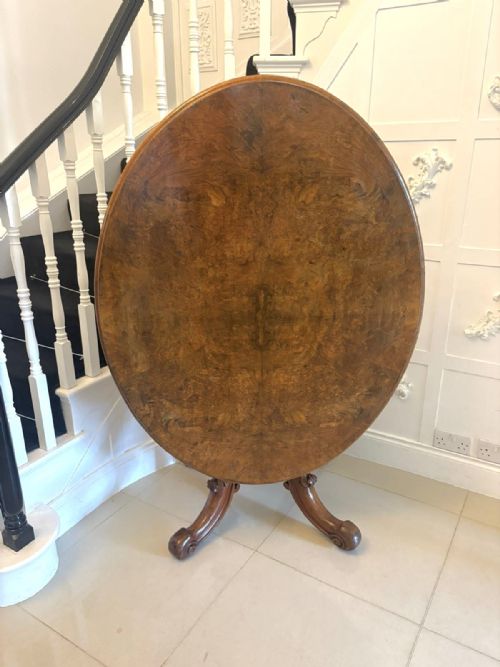
An oval burr walnut dining table appears primarily in Victorian iterations, alongside mid-century and Art Deco examples. These pieces span dining tables, loo tables, breakfast tables, and centre tables.
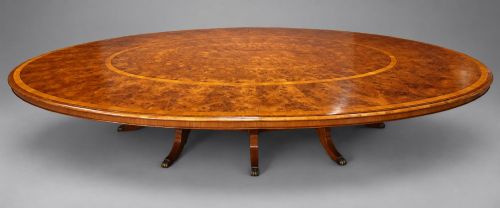
Victorian examples frequently utilise tilt-top or snap-top mechanisms designed to save space when not in dining use. Later twentieth-century versions often provide extending formats to seat larger groups.
The selection here encompasses everything from compact centre tables to large extending dining tables suited for modern use. Each piece displays the distinctive curved silhouette defining this search phrase.
Materials and construction
Cabinet makers utilised burr walnut veneer laid over solid timber substrates to create swirling, highly figured tabletops. Boxwood inlay frequently frames these surfaces with precise contrasting lines.
Bases are constructed from solid walnut and timber, incorporating carved quadrapod supports or pedestal columns on many Victorian examples. Brass fittings appear on castors and structural joints.
Oval Burr Walnut Dining Table Retail Price Guide 2026
Typical asking prices for oval burr walnut dining table among the pieces listed under this phrase on Sellingantiques today, from the lower quarter to the upper quarter. They describe what is for sale here now, not the wider market.
Current listings feature Victorian, Art Deco, and mid-century periods, running from the 1850s through to the 1950s.
Judging the work
Quality rests in the intensity and symmetry of the burr walnut figuring across the tabletop. Superior examples display balanced grain patterns that catch the light evenly.
Carving on the pillar bases and legs demonstrates the hand of the maker, moving from simple turned pedestals to deeply carved quadrapod assemblies.
The Oval Burr Walnut Dining Table Glossary
- Burr walnut
- A veneer sliced from the gnarled growths of a walnut tree, yielding complex swirling grain patterns. It provides the decorative surface seen on the best tabletops.
- Loo table
- A large round or oval Victorian table designed for card games, which tilts vertically on its base for storage. They function effectively as dining tables.
- Tilt top
- A tabletop mechanism allowing the surface to pivot ninety degrees and lock flat. This permitted historical storage against a wall when the room was cleared.
- Boxwood inlay
- Narrow strips of pale boxwood set flush into darker walnut surfaces to create geometric or floral borders. It provides sharp visual contrast.
- Quadrapod base
- A heavy central pillar supported by four carved legs radiating outward. These structures carry the substantial weight of large timber tops.
Oval Burr Walnut Dining Table: Frequently Asked Questions
How do I care for a walnut table?
Keep the timber away from direct heat sources and strong sunlight to prevent the veneer from drying out or splitting over time. Polish the surface occasionally with traditional beeswax to maintain the natural sheen of the wood.
Use coasters and mats for hot dishes or moisture to protect the polished finish from water rings. Gentle dusting with a soft cloth keeps abrasive particles from marking the delicate surface.
Can I use a loo table for daily dining?
Many Victorian loo tables provide ample surface area and height for comfortable seating during meals. Ensure the tilt mechanism locks securely before setting dishes and chairs around the perimeter.
The tilt function also allows you to store the table flat against a wall if you need to reclaim floor space between meals.
How do I date a walnut table?
Examine the construction methods underneath the tabletop, looking at the timber framing, screws, and block joints used by the cabinet maker. Victorian pieces often display hand-turned pedestals and specific timber choices like solid walnut framing beneath the veneer.
Art Deco and later twentieth-century examples shift toward cleaner lines, different structural hardware, and alternative extending mechanisms. Comparing the base carving and inlay style to known period pieces clarifies the decade of manufacture.
What is the difference between a centre table and a dining table?
Centre tables traditionally stood in the middle of a Victorian parlour for display or occasional use rather than heavy dining. They often feature tilt tops or smaller dimensions compared to dedicated dining furniture.
Dining tables are engineered for stability during meals, frequently featuring extending mechanisms or fixed heavy frames. Both share the characteristic oval burr walnut top format.