


Walnut Music Stand Table
These walnut music stand table pieces bring together practical storage and display surfaces, offering refined woodwork for your home.
Walnut Music Stand Table
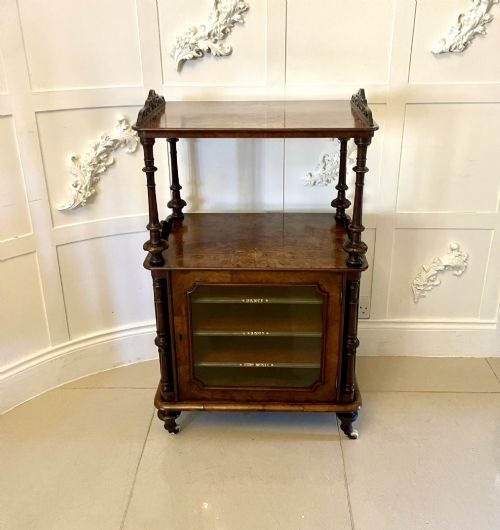
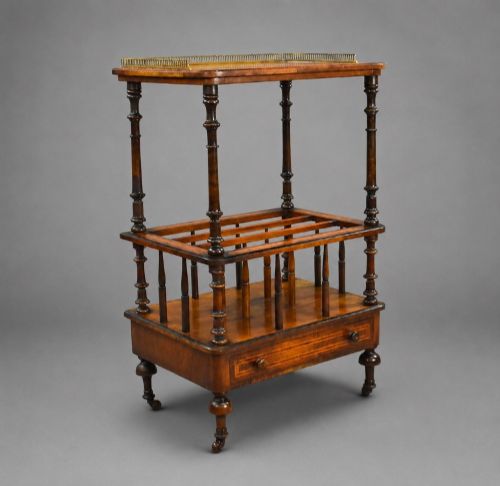
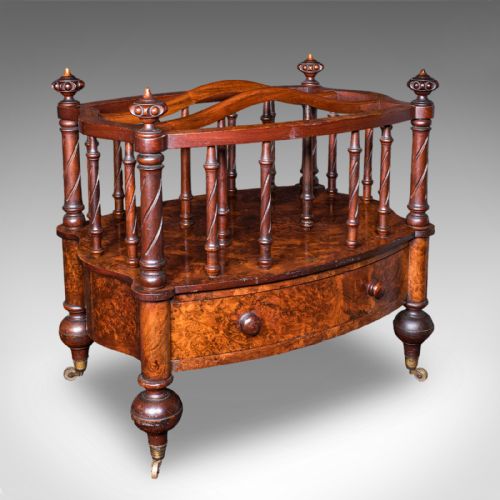
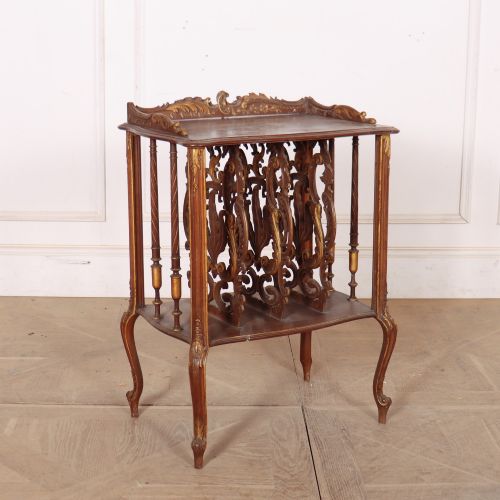
A walnut music stand table combines the display surface of an occasional table with specific provisions for holding folios, newspapers, or sheet music. These pieces frequently manifest as canterburys, whatnots, and music cabinets spanning the Victorian and Regency periods.
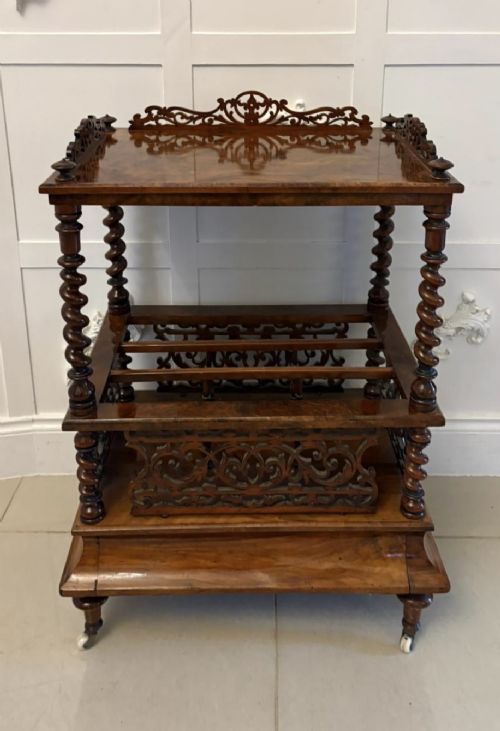
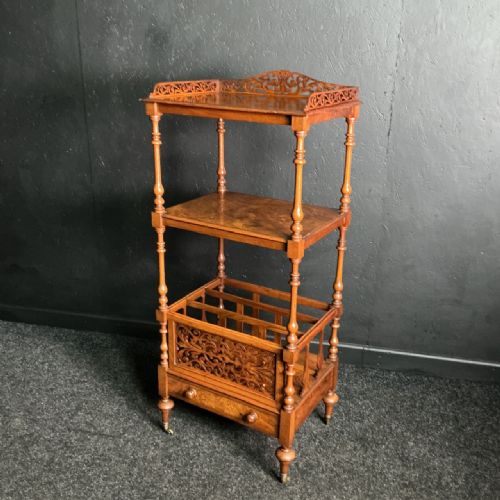
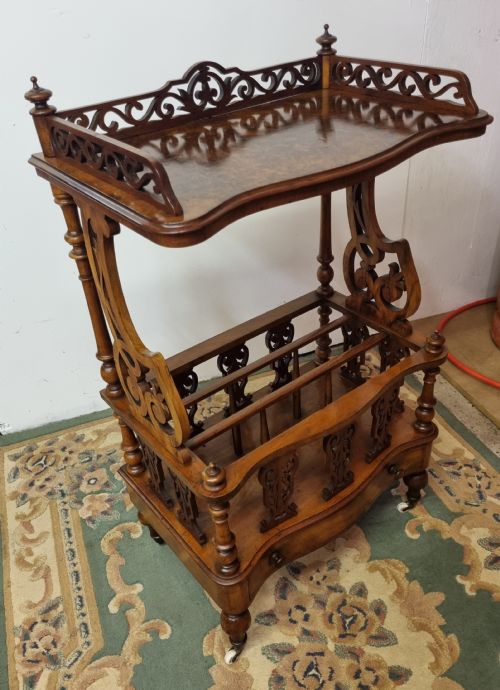
The most common form met here is the Victorian burr walnut canterbury table, often featuring multiple vertical divisions for storage combined with a lower drawer or an upper display tier. Examples range from simple freestanding racks to elaborate serpentine shapes fitted with castors.
Makers utilised rich timbers and thoughtful compartment layouts to create dual-purpose furniture for the nineteenth-century parlour. The integration of reading ledges, lift-up adjustable stands, and writing surfaces reveals how these items served varied daily activities in period interiors.
How they were made
Cabinet makers relied primarily on walnut and burr walnut veneers, applying them over secondary woods to showcase rich, swirling grain patterns across table tops and drop-down fronts. Inlays of boxwood, ebony, and other contrasting timbers often define the borders and panels of Victorian pieces.
Functional elements such as adjustable music rests and stands incorporate brass mechanisms, ceramic components, and turned wooden supports. These hardware details allow the reading surfaces to tilt or elevate according to the user's requirements.
Some tables hide compartments so neatly that finding the drawer feels like a minor archaeological discovery in miniature.
What varies in quality
The choice of burr walnut veneer and the precision of the inlaid details set the finer examples apart from simpler utilitarian pieces. Richly figured timber with harmonious grain matching indicates superior workshop execution.
Structural complexity also defines the tier, such as the inclusion of turned columns, serpentine shaping, carved details, and integrated drawers. Robust construction of the internal partitions and functional longevity of any adjustable stands determine the standing of each piece.
The Walnut Music Stand Table Glossary
- Canterbury
- A low, multi-partitioned stand designed for holding sheet music, folios, or periodicals, often combined with a table top or drawer below. Originating in the late eighteenth century, it remains a defining form in these listings.
- Whatnot
- An open set of multi-tiered shelves supported by slender columns or pillars, used for displaying ornaments or holding books. They frequently merge with canterbury forms in Victorian furniture.
- Burr Walnut
- Wood taken from the warted excrescences of walnut trees, valued for its intricate and swirling grain patterns. It provides the decorative primary surface for many nineteenth-century tables.
- Inlay
- A technique where contrasting materials such as boxwood or ebony are inserted into recessed portions of the walnut base wood to create geometric or floral patterns. This ornamentation marks out finer Victorian examples.
- Adjustable Stand
- A reading or music rest fitted with a mechanical mechanism that alters the angle or height of the surface. These mechanisms often incorporate brass and ceramic elements.
Walnut Music Stand Table: Frequently Asked Questions
What is a walnut music stand table?
It is a nineteenth-century furniture form that combines a flat table surface or display tier with integrated racks, compartments, or an adjustable stand for holding music and reading materials.
These pieces bridge the gap between occasional tables and dedicated storage stands, reflecting the domestic habits of the Victorian and Regency periods.
How were canterbury tables used?
They sat beside pianos or in parlours to keep sheet music, newspapers, and books neatly organised and within arm's reach of the seated reader or musician.
The inclusion of table tops, drawers, and upper shelves also allowed them to function as lamp tables or display surfaces for decorative objects.
Can the music stands be adjusted?
Many of the recorded music stands and lecterns feature mechanical adjustments using brass fittings to alter the angle of the reading surface.
This adjustability allowed users to prop up folios or writing books at a comfortable working position.