

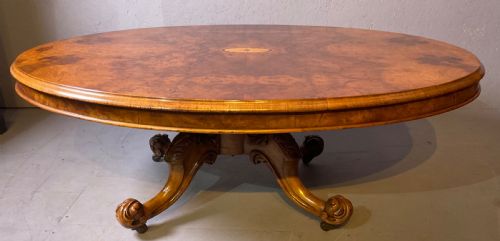
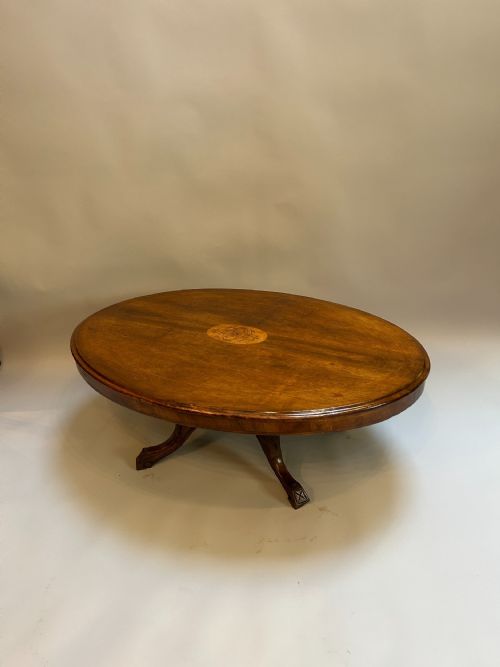


Walnut Marquetry Low Table
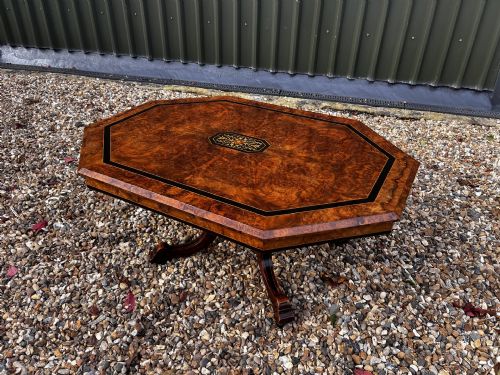
These walnut marquetry low table examples bring together figured timbers and intricate inlay, offering a low surface well suited to modern sitting rooms.
Walnut Marquetry Low Table
A walnut marquetry low table combines figured timber with pictorial or geometric wood inlay, appearing across Victorian, Edwardian, and Art Deco periods. These pieces often originate as nineteenth-century centre or games tables adapted to lower proportions, alongside purpose-built twentieth-century coffee tables.
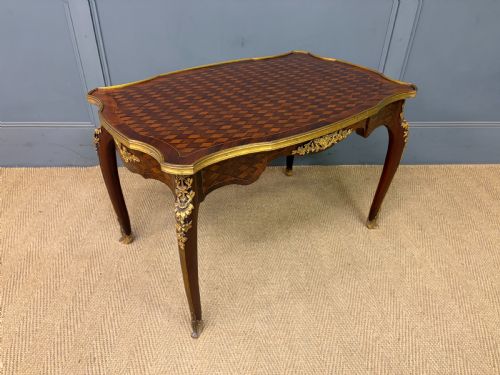
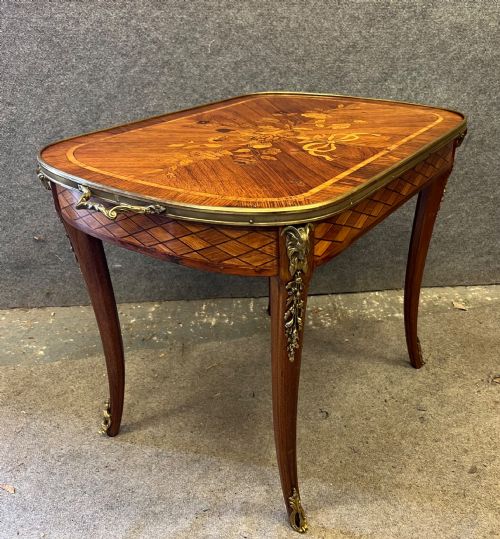
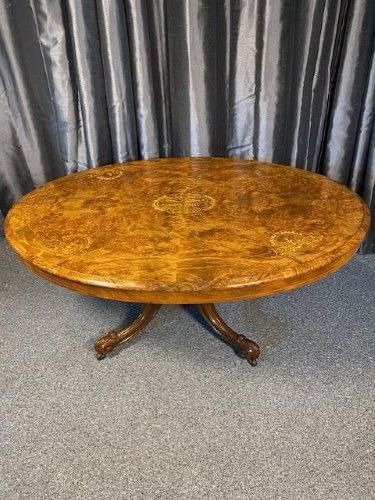
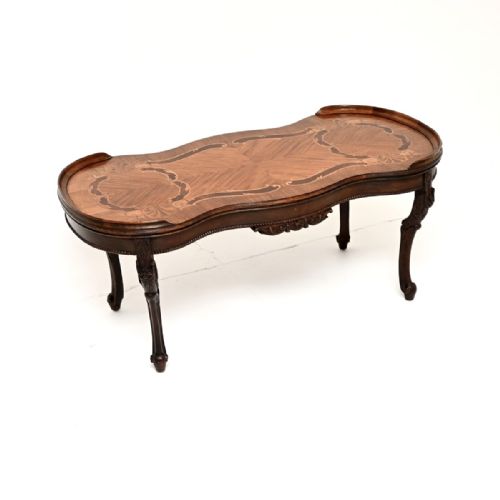
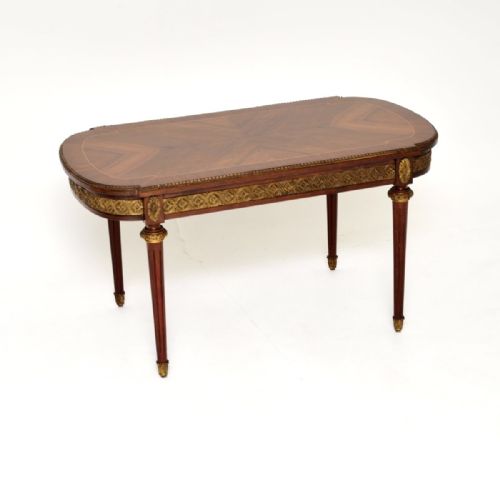
Makers drew heavily on French revival idioms, producing kidney-shaped, oval, and round formats influenced by Louis XV and Louis XVI designs. Alongside these continental styles, British iterations from the Victorian era demonstrate rich burr surfaces paired with marquetry motifs.
Materials and Technique
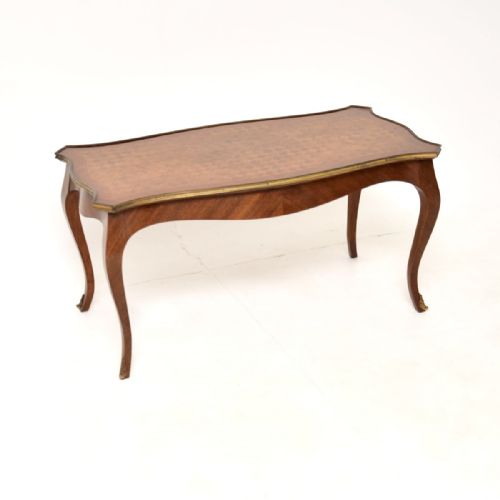
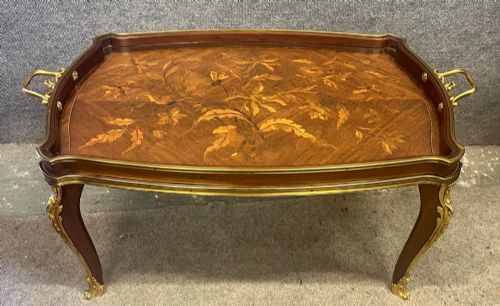
Cabinet makers utilised walnut and burr walnut as the primary timber, laying decorative veneers over secondary woods to create highly figured tabletops. These surfaces received elaborate marquetry and parquetry using contrasting timbers such as boxwood, fruitwood, and kingwood.
Mounts in ormolu, gilt bronze, or brass often embellished the legs and edges, while hand-carved wooden bases or modern cast iron tripod supports provided structural foundations.
Walnut Marquetry Low Table Retail Price Guide 2026
Typical asking prices for walnut marquetry low table among the pieces listed under this phrase on Sellingantiques today, from the lower quarter to the upper quarter. They describe what is for sale here now, not the wider market.
Listings feature walnut marquetry low table examples spanning from the mid-nineteenth century through the 1930s, incorporating brass, ormolu, and boxwood inlay.
Evaluating Quality and Execution
The refinement of the marquetry cutting distinguishes standard production from superior examples, with finer work displaying tight joints between contrasting wood species and intricate detail within the floral or geometric motifs. The choice of burr walnut veneer also dictates visual depth, where highly figured, symmetrical grain patterns elevate the overall presence of the top.
Integration of secondary materials like cast ormolu mounts and hand-carved bases demonstrates higher craftsmanship, whereas simpler turned legs or plain surrounds indicate more utilitarian construction.
Gillows
The Walnut Marquetry Low Table Glossary
- Marquetry
- Decorative veneer work arranged in pictorial patterns using various coloured woods. This technique requires precise cutting of thin wood sheets to form intricate designs across tabletops.
- Burr walnut
- A prized timber harvested from tree growths, yielding swirling, knotty grain patterns. It provides a highly decorative surface for table tops.
- Ormolu
- Gilt bronze ornamentation applied to furniture mounts and borders. The metal is cast and then gilded to provide a bright metallic finish.
- Parquetry
- Geometric mosaic woodwork forming repeating patterns such as cubes or chequers. It differs from marquetry by relying on angular shapes rather than pictorial subjects.
- Sorrento ware
- Wood inlay work originating from Italy, typically featuring characteristic local scenes or floral marquetry. Pieces from this tradition often utilise distinct light and dark fruitwoods.
Walnut Marquetry Low Table: Frequently Asked Questions
How do I clean a burr walnut top?
Dust gently with a soft, dry cloth to protect the delicate veneer and older polish finishes.
Avoid using liquid cleaners or silicone sprays, which can penetrate hairline cracks in the timber and damage the inlay.
Are these coffee tables original?
Many examples from the nineteenth century began life as taller centre, games, or work tables before being lowered to suit contemporary seating.
Twentieth-century pieces were frequently manufactured from the outset as low coffee or cocktail tables.
How do I identify French revival styles?
Look for serpentine edges, cabriole legs, and kidney or oval top shapes that echo eighteenth-century royal furniture.
Ormolu mounts and elaborate floral marquetry further signal the influence of Louis XV and Louis XVI designs.
Will sunlight damage the marquetry?
Direct sunlight causes walnut timber and lighter inlay woods like boxwood to fade and lose their tonal contrast over time.
Positioning the table away from intense windows preserves the natural colour variation of the veneers.