
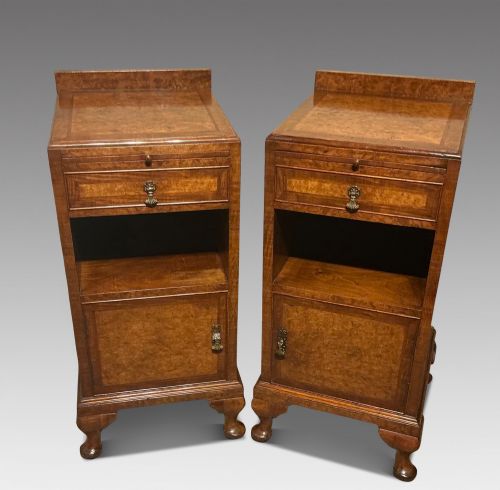

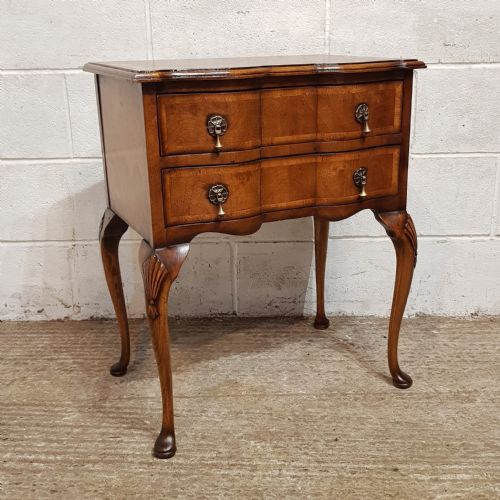




Queen Anne Lamp Table
A queen anne lamp table is a compact surface built for illumination and display, rooted in eighteenth-century proportions.
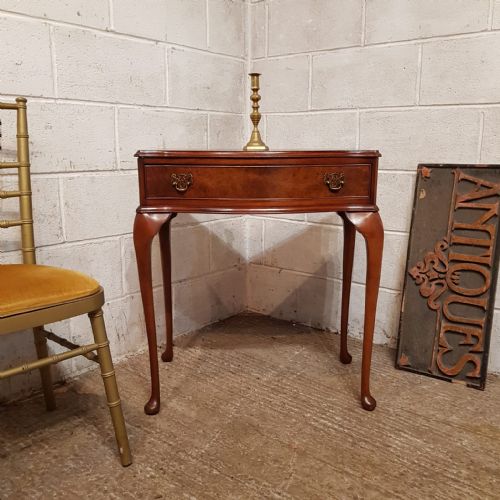
Queen Anne Lamp Table
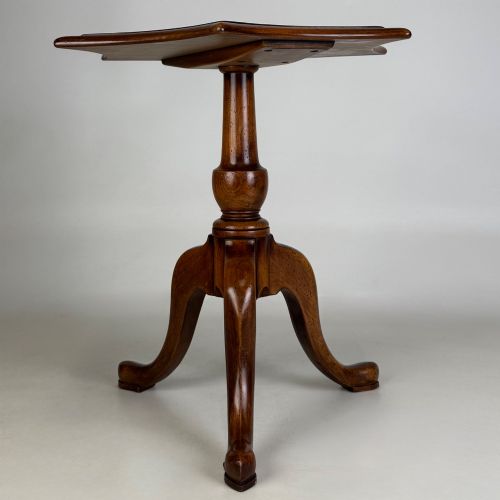
A queen anne lamp table spans several centuries of British cabinet-making, though most examples appearing here date from the Edwardian era and the nineteen-twenties revival period. These tables serve primarily as bedside surfaces, compact side tables, or occasional stands designed to hold a lamp beside seating.
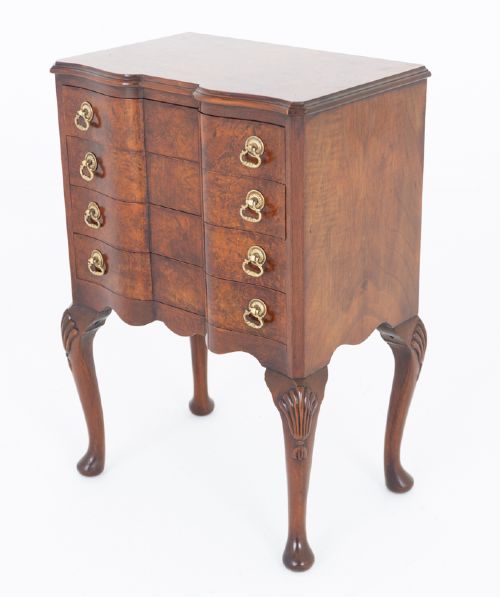
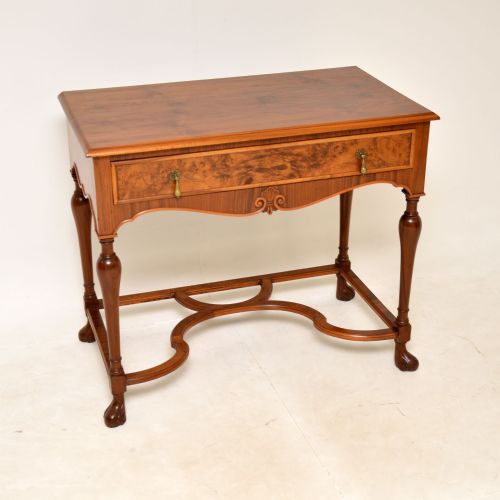
The form adapts traditional side tables and lowboys into smaller footprints suited to domestic lighting and interior display. Buyers find variations ranging from serpentine-fronted bedside chests to oval occasional tables and simple oak side pieces with drawers.
While genuine eighteenth-century pieces emerge occasionally, the majority of the selection reflects early twentieth-century revival craftsmanship drawing on Georgian design vocabulary. These later interpretations capture the distinctive silhouette of the original period while serving modern functional requirements.
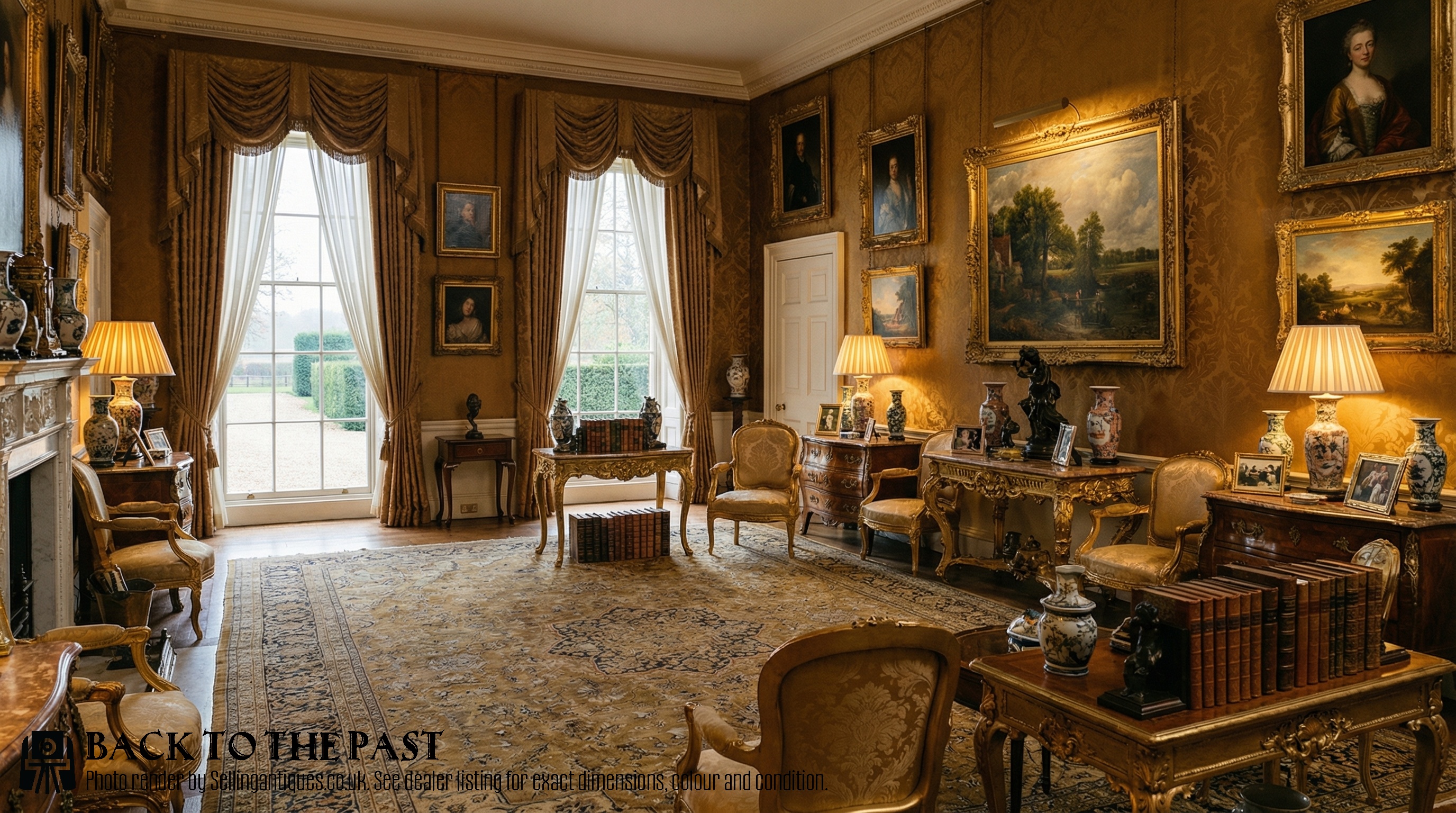
Distinctions in quality
Quality rests in the selection of timber veneers and the precision of the joinery rather than the age alone. Superior examples display carefully matched burr walnut figuring across the top and drawer fronts, maintaining continuous grain patterns that reveal disciplined workshop practice.
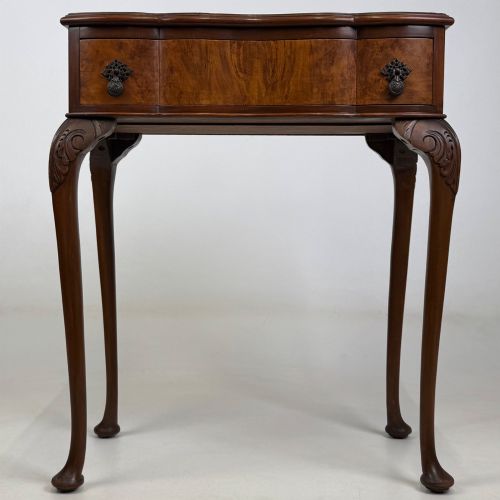
The sculptural execution of the cabriole leg and the neatness of its transition into the frieze distinguish finer pieces from plainer production. Timber stability, smooth drawer action, and crisp edge moulding separate standard revival items from the top of the range.
Listings feature walnut, burr walnut, oak, and mahogany across periods spanning from the eighteenth century to the nineteen-thirties.
The Queen Anne Lamp Table Glossary
- Cabriole leg
- A furniture leg that curves outward in a convex arc and tapers inward in a concave arc, ending in a pad or foot. This form originated in ancient China and became a defining feature of eighteenth-century design.
- Burr walnut
- A specialised timber veneer taken from the knotted growth of a walnut tree, prized for its swirling and intricate grain patterns. Cabinet-makers used it on prominent surfaces to create striking visual depth.
- Lowboy
- A small eighteenth-century dressing table or side table featuring one or more drawers and long cabriole legs. These pieces frequently function as lamp or hall tables in modern interiors.
- Serpentine front
- A furniture front characterised by a convex central section flanked by two concave curves. This shape requires advanced woodworking skill to construct and fit accurately.
- Tray top
- A table top finished with a raised rim or moulding around the outer edge to prevent items from sliding off. This detail appears frequently on smaller occasional and bedside tables.
Queen Anne Lamp Table: Frequently Asked Questions
What is a queen anne lamp table used for?
These pieces function primarily as bedside surfaces, compact side tables, or occasional stands. Their proportions suit positions beside seating or corners requiring illumination.
Historically adapted from lowboys and small side tables, they provide a stable platform for lighting while offering surface space for books or decorative objects.
Are these tables solid walnut?
Most twentieth-century revival tables utilise figured walnut or burr walnut veneers applied over solid secondary timbers such as pine or oak. This technique allowed cabinet-makers to display decorative grain patterns across the top surfaces without warping.
Solid walnut appears more frequently on structural components like legs and frames, while veneers create the decorative visual impact on tabletops and drawer fronts.
How do I style a lamp table in a modern room?
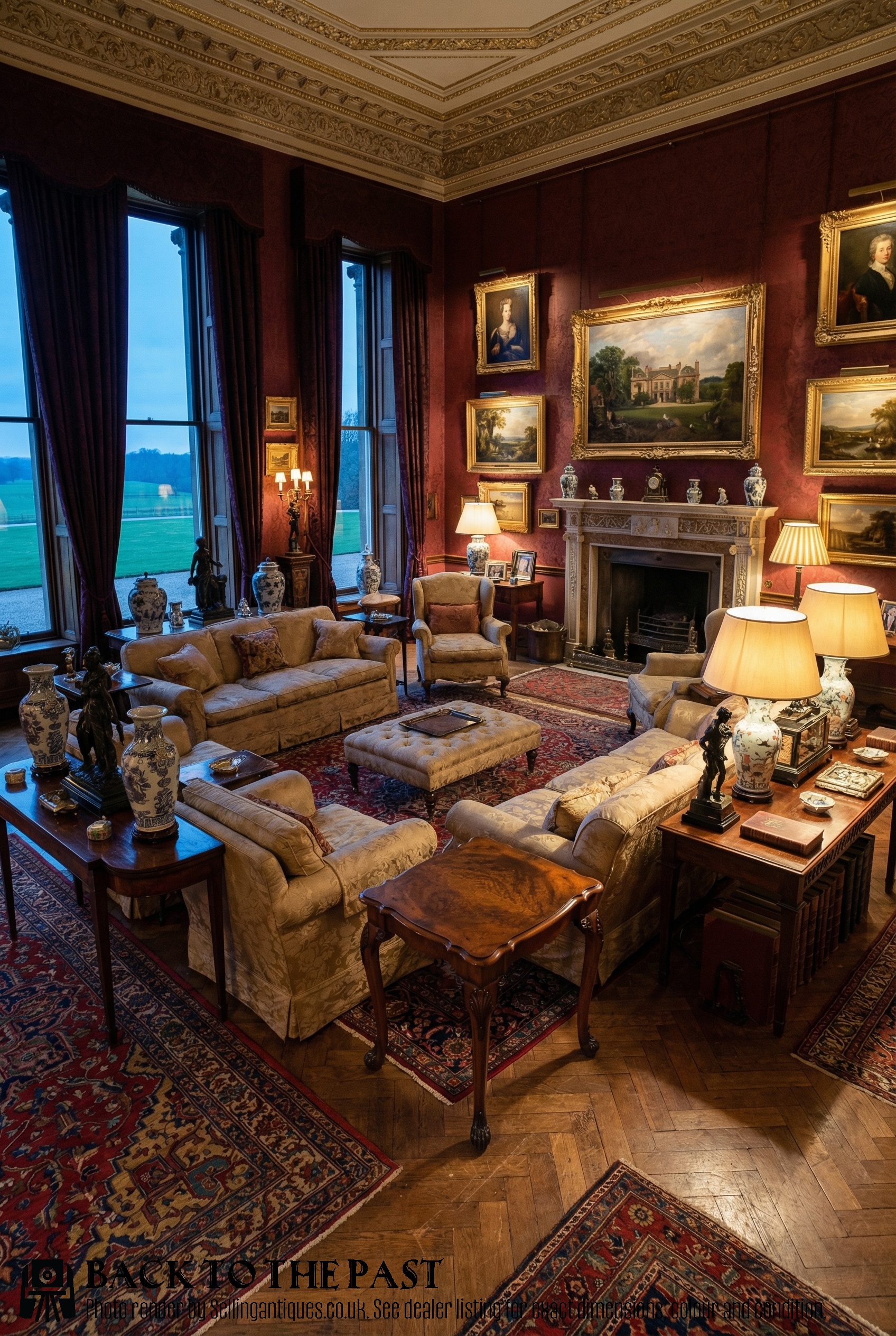
The warm tones of walnut and oak integrate easily into contemporary interiors by adding texture and historical contrast. Their compact footprints allow them to fit into tight corners, narrow hallways, or small bedroom spaces.
Pairing the table with a simple ceramic or brass lamp highlights the timber grain while maintaining a balance between utility and period character.