
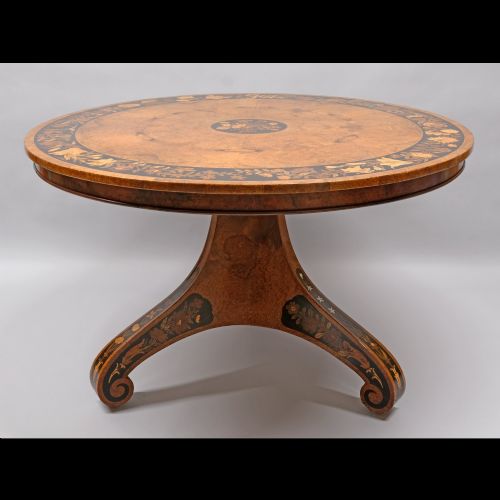
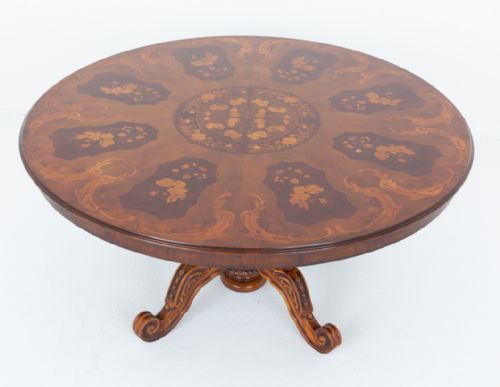


Walnut Marquetry Dining Table
A walnut marquetry dining table brings striking grain and intricate floral patterns to a room, offering a functional surface rooted in nineteenth-century craftsmanship.
Walnut Marquetry Dining Table
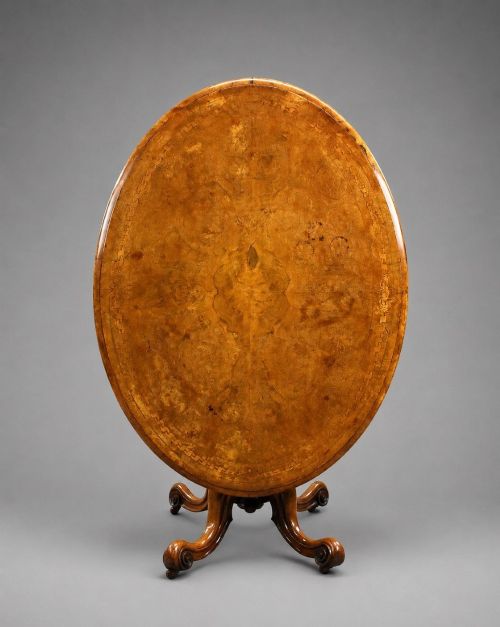
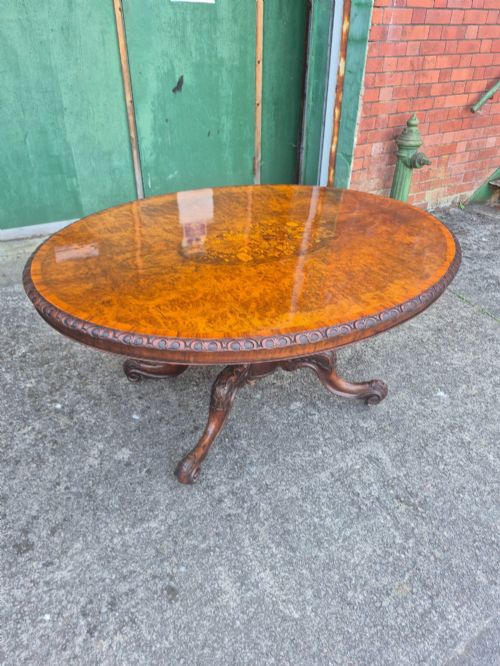
When you search for a walnut marquetry dining table, you encounter substantial furniture pieces originating predominantly from the Victorian and Edwardian eras. These surfaces often double as large centre tables, loo tables or breakfast tables adapted for dining use over time.
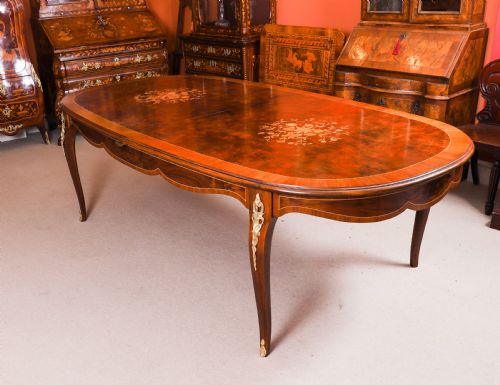
The versions most commonly met on this page date from the nineteenth century, ranging from round tilt-top breakfast formats to expansive extendable boards. French and Italian stylistic influences appear frequently alongside domestic British cabinet making.
How they were made
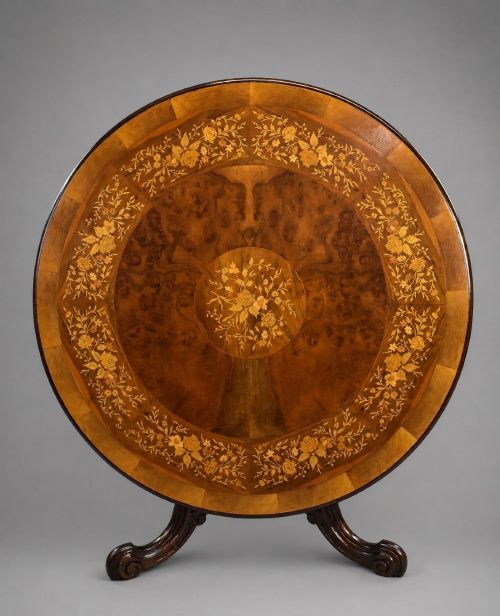
Cabinet makers utilised choice cuts of walnut and burr walnut veneers applied over solid secondary timbers to achieve rich, figured surfaces. These grounds provided the dark canvas necessary for intricate pictorial or geometric marquetry.
Craftsmen embedded contrasting fine woods such as boxwood and fruitwood into the surface veneer to form delicate scrolls, foliage and classical motifs. Brass mounts and gilt detailing occasionally supplement the timber work on revival pieces from later decades.
Musical themes occasionally hide within the floral scrolls, waiting for a sharp-eyed diner to spot a violin inlaid in boxwood.
What varies in quality
The ambition and execution of the wood inlay distinguish finer examples from simpler production pieces. Crisp definition in the boxwood and fruitwood scrolling indicates superior hand cutting rather than mass-produced stamping.
The choice and natural figure of the burr walnut veneer dictate visual depth across the top. Thicker, well-matched veneers withstand decades of polishing while retaining their structural integrity and grain pattern.
Holmes Baldock·Holland & Sons·John Kendal
The Walnut Marquetry Dining Table Glossary
- Marquetry inlay
- Decorative patterns formed by fitting contrasting veneers into a prepared wood ground. This technique creates pictorial or geometric designs across tabletops.
- Burr walnut
- Timber harvested from walnut tree growths that produces highly figured, swirling grain patterns. Cabinet makers prize this wood for formal tabletops.
- Loo table
- A round or oval nineteenth-century table originally designed for card games. Many examples tilt vertically on a central pedestal when not in use.
- Tilt-top table
- A furniture piece featuring a mechanism that allows the surface to fold flat against the pedestal base. This design conserved valuable floor space in historical interiors.
Walnut Marquetry Dining Table: Frequently Asked Questions
How do I care for a walnut marquetry table?
Keep the wood away from direct heat sources and strong sunlight to prevent the delicate boxwood and fruitwood veneers from drying out or lifting over time.
Apply a traditional beeswax polish sparingly and buff with a soft cloth to maintain the natural lustre of the burr walnut grain without building up heavy residue.
Were these tables originally used for dining?
Many of these pieces began life as large centre tables, loo tables or breakfast tables rather than dedicated dining furniture. Their generous proportions and sturdy pedestal bases made them adaptable for meals.
Victorian households frequently utilised multi-purpose furniture, meaning tilt-top and centre tables often served dual functions for gatherings and daily family dining.
How do I date a walnut marquetry table?
Examine the construction methods underneath the top and look closely at the style of the central pedestal or legs. Victorian and Edwardian pieces display specific turnings and veneer thicknesses characteristic of their decade.
Reference the secondary timbers used beneath the walnut veneer, as timber choices shifted across the nineteenth century from native hardwoods to imported alternatives.
What is the difference between marquetry and inlay?
Inlay involves inserting pieces of wood into a pre-carved recess within a solid timber background. Marquetry assembles an entire decorative picture from various veneers before gluing the whole sheet onto the surface.
Tables described with marquetry typically showcase complex floral or scrolling scenes created entirely from assembled wood veneers rather than simple carved channels.