


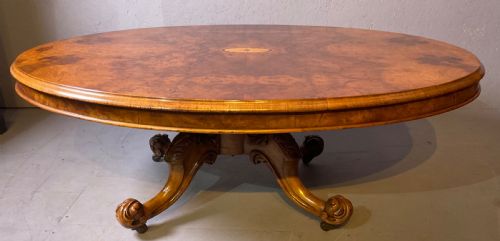
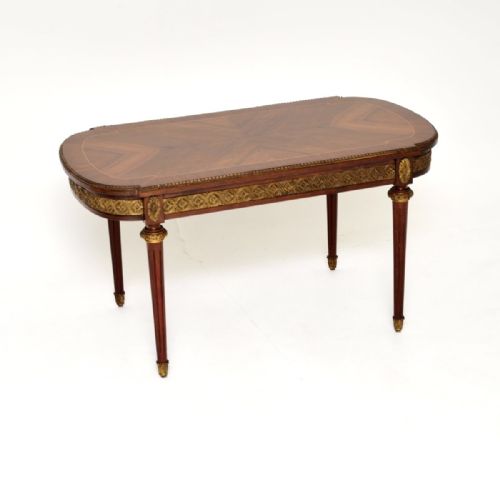


Walnut Marquetry Coffee Table
A walnut marquetry coffee table brings intricate floral veneers and rich dark timber together into a striking centrepiece for a traditional or modern room.
Walnut Marquetry Coffee Table
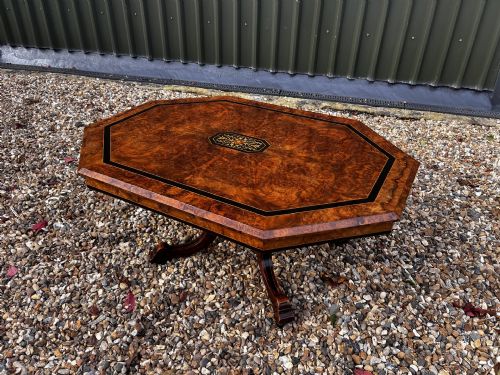
A walnut marquetry coffee table combines low proportions with detailed wood veneers, frequently taking the form of oval, round or rectangular occasional surfaces. Many examples originate in the Victorian period or the early twentieth century, drawing on French revival styles or domestic cabinet-making traditions.
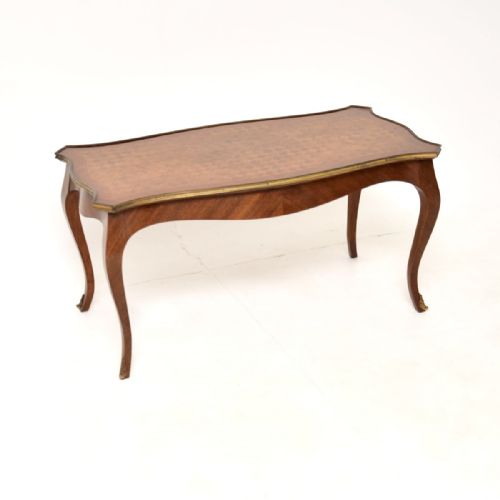
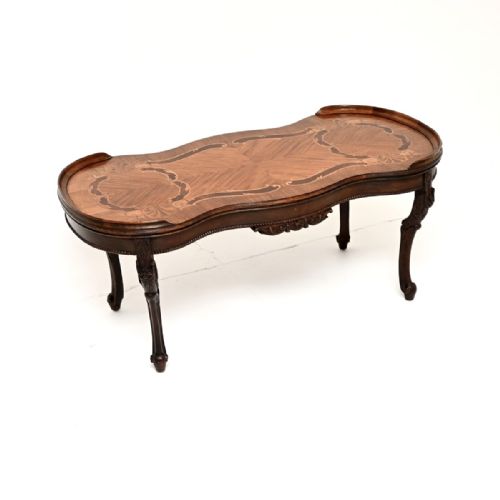
Buyers will encounter various formats on this page, ranging from adapted antique centre tables lowered for modern use to nest configurations and occasional tables fitted with brass galleries or tray tops. The overriding characteristic remains the patterned veneer surface set upon turned, fluted or tripod bases.
How they were made
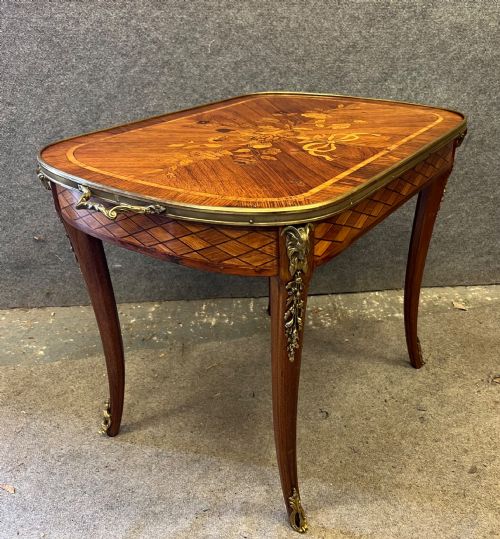
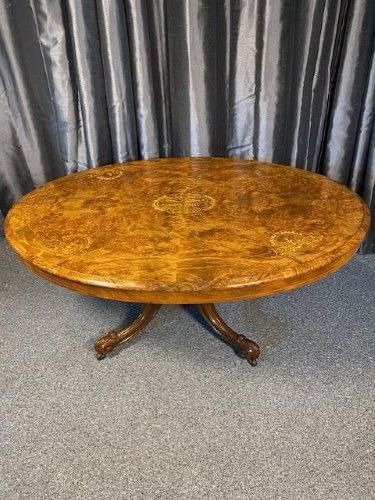
Cabinet-makers constructed these pieces using solid walnut or supportive secondary timbers as a carcase, applying figured burr walnut veneers to the primary surfaces for dramatic grain patterns. Marquetry designs were formed by cutting contrasting fruitwoods, kingwood and sometimes mother-of-pearl into precise pictorial or geometric motifs.
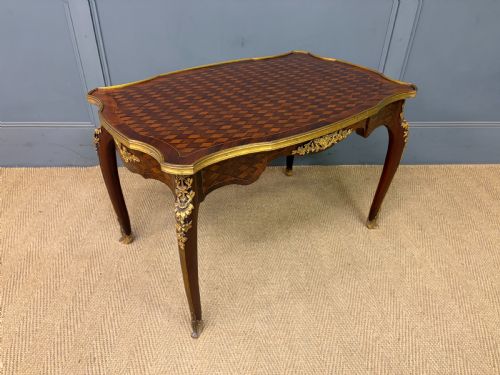
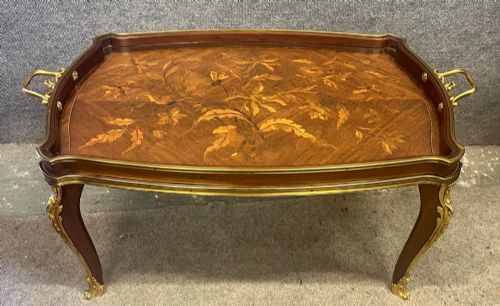
Details such as cast or gilt ormolu mounts, brass banding and hand-carved wooden trim added structural definition and ornamentation to the French and English models. French polish finishes were then applied to seal the timber and highlight the tonal variations of the inlaid woods.
Walnut Marquetry Coffee Table Retail Price Guide 2026
Typical asking prices for walnut marquetry coffee table among the pieces listed under this phrase on Sellingantiques today, from the lower quarter to the upper quarter. They describe what is for sale here now, not the wider market.
Listings span from late seventeenth-century Dutch parquetry to 1930s Art Deco designs, with Victorian burr walnut examples appearing most frequently.
What varies in quality
The sophistication of the marquetry design and the choice of veneer dictate the baseline quality of the piece, with dense, highly figured burr walnut commanding greater appreciation than plain timber grounds. Precision in the cutting and fitting of the inlaid fruitwood elements reveals the hand of a skilled workshop rather than mass production.
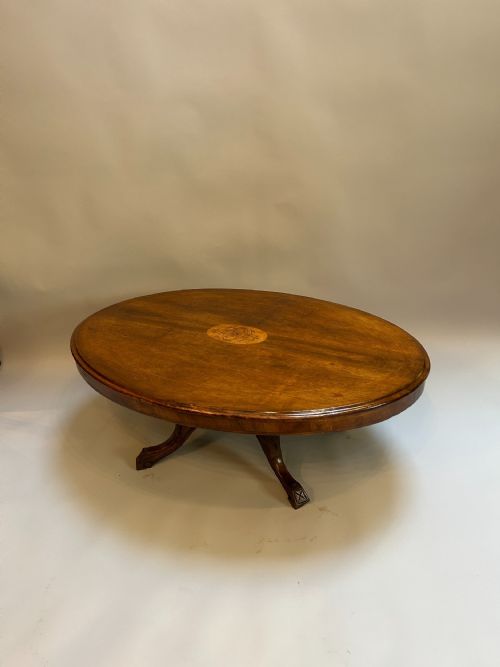
Structural alterations also influence the standing of an item, as period centre or tea tables lowered to coffee table height during later decades sit alongside tables retaining their original proportions. The integration of mounts, the crispness of any hand-carved woodwork and the retention of matching timber tones across the top and base complete the assessment.
Emile Galle
The Walnut Marquetry Coffee Table Glossary
- Marquetry
- Decorative veneer work assembled in pieces to form pictures or ornamental patterns on a wooden ground. This technique uses contrasting timbers and organic materials to create pictorial scenes.
- Burr Walnut
- Timber taken from the growth excrescence of a walnut tree, prized for its swirling and convoluted grain patterns. It provides a highly decorative surface for table tops.
- Ormolu
- Gilt bronze mounts used to decorate the edges, legs and aprons of fine furniture, particularly those in French revival styles. The finish provides a metallic contrast to the dark walnut timber.
- Parquetry
- Geometric wood inlay laid down in repeating patterns such as cubes, diamonds or chequers. Unlike marquetry, it relies on strict angular geometry rather than flowing pictorial motifs.
- Centre Table
- A freestanding table designed to be viewed from all sides rather than pushed against a wall. Many pieces found in this category started life in this form before conversion.
Walnut Marquetry Coffee Table: Frequently Asked Questions
Are these tables converted from older furniture?
Many examples listed as coffee tables were originally taller occasional, centre or tea tables that have been reduced in height to suit contemporary seating arrangements. Some listings explicitly note these adaptations in their descriptions.
Other pieces were manufactured as low tables from the outset, particularly those dating from the early twentieth century or specific French revival periods. Checking the proportions and leg junctions helps determine whether a piece began life in its current format.
How do I care for walnut veneer?
Walnut veneer benefits from stable room environments away from direct sunlight and sudden temperature shifts, which can cause the thin wood layers to lift or dry out. Regular dusting with a soft, dry cloth maintains the polish without chemical buildup.
Applying a traditional beeswax polish occasionally helps nourish the timber and preserve the depth of the grain. Avoid placing wet cups or hot items directly onto the surface to protect the historic finish.
What is the difference between marquetry and parquetry?
Marquetry involves cutting and fitting various coloured woods and organic materials to create pictorial designs, floral sprays or complex scrolls. It focuses on organic and curving artistic expression.
Parquetry uses geometric shapes like squares, triangles or cubes to form repeating patterns across the surface. Both techniques appear frequently on walnut table tops from different periods.
How can I tell the Victorian pieces apart?
Victorian walnut tables often display rich burr walnut top veneers combined with elaborate marquetry floral sprays and solid walnut turned or carved bases. The construction methods of this era typically involve sturdy timber carcases and traditional joinery.
Later twentieth-century or French-influenced pieces may incorporate lighter fruitwoods, brass gallery rails or ormolu mounts that reflect distinct continental design preferences. Examining the underside and the interior construction assists in confirming the period.