

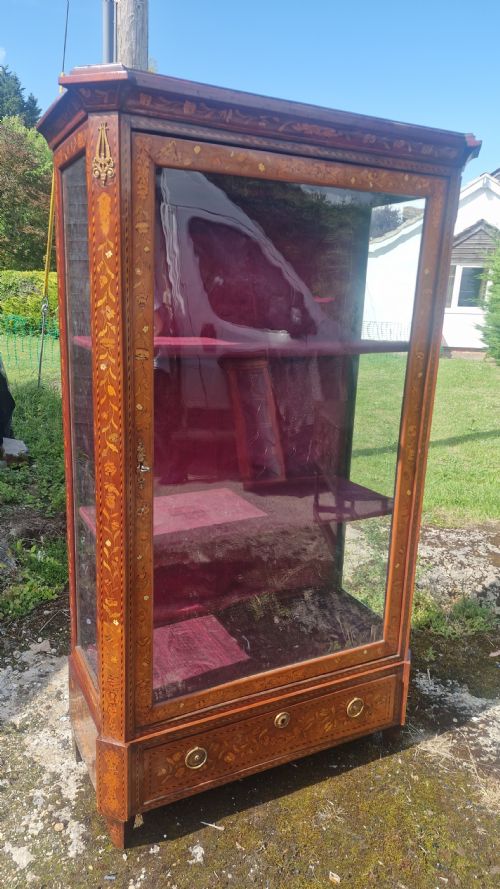


Walnut Marquetry China Cabinet
A walnut marquetry china cabinet brings intricate floral veneers and glass display space together, anchoring a room with centuries of continental craftsmanship.
Walnut Marquetry China Cabinet
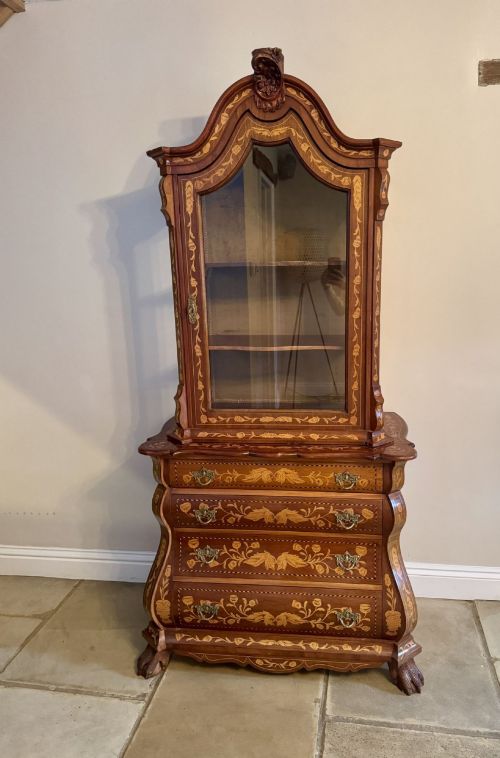
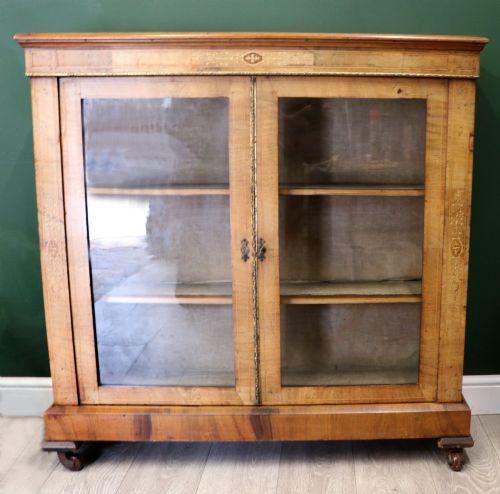
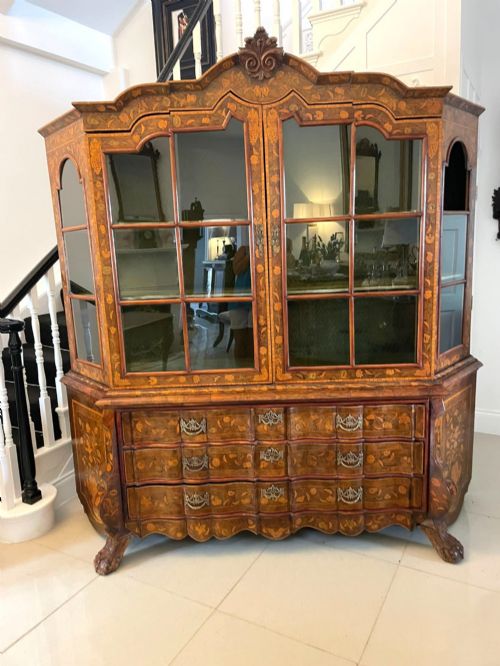
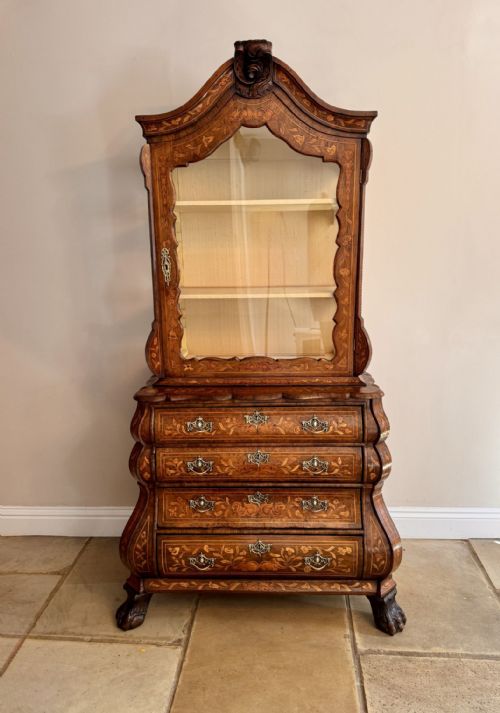
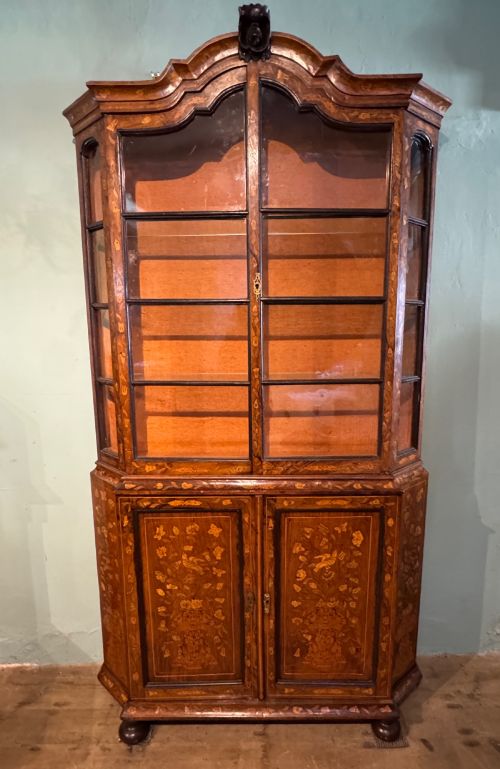
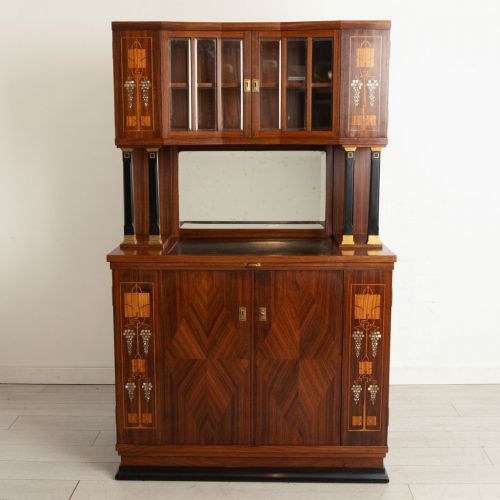
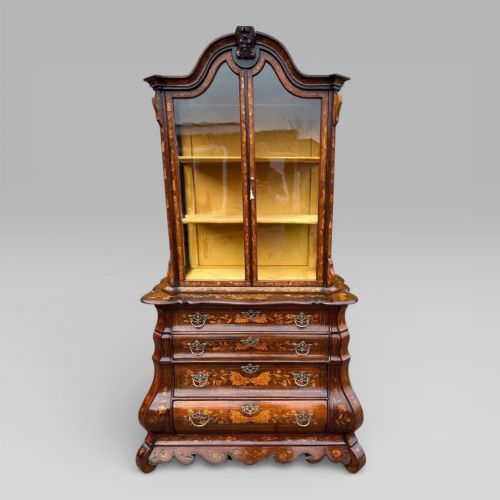
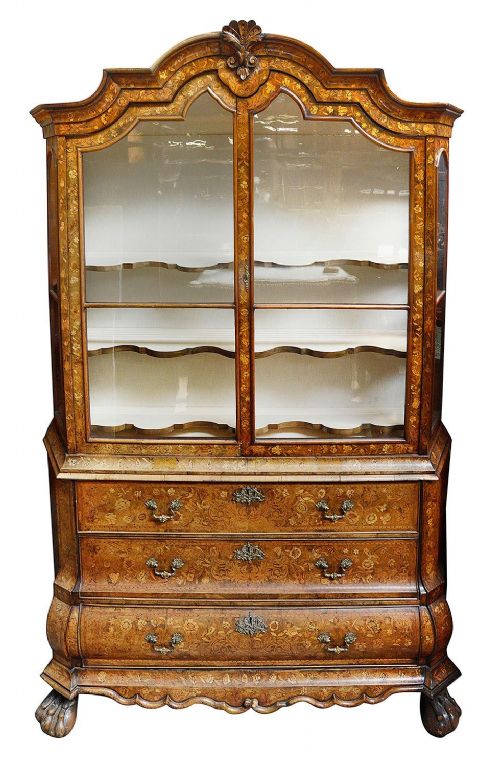
A walnut marquetry china cabinet combines architectural display space with elaborate decorative woodwork, often taking the form of tall glazed cupboards or vitrines. Buyers seeking this phrase encounter pieces ranging from eighteenth-century Dutch bombé constructions to Victorian pier cabinets and later revivals.
The most common examples on this page are Dutch marquetry pieces featuring bulbous bombé bases and dense floral inlay, alongside Victorian burr walnut cabinets with delicate stringing. These variations reflect regional tastes spanning the eighteenth, nineteenth, and early twentieth centuries.
Materials and construction
Cabinetmakers constructed these pieces using solid walnut and oak carcasing, applied with highly figured walnut veneers and burr walnut sections to create richly textured surfaces. Fruitwoods such as maple or boxwood were meticulously cut and inlaid into the timber to form complex floral and scrollwork marquetry panels.
Glass panels were fitted into glazed doors to showcase porcelain and curiosities, while brass handles, locks, and cast ormolu mounts provided structural closure and decorative accent. Interior shelves and velvet linings added functional elegance for displaying collection items.
Walnut Marquetry China Cabinet Retail Price Guide 2026
Typical asking prices for walnut marquetry china cabinet among the pieces listed under this phrase on Sellingantiques today, from the lower quarter to the upper quarter. They describe what is for sale here now, not the wider market.
Some floral marquetry panels contain hidden insect inlays tucked away beneath the scrolling leaves for the observant collector to discover.
Judging quality and execution
The sophistication of the marquetry sets exceptional pieces apart from standard workshop output, measured by the precision of the fruitwood cuts and the complexity of the floral motifs. Dense, natural shading within the veneer work indicates a master hand rather than simple surface tracing.
Structural ambition also dictates worth, particularly in the difficult shaping of bombé and serpentine fronts that demand advanced carpentry. The integration of cast ormolu mounts and the depth of the walnut figure further distinguish high-tier examples from simpler glazed cupboards.
August Ungethüm·Edwards & Roberts
The Walnut Marquetry China Cabinet Glossary
- Marquetry
- A decorative technique where small pieces of veneer, fruitwood, and other materials are assembled into intricate pictorial patterns. This craft covers the surfaces of doors and panels with elaborate floral designs.
- Bombe
- A swollen or bulging convex shape characteristic of advanced continental case furniture. This undulating form requires specialist timber bending and carpentry skills.
- Vitrine
- A glass-fronted display cabinet or case designed specifically for showing porcelain and small precious objects. The glazed panels invite unobstructed viewing from multiple angles.
- Pier cabinet
- A low freestanding display cabinet designed to fit narrow wall spaces between windows or architectural pillars during the Victorian era. These pieces often feature glass doors and velvet-lined interiors.
- Ormolu
- Gilded bronze mounts applied to furniture edges, feet, and friezes for decorative enhancement. This metalwork catches the light and frames the walnut woodwork.
Walnut Marquetry China Cabinet: Frequently Asked Questions
What is a walnut marquetry china cabinet?
A walnut marquetry china cabinet is a glazed display piece decorated with intricate wood veneer patterns made from fruitwoods and walnut. These cabinets provide enclosed shelving for porcelain and decorative objects while serving as major focal points in a room.
Craftsmen built them across various European centres, producing distinct regional styles ranging from Dutch bombé shapes to Victorian pier cabinets. The combination of figured timber and detailed inlay defines their enduring appeal.
How do I date an antique cabinet?
Dating relies on examining the construction methods, timber choice, and prevailing stylistic influences such as Dutch Baroque or Victorian revival forms. Secondary woods inside the carcass and the type of veneer backing provide clear clues to the decade of manufacture.
Makers often integrated specific hardware, lock mechanisms, and mount styles that shifted predictably between the eighteenth and early twentieth centuries. Comparing these structural details against known regional timelines establishes the likely period.
Where should I place a cabinet?
These cabinets suit principal reception rooms, dining areas, or studies where their glazed doors and inlaid surfaces can be appreciated without obstruction. Positioning them away from direct sunlight protects the walnut veneers and interior velvet linings from fading.
Because many examples feature serpentine or bombé bases, they require sufficient floor clearance to allow their curved profiles to project into the room gracefully. Pier cabinet variants work well against narrower wall sections between architectural openings.
How do I care for antique walnut?
Maintaining walnut furniture involves keeping pieces in stable environmental conditions away from extreme humidity and rapid temperature fluctuations. Regular dusting with a soft, dry cloth prevents particulate accumulation on the delicate marquetry surfaces.
Applying appropriate specialist waxes occasionally helps nourish the burr walnut timber and preserves the natural sheen of the grain. Avoid chemical cleaners or excessive moisture, which can damage the historic fruitwood inlay and polish.