
Walnut Marble Side Tables
These walnut marble side tables pair richly grained timber with cool stone surfaces, bringing practical elegance and enduring French style to a room.
Walnut Marble Side Tables
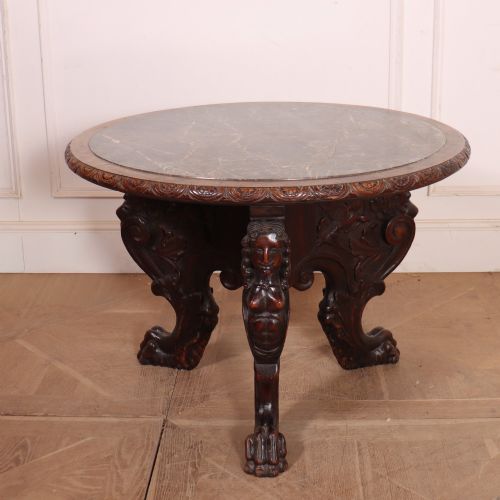
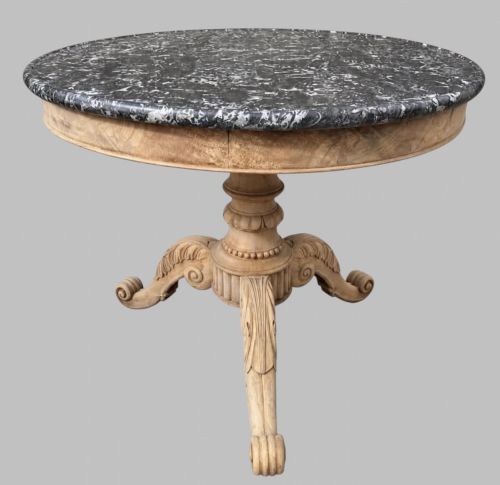
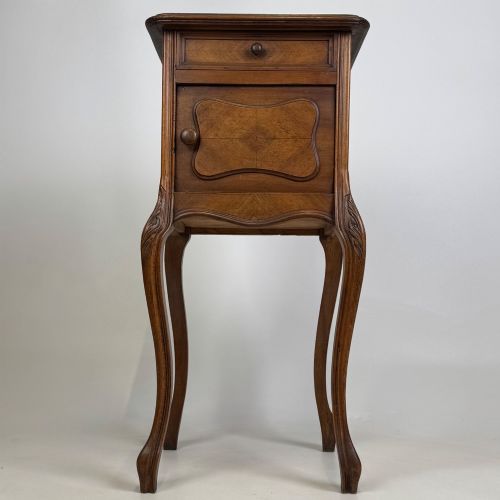
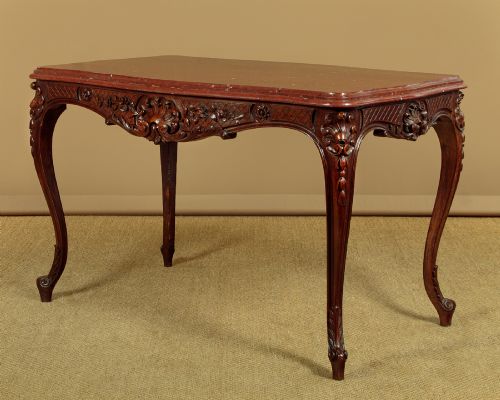
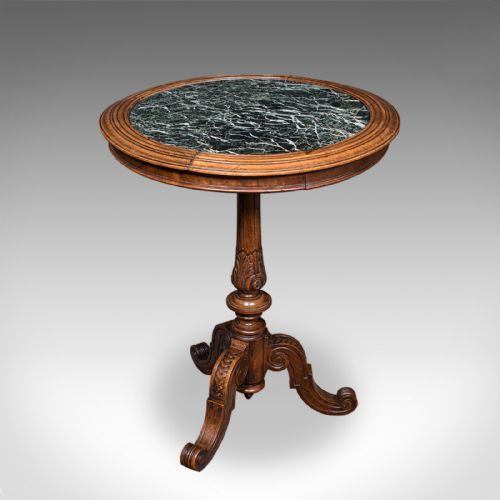
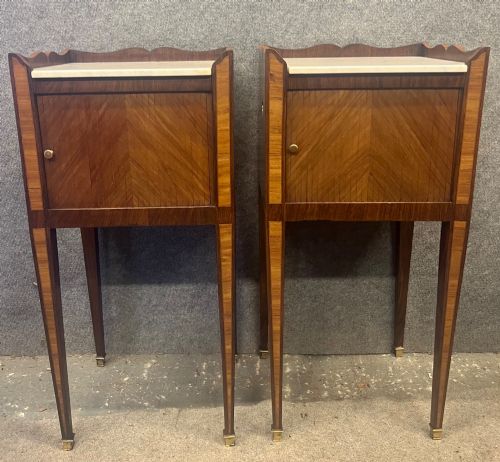
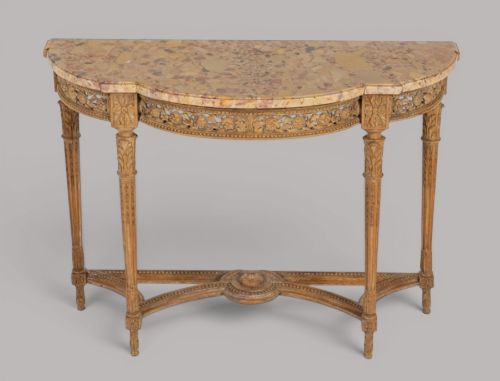
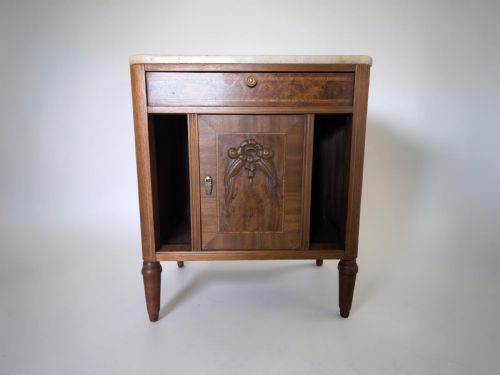
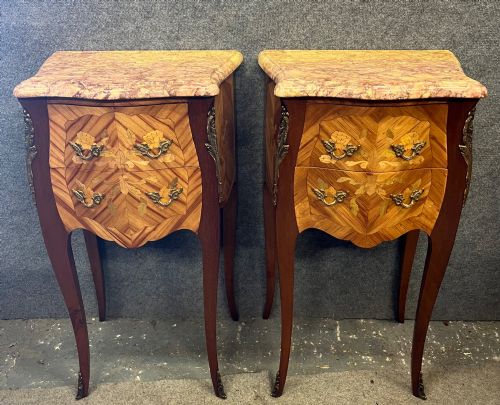
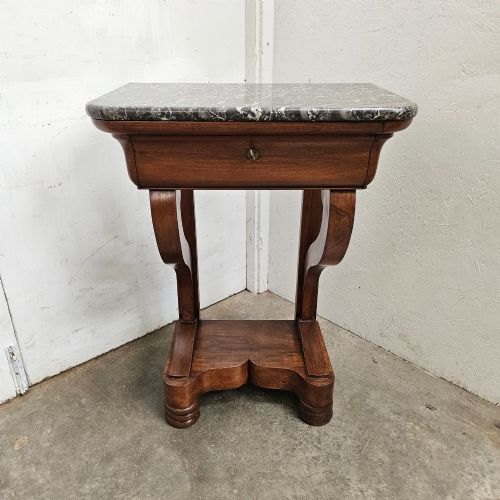
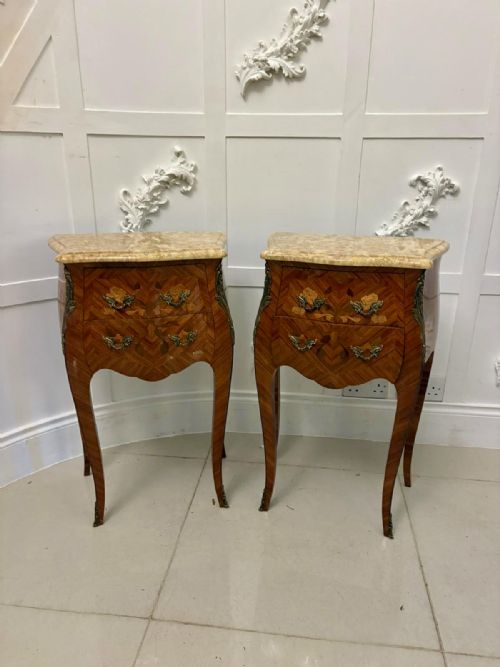
Walnut marble side tables encompass a diverse array of forms, stretching from compact bedside chests and lamp tables to grand console tables and occasional pieces. A buyer searching for walnut marble side tables will frequently encounter French bedside cabinets and console tables originating from the nineteenth and early twentieth centuries.
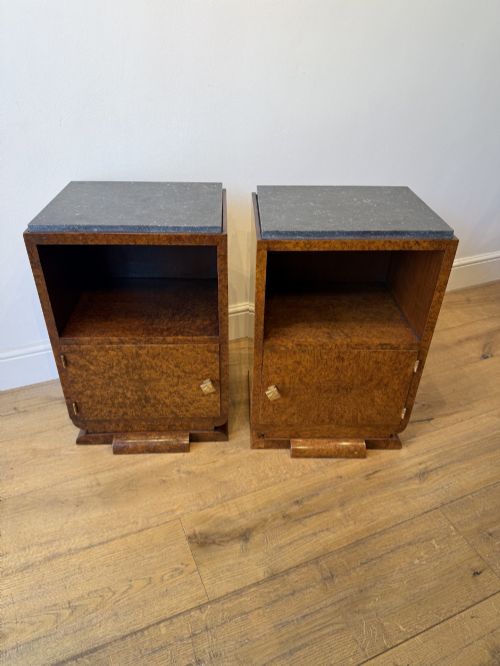
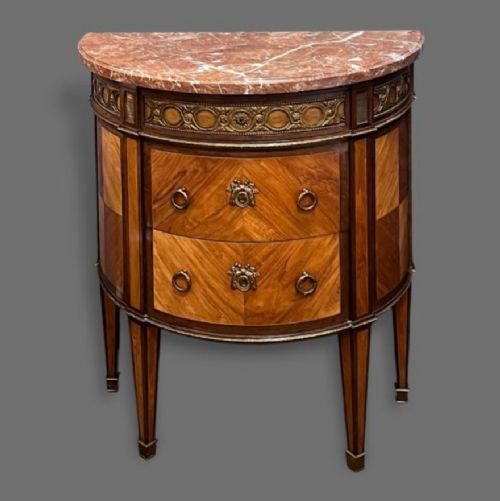
The selection ranges across distinct periods, incorporating eighteenth-century George II designs alongside Victorian interpretations and 1920s Art Deco creations. Alongside conventional side tables, the inventory includes gueridon tables, demi-lune chests, and galleried occasional tables suited for various domestic spaces.
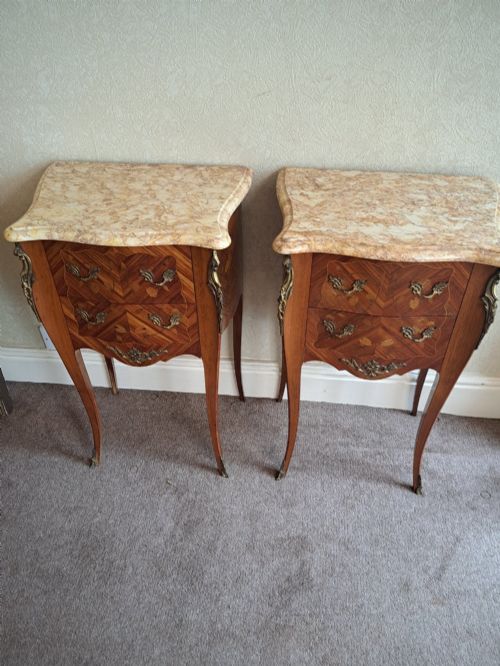
Continental workshops, particularly French and Italian makers, dominate the forms seen, often adopting Louis XV and Louis XVI revival styles. These pieces combine functional storage or display surfaces with decorative marble tops, making them versatile additions to both traditional and modern interiors.
Materials and Construction
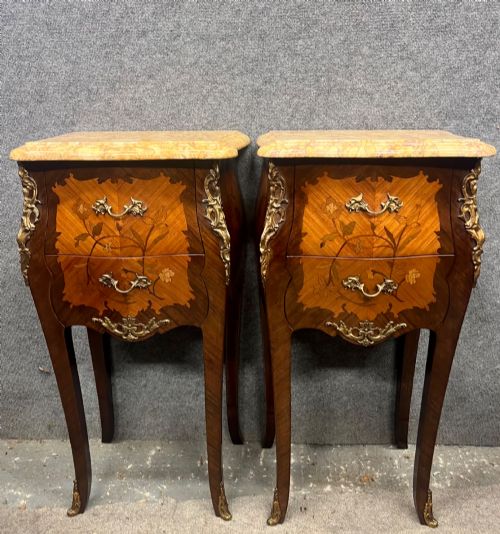
Makers utilised solid walnut and figured burr walnut veneers, frequently pairing the warm timber surfaces with contrasting marquetry inlays, kingwood, and parcel gilt accents. Brass and ormolu mounts appear alongside carved wood details to accentuate the classic revival silhouettes.
The stone elements consist primarily of fitted marble tops, including rouge and onyx variants, cut to match the geometric or serpentine contours of the wooden carcasses beneath.
Cabinetmakers employed a wide palette of materials including burr walnut, kingwood, mahogany, brass, ormolu, and various coloured marbles.
Assessing Quality and Craftsmanship
Quality reveals itself in the choice of timber and the precision of the grain matching, particularly where burr walnut or intricate marquetry inlay adorns the surfaces. Superior examples demonstrate expert cabinetmaking through seamless joints and well-fitted marble slabs that sit flush against the timber frame.
The sophistication of the carved wood details, the inclusion of cast ormolu mounts, and the overall balance of proportion separate exceptional pieces from standard production items.
L.Martin of Paris
The Walnut Marble Side Tables Glossary
- Gueridon
- A small French round table, often standing on a single central pillar or slender legs, designed for display or holding a lamp.
- Demi-lune
- A half-moon shaped furniture form, frequently seen in console tables and chests designed to sit flush against a wall.
- Marquetry
- Decorative woodwork where small pieces of veneer are fitted together to form geometric or floral patterns on the surface.
- Ormolu
- Gilt bronze mounts and decorative ornaments applied to furniture, popular in French revival pieces of the nineteenth century.
- Chevet
- A French term for a small bedside table or cabinet used to hold nighttime necessities.
Walnut Marble Side Tables: Frequently Asked Questions
What rooms suit a marble top console?
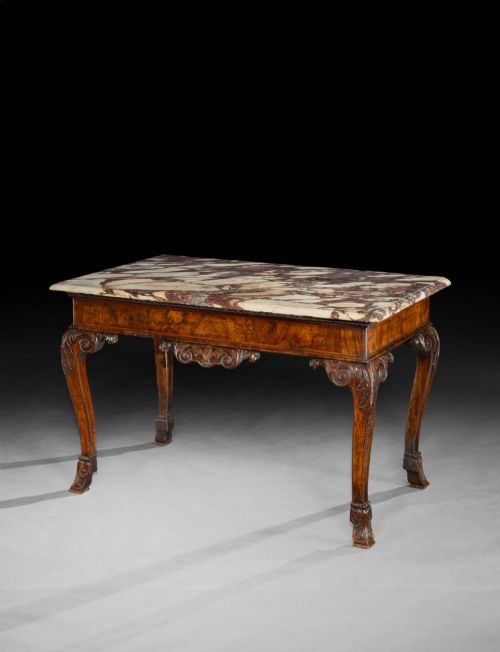
Console tables function effectively in hallways, living rooms, or dining spaces where a shallow footprint allows for display without obstructing movement. Their stone surfaces provide a durable platform for lamps and decorative objects.
Positioning them against a wall creates an architectural focal point, especially when paired with a mirror or artwork above.
How do I care for marble and walnut?
Maintaining walnut requires dusting with a soft cloth and occasional treatment with suitable furniture wax to preserve the timber grain. Avoid placing untreated wood directly against extreme heat or moisture.
Marble surfaces benefit from prompt cleaning of spills using mild, non-acidic soap and water to protect the stone finish from staining.
Are bedside cabinets from this era practical?
Nineteenth and early twentieth-century bedside cabinets offer enclosed storage alongside a stone top that resists liquid marks from glasses and bedside lamps. Their compact dimensions suit modern bedroom proportions while adding distinct historical character.
Many examples include cupboards or drawers designed to conceal personal items conveniently.
How do I identify a revival style?
Revival pieces borrow motifs and construction techniques from earlier periods, such as the curved cabriole legs and floral marquetry characteristic of Louis XV designs. Examining the interior timber and hardware helps clarify whether a piece dates to the original eighteenth century or a later nineteenth or twentieth-century revival.
Craftsmanship clues and secondary woods often provide the definitive timeline for these interpretations.