


Walnut Marble Hall Table
A walnut marble hall table anchors an entrance hall with solid timber and cool stone, offering a surface that handles daily use while carrying genuine period weight.
Walnut Marble Hall Table
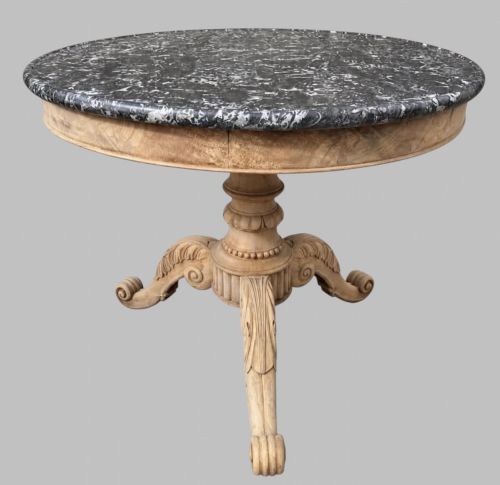
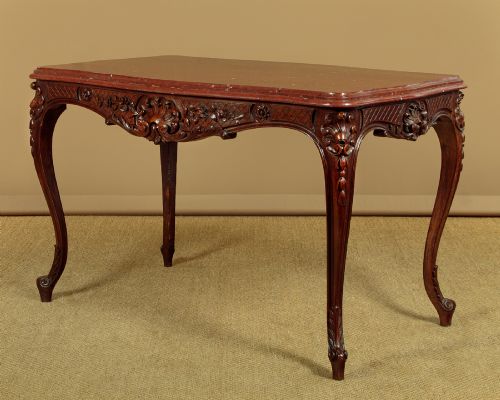
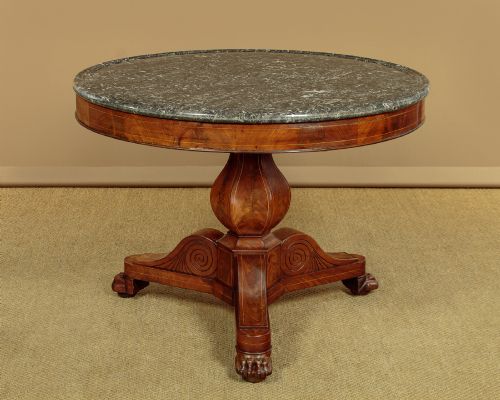
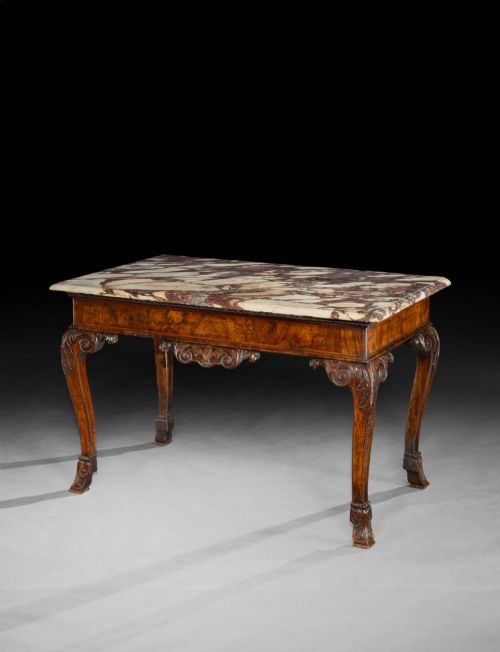
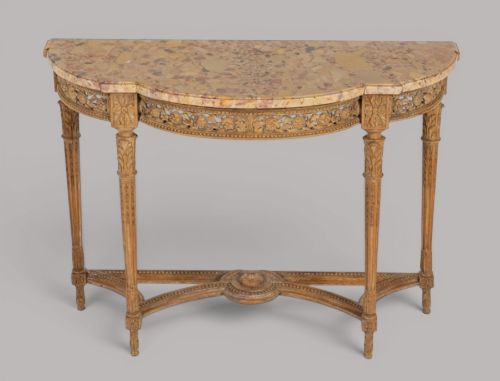
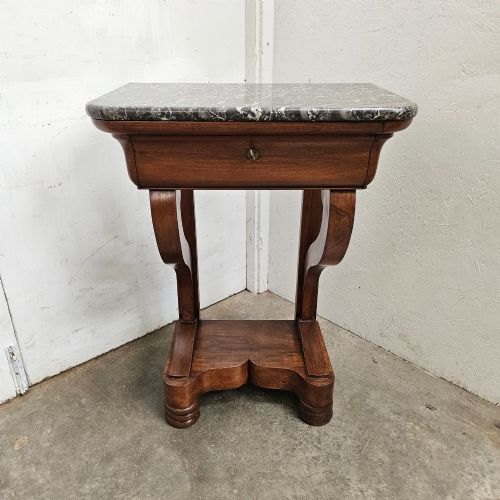
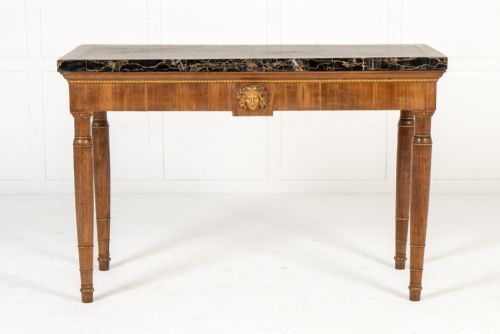
A walnut marble hall table appears in several distinct forms across this selection, primarily as console tables, centre tables, and side tables designed for domestic halls and reception rooms. These pieces originate from various European centres, spanning periods from the eighteenth century through to the early twentieth century.
Buyers will most frequently encounter nineteenth century examples, particularly French and Italian pieces showing stylistic influences ranging from Rococo Revival and Victorian to French Empire and Louis XVI. Formats include serpentine fronts, circular gueridon shapes, and rectangular console configurations often paired with marble tops in shades of rouge, purple, pink Salome, or specimen stone.
Materials and construction
Construction relies heavily on European and American walnut, frequently utilised in solid form or as burr walnut, bleached walnut, and figured veneers over secondary woods. Marquetry, inlay, and parcel gilt work often enhance the timber surfaces, reflecting the decorative priorities of their respective periods.
Heavy marble slabs form the primary table tops, secured above frames built with traditional joinery. Details such as brass and ormolu mounts appear on specific continental models, adding metallic contrast to the timber and stone components.
Some nineteenth century tables double as washstands, proving that earlier households washed their hands in the grandest hallways.
Gradations of quality
Quality reveals itself in the integration of the marble top with the walnut base, where precise fitting and substantial stone thickness indicate superior workshops. The grain selection on figured and burr walnut surfaces further separates standard production from finer examples.
The sophistication of carving on the walnut frame, especially on Rococo or Baroque revival pieces, dictates the overall calibre. Crisp hand-chiselled details on ormolu mounts and refined marquetry patterns elevate individual tables above simpler vernacular pieces.
The Walnut Marble Hall Table Glossary
- Console table
- A table designed to stand against a wall, frequently secured to the vertical surface with brackets or wall fixings. These pieces typically feature decorative work on the front and sides.
- Gueridon table
- A small round table supported by a central pillar or multiple legs, originating in seventeenth century France. These frequently serve as centre tables in larger rooms.
- Burr walnut
- Timber taken from a walnut tree growth or burl, highly prized for its swirling, intricate grain patterns. Cabinetmakers sliced this wood into veneers for decorative table tops.
- Serpentine
- A curved shape featuring a convex centre flanked by concave curves, commonly seen on eighteenth and nineteenth century table fronts.
Walnut Marble Hall Table: Frequently Asked Questions
How do I style a hall table?
Place the table flat against the hallway wall to create an immediate focal point upon entry. Keep the surface uncluttered to allow the walnut grain and marble slab to remain visible.
Pair the piece with a matching pier mirror hung directly above to balance the proportions and bounce natural light around smaller entrance spaces.
Can these tables hold heavy items?
The substantial stone tops and sturdy timber frames provide a strong, stable surface for everyday objects like ceramics, bronze figures, or lighting. The heavy marble naturally anchors the entire piece against the wall.
Avoid placing excessive point loads near the edges of cantilevered or heavily carved console brackets to protect the structural joinery over time.
How do I clean the marble top?
Wipe the stone surface regularly with a soft, damp cloth using plain warm water to remove dust and grit. Avoid acidic household cleaners or vinegar, which will etch and dull polished marble.
Dry the stone thoroughly after wiping to prevent water spots from forming on coloured or specimen marble variations.
How do I identify the period?
Examine the stylistic cues, such as the sweeping curves of Rococo Revival or the restrained symmetry of Louis XVI designs. Tool marks on the underside of the timber and the type of marble used also offer clear chronological clues.
Cross-reference the construction methods and wood preparation with known manufacturing traits from the eighteenth, nineteenth, and early twentieth centuries.