
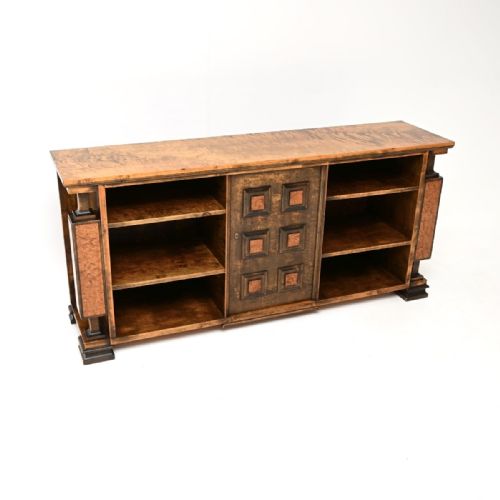
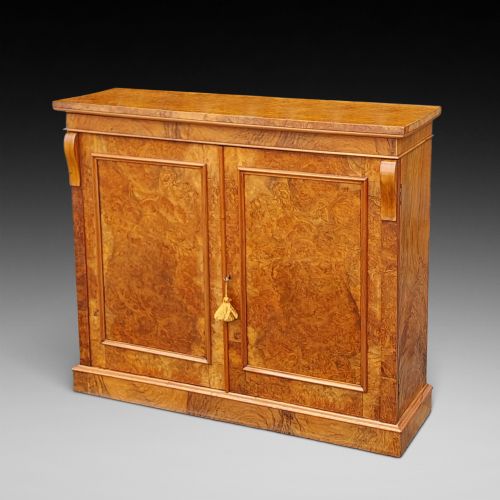
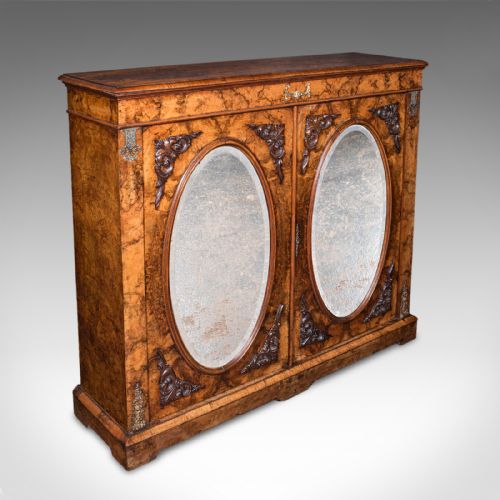
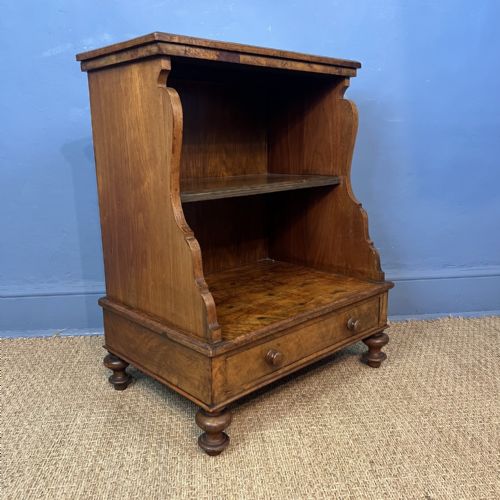
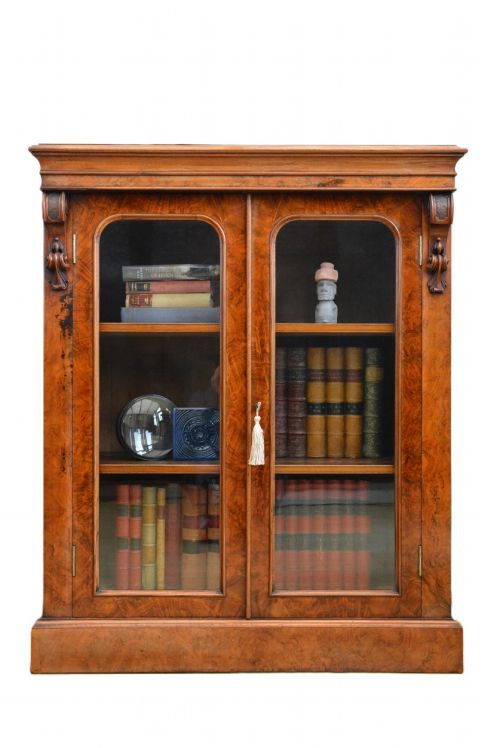


Walnut Low Cupboard
These walnut low cupboard pieces bring rich grain and compact storage to a room, offering a practical surface alongside enclosed shelving.
Walnut Low Cupboard
When you search for a walnut low cupboard, you find low-slung storage furniture typically standing below eye level. These pieces include bedside cabinets, side cabinets, pier cabinets, and low bookcases with lower cupboard doors.
The selections span the Victorian, Regency, Edwardian, and Art Deco periods, alongside Queen Anne revival styles. You meet both British workshop productions and continental examples.
Most items combine display space or shelving with an enclosed timber base. They suit alcoves or smaller rooms where tall bookcases overwhelm the space.
How they were made
Cabinet makers utilised solid timber framing veneered with figured walnut, burr walnut, or satin birch to showcase complex grain patterns. Artisans often applied marquetry inlay to enrich the flat surfaces of the doors and panels.
Glazing appears on many upper sections, paired with brass hinges, locks, and ormolu mounts. Velvet linings survive inside certain display compartments, while interiors commonly feature adjustable timber shelving.
Burr walnut grain patterns are so chaotic that cabinet makers spent hours playing puzzle pieces with thin veneer slices to make them mirror each other.
What varies in quality
The selection of the veneer marks the distinction between standard production and exceptional cabinet work. Figured and burr walnut introduce swirling patterns that require precise matching across doors and panels.
Construction details such as dovetailed drawers, original brass hardware, and well-fitted doors define the better pieces. The integration of marquetry and ormolu mounts further separates simpler utility items from top-tier salon pieces.
Whytock and Reid·Bowman Brothers·Maple and Co·Gillows·Waring and Gillows
The Walnut Low Cupboard Glossary
- Burr walnut
- A prized wood harvested from the wart or growth on a walnut tree, yielding dense and swirling grain patterns. Cabinet makers prized this veneer for principal display surfaces.
- Pier cabinet
- A low freestanding display piece designed to fit against the wall space between windows. These items often feature glazed doors and velvet-lined interiors.
- Marquetry
- The art of applying small pieces of veneer to form decorative patterns and pictures. Makers utilised contrasting timbers to create floral or geometric designs.
- Ormolu
- Gilded bronze used for decorative mounts and feet on finer furniture. This technique adds metallic highlights to the dark walnut timber.
- Breakfront
- A piece of furniture where the central section projects forward from the flanking sides. This architectural form breaks up the linear profile of larger bookcases.
Walnut Low Cupboard: Frequently Asked Questions
How do I date a walnut low cupboard?
Examine the construction methods, timber choice, and overall style to establish an approximate period. Victorian and Regency examples show different proportions and decorative motifs compared to Art Deco pieces from nineteen thirty.
Hardware, such as brass locks and hinges, also offers clues to the manufacturing era. Comparing the piece against documented cabinet maker archives helps narrow the production decade.
Where should I place a low cupboard in my home?
These compact pieces suit living rooms, studies, and bedrooms where floor space is limited. Their low height leaves wall space clear above for artwork or mirrors.
They function effectively as side cabinets, bedside storage, or low bookcase units. Avoid placing them in direct sunlight to protect the walnut veneer from fading.
How do I care for walnut veneer surfaces?
Dust the timber regularly with a soft, dry cloth to prevent grit accumulation. Apply occasional natural beeswax to nourish the wood and maintain the sheen of the grain.
Keep the furniture away from radiators and damp areas to prevent the veneer from lifting. Handle brass mounts with care during cleaning to preserve their finish.
What is the difference between a pier cabinet and a side cabinet?
Pier cabinets were traditionally built to stand against the narrow wall pier between two windows. They frequently feature glass doors for displaying porcelain and collectables.
Side cabinets serve a more general storage role against any wall in a room. They often combine enclosed wooden cupboard doors with shelving rather than full display glazing.