
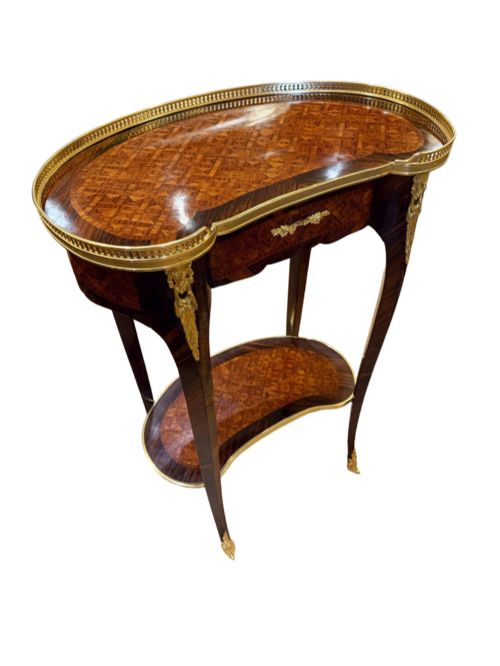
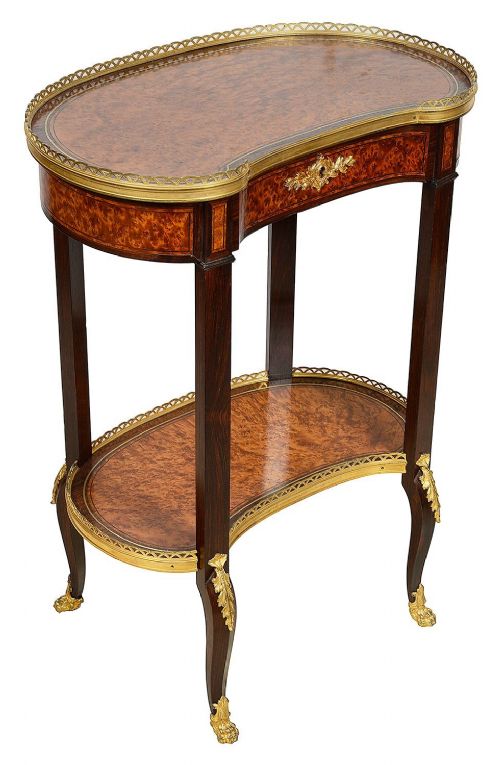


Walnut Kidney Side Table
These walnut kidney side tables combine serpentine curves with figured timber, offering compact utility alongside refined nineteenth-century and later styling.
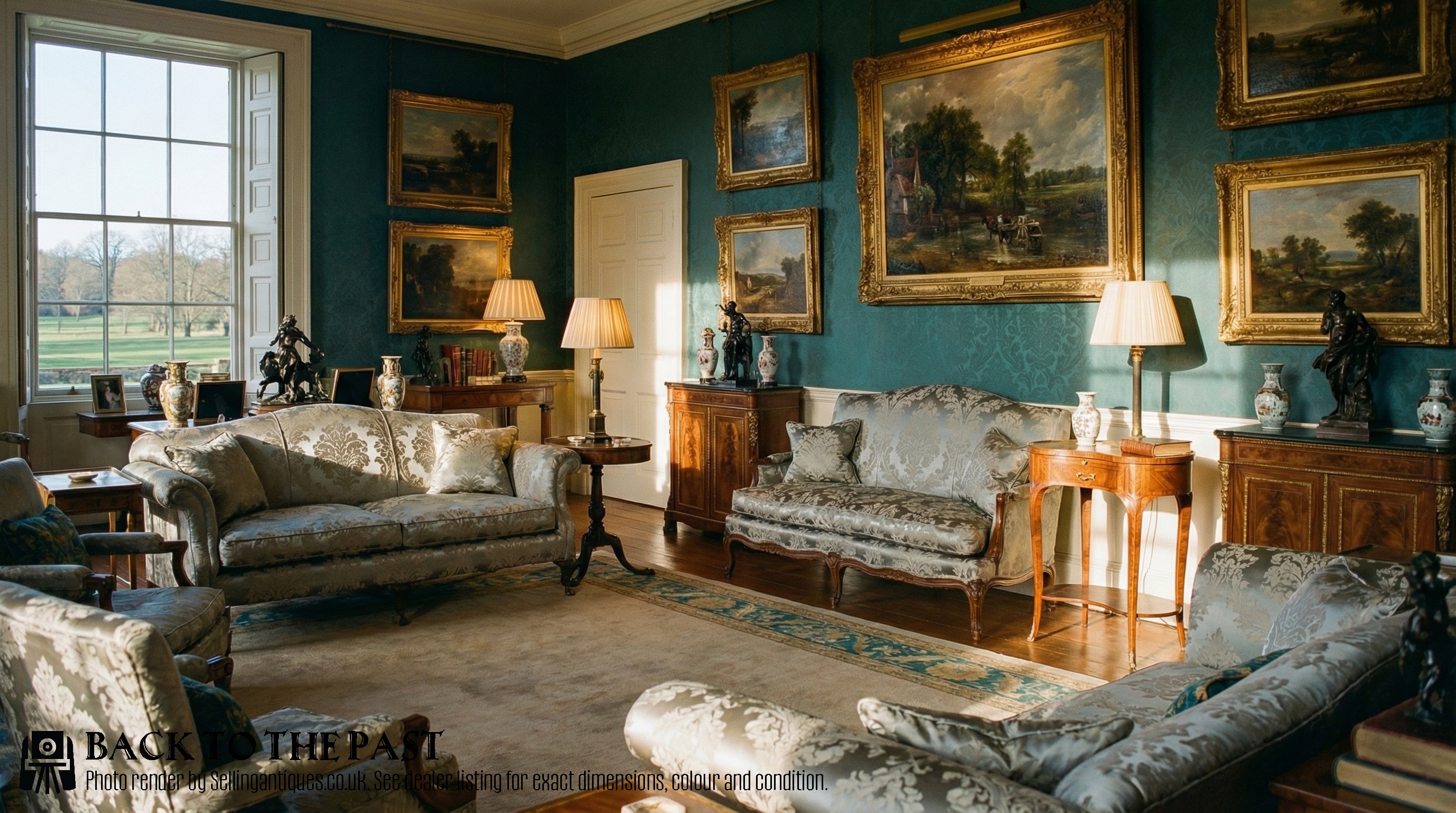
Walnut Kidney Side Table
A walnut kidney side table provides a distinctive curved surface suited to smaller rooms and domestic corners. These pieces function as occasional tables, bedside units, and compact writing desks.
Most examples originate from the Victorian period through to the nineteen-twenties, incorporating French revival influences like Louis XV and Louis XVI styling. The form naturally suits domestic spaces requiring functional surfaces with decorative presence.
The layout of these pieces varies from single-tier occasional tables to multi-tiered étagères and fitted writing desks. Buyers encounter variations including leather-inset tops and lower undertiers supported by slender legs.
How They Were Made
Cabinet makers utilised solid walnut and decorative burr walnut veneers applied to supportive pine or oak carcases. This timber selection created the characteristic figured grain patterns across the curved top surfaces.
Marquetry and parquetry inlay in contrasting woods such as satinwood decorate many surfaces, often accompanied by cast brass mounts and ormolu detailing. Writing variants frequently integrate inset leather panels bordered by gilt tooling.
The listings show materials spanning burr walnut, brass, ormolu, marquetry inlay, leather, satinwood, and porcelain.
What Varies in Quality
The sophistication of the timber figure and the precision of the marquetry inlay define the upper tier of these tables. Superior examples display carefully matched burr veneers that follow the complex curves of the kidney outline without lifting or splitting.
Construction details such as the stability of the leg joints and the quality of applied ormolu or brass mounts distinguish standard pieces from finer ones. The integrity of internal framing and the crispness of carved or inlaid details reflect the original workshop standards.
Tehan
The Walnut Kidney Side Table Glossary
- Burr Walnut
- A timber harvested from the growths of walnut trees, displaying highly figured, swirling grain patterns. This material was sliced into fine veneers for high-status cabinet work.
- Marquetry Inlay
- Decorative patterns formed by fitting contrasting wood veneers into a prepared background. Artisans used this technique to create floral or geometric motifs across table tops.
- Ormolu
- Gilded bronze ornamentation applied to furniture mounts and feet. This decorative metalwork is typical of French revival pieces.
- Parquetry
- Geometric wood inlay forming repeating patterns such as cubes or squares. It differs from marquetry through its strict geometric arrangement.
- Étagère
- A set of open shelves or tiered stands designed for display. These multi-tiered versions provide additional surface space within a compact footprint.
Walnut Kidney Side Table: Frequently Asked Questions
What periods do these tables come from?
The available evidence spans the nineteenth century, including Victorian production, alongside later examples from the nineteen-twenties.
Maker attribution and stylistic cues help contextualise the manufacturing era for each individual piece.
How were these tables originally used?
These pieces served multiple domestic functions including bedside placement, occasional display, and intimate letter writing.
Fitted variations incorporate leather writing surfaces and drawers designed for correspondence and desk accessories.
What woods are typically used?
Walnut and burr walnut form the primary structural and decorative timbers across the documented examples.
Secondary woods and contrasting veneers like satinwood support the detailed inlay work and marquetry panels.
Are these tables French in style?
Many examples draw upon Louis XV and Louis XVI French revival designs, alongside domestic Victorian interpretations.
Ormolu mounts and elaborate marquetry reflect the continuing popularity of continental aesthetics in British and French workshops.
How do multi-tier tables differ?
Multi-tier versions include étagères and Canterbury workstations that provide integrated shelving beneath the main kidney surface.
These variations offer increased display capacity while maintaining the space-saving curved silhouette.