



Kidney Shaped Nightstands
Kidney shaped nightstands bring a clever, curved silhouette to the bedroom, offering compact bedside storage with unmistakable period charm.
Kidney Shaped Nightstands
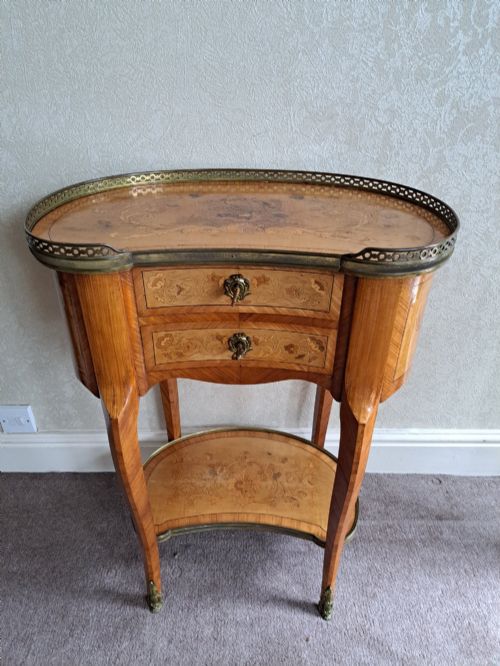
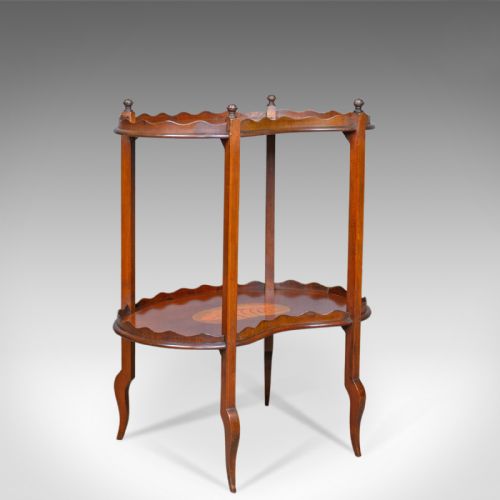
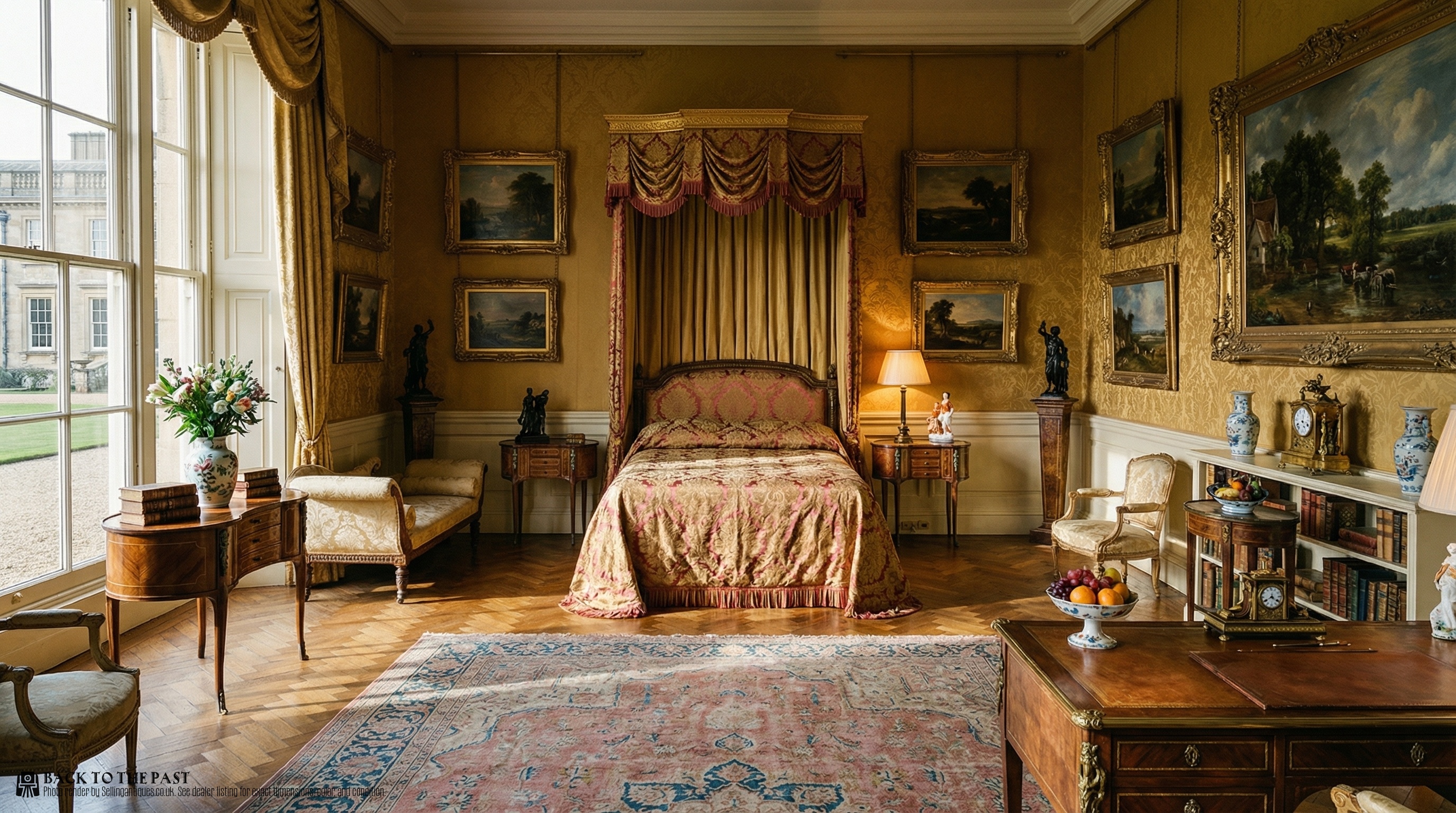
Kidney shaped nightstands present a distinctive curved outline that hugs the bed or sits neatly in an alcove, functioning primarily as bedside tables or occasional side tables. The form appears across the nineteenth century and into the early twentieth century, drawing heavily on French stylistic revivals.
You are most likely to encounter these pieces in nineteenth-century interpretations and 1920s examples, often reflecting Louis XV and Louis XVI revivals. They frequently emerge as pairs or single occasional tables finished with fine woodworking techniques.
How they were made
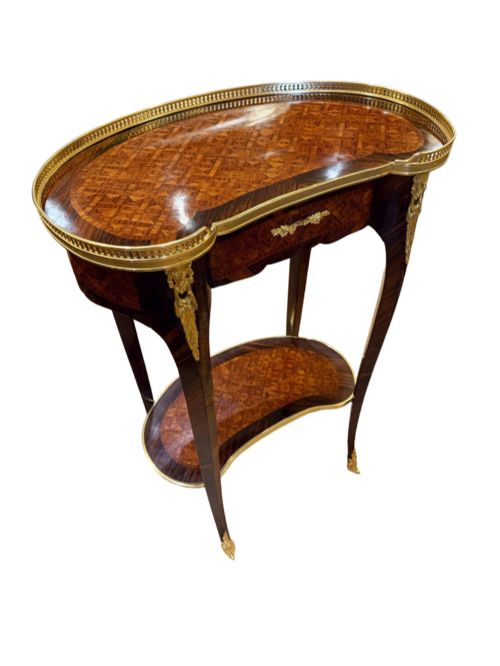
Cabinetmakers constructed these tables using a sturdy carcase of mahogany, walnut, or rosewood, frequently applying decorative veneers such as kingwood and satinwood to the curved surfaces. Parquetry inlay and geometric veneer patterns required meticulous hand-cutting to follow the tight radius of the kidney outline.
Metal mounts in brass and ormolu dress the corners, feet, and drawer pulls, adding structural protection and ornamental contrast to the dark hardwoods. Gallery rails often edge the top surface in brass, preventing items from sliding off the curved table top.
A tiny raised brass gallery ensures your midnight glass of water stays put, no matter how sharp the curve of the table top.
What varies in quality
The sophistication of the timber work dictates the standing of a piece, with complex parquetry and well-matched veneer grains marking out superior examples. Plain surfaces rely entirely on the natural figure of the walnut or mahogany, where uniform depth of tone reveals careful material selection.
Mounts and hardware show a clear divergence in execution, as finely cast ormolu details outlast simple stamped brass elements. The precision of the curved drawer joinery and the snugness of the fit within the serpentine frame indicate the original maker's skill.
The Kidney Shaped Nightstands Glossary
- Parquetry
- Geometric wood inlay arranged in patterns such as cubes or chequers. This technique demonstrates the cabinetmaker's precision on curved surfaces.
- Ormolu
- Gilded bronze used for decorative mounts and furniture fittings. It provides a bright metallic contrast against dark hardwoods like rosewood and mahogany.
- Kingwood
- A dense, richly figured exotic timber prized in fine cabinetmaking. Its contrasting dark and golden brown stripes suit detailed veneering.
- Gallery
- A raised miniature railing around the edge of a table top. Brass galleries keep small objects secure on narrow surfaces.
- Veneer
- A thin slice of decorative wood applied over a secondary timber base. Skilled layering allows makers to display complex grain patterns without warping solid boards.
Kidney Shaped Nightstands: Frequently Asked Questions
Why choose a kidney shaped nightstand?
The curved front profile fits comfortably beside a bed while projecting less into the room than a square cabinet. This shape maximises floor space without sacrificing surface area for lamps and books.
They introduce distinct period character derived from French revival designs, moving away from rigid rectangular furniture.
Are these tables usually found in pairs?
While many survive as individual side or occasional tables, matched pairs do appear from the Victorian and 1920s periods. Pairs command greater attention from buyers seeking symmetry on both sides of a bed.
Single pieces function well as standalone accent tables in corners or smaller bedrooms.
What woods were used for these tables?
Cabinetmakers relied on stable structural timbers like mahogany and walnut, often layering decorative veneers over them. Rosewood and kingwood appear frequently for their striking natural grain patterns.
Satinwood provides a lighter contrast for inlay work, creating visual depth across the curved surfaces.
How do I date a kidney shaped nightstand?
Dating relies on combining the stylistic clues of the period, such as Louis XV revival motifs, with the construction methods visible in the drawers and carcase. Nineteenth-century examples often feature hand-cut dovetails and heavy timber framing.
Twentieth-century pieces from the 1920s and 1930s tend to show lighter internal framing while retaining traditional veneering techniques.