


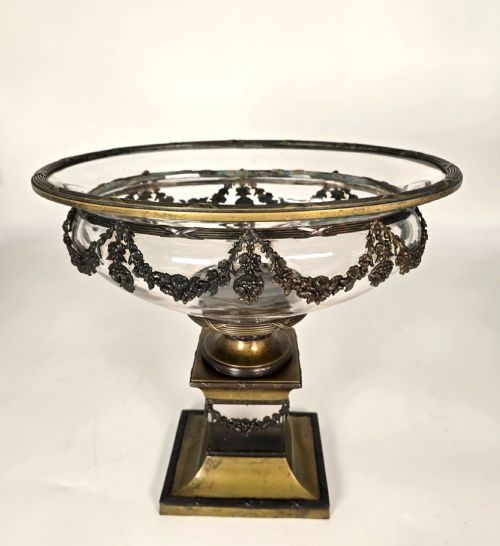
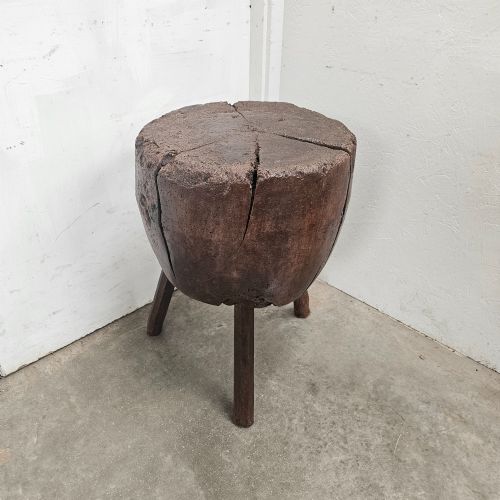
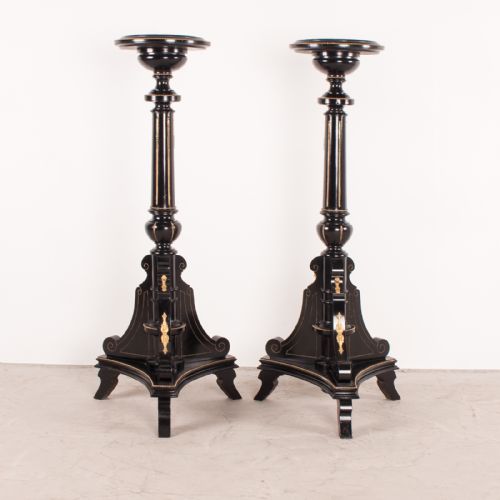
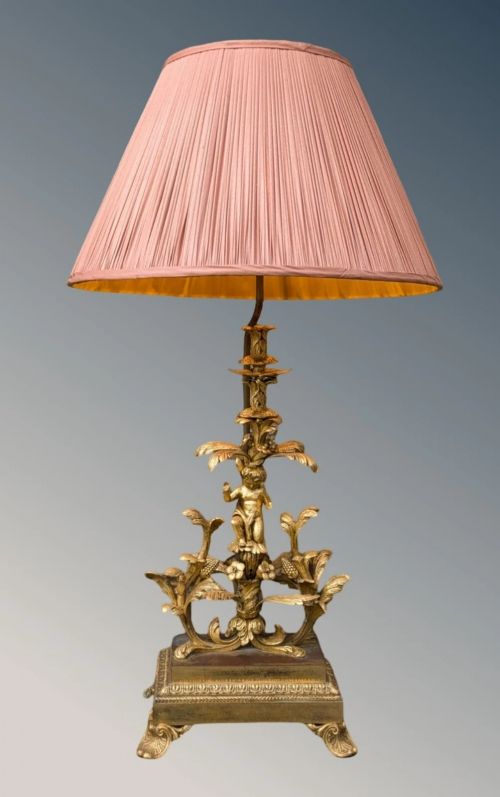

Vintage French Pedestals
Vintage french pedestals anchor a room with classical dignity, lifting plants, lamps and decorative objects on sturdy columns of marble, brass and polished timber.
Vintage French Pedestals
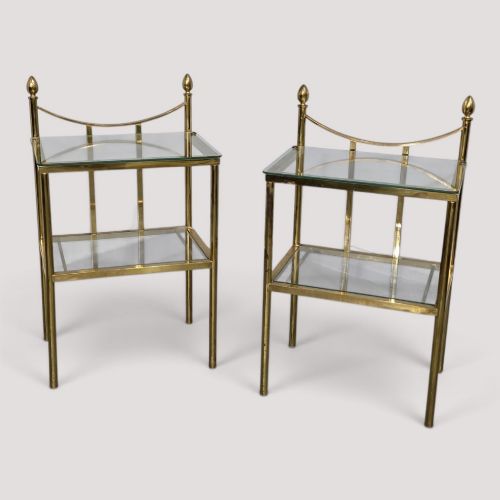
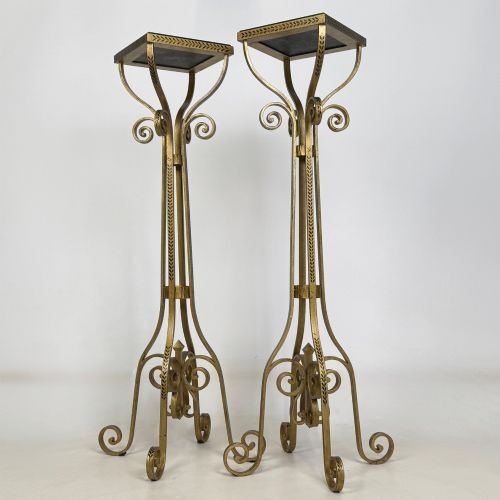
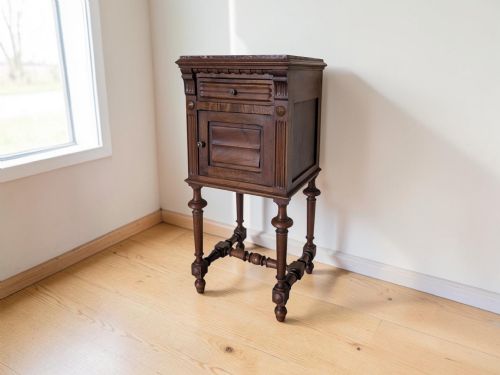
Vintage french pedestals comprise column display supports, torcheres and marble-topped plant stands originating from the nineteenth and early twentieth centuries. These forms merge architectural poise with utilitarian function, serving as stable platforms for sculpture, lighting or botanical displays.
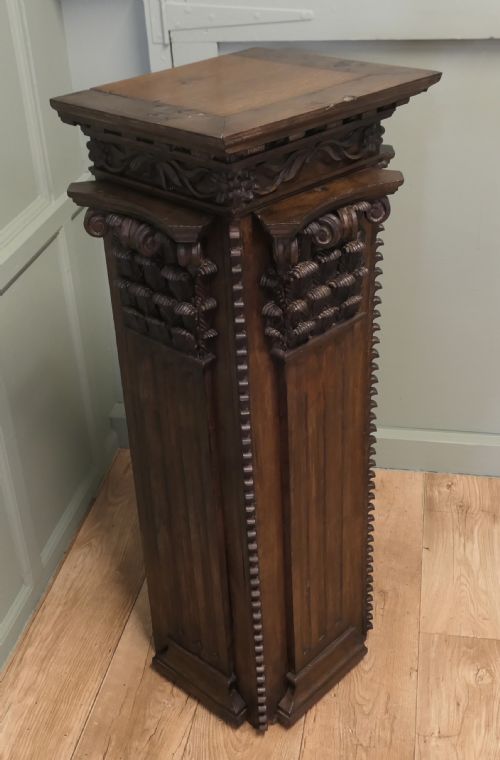
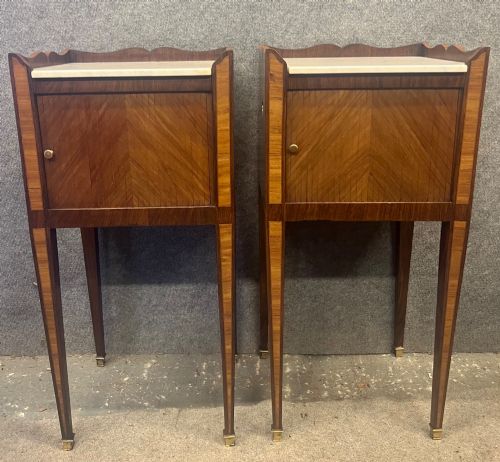
The selection encountered here spans formal French Empire or Rococo Revival designs alongside cleaner Art Deco geometries and rustic oak columns. Buyers find both matched pairs intended for symmetry and singular architectural fragments.
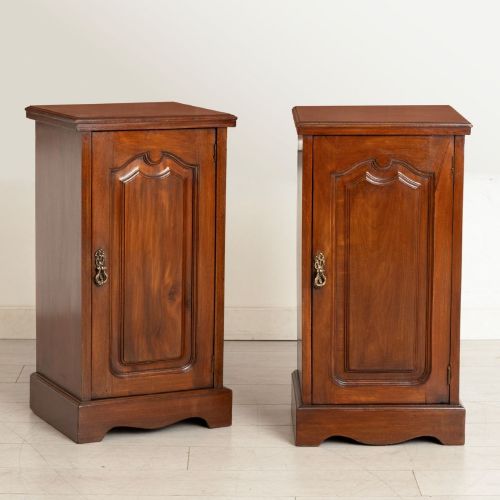
Originating predominantly from French workshops, these pieces utilise traditional joinery and heavy mineral tops to achieve both visual weight and physical stability. Their scale ranges from compact bedside stands to substantial display columns.
How they were made
Construction relies upon a dense combination of hardwoods such as mahogany, walnut, kingwood and oak, frequently paired with cast iron, bronze or brass mounts. Ormolu and chiseled brass add metallic highlights to timber shafts and stone surfaces.
Inlaid veneers, parquetry patterns and applied gesso enrich the structural timber bodies, while heavy slabs of white or veined marble form smooth upper surfaces resistant to moisture and heat. Wrought iron and patinated bronze provide robust framing for cafe and garden variations.
Periods represented span the nineteenth century through Edwardian and Art Deco decades.
What varies in quality
Quality rests upon the crispness of the carved or cast ornamentation and the precise integration of disparate materials, such as the snug fit of marble within a wooden or brass gallery. Superior examples display fluent hand-chiselling on bronze mounts and seamless veneer matching across curved surfaces.
The integrity of the underlying timber structure and the preservation of original patination dictate longevity and visual depth. Pieces retaining their uncompromised original paint, fire-gilt or polished finishes demonstrate superior initial craftsmanship and careful subsequent preservation.
Christofle·Étienne Kohlmann·Jean Antoine Houdon
The Vintage French Pedestals Glossary
- Ormolu
- Gilded bronze applied as mountings to furniture and pedestals. This decorative technique involves fusing gold-mercury amalgam onto a cast bronze base.
- Torchere
- A tall stand designed to support a candle or lamp. These elevated platforms frequently feature slender columns and decorative tripod bases.
- Gueridon
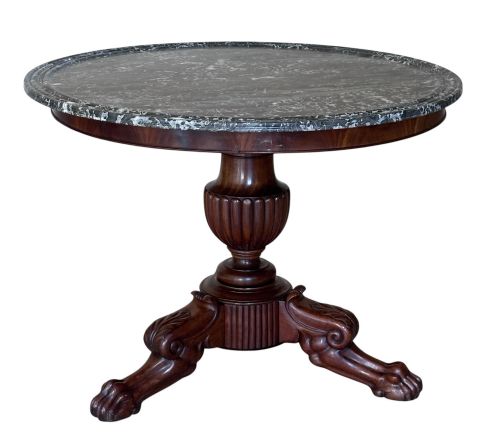
- A small circular table supported on a central column or pillar. Originating in seventeenth-century France, these pieces function as centre tables or plant stands.
- Parquetry
- Geometric mosaic woodwork used for decorative surfaces on tables and cabinets. Artisans arrange contrasting wood veneers in repeating patterns.
Vintage French Pedestals: Frequently Asked Questions
How do I clean a marble top?
Wipe the surface gently with a soft damp cloth using neutral soap, avoiding acidic cleaners that etch stone.
Dry thoroughly with a lint-free cloth to maintain the polished finish.
Can these support heavy stone urns?
Most solid timber and cast iron columns possess high load-bearing capacity suitable for substantial planters.
Verify that the base diameter matches the footprint of the heavy object to ensure physical stability.
Are pairs matched or assembled later?
Pairs often emerge from formal dining rooms or salons where symmetry was required by period interior design.
Examine wood grain patterns and manufacturing tool marks to confirm identical construction origins.
How do I distinguish Empire from Deco?
Empire pieces feature classical motifs like acanthus leaves, columns and heavy ormolu mounts reflecting nineteenth-century antiquity.
Art Deco versions utilise streamlined geometric silhouettes, simplified surfaces and modern industrial metals from the interwar period.