


Walnut Jardiniere Table
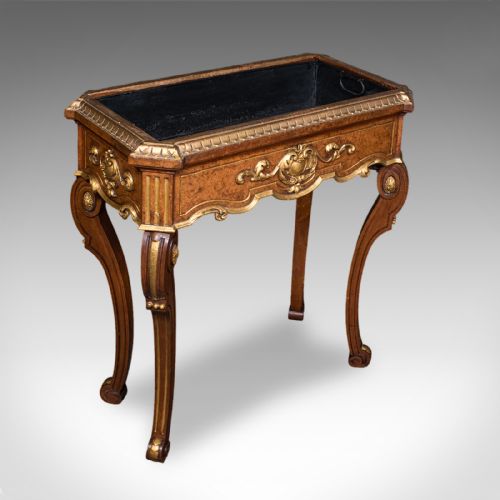
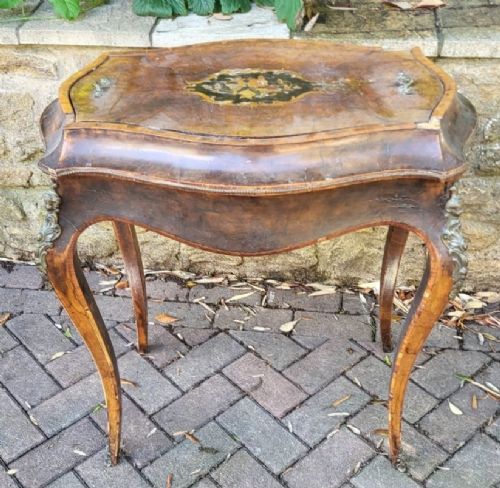
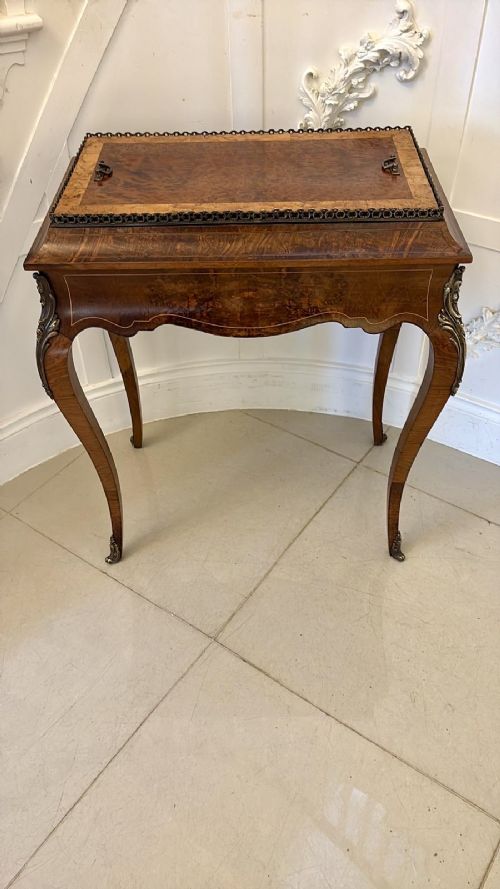
These walnut jardiniere table examples combine rich timber with integrated planting wells, offering a practical centrepiece for indoor greenery.

What a walnut jardiniere table is
A walnut jardiniere table serves as both a decorative side table and a functional indoor plant stand, often incorporating a metal or zinc liner to hold water and earth safely. These pieces emerge across the 19th century, including specific years like 1850 and 1880, as well as the Regency and Victorian periods.
Most items you meet here draw heavily on French design, spanning French Rococo Revival, Louis XV Style, and Napoleon III aesthetics. Alongside standard jardiniere tables, the selection includes related forms such as planter stands, wine coolers, cellarettes, and marquetry inlaid side tables.
Makers frequently employ rich burr walnut veneers, sometimes enhanced with intricate marquetry inlays, alongside contrasting ebonised wood. The integration of porcelain plaques and ormolu mounts further elevates certain forms into grander decorative statements.
How they were made
Cabinetmakers constructed these tables using solid walnut frameworks overlaid with highly figured burr walnut veneers, applying intricate marquetry patterns across top surfaces and friezes. Ebonised wood often provides sharp architectural contrast to the warm tones of the walnut.
Retail Price Guide 2026
Typical UK retail prices for walnut jardiniere table, calculated from the Sellingantiques database of over a million retail prices indexed since 2003. This retail price guide relies exclusively on Sellingantiques data; no external sources or auction records are used, so the figures do not describe the wider market.
Periods represented include Regency, Victorian, and the wider 19th century.
What varies in quality
Quality rests upon the selection and matching of the burr walnut veneer, where tighter, more symmetrical grain patterns distinguish finer examples from plain timber. The crispness of the cast ormolu mounts and the precision of the marquetry inlay similarly mark out ambitious workshop output.
Structural integrity depends on how well the internal metal liner has protected the surrounding woodwork from historical water exposure. Pieces that retain their original porcelain plaques and stable, warp-free tops sit firmly at the upper end of the scale.
The Walnut Jardiniere Table Glossary
- Jardiniere
- A decorative container or stand designed for holding growing plants and flowers. It sits either as a standalone piece of furniture or atop a dedicated table base.
- Burr walnut
- A specialised timber harvested from the gnarled growths of a walnut tree, yielding dense, swirling grain patterns. Cabinetmakers prize it for creating highly decorative table tops.
- Ormolu
- Gilded bronze or brass applied as decorative mounts to furniture edges and legs. It provides a bright metallic contrast against dark woods like walnut.
- Marquetry
- The art of applying thin slices of various woods to a structure to form decorative patterns and pictures. It frequently decorates the surfaces of 19th-century side tables.
- Cellarette
- A fitted cabinet or stand originally used for storing bottles of wine or spirits. Some 19th-century planter tables share this dual form.
Frequently Asked Questions
What is a walnut jardiniere table?
A walnut jardiniere table is a 19th-century furnishing that combines a display surface with a built-in planter well for indoor greenery.
These pieces often feature French styling, including marquetry inlay, ormolu mounts, and burr walnut veneers.
How were they used historically?
Wealthy households used these tables in reception rooms and parlours to bring living plants indoors safely.
The integrated metal liner protected the surrounding wooden table from water damage during watering.
Are liners usually original?
Many surviving tables retain their period zinc or brass liners, though some have been replaced over time due to wear.
Checking the fit and metal type helps determine if the liner has aged alongside the wooden frame.
How do I spot Victorian pieces?
Victorian examples frequently showcase heavy burr walnut veneers, rich marquetry patterns, and robust side table proportions.
Stylistic cues often point toward French Rococo Revival or Louis XV influences popular during the 19th century.