
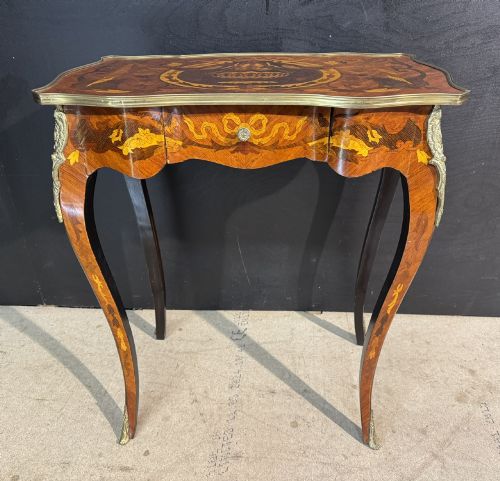
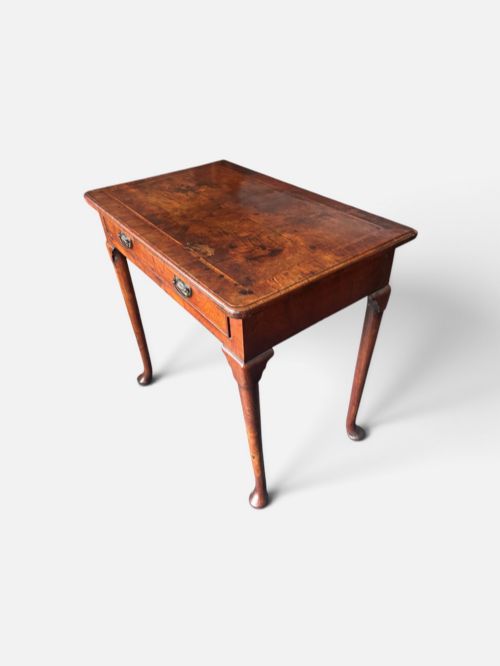
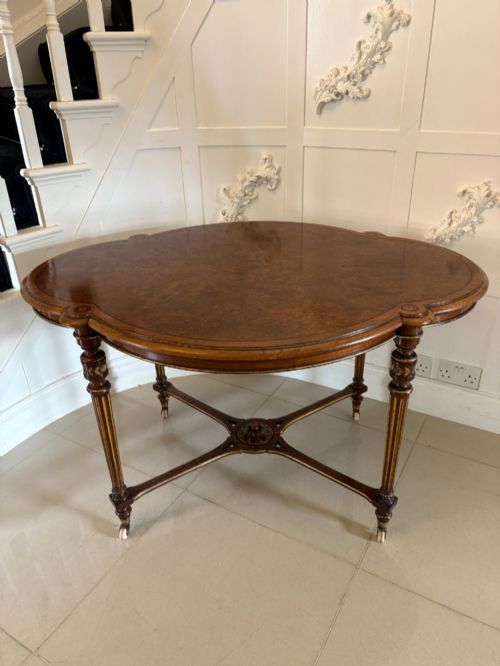
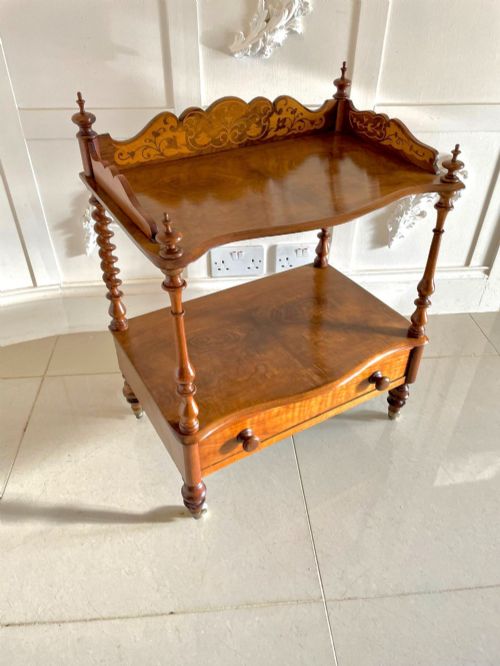
Walnut Inlay Side Table
A walnut inlay side table brings patterned timber into a room, offering a surface for a lamp or books.
Walnut Inlay Side Table
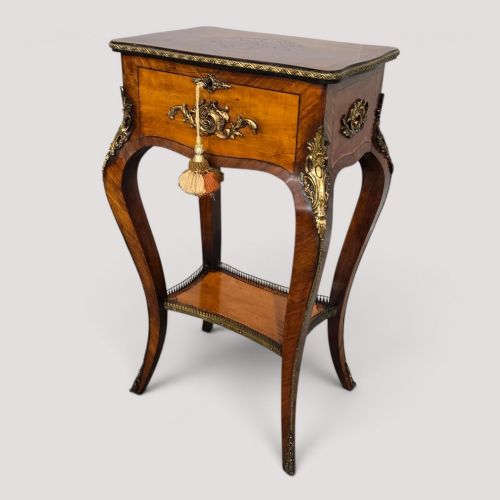
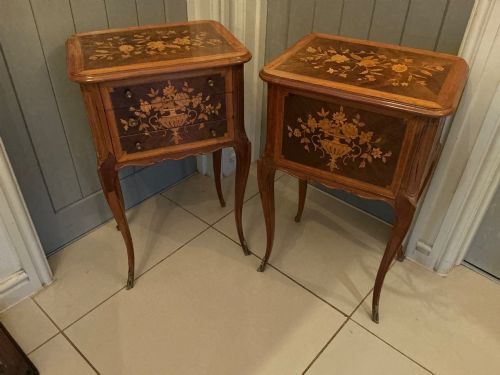
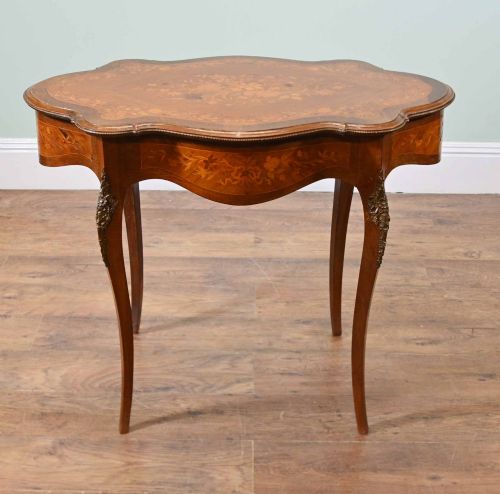
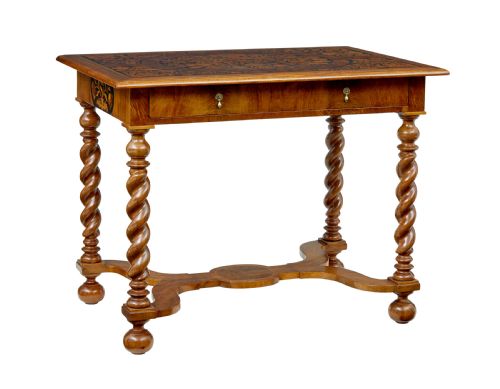
A walnut inlay side table is typically encountered as a lamp table, occasional table, or small writing desk dating from the nineteenth century or the Victorian period. These pieces serve practical uses beside seating or in hallways while displaying detailed decorative surfaces.
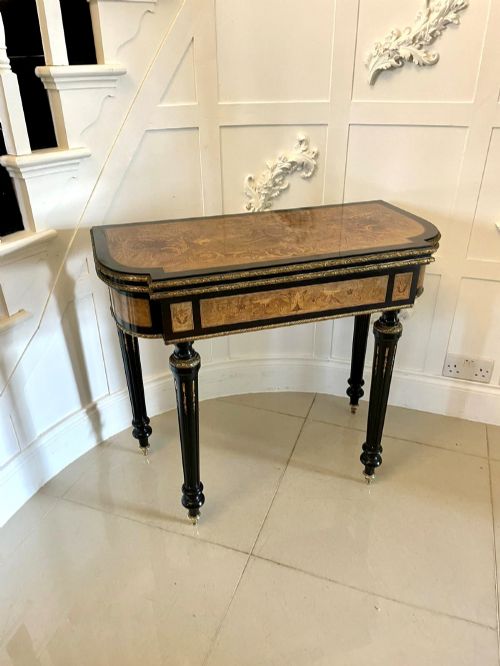
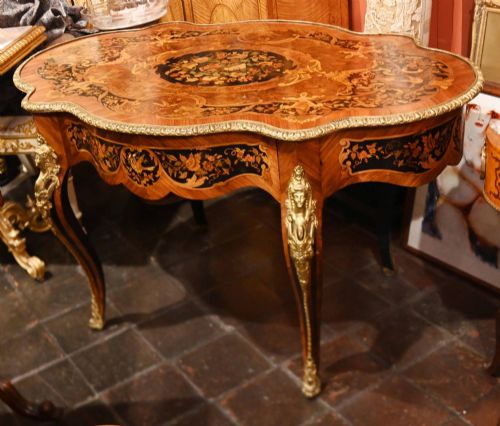
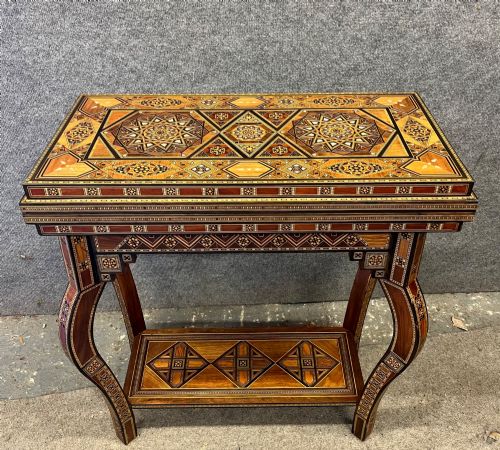
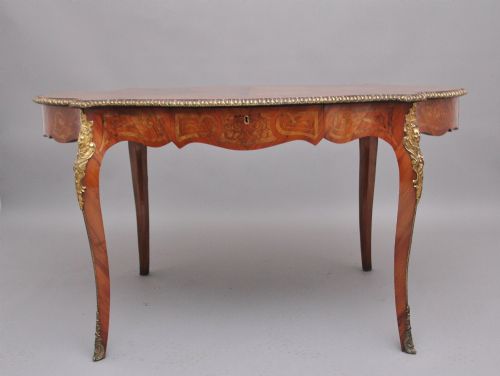
The selection includes French Louis XV style pieces alongside English Victorian examples, often featuring shaped tops and slender supports. Smaller formats such as bedside tables and games tables also appear frequently across the periods represented.
Materials and construction methods
Cabinet makers utilised solid walnut and burr walnut as the primary timber, often combining it with contrasting woods like rosewood and fruitwood for decorative effect. Brass fittings and ormolu mounts frequently accent the woodwork on French and English pieces.
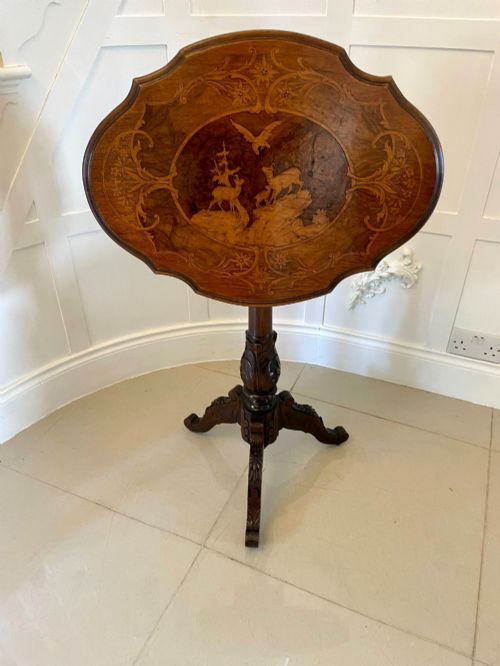
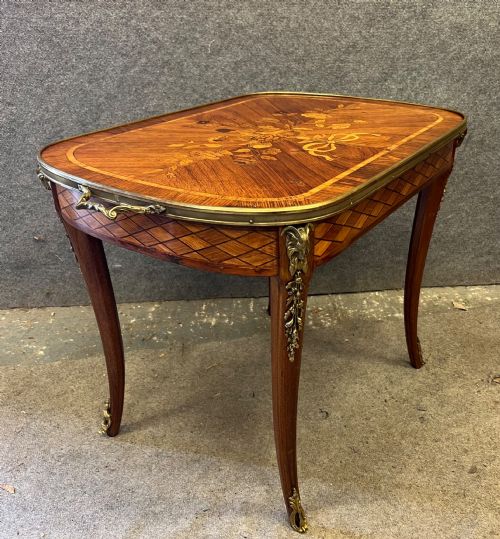
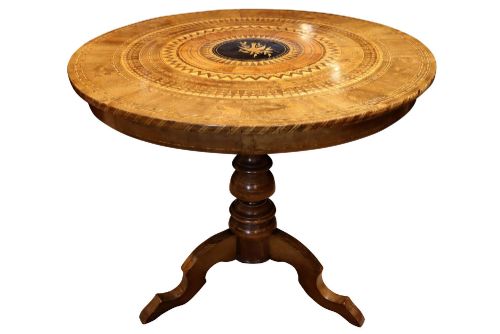
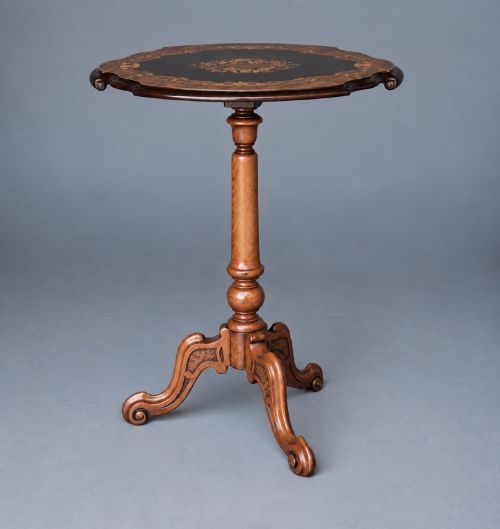
Marquetry inlay and parquetry techniques create elaborate floral or geometric patterns across the table tops. Artisans cut thin veneers of different timbers and fitted them precisely into prepared recesses within the walnut carcase.
Some nineteenth-century tables hide miniature compartments beneath folding tops, perfect for keeping small secrets safe.
Distinctions in craftsmanship
Quality rests on the precision of the veneer work and the choice of timber figure, such as highly figured burr walnut. Finer examples display seamless integration of the inlay without gaps or lifting edges across the surface.
The sophistication of the frame construction and the subtlety of the carving differentiate workshop standards. Tables bearing maker signatures or showing refined proportions command greater attention from collectors.
JAS Shoolbred·Walter Carter Harrods
The Walnut Inlay Side Table Glossary
- Marquetry inlay
- Decorative patterns formed by fitting veneer pieces into a wood background. This technique creates pictorial or floral designs across table tops.
- Burr walnut
- Timber taken from the growth excrescence of a walnut tree, showing swirling grain patterns. It provides a highly decorative surface for high-end furniture.
- Parquetry
- Geometric wood inlay forming regular patterns like checkerboards or cubes. It differs from marquetry by using strict geometric arrangements.
- Ormolu
- Gilded bronze used for decorative mounts and furniture hardware. It adds metallic contrast to dark timber surfaces.
- Lowboy
- A small eighteenth-century dressing table or side table with drawers. These low tables typically stand on cabriole or straight legs.
Walnut Inlay Side Table: Frequently Asked Questions
How do I clean a walnut inlay side table?
Dust the surface regularly with a soft, dry cloth to prevent dirt accumulation in the veneer joints. Avoid modern chemical polishes that can damage old polished finishes.
Apply a microcrystalline wax occasionally to nourish the timber and protect the inlay work from moisture. Keep the table away from direct sunlight and heat sources to prevent the wood from drying out.
Can I use a side table for daily writing?
Many nineteenth-century occasional and writing tables feature shallow drawers suitable for occasional correspondence. The lighter construction of these pieces means they suit paper use rather than heavy desk work.
Protect the veneered top with a leather pad or desk blotter if you write on it frequently. This prevents ink stains and surface scratches on the antique timber.
How do I distinguish French styles from English ones?
French tables from the nineteenth century often display Louis XV revival curves, intricate marquetry, and prominent ormolu mounts. The legs tend to be more curved and the overall ornamentation heavier.
English pieces of a similar age generally favor simpler walnut veneers with restrained stringing or geometric inlay. Victorian examples balance utility with decorative burr walnut surfaces.
What rooms suit a small games table?
Small games tables function well in reception rooms or studies where they provide a flexible surface. Many designs fold out or swivel to reveal a baize-lined playing area for cards or chess.
When closed, they occupy minimal space against a wall while displaying decorative wood patterns. They pair effectively with armchairs or serve as occasional lamp tables.