




Walnut High Back Carver
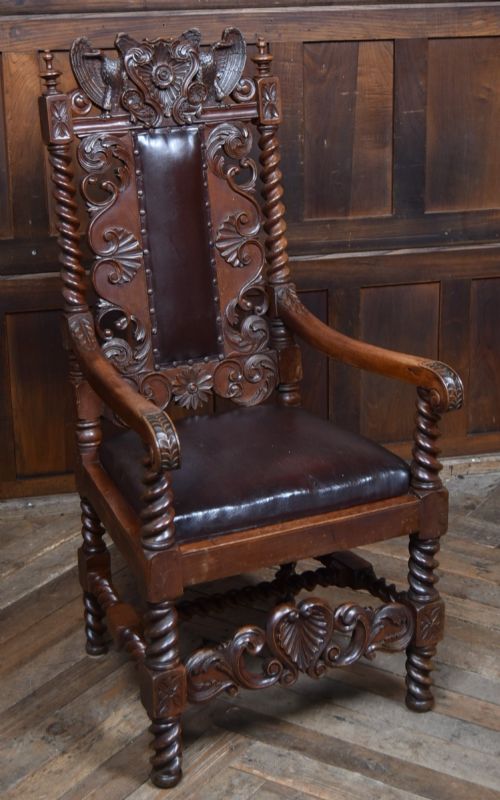
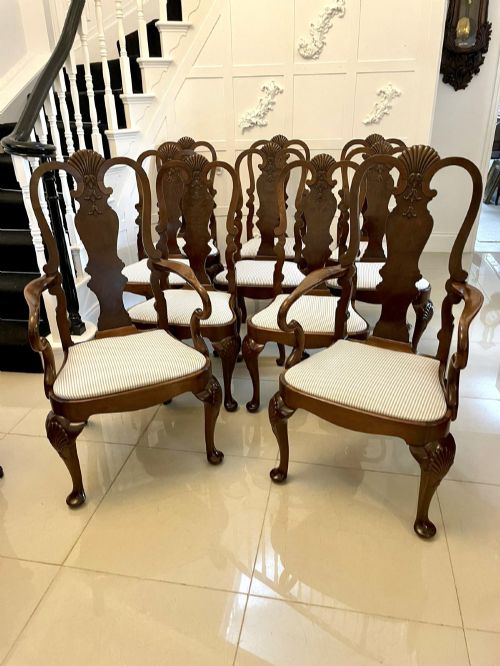
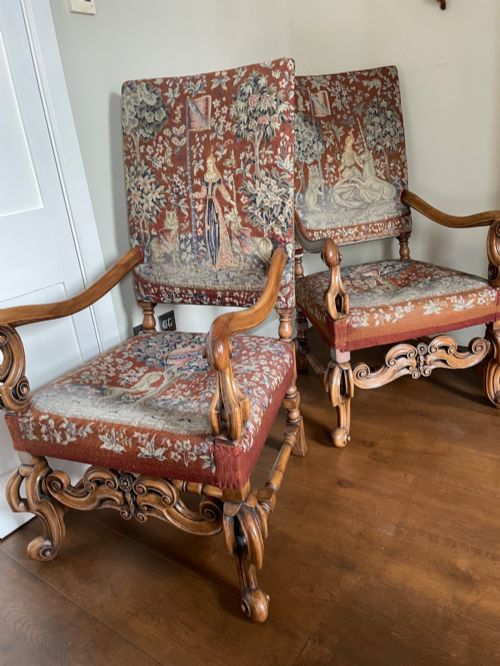
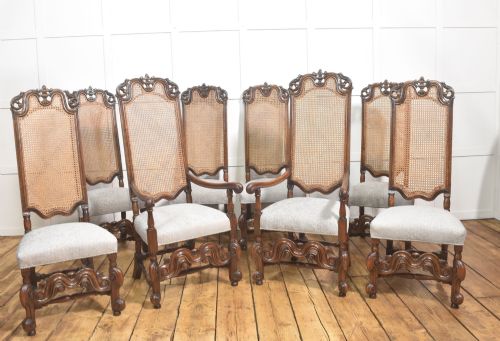
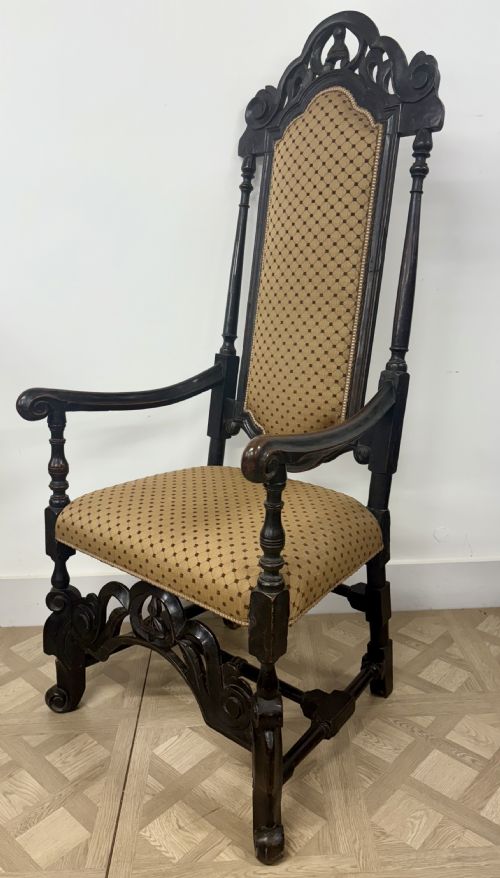
Walnut high back carver armchairs combine architectural height with rich timber figures, offering commanding presence and traditional seating comfort.
Walnut High Back Carver
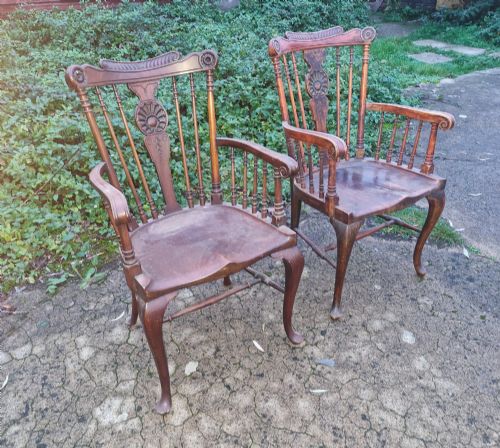
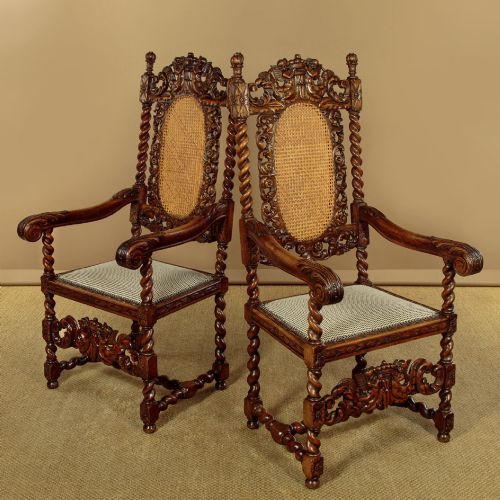
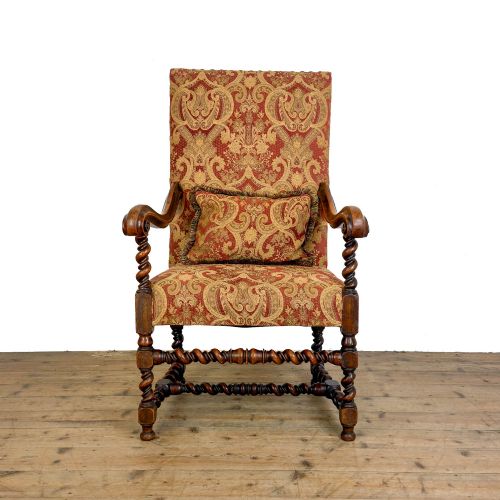
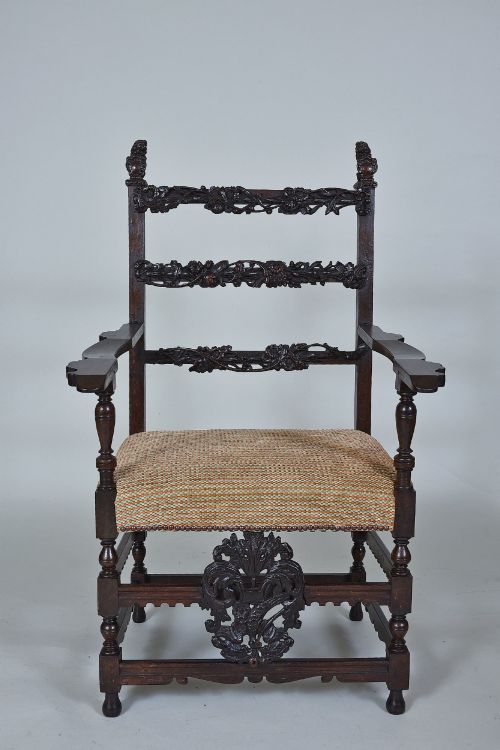
A walnut high back carver provides tall back support alongside supportive armrests, making it a prominent seating choice within domestic interiors. These chairs appear across various periods, from seventeenth-century originals through nineteenth-century revival interpretations and early twentieth-century reproductions.
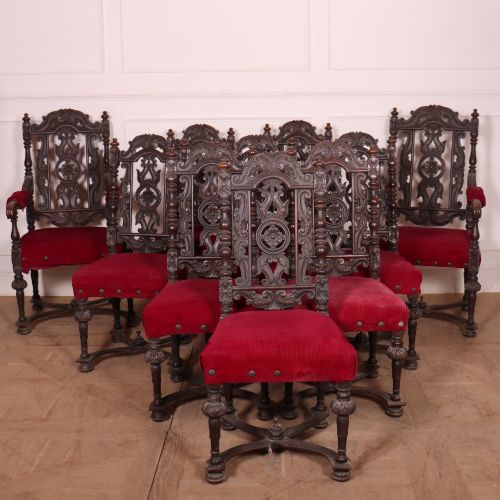
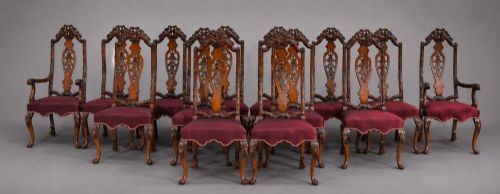
The forms span several stylistic revivals including Queen Anne, William and Mary, and Carolean or Restoration designs. Buyers frequently encounter sets of dining chairs alongside single armchairs and pairs originating from English, Italian, French, and Dutch workshops.
What varies in quality
The depth and crispness of carved detail distinguish different grades of workmanship across these chairs. Heavy, sharply defined scrolls and foliage indicate superior execution compared to soft or shallow moulding.
Timber selection and the preservation of original surfaces create notable distinctions between pieces. Solid walnut frames with intact period upholstery or undamaged cane panels hold greater material integrity.
Walnut High Back Carver Retail Price Guide 2026
Typical asking prices for walnut high back carver among the pieces listed under this phrase on Sellingantiques today, from the lower quarter to the upper quarter. They describe what is for sale here now, not the wider market.
Current listings feature walnut timber combined with cane, leather, velvet, and various textile upholstery options across multiple historical periods.
The Walnut High Back Carver Glossary
- Carver
- An armchair designed with armrests, traditionally used at the head of a dining table. These pieces match or complement smaller side chairs in a set.
- Cane
- Woven rattan material used for chair backs and seats. It provides a resilient and breathable surface common in seventeenth-century and revival seating.
- Stretcher
- A horizontal wooden brace connecting the legs of a chair to provide structural stability. Revival pieces often feature intricately turned or carved versions.
- Crest rail
- The topmost horizontal member of a chair back. It frequently bears the primary carved decoration on high back armchairs.
Walnut High Back Carver: Frequently Asked Questions
What is a carver chair?
A carver chair is an armchair that matches a set of dining chairs, traditionally placed at the ends of a table. These pieces feature integrated armrests for added support.
They function as both practical seating and decorative focal points within a dining room arrangement.
How do I spot a revival chair?
Revival chairs replicate earlier historical styles, such as William and Mary or Queen Anne designs, but date from later periods like the nineteenth or twentieth century. Examining construction marks and timber ageing helps determine the actual production date.
Cabinetmakers during the Victorian and Edwardian eras frequently produced high-quality interpretations of these classic forms.
Where were these chairs made?
Walnut high back carvers originate from various European countries including England, Italy, France, and the Netherlands. Each region developed distinct regional characteristics in turning and carving.
English and continental workshops adapted local furniture traditions to suit shifting stylistic preferences over the centuries.
How do I care for cane seats?
Caned panels require gentle cleaning with a damp cloth to prevent the natural rattan material from drying out and snapping. Avoiding excessive weight and maintaining moderate room humidity preserves the weave.
Original cane panels demand particular care to maintain their structural integrity over time.