


Walnut Hanging Wall Cupboard
A walnut hanging wall cupboard brings practical storage and rich timber grain to domestic interiors, spanning centuries of cabinet-making.
Walnut Hanging Wall Cupboard
A walnut hanging wall cupboard offers secure storage off the floor, utilising vertical wall space in kitchens, parlours and halls. These pieces appear in forms ranging from straightforward single-door boxes to sophisticated glazed display units and bow-fronted corner cupboards.
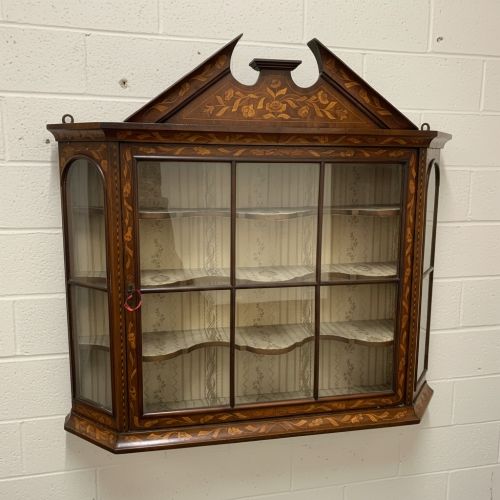
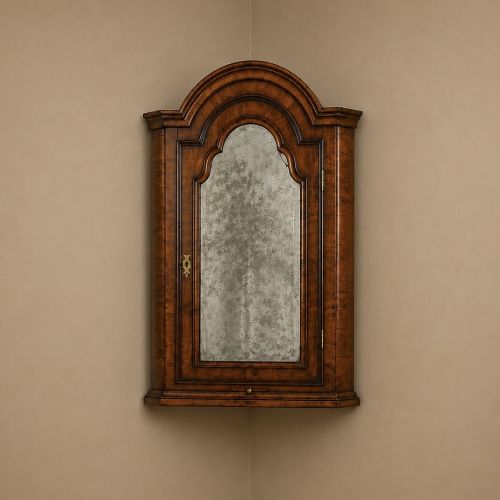
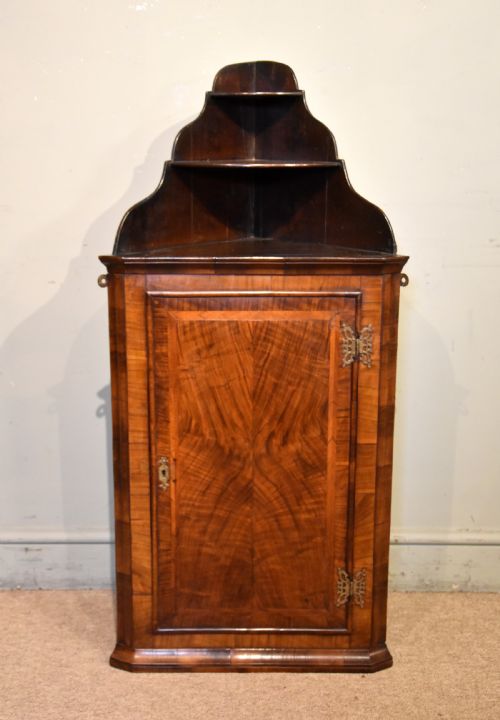
The selection encountered spans several centuries, drawing heavily upon eighteenth-century examples featuring Queen Anne and Georgian design alongside Victorian and later nineteenth-century interpretations. Corner cupboards dominate the selection, shaped specifically to fit into room junctions and maximise spatial efficiency.
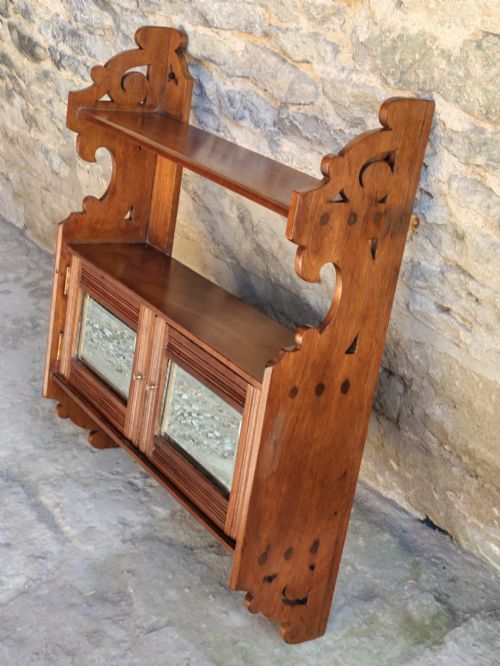
Makers adapted these cabinets for varied domestic uses, incorporating candle slides, mirrored doors or open shelving alongside enclosed cupboard space. Continental and English workshops alike produced these wall-mounted items, employing regional timbers and stylistic markers peculiar to their origin.
Materials and construction
Makers constructed these wall cupboards primarily using solid walnut or burr walnut veneers applied to secondary woods such as oak, fruitwood or elm. Marquetry inlay, carved details and turned finials frequently embellish the primary surfaces, demonstrating skilled joinery.
Fittings such as brass hinges, escutcheons and glass panels complete the structural assembly. Cabinet makers utilised dovetail joints for drawer construction and pegged mortise and tenon joints for the main carcass to ensure durability when wall-mounted.
The site listings include walnut wall cupboards spanning the eighteenth century through to the Edwardian period, incorporating oak and fruitwood secondary timbers.
Assessing quality
The standard of timber selection largely dictates the standing of a piece, particularly where figured burr walnut or intricate marquetry panels are employed. Superior examples display thoughtful grain matching across the doors and frame, whereas lesser items rely on plain veneers or standard stock timber.
Construction methods and the retention of original hardware reveal much about a cabinet's pedigree. Hand-cut dovetails, original brasses and undisturbed backboards separate master-built workshop output from later alterations or utilitarian production.
Arthur Simpson
The Walnut Hanging Wall Cupboard Glossary
- Marquetry
- Inlaid patterns of wood veneer forming decorative pictures or geometric designs on furniture surfaces. This technique requires immense precision to fit varied timber species together seamlessly.
- Corner cupboard
- A cabinet specifically built with an angled back to fit neatly into the corner of a room. These forms make efficient use of otherwise neglected architectural space.
- Burr walnut
- Timber taken from a tree growth or wart, yielding a swirling, highly figured grain pattern. Cabinet makers prize this material for creating striking decorative panels on door fronts.
- Glazed cabinet
- A storage piece featuring glass panes in the doors to display contents safely. This style became increasingly popular for showing ceramics and glassware in domestic settings.
- Panetiere
- A traditional freestanding or wall-mounted bread cabinet originating in France, often featuring turned spindles and carved details. These items allowed air circulation around stored loaves while protecting them from pests.
Walnut Hanging Wall Cupboard: Frequently Asked Questions
How were walnut hanging wall cupboards used originally?
These cabinets served to store valuable tableware, spices, documents or medicines safely away from damp floors and household pests.
In domestic interiors, corner units utilised awkward room junctions while displaying prized porcelain or keeping daily necessities within reach.
How do I secure a wall cupboard safely?
Wall-mounted cabinets require fixing directly into structural studs or masonry using appropriate wall anchors suitable for the weight of hardwood.
Professional installation ensures the piece supports its own weight plus the load of stored items without pulling away from the plaster.
How do I tell an 18th-century cupboard from a Victorian one?
Eighteenth-century examples often exhibit hand-cut dovetails, pegged joints and simpler carcass constructions using native walnut or early veneers.
Victorian pieces frequently display heavier proportions, machine-sawn elements, varied secondary woods like pine or oak, and distinct revivalist decorative motifs.
How should I care for antique walnut wood?
Maintain the timber by keeping it away from direct sunlight and sudden temperature shifts that cause veneer to crack or lift.
Apply traditional beeswax sparingly and buff gently with a soft cloth to nourish the grain without building up heavy chemical residues.