





Walnut Hanging Mirror
A walnut hanging mirror brings warmth and grain to a room, shifting from crisp Georgian fretwork to sweeping Art Deco curves.
Walnut Hanging Mirror
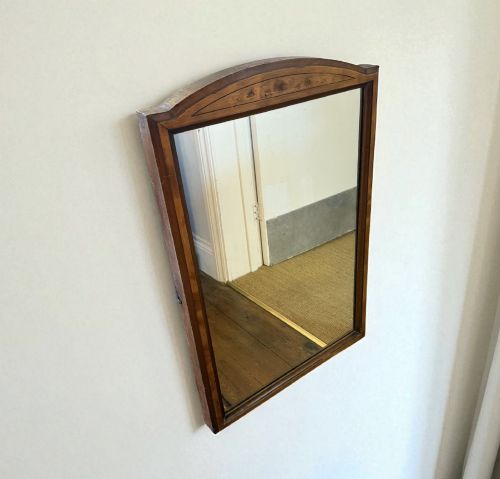
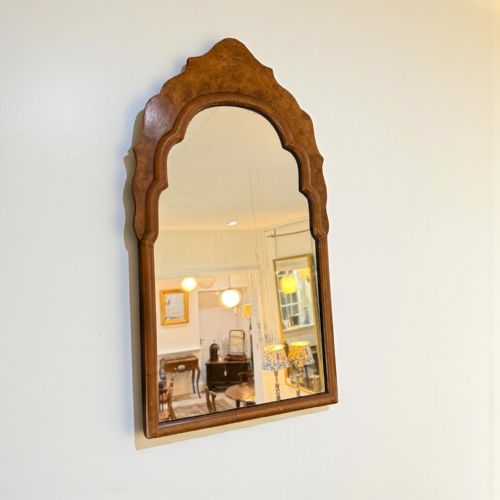
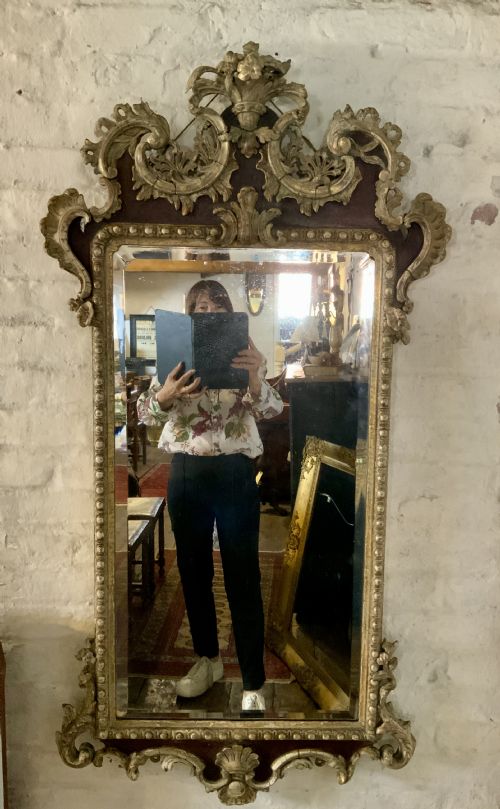
A walnut hanging mirror combines timber frames with reflective glass for wall mounting, spanning centuries of domestic design. When searching for a walnut hanging mirror, buyers encounter everything from early eighteenth-century Queen Anne and George II forms to later revival pieces and 1930s designs.
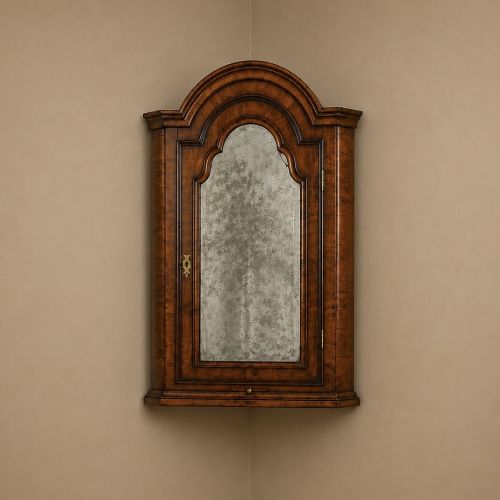
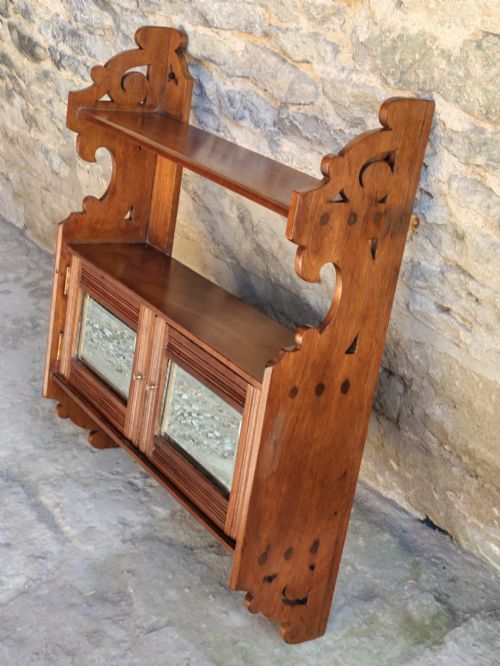
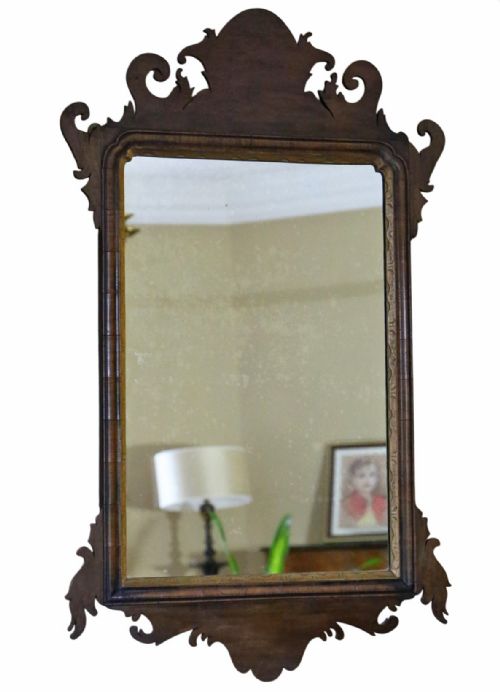
The objects take many shapes, including rectangular portrait formats, fret-cut silhouettes, shield designs, and cloud shapes. Alongside standard wall mirrors, the selection includes related wall-mounted forms such as hanging cabinets and corner cupboards incorporating mirror glass.
How they were made
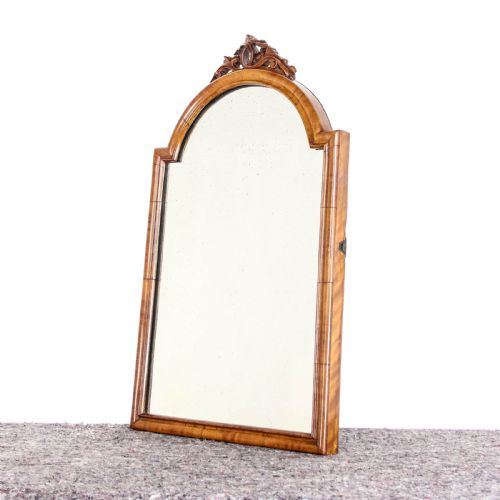
Frames rely on solid timber and decorative veneers, particularly burr walnut and oyster veneers that display intricate natural grain patterns. Craftsmen utilised walnut alongside supporting elements of parcel gilt, giltwood, and brass hardware.
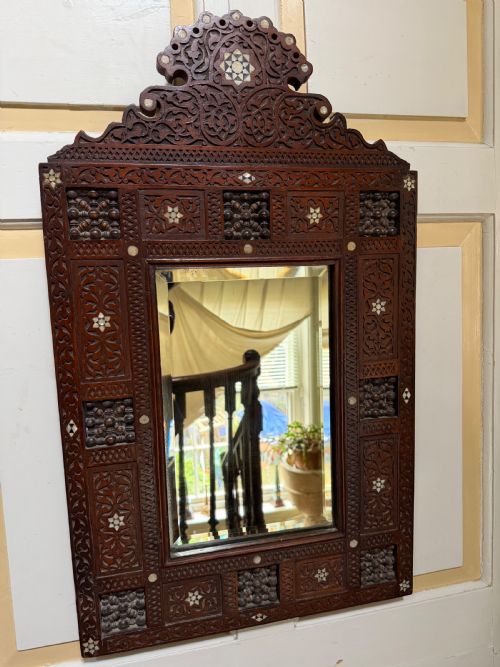
Construction techniques include delicate fretwork jigsaw piercing, carved classical motifs, and parcel gilt highlights applied to wood surfaces. Mirror plates sit within rebated frames, sometimes accompanied by original glass and candle slides.
Listings span multiple eras, including 17th Century, 18th Century, 19th Century, Edwardian, and Art Deco periods.
What varies in quality
The refinement of the timber selection dictates visual depth, separating plain boards from richly figured burr walnut and patterned veneers. Precision in fretwork cutting and the crispness of carved details set finer examples apart from simpler production.
Survival of original components, such as early mirror glass, parcel gilt accents, and structural backing, influences the integrity of the piece. Proportion and adherence to classical Georgian or Queen Anne architectural rules govern the overall aesthetic success.
The Walnut Hanging Mirror Glossary
- Fretwork
- Thin wood panels pierced with decorative scroll or geometric patterns using a fretsaw. This technique defines many eighteenth-century and revival wall mirrors.
- Burr walnut
- Timber taken from a tree growth or wart, producing swirling, highly ornamental grain patterns. Cabinetmakers prize this wood for feature panels on high-status frames.
- Parcel gilt
- The practice of applying thin gold leaf to specific raised portions of a carved wooden frame. It highlights architectural details against the dark walnut ground.
- Oyster veneer
- Slices cut transversely across small branches to create circular, overlapping wooden rings resembling oyster shells. It appears on seventeenth-century surfaces.
- Corner cupboard
- A triangular hanging cabinet designed to fit room angles, occasionally incorporating mirror glass or candle slides in the door. These pieces serve as functional wall storage.
Walnut Hanging Mirror: Frequently Asked Questions
How do I hang a heavy antique wall mirror safely?
Heavy frames require sturdy fixings anchored directly into wall studs or masonry using appropriate wall plugs and screws. The weight rests on secure brackets rather than relying on decorative top hooks alone.
Professional mirror hangers evaluate the frame construction and backboards to ensure the hanging wire or D-rings distribute the load evenly without straining old joints.
Are these mirrors made from solid walnut?
Many examples utilise pine or secondary timbers as a structural base, applying fine walnut veneers or burr walnut across the visible frame surfaces. Solid walnut does appear on certain carved items and earlier frames.
veneering techniques allowed makers to display dramatic grain patterns without risking the warping that solid boards of large dimensions might suffer.
What is the difference between Georgian and Georgian revival?
Original Georgian pieces date from the eighteenth century, showing period construction methods, hand-cut joinery, and aged patination on the timber and glass. Georgian revival items date from later periods, such as the early twentieth century.
Revival pieces intentionally replicate historical styles like Chippendale or George II using machine assistance or later workshop techniques while maintaining traditional aesthetic proportions.
How should I clean antique mirror glass?
Cleaning requires a soft microfiber cloth and a mild, ammonia-free glass cleaner sprayed onto the cloth rather than directly onto the mirror. This prevents liquid from seeping behind the silvering or into vulnerable wooden frames.
Silvering on antique glass is fragile and can flake or discolour if harsh chemicals or excessive moisture penetrate the edges of the plate.
Can these mirrors go in a bathroom?
Bathrooms introduce high humidity and steam that can damage antique wood finishes, loosen veneers, and degrade old mirror silvering over time. Placing a mirror in a damp environment requires good ventilation.
Specialist shaving mirrors and bathroom cabinets from Edwardian periods were designed for functional washroom use, though antique timber still benefits from stable atmospheric conditions.