



Walnut Hallway Table
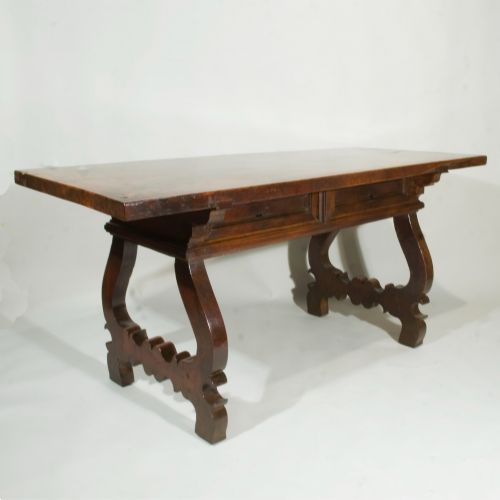
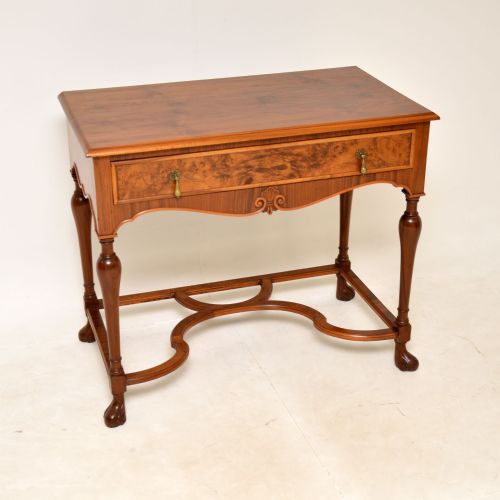
A walnut hallway table grounds an entrance with dark grain and clean proportion, offering a surface for letters and keys.

Walnut Hallway Table
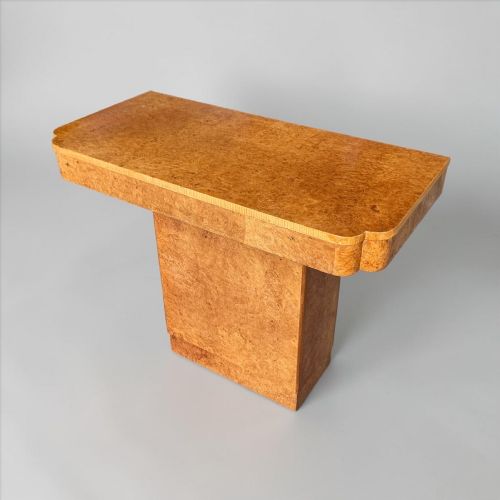
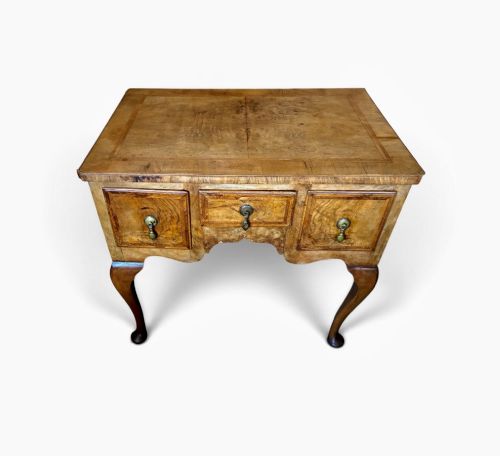
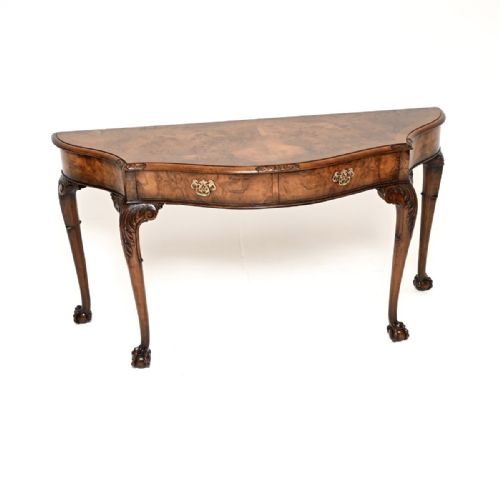
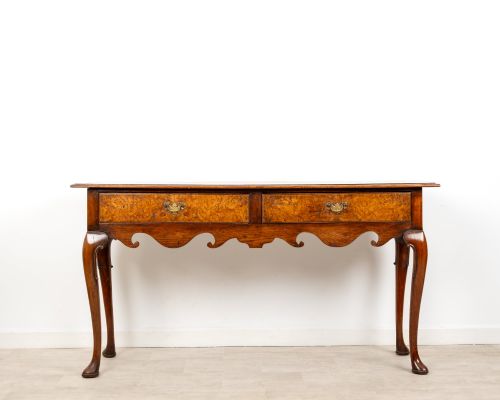
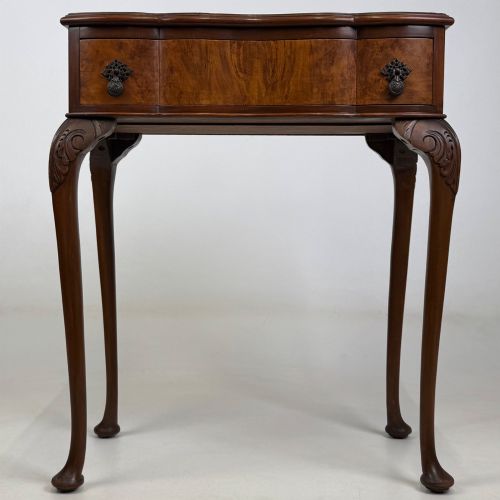
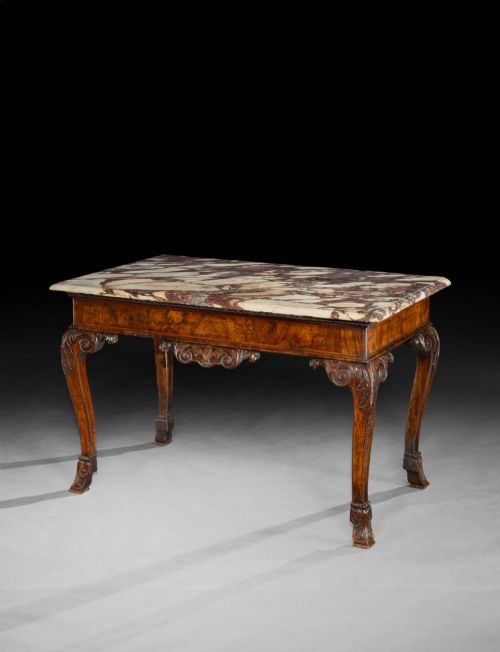
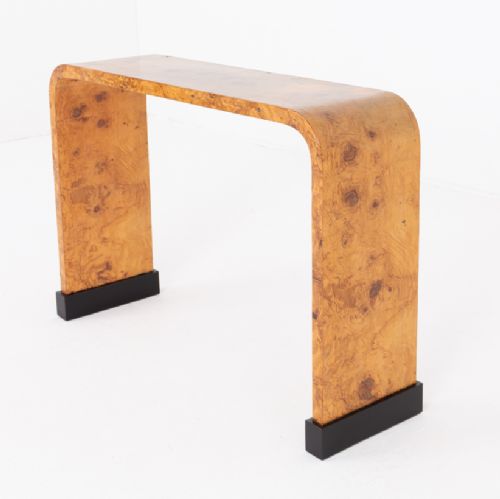
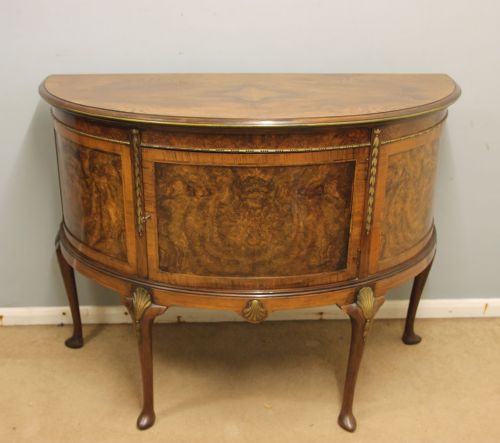
A walnut hallway table brings rich timber tones to entrance spaces, taking forms such as console tables, side tables, serving tables, and lowboys. These pieces span centuries of design, from seventeenth-century heavy timber to nineteenth-century revival styles and twentieth-century Art Deco lines.
The most frequent examples on this page date from the twentieth century, particularly the nineteen-thirties, alongside nineteenth-century interpretations of earlier Georgian and Queen Anne aesthetics. Dimensions range from compact lowboys to grand marble-topped console tables paired with pier mirrors.
Makers and makers' workshops utilise the timber's natural figure to create decorative impact in narrow spaces, combining drawers, turned legs, or cabriole supports. Whether geometric Art Deco or carved Victorian, each item serves as a functional surface for a hall or landing.
Judging the range
Quality rests in the selection of the wood veneer and the crispness of any carved ornament, where master makers achieved harmonious balance across the proportions. Plain timber surfaces rely entirely on clean joinery and rich colour depth, while burr walnut demands precise matching of the grain across drawers and tops.
The integrity of the original structure and the restraint of the design distinguish standard domestic furniture from high-end cabinet work. Tables retaining their original marble tops, brass hardware, or maker signatures demonstrate superior provenance within their period.
Several tables include telephone compartments, documenting the exact moment furniture designers had to accommodate the invention of the home telephone.
Hille·Maple and Co
The Walnut Hallway Table Glossary
- Lowboy
- A small oak or walnut table with drawers, resembling the lower section of a highboy, commonly used as a side or dressing table.
- Burr walnut
- A veneer sliced from the knotty growth of a walnut tree, prized for its swirling, highly decorative grain patterns.
- Console table
- A table designed to stand against a wall, frequently fixed with brackets or supported by front legs.
- Demi-lune
- A half-moon shape used for the top and base of specific side and console tables.
- Ormolu
- Gilt bronze ornamentation applied to furniture, popular in French-influenced design.
Walnut Hallway Table: Frequently Asked Questions
Where do I place a walnut hallway table?
These pieces suit entrance halls, narrow corridors, and landings where surface space is needed without blocking movement.
Their shallow depth allows them to sit flush against a wall while holding small daily items or a lamp.
How do I care for walnut wood?
Keep the timber away from direct heat sources and strong sunlight to prevent the grain from drying and fading.
Dust regularly with a soft dry cloth and apply occasional specialist wax to nourish the finish.
What is the difference between a console and a side table?
A console table traditionally fastens to the wall or stands firmly against it, often featuring decorative front legs.
Side tables stand independently on four legs and offer all-round finished access.
How do I identify Art Deco walnut tables?
Art Deco pieces display streamlined geometric forms, smooth burr walnut veneers, and minimal surface carving.
They date primarily from the nineteen-thirties and rely on clean silhouettes rather than historical revival motifs.