

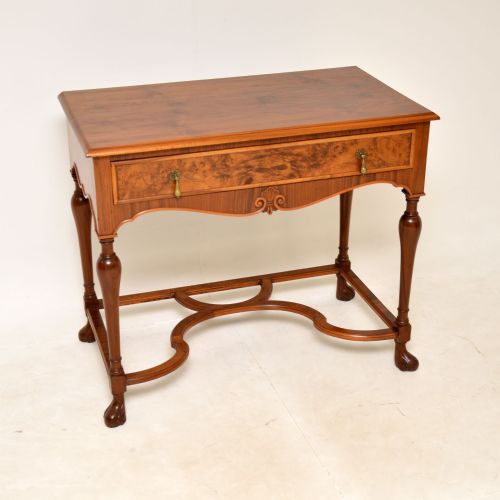


Walnut Hallway Console
A walnut hallway console is a functional surface bringing warm timber tones and period character to an entrance.
Walnut Hallway Console
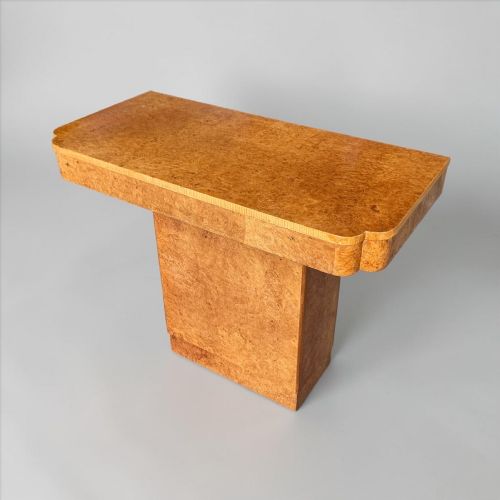
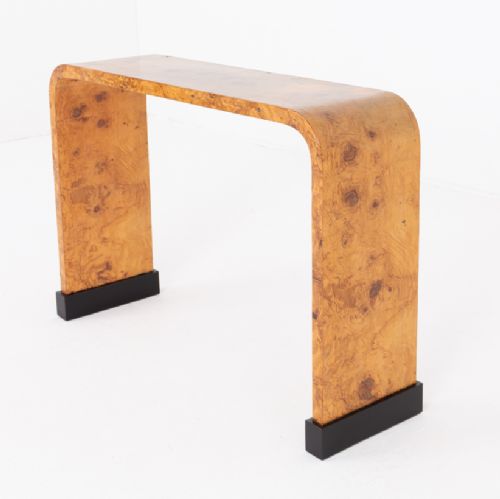
A walnut hallway console is a narrow table or serving piece designed to sit flush against an entrance wall without obstructing passage. The selection spans straightforward twentieth century Art Deco designs to revival pieces referencing earlier centuries.
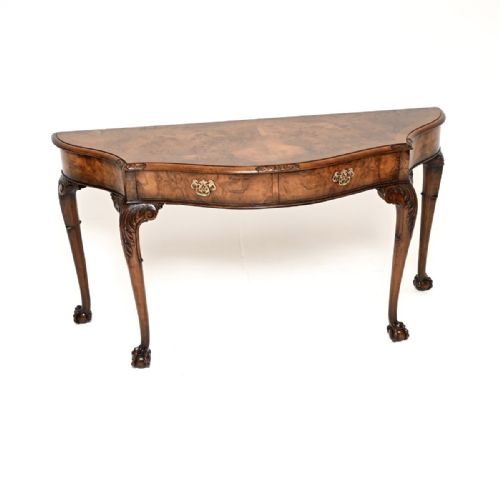
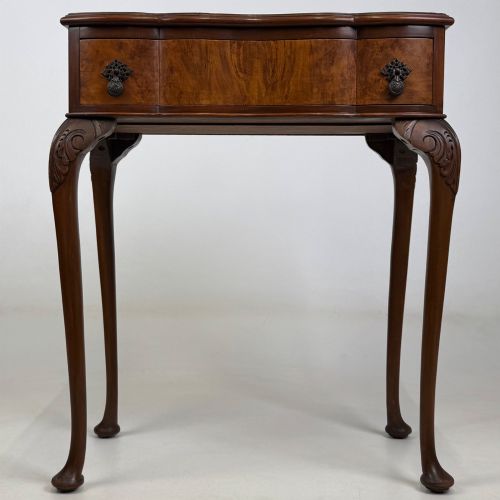
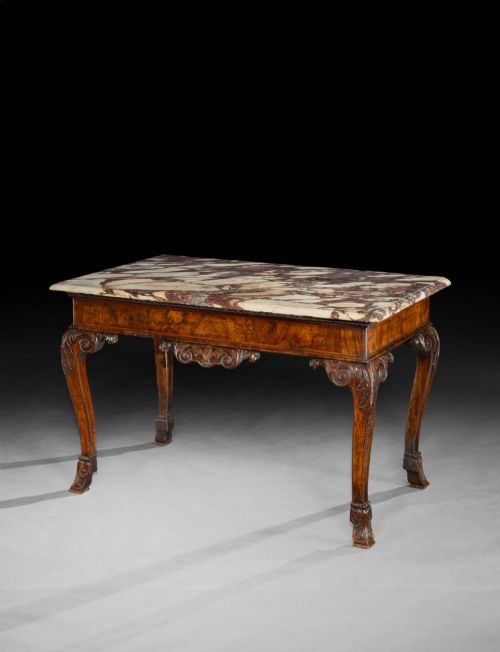
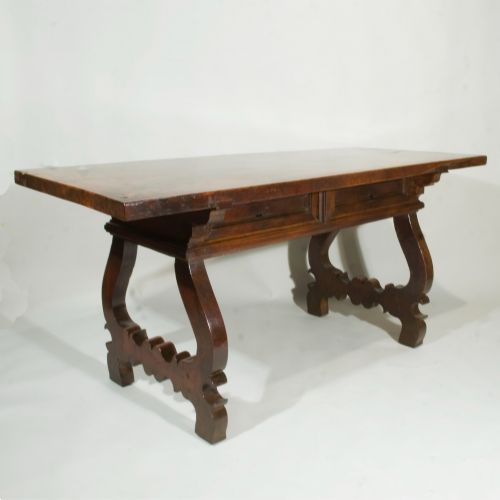
The form encompasses console tables, side tables, serving tables, and lowboys, alongside paired examples and pieces incorporating marble tops or mirrors. Dating ranges from seventeenth century Spanish and French Renaissance iterations through eighteenth century George II models up to twentieth century Art Deco production.
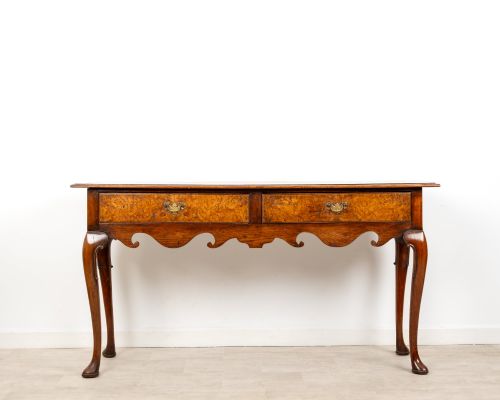
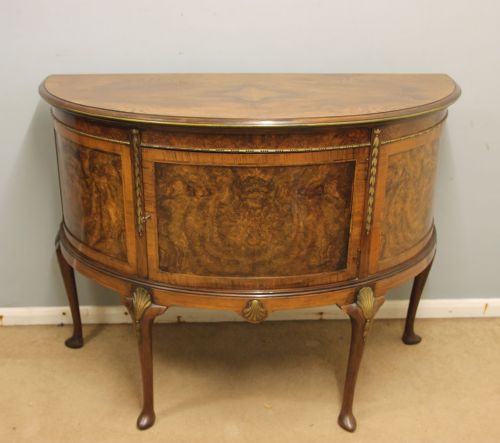
Buyers encountering this phrase find both English and continental European origins, reflecting diverse regional furniture traditions. Common configurations include two drawer formats, demi-lune shapes, and bow fronted designs intended for narrow spaces.
How they were made
Makers utilised solid walnut and decorative veneers such as burr walnut and figured walnut over secondary timbers to achieve striking surface grain patterns. Timber selection dictated the visual weight of the console, often enhanced by carving or ebonised details.
Surface adornments incorporated materials like brass handles, ormolu mounts, inset marble slabs, and mirrored glass panels. Construction methods relied on traditional joinery suited to the period, whether seventeenth century European framing or twentieth century Art Deco streamlining.
Listings feature walnut, burr walnut, marble, glass, brass, and ormolu across multiple centuries.
What varies in quality
Quality rests in the selection of the timber veneer and the precision of its matching across the top and drawer fronts, where figured and burr walnut display distinctive natural patterning. The integration of auxiliary materials like marble tops, parcel gilding, or bronze ormolu mounts further distinguishes standard production from finer examples.
Execution of carved elements, whether classical revival motifs or clean geometric Art Deco lines, determines the refinement of the piece. The structural integrity of the frame, alongside original hardware such as brass pulls, separates ordinary utility tables from significant cabinetmaker output.
Hille·Maple and Co
The Walnut Hallway Console Glossary
- Burr walnut
- A prized timber harvested from tree growths that produces highly swirling, intricate grain patterns. It is frequently utilised for decorative veneer on cabinet furniture and console tops.
- Demi-lune
- A half-moon shape characteristic of tables designed to stand flat against a wall. This format is common in hallway furniture to maximise floor space.
- Lowboy
- A small seventeenth or eighteenth century table featuring drawers, traditionally used as a side or dressing table. These typically rest on cabriole legs.
- Ormolu
- Gilt bronze ornamentation applied to furniture mounts and decorative accents. It was frequently utilised on French Empire and continental console tables.
- Pier mirror
- A tall mirror designed to hang in the wall space between windows, often paired with a matching console table placed directly beneath it.
Walnut Hallway Console: Frequently Asked Questions
Where should a walnut hallway console be placed?
These tables are primarily designed for entrance halls, corridors, and reception spaces where floor area is restricted. Their shallow depth allows them to sit neatly against a wall without blocking foot traffic.
They frequently support a mirror above, creating a practical surface for everyday items upon entering the home.
How do I identify an Art Deco console table?
Art Deco pieces from the twentieth century typically exhibit streamlined silhouettes, geometric forms, and symmetrical arrangement of burr walnut veneers. They lack the ornate carving found on earlier revival styles.
Maker attribution and simpler, functional lines often point towards this twentieth century period.
How do I care for a marble topped console?
Marble surfaces require protection from acidic liquids, oils, and moisture which can etch or stain the polished stone. Regular dusting with a soft dry cloth maintains the finish without harsh chemical cleaners.
The walnut wooden base underneath benefits from occasional waxing suited to antique furniture.