



Walnut Gentleman Chair
A walnut gentleman chair brings substantial Victorian presence to a room, offering robust timber framing and generous upholstered comfort.
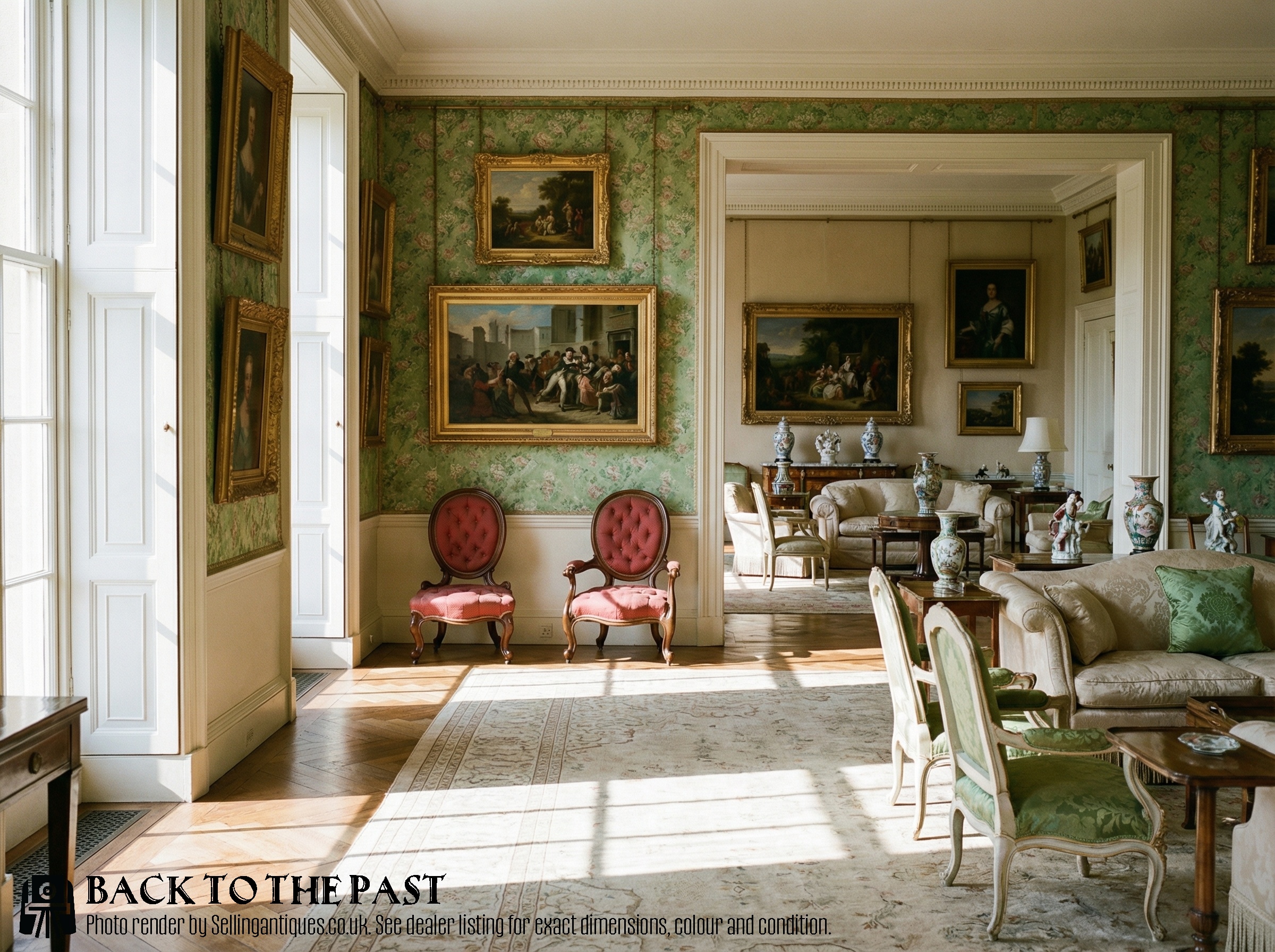
Walnut Gentleman Chair
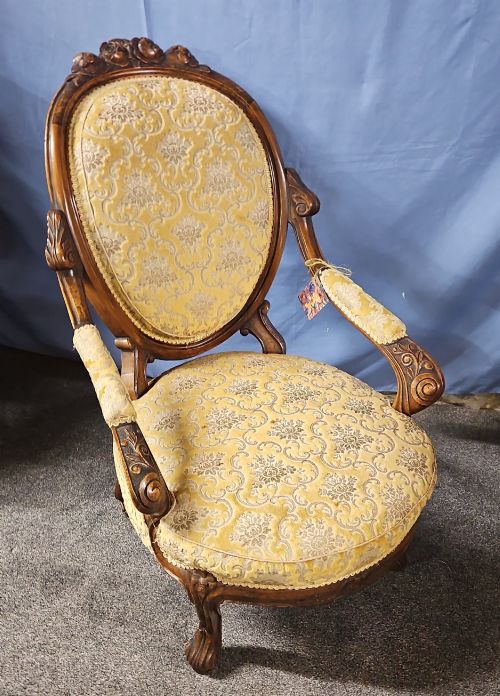
A walnut gentleman chair represents a distinct category of 19th-century seating designed for parlour, drawing room or library use. Buyers seeking this form will find robust timber frames paired with deep upholstery, often appearing singly or as part of larger salon suites.
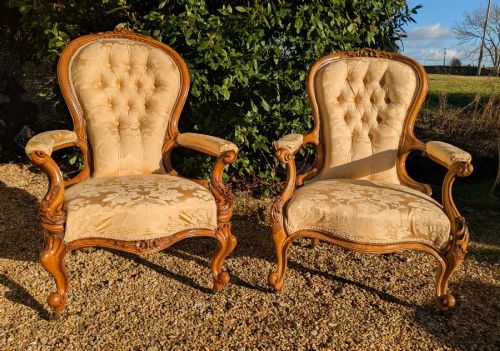
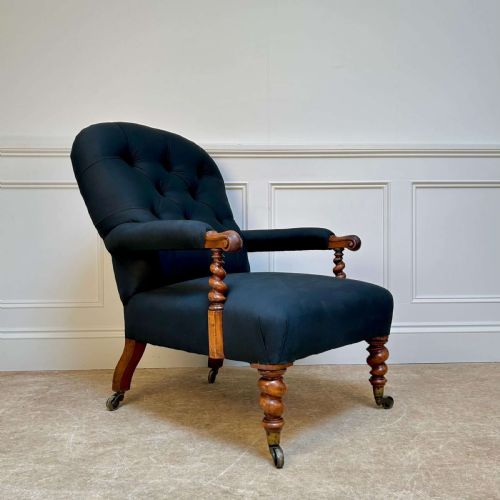
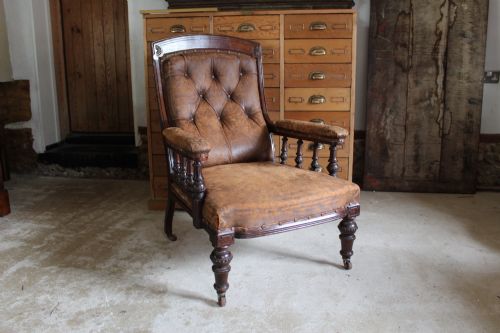
The majority of these pieces originate in the Victorian period, spanning decades from the mid-to-late nineteenth century with occasional Edwardian examples. They take various forms, including open-arm library chairs, spoon-back armchairs, and matching pairs intended alongside a smaller lady's chair.
How They Were Made
Craftsmen built the structural frames using solid walnut, frequently shaped with elaborate carved scrollwork and show-wood contours. Brass elements and ceramic castors often support the turned or cabriole legs.
Upholstery techniques involved dense internal stuffing covered in velvet, textile, or leather, frequently secured with deep buttoning. These padded surfaces were integrated directly into the carved wooden armframes and supportive high backs.
One recorded Victorian armchair previously resided in the home of artist John Bellany, bringing a touch of painterly history to its carved walnut frame.
What Varies in Quality
The sophistication of the carved show wood defines the upper tier of these chairs, distinguishing crisply hand-chased foliage from simpler moulded contours. Timber selection also matters, as figured grain yields a richer surface texture across the exposed frame.
Execution of the upholstery work separates standard seating from exceptional examples, seen in the precision of buttoning and the harmony of the textile covering. Structural integrity of the open arms and joints determines how well the chair survives centuries of daily use.
Hindley & Sons
The Walnut Gentleman Chair Glossary
- Spoon-back
- A padded chair back shaped like the bowl of a spoon to fit the human spine. This ergonomic contour appeared frequently in mid-Victorian seating.
- Show wood
- The exposed, polished wooden framing left visible around the upholstered sections of a chair. It highlights the grain and carving skill of the maker.
- Button back
- An upholstery style where depressions are formed in the padding by stitches pulled tight and secured with fabric buttons. This technique provides firm tension across the backrest.
- Open arm
- A chair design featuring un-upholstered wooden armrests supported by open framing rather than solid padded panels. It creates a lighter visual profile for a parlour chair.
Walnut Gentleman Chair: Frequently Asked Questions
What is a walnut gentleman chair?
A walnut gentleman chair is a Victorian armchair characterised by a sturdy walnut timber frame and generous padded upholstery. These pieces were traditionally proportioned for men to sit comfortably in studies, libraries or drawing rooms.
They frequently feature carved show wood, open arms, and buttoned backs. Many survive alongside matching ladies' chairs as part of larger nineteenth-century parlour suites.
How do I date a walnut armchair?
Dating relies on examining the stylistic details of the woodwork and the upholstery structure. Mid-Victorian examples often display ornate Rococo Revival carving and spoon-back profiles, while later pieces shift toward Arts and Crafts or Edwardian lines.
Construction marks, such as brass castors and the specific finish of the walnut timber, also help narrow the decade of production. Most examples on record cluster between eighteen-forty and nineteen-hundred.
Were these chairs sold in pairs?
Yes, many nineteenth-century seating options were produced as matched sets for formal rooms. Surviving pairs often combine a larger gentleman's chair with a slightly smaller companion chair intended for a lady.
Larger drawing room suites also included matching sofas, footstools, and multiple side chairs sharing identical walnut frames and fabric coverings.
How do I care for antique walnut furniture?
Care for the wooden frame involves keeping the walnut clean with a soft cloth and avoiding harsh chemical polishes. Natural wax helps maintain the lustre of the exposed show wood over time.
Upholstered sections require gentle vacuuming with a low-suction attachment to protect fragile textiles, velvet, or leather. Placing the chair away from direct sunlight and heat sources prevents the timber and fabric from drying out.