


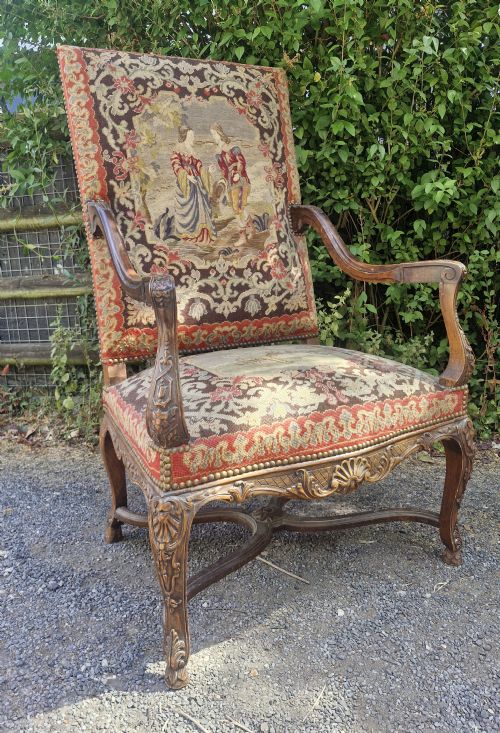


Walnut Framed Needlepoint
Walnut framed needlepoint pieces combine warm timber with hand-worked wool, offering rich texture and traditional comfort to any interior.
Walnut Framed Needlepoint
When you search for walnut framed needlepoint, you encounter a selection of historic seating, stools, and wall art spanning the seventeenth, eighteenth, and nineteenth centuries. These items feature timber frames paired with hand-stitched textile panels in wool and linen.
The most common examples on this page are Victorian armchairs and nursing chairs featuring carved walnut surrounds. Alongside these are smaller footstools and framed wall art from various periods including the mid-nineteenth century.
Makers utilised diverse revival styles such as Louis XV, Renaissance, and Scottish Baronial to create these furnishings. The resulting pieces range from small domestic stools to large armchairs designed for formal rooms.
How they were made
Makers constructed the structural frames from solid walnut, often applying hand carving to the wood around the borders. This timber provided a strong, dark support for the softer textiles mounted within or over it.
Textile panels utilised wool and sometimes linen, worked in techniques such as petit point and tapestry stitching. Artisans stitched these colourful designs by hand before mounting them onto the wooden armchairs, stools, or wall frames.
Walnut Framed Needlepoint Retail Price Guide 2026
Typical asking prices for walnut framed needlepoint among the pieces listed under this phrase on Sellingantiques today, from the lower quarter to the upper quarter. They describe what is for sale here now, not the wider market.
One recorded needlework sampler preserves the diligent work of Miss Louiss Elkins, completed precisely at age twelve.
What varies in quality
The finesse of the hand-stitched needlework defines the upper tier of these pieces, particularly where dense petit point creates detailed pictorial scenes or floral motifs. Simpler tapestries show broader stitches and less intricate colour shading.
Timber framing quality depends on the crispness of the carved wood details and the structural integrity of the walnut joints. Strong, well-preserved frames support the tension of the upholstered needlework far better than altered or weakened examples.
The Walnut Framed Needlepoint Glossary
- Needlepoint
- A type of canvas work embroidery stitched by hand using wool or other yarn. It forms a dense, durable pattern that covers the foundation fabric entirely.
- Petit point
- A fine needlepoint technique worked on a high-count canvas using single stitches. This method allows for exceptional detail and shading in pictorial scenes.
- Nursing chair
- A low-seated Victorian chair designed originally for feeding infants or personal grooming. These chairs frequently feature upholstered needlework and supportive walnut frames.
- Tapestry
- A form of textile art traditionally woven on a loom or executed by hand needlework. In these listings, it describes pictorial wall hangings and furniture upholstery.
- Scottish Baronial
- A nineteenth-century architectural and decorative style inspired by medieval Scottish castles. Pieces in this style often incorporate robust woodwork and heraldic motifs.
Walnut Framed Needlepoint: Frequently Asked Questions
How do I clean walnut frames?
Dust the carved walnut woodwork regularly with a soft, dry cloth to prevent dirt accumulation. Avoid harsh chemical polishes that can damage the historic timber surface.
For the needlework panels, consult a professional textile conservator rather than attempting wet cleaning at home. Moisture can rot old wool threads and warp the underlying canvas.
Are these pieces comfortable for daily use?
Nineteenth-century nursing chairs and armchairs were built with traditional stuffing materials like horsehair and coil springs. They offer a firmer sit than modern upholstered furniture.
If you plan to use a walnut framed chair daily, check the stability of the joints and the spring tension. Gentle use preserves the historic integrity of both frame and fabric.
Can I hang needlepoint art on the wall?
Framed needlework pictures and wall hangings were designed specifically for interior display. They bring rich textile texture and historic colour to vertical surfaces.
Keep wall-hung needlepoint out of direct sunlight to prevent the wool yarns from fading. Stable room humidity also protects the fragile linen and wool fibres.